For all of the things that it did well, 'Skyfall' remains, for me, an awkward movie. Certainly an awkward Bond movie. On the one hand, it strives to be resolutely unBondian, documenting its protagonist's psychological depletion and building towards a low-key finale (by the standards of the franchise, anyway) in which 007's past is effectively obliterated; yet on the other, it shamelessly panders to the fan-boys (the Aston Martin with modifications; M's old office). 'Skyfall' stretches an act of transition across two plus hours, maneouvring Daniel Craig's Bond from the origin story and flawed coda of 'Casino Royale' and 'Quantum of Solace' respectively to a point of reference recognisable from the early Connery to mid-period Moore years.
'Spectre' was mouth-watering in its potential: a cold, ruthless Bond going head to head with a re-imagined Blofeld, the antagonist back after a decades-long rights wrangle.
Then the reviews started coming in and they were lukewarm; some outright hostile. With expectations at rock-bottom, I hauled myself off to my local multiplex and caught a screening the day before its run ended. Maybe it was the low expectations that did it, maybe it's because I never quite embraced 'Skyfall' the way everybody else seemed to, but I enjoyed 'Spectre' a lot.
There are, I should add with some degree of haste, caveats. First and foremost, 'Spectre' suffers from a two-and-a-half hour running time not remotely bolstered by anything resembling a plot. "Bond looks into some things that pissed him off from the earlier movies" is about as sophisticated as things get narratively. Basically, Bond receives a posthumously instruction from Judi Dench's M to take out an entirely disposable bad guy, after which he joins a series of heavily telegraphed dots, finally ending up at a secret base owned and operated by our old mate Ernst Stavro. Said dots serve as a tying up of loose ends from the preceding three movies (Quantum, in turns out, is little more than a sub-contractor to Spectre), but whereas those movies each have something at stake, the only thing 007 seems to be racing against the clock to prevent is the new M (Ralph Fiennes) being made redundant.
In a subplot that has more nuance and credibility than the main action, an MI5/MI6 merger is on the cards and politically-savvy hatchet man Max Denbigh (Andrew Scott) is hellbent on shutting down the Double-O programme while brokering an information-sharing agreement between security services on a global level. There was a moment in the film where I really hoped that Christoph-Waltz-as-villain was merely a feint and Scott would be revealed as Blofeld, nicely exploiting his already iconic turn as Moriarty in 'Sherlock'. But no. Waltz plays Hans Oberhauser, a figure from Bond's past who fakes his own death and re-invents himself. Blofeld's his mother's name. Yes, the revelation really is that ho-hum.
On the plus side, however, the pre-credits sequence is Craig's best yet (which is saying something after the fantastic set piece that kicked off 'Skyfall'). Even its immediate supplanting by Sam Smith's truly fucking horrible theme song and a title design that is bizarre to the point of hallucinatory can't detract from how good it is. Even if it does homage 'For Your Eyes Only' a little too slavishly. The rest of the action more or less maintains the quality: a car chase, a plane/jeep chase (one of the film's best self-contained sequences), a speedboat/helicopter chase, a shedload of explosions and an extended bout of hand-to-hand combat in the narrow confines of a train. Even if it does homage 'From Russia With Love' a little too slavishly.
In fact, let's just call it: 'Spectre' is the most self-reflexive Bond movie since 'Die Another Day' wallowed in the non-hilarity of its parade of in-jokes. Granted, director Sam Mendes and scripters John Logan, Neal Purvis, Robert Wade and Jez Butterworth attempt to work them cohesively into the narrative, but it doesn't take long for deja vu to set in. In addition to the above cited examples, we have the mountaintop clinic from 'On Her Majesty's Secret Service', lifestyle porn hospitality as a prelude to torture from 'Dr No', and the collapsing building/trapped heroine finale from 'Casino Royale'.
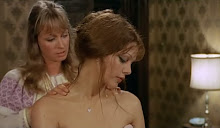
Speaking of the heroine, let's drag this review back on course and notch up another high point for 'Spectre'. All hail Lea Seydoux, the most capable Bond girl and character-in-her-own-right since Diana Rigg provided the franchise’s apex in this regard in 'OHMSS'. And also the most unlikely. Seydoux plays Madeleine Swann (a clunky but more-or-less thematically valid nod to Proust) – Mr White (Jesper Christensen)'s daughter. Not much further down the cast list, but with criminally less screen time, Monica Bellucci provides Bond with the frisson of a dalliance with a woman who isn't young enough to be his daughter; although she's little more than a plot device to take Bond one step closer to Spectre and Blofeld, she achieves an edgy chemistry with Craig that works to the film's benefit.
There's also a nice vibe going on between M, Q (Ben Wishaw), and Moneypenny (Naomie Harris). Mendes has great fun throwing them together for a little fieldwork during the extended (perhaps overly extended) finale.
And here I find myself unable to escape the defining tone of this review: everything I liked about 'Spectre', every aspect of it I thoroughly enjoyed, triggers a caveat. Believe me, I'd love to have pounded out 1,000 breathless words, adjectives cascading like spent cartridges from a semi-automatic weapon*, and sung its praises. But there's no avoiding the fact that 'Spectre' is flawed; not tonally as 'Skyfall' was, but structurally and narratively. Simply introducing Blofeld as a fully formed supervillain and giving him some kind of doomsday device would have helped matters no end. After pursuing the Bond origin story and its psychological fallout over three consecutive films, staging 'Spectre' as the Blofeld origin story seems equally transitional. Maybe next time we'll get a straight-down-the-line Bond movie.
*Yeah: I’m classy, me.