Joseph Losey directed ‘The Servant’ from a script by Harold Pinter based on a novel by Robin (nephew of W. Somerset) Maugham. Likewise, ‘Accident’ re-teamed Losey and Pinter for an adaptation of a novel by Nicholas (son of Oswald) Moseley. And, of course, Dirk Bogarde was back in the fold: between ‘The Servant’ and ‘Accident’, he and Losey had made ‘King and Country’ and ‘Modesty Blaise’ together.
‘Modesty Blaise’ is the odd-man-out of their films, a lightweight bit of fluff: fun but forgettable). ‘King and Country’, however, was a shattering anti-war film comparable to Kubrick’s ‘Paths of Glory’, in which Bogarde plays an officer who defends Tom Courtenay’s simpleton private in a court martial for desertion, an offence punishable by execution. As such, Losey’s pre-occupation with class, society and hypocrisy are again to the fore, Losey’s cinematic microcosm being the trenches of the First World War.
‘Accident’, the final Losey/Bogarde picture, is again about class. But the microcosm here is the groves of academe. The dreaming spires of Oxford. Granted, it’s the perfect milieu for an examination of repression, thwarted ambition, staid traditionalism and social hypocrisy, dark emotions lurking behind the leisurely punts down the river, the elegant soirées and the endless games of cricket or tennis … but compared to the more explicit portrayal of social degeneracy and power games in ‘The Servant’ or the brutal backdrop of wartime suffering in ‘King and Country’, ‘Accident’ suffers from the worst affliction that can befall a motion picture (I use this cornball term advisedly: motion = movement; picture = visual): inertia.
Everything about ‘Accident’ is sluggish. With the titular accident happening offscreen, the ‘action’ is limited to book-lined rooms, manicured lawns and the sun-dappled river. Gerry Fisher’s colour-saturated cinematography prettifies everything when the script calls for the starkness of Douglas Slocombe’s crisp black-and-white lensing on ‘The Servant’. Pinter’s script, typically oblique, is heavy with pregnant pauses. Elsewhere in his ouevre this is hugely effective – small pockets of silence which hidden meanings and suggestions seep into – but here they drag on to the point of … well, we’re back at that word again: inertia.
Fortunately, a cluster of great performances hold the attention: Bogarde gives a finely nuanced turn as Stephen, an Oxford don going through a mid-life crisis; Stanley Baker is ruggedly effective as Stephen’s colleague Charley, whose success as an academic, novelist, TV pundit and womaniser throws into sharp relief Stephen’s sense of self-doubt; Vivien Merchant anchors the film as Stephen’s homely wife; and Jacqueline Sassard is luminous as Anna, the student Stephen lusts after.
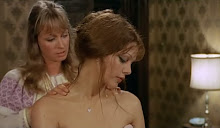
Two scenes remain in the mind long after the rest of the film has faded: a dinner party which ends in drunken embarrassment, the veneer of Stephen’s home life cracking apart to reveal his desperate insecurities; and Stephen’s less-than-proper attentions towards Anna as she drifts in an out of consciousness following the accident, a scene so suggestive and ambiguous that it finally – at the last post – lifts the film into the realms of the memorable.
‘Modesty Blaise’ is the odd-man-out of their films, a lightweight bit of fluff: fun but forgettable). ‘King and Country’, however, was a shattering anti-war film comparable to Kubrick’s ‘Paths of Glory’, in which Bogarde plays an officer who defends Tom Courtenay’s simpleton private in a court martial for desertion, an offence punishable by execution. As such, Losey’s pre-occupation with class, society and hypocrisy are again to the fore, Losey’s cinematic microcosm being the trenches of the First World War.
‘Accident’, the final Losey/Bogarde picture, is again about class. But the microcosm here is the groves of academe. The dreaming spires of Oxford. Granted, it’s the perfect milieu for an examination of repression, thwarted ambition, staid traditionalism and social hypocrisy, dark emotions lurking behind the leisurely punts down the river, the elegant soirées and the endless games of cricket or tennis … but compared to the more explicit portrayal of social degeneracy and power games in ‘The Servant’ or the brutal backdrop of wartime suffering in ‘King and Country’, ‘Accident’ suffers from the worst affliction that can befall a motion picture (I use this cornball term advisedly: motion = movement; picture = visual): inertia.
Everything about ‘Accident’ is sluggish. With the titular accident happening offscreen, the ‘action’ is limited to book-lined rooms, manicured lawns and the sun-dappled river. Gerry Fisher’s colour-saturated cinematography prettifies everything when the script calls for the starkness of Douglas Slocombe’s crisp black-and-white lensing on ‘The Servant’. Pinter’s script, typically oblique, is heavy with pregnant pauses. Elsewhere in his ouevre this is hugely effective – small pockets of silence which hidden meanings and suggestions seep into – but here they drag on to the point of … well, we’re back at that word again: inertia.
Fortunately, a cluster of great performances hold the attention: Bogarde gives a finely nuanced turn as Stephen, an Oxford don going through a mid-life crisis; Stanley Baker is ruggedly effective as Stephen’s colleague Charley, whose success as an academic, novelist, TV pundit and womaniser throws into sharp relief Stephen’s sense of self-doubt; Vivien Merchant anchors the film as Stephen’s homely wife; and Jacqueline Sassard is luminous as Anna, the student Stephen lusts after.
Two scenes remain in the mind long after the rest of the film has faded: a dinner party which ends in drunken embarrassment, the veneer of Stephen’s home life cracking apart to reveal his desperate insecurities; and Stephen’s less-than-proper attentions towards Anna as she drifts in an out of consciousness following the accident, a scene so suggestive and ambiguous that it finally – at the last post – lifts the film into the realms of the memorable.