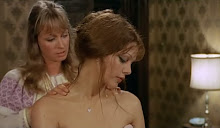
‘The Reader’ isn’t that good a film. It is, at best, deeply average. The cast is heavyweight (Kate Winslet, Ralph Fiennes, Bruno Ganz, Lena Olin), the cinematography is by two of the best practitioners of the art currently working (Chris Menges and Roger Deakins), the script is courtesy of David Hare and Bernhard Schlink’s source novel a breakout success beyond its original German-language publication, and yet the whole thing never quite adds up to the sum of its parts. As a viewing experience, it’s curiously antiseptic.
 I could almost feel sorry for director Stephen Daldry – if, that is, I wasn’t so sure that he’s going to clean up on the 22nd – because the man genuinely seems to want to make profound and thought-provoking films. There was the inexplicably popular ‘Billy Elliott’, which aimed for a triumph-of-the-spirit aesthetic set against the potent backdrop of the miners’ strike. There was ‘The Hours’, with another heavyweight cast and ‘literary’ source novel. But the former was bogged down with clichés – from the gay best friend to the gruff no-son-of-mine father who, awww bless, comes through for the lad at the end – and made ‘Brassed Off’ look like cinema vérité; while the latter was just plain bogged down.
Next up, Daldry is helming an adaptation of Michael Chabon’s ‘The Adventures of Kavalier and Clay’ and I could weep into my beer that such a wonderful and iconoclastic novel has fallen into his hands. Chabon’s prose deserves a Guillermo del Toro, a Christopher Nolan, a Darren Aronofsky. Not a Stephen Daldry.
I started this blog to rave about the films I love, so wasting words on ‘The Reader’ runs contrary to the remit. Besides, there’s a blandness, a tiredness to it that inspires a similar malaise in yours truly. One of my favourite bloggers on film, Tim at Antagony & Ecstacy, provided an eloquent review of some 1,200 words, and yet summed it up perfectly in his pullquote: “What if they threw a Nazi porno and nobody came?”
Similarly, you could throw at ‘The Boy in the Striped Pyjamas’ the question “What if they told a Nazi bedtime story and somebody died?” Okay, I’ll admit it: that was snide. I’m a little more inclined to be charitable to ‘TBITSP’ – it’s adapted from a children’s novel and I’ll make the assumption that director Mark Herman has pitched the film at an audience of similar age range. Not that I saw many children in the audience when I went to see it. They were probably in one of Cineworld’s thirteen other screens, pledging allegiance to Pixar, Dreamworks or Disney. I tip my hat to them.

The problems with ‘TBITSP’ are several. Like ‘The Reader’, it has a director who wants to be serious and challenging but just doesn’t have what it takes to engage with the material. His previous outings, the aforementioned ‘Brassed Off’ and the terminally confused ‘Little Voice’ (is it a comedy? is it a drama? is it meant to be realistic? is it meant to be theatrical? does Brenda Blethyn have to screech all the time?), are not the work of a director ready to tackle the Holocaust.
Never mind if you’re doing it from a child’s point of view, if you’re making a film about the Holocaust then you’re making a film about the Holocaust. That carries as serious a responsibility as any subject a film-maker can pick. A responsibility, first and foremost, to historical accuracy. And yes, John Boyne’s novel is narrated in a deliberately naïve ‘voice’, the better to show the scales falling from his young protagonist’s eyes as he realises the lies his high-ranking SS officer father has told about “Outwith” (his mis-heard name for Auschwitz) are just that – lies – but a novel is a construct of words. Film is visual. So if you’re showing a concentration camp through the eyes of a child, then you’re still showing a concentration camp.
This is where the disconnect occurs in Herman’s film. All of the key scenes between the SS officer’s son and the young Jewish boy, an expanse of barbed wire separating them, take place in some forgotten corner of the camp where no guards patrol, no-one notices anything from the watchtowers, the boy can skive off work detail for long periods at a time and the other inmates in his work gang are unsupervised by guards.
And yet ‘TBITSP’ at least tries to do something, I think. More so than ‘The Reader’, which just says look at me, I’m a profound and important film about a thorny subject, I’d like to thank God, the Academy, my agent … ‘TBITSP’ at least tries to use its child protagonists to make accessible (if that’s the right word) to a younger audience a subject they probably haven’t encountered before and likely have no foreknowledge of. Also it boasts some good performances, most notably from Vera Farmiga – her work here is the equal of anything by this year’s quintet of Best Actress nominees.
Ultimately, though, in the current climate of German cinema demonstrating the fearlessness to tackle its own difficult history, ‘The Reader’ and ‘TBITSP’ suffer from being English-language productions with British directors and chiefly British casts. Had they been made by German directors, I have no doubt that the results would have been a lot more interesting.