Sunday, July 08, 2012
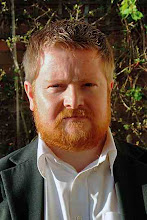
Ernest Borgnine
Thursday, July 07, 2011
SUMMER OF SATAN: The Devil’s Rain

Following on from ‘The Brotherhood of Satan’, here’s another slice of low-budget 70s small town gothic starring a couple of Peckinpah alumni, this time Ernest Borgnine and Ida Lupino. I’m thinking I might make ‘Race with the Devil’ – featuring Peckinpah alumnus Warren Oates – my next Summer of Satan pick and consider it a trilogy of sorts. The “What I Did in Backwoods America with a Bunch of Satanists When I Wasn’t Making Movies with Sam” Trilogy.
‘The Devil’s Rain’ opens with the elderly Mrs Preston (Lupino) awaiting the return, in a howling storm, of her son Mark (William Shatner). There is a lot of portentous dialogue about the missing patriarch of the household, a book and the diabolical John Corbus (Borgnine), a Satanist who has set up shop in a deserted mining town nearby and who wants the book back. (There is so much blether about the book during the first half of the film, with the reason for its importance not revealed until a good 50 minutes in, that I was wondering why Corbus didn’t just go to a freakin’ library. Or, y’know, join a mail order book club.)
Then things turn nasty at the Preston household, some supernatural business occurs, and Mrs P is kidnapped. This pisses Mark right off and he heads for the mining town intent on confronting Corbus, kicking ass, and getting his dear ol’ ma back.

He finds himself up against more than he bargained for, and an abrupt segue thirty minutes into the proceedings hands over protagonist duties to his brother Tom (Tom Skerritt). Tom is introduced in a scientifically unsound vignette where he and his colleague Dr Sam Richards (Eddie Albert) are conducting an ESP experiment on Tom’s wife Julie (Joan Prather). Julie has a horrifying premonition – one that seems to involve her, in a way that never quite makes sense until the very end of the movie – at the same time that Tom receives news that his ma and his brother are missing.
With local lawman Sheriff Owens (Keenan Wynn) too busy with a recent flood to offer much assistance, Tom picks up the trail and heads off to the mining town. Pretty soon, he discovers that Corbus has as much interest in him as the rest of his family. It’s when he finds out why – and what the importance of the book is – that he is forced into a confrontation with the Satanists.
On the whole, ‘The Devil’s Rain’ is a much better production than ‘The Brotherhood of Satan’. Cinematographer Alex Phillips Jr – who also lensed Peckinpah’s whacked-out black valentine to Mexico, ‘Bring Me the Head of Alfredo Garcia’ – exploits the deserted mining town to magnificently moody effect. Imagine if the red-masked bad dudes in Sergio Corbucci’s ‘Django’ had been card-carrying Lucifer lovers instead of casually racist gunslingers and you’re halfway there.

Robert Fuest’s direction is focused: the film is tight, pacy and decently structured. The face-melting effects have aged somewhat (although you can see where Spielberg got the final sequence of ‘Raiders of the Lost Ark’ from), but the only bit of FX that’s truly embarrassing is the firecracker transition of Ernest-Borgnine-as-Satanist-in-a-jump-suit to Ernest-Borgnine-in-a-goat-mask.
Where ‘The Devil’s Rain’ really achieves its quota of what-the-fuckery, however, is not in the effects, or the revelation of what the Devil’s Rain actually is, or the incomprehensibility of how the Satanists managed to install a full-scale fucking pipe-organ in the mouth of a cave, but in its casting. The full import is probably diluted by the fact that I’ve scattered the principles’ names parenthetically across three or four paragraphs, so let me line them up next to each other. ‘The Devil’s Rain’, ladies and gentleman, gives you the opportunity to experience Ernest Borgnine, Ida Lupino, Eddie Albert, Keenan Wynn, Tom Skerritt and The Shat in the same movie. Oh yeah, and if you scrutinize the ranks of the Satanists carefully, you’ll see a young John Travolta floating around in the background.
Effective little chiller it may be, but there are plenty of instances where ‘The Devil’s Rain’ verges on camp. The sight, just minutes in, of Lupino wringing her hands and projecting wide-eyed sincerity and trying to pretend that she’s not in a B-movie horror outing while The Shat gives it the thousand yard stare to a point just off camera (I began to suspect that he was locked in a stare-it-out contest with the dude holding the boom) while DELIVERING all-his-dialogue IN A MANNER that-randomly-alternates … between … STENTORIAN ENUNCIATION and rat-a-tat-speed … with … more … pregnant pauses … than … a … Harold Pinter play. But. At. The. Wrong. Moments. I can only assume that when the man read a script, his brain automatically Tippexed out all the punctuation and he paused and stopped and raised his voiced and then spokerealfast at what he thought were the right moments. (They weren’t.)
Mark’s verbal stand-off with Corbus is hilarious, The Shat pulling out a frown/pointy figure combo as it a stiff talking to is all it takes for a 300-year-old devil worshipper to repent his ways and ask forgiveness. It says something that, in this scene, that Borgnine (an inveterate scenery chewer except when he had the guidance of a director of Peckinpah’s stature) comes off as understated!

Robert Fuest spent much of his career in TV (in particular directing some cracking episodes of ‘The Avengers’), but the handful of feature films he helmed make it lamentable that his talent wasn’t deployed on the big screen more often. ‘The Abominable Dr Phibes’ and its sequel are genre favourites, ‘And Soon the Darkness’ is a slow-burn exercise in Hitchcockian suspense, and his adaptation of ‘Wuthering Heights’ with Anna Calder-Marshall and Timothy Dalton captures the viciousness of Cathy and Heathcliffe’s turbulent romance better than any other version.
In ‘The Devil’s Rain’, Fuest conflates the horror film and the western, without sacrificing or bastardizing the imagery of either. He pitches the old guard against young turks. He creates atmosphere (the storm that batters the Prestons’ homestead in the opening scene; the dusty avenues of the abandoned town; the out-of-place church and its unholy interior) on a nothing budget. Sure, some of it’s wonky (the very last shot, while brutally effective as a closer, actually doesn’t make sense once you think about it for longer than, say, 30 seconds) and it was never going to be anything more than a B-movie, but it’s a pisser to note that ‘The Devil’s Rain’ was his last big screen outing.
Sunday, December 27, 2009
Convoy

Background
With 'Cross of Iron' roundly ignored at the box office and Peckinpah out of pocket to the tune of the $90,000 he put into the ailing production, it was imperative that he direct something commercial. That something was 'Convoy'. Its source material was a novelty song by one-hit-wonder C.W. McCall. Its target audience were the undiscerning cinema-goers who had made 'Smokey and the Bandit' such a hit and would go on to embrace 'The Cannonball Run' and its unholy trinity of car crashes, dumbass sheriffs and low-brow humour a few years later.
Peckinpah spent most of the shoot incapacitated. Various people pitched in to direct scenes, including James Coburn who had taken a position as second unit director in order to garner some behind-the-camera experience and Katy Haber, Peckinpah's partner at the time. When he did call the shots, he disregarded the script and had his cast ad-lib. As Weddle puts it in his biography, "simple, straightforward scenes ... turned into amorphous, convoluted and often incomprehensible improvisations". This technique, coupled with Peckinpah's frequent absences from the set, resulted in 'Convoy' wrapping almost a fortnight overschedule and a whopping $5 million overbudget - almost twice what it had been budgeted at. Peckinpah had shot nearly twice the amount of footage as on 'The Wild Bunch'. By the time he got to the editing room, he gave up. For the first time in his career, Peckinpah didn't find himself locked in a battle with producers over final cut and reductions to running time. He simply, without even completing a preview cut, turned the whole thing over to the studio and walked away.
None of this boded well for future projects, but all sins would doubtless have been forgiven after it took more than $46 million worldwide ... except for the stories that had filtered back to Tinseltown: stories of Peckinpah fucked up on booze and the Columbian marching powder, slumped in his director's chair or holed up in his trailer, the production at a standstill and the budget spiralling. It would be five years before he directed again.

Synopsis
Bunch of truckers. Poor little rich girl. Corrupt cop. Truck-stop fight. Convoy to the state line. Media coverage. Interstate police response. Political shenanigans. National Guard. River bridge. Truck vs tank. That's it, really.

Analysis
There's a diminishing aspect to Peckinpah's approach to commercial/director-for-hire projects:

There's some small pleasure in ticking off some of the Peckinpah Irregulars: Kris Kristofferson notches up his third appearance for Sam as Rubber Duck, the bearded, muscle-rippling truck driver who leads the convoy; Rubber Duck has a healthy disrespect for authority and a disinclination to wearing a shirt. This must be what appeals to poor little rich girl Melissa (Ali MacGraw, making it a second Peckinpah role after 'The Getaway') - she certainly wastes no time checking out his sleeper cab. Elsewhere, Ernest Borgnine and Burt Young also notch up their second go-around for Peckinpah. The performances, though, range from hammy (Borgnine) to comatose (Kristofferson) to just plain bad (MacGraw).
Friday, December 18, 2009
Passion & Poetry: The Ballad of Sam Peckinpah

The title 'Passion & Poetry' is an excellent encapsulation of Peckinpah's approach to filmmaking and his visual/emotional achievements in the field. It applies equally well to writer/director Mike Siegel and his passionate commitment to bringing his documentary on Peckinpah's life and work to the screen. The phrase "labour of love" is often bandied about - it's almost a cliche - but in Mike's case it's a statement of fact.
The project had its roots in a retrospective of Peckinpah's work in Padua, Italy, which Mike organised in 2000. The festival ran for 10 days and was attended by actors and crew members from Peckinpah's films - including James Coburn, R.G. Armstrong (who was 82 years old at the time!), Ali MacGraw, Susan George and 'Wild Bunch' co-writer Walon Green - as well as members of Peckinpah's family. Their reminiscences provided a wealth of first-hand testimony on Peckinpah's life and work: his turbulent life, the struggles to make films his way. Mike determined that his next project would be an in-depth documentary about Sam Peckinpah, drawing from the memories and experiences of those who knew him closely.
There was one immediate problem: financing. Mike had only made one film, had no real cachet in the industry, and was wary of wasting precious time trying to find backers or distributors. In true guerilla filmmaking style, he decided just to make the thing and finance it himself. For most people, this would entail back loans, scrounging from family members and a lifetime of bad debt and ruined credit rating. Mike took a different approach: he started selling off his expansive collection of movie posters and lobby cards. " 'Passion and Poetry' might be the first bigger film that was totally funded through sales at eBay," says Mike.

It took two years to raise enough funds for a working budget, including equipment and travel costs. Fellow filmmaker Patrick Gleason and former close friend and associate of Peckinpah Katy Haber came on board. With their help, Mike undertook a five week shoot in Mexico and Los Angeles. Shooting in Mexico was particularly interesting: Mike intended on the documentary to begin and end at the now abandoned hacienda which serves as General Mapache's headquarters in 'The Wild Bunch'. There was just one problem: actually locating it! Via an internet forum, Mike made contact with a septuagenarian originally from Texas who lived close to the location; he volunteered his services as Mike's guide.
Contributors to the documentary include actors James Coburn, Ernest Borgnine, Kris Kristofferson, Ali MacGraw, Senta Berger, L.Q. Jones, R.G. Armstrong, Isela Vega, David Warner and Bo Hopkins; critics and film historians Garner Simmons and David Weddle; friends and associates Chalo Gonzalez, Gordon Dawson, Katy Haber, Dan Melnick and Martin Lewis; Peckinpah's sister Fern Lea Peter, and his daughter Lupita Peckinpah.

Mike's persistence in securing the participation of Borgnine and Jones is almost legendary. Borgnine had responded to Mike's many calls by protesting that he probably wouldn't remember much; when Mike called him from the Mexico location of 'The Wild Bunch', it prompted such wonderful stories from Borgnine that the long-anticipated interview was finally arranged. Arriving at Borgnine's home, the legendary actor opened the door and announced, "Hi, I'm Ernie Borgnine," and Mike responded, "Hi, I'm the pain in the ass," prompting good-natured laughter from the actor and a friendship that continues to this day.Mike had communicated with L.Q. Jones by letter and phone, but the actor repeatedly refused to appear on camera without being paid. It wasn't going to happen; Mike's budget had already been eaten up by equipment costs and travel. Mike made one more call to Jones and, getting his answerphone, left a message calling him a horse thief! Jones threw in the towel and agreed to an interview.

Ultimately, Mike's two-hour film 'Passion & Poetry - The Ballad of Sam Peckinpah' was the product of over 30 hours of footage; enough that Mike was able to craft two entirely new documentaries, one for the Sony DVD release of 'Major Dundee' and one for the EuroVideo German release of 'Straw Dogs'.
Thursday, December 10, 2009
"A walk thing": creating The Wild Bunch's most iconic moment
Pike tosses some coins on a table and exits the room. Next door, the Gorch brothers, Tector (Ben Johnson) and Lyle (Warren Oates), have been similarly engaged. "Let's go," Pike barks. A look passes between them. Understanding registers on Tector's face. Lyle blinks, momentarily uncertain, then his whiskery features harden. "Why not?" he replies.
Outside, Dutch Engstrom (Ernest Borgnine) is sitting against the brothel wall, whittling a stick. Whittling is probably the wrong word - he's going at it with a knife like it was Mapache himself. It was Dutch who was with Angel when Mapache's men captured him. Dutch who rode away and left him to his fate, there being no other course of action. Dutch more than any of them hurts at Mapache's torture of Angel. Dutch doesn't even attempt to assuage himself in the arms of whores; he simply sits and hacks away with his knife and waits.
When Pike and the Gorch brothers emerge, he and Dutch lock eyes. No word is spoken. Words aren't needed. Dutch slowly gets to his feet. He knows what's going to happen next. He's been willing it. He wants it.
The four men walk purposefully over to where their horses are hitched. They pull rifles out of saddle rolls, check pistols, thumb rounds into chambers.
It was at this point - as far as the script was concerned - that the action abruptly cut to the Bunch's arrival at the courtyard where Mapache and his dissolute revolutionaries are drinking and entertaining women. This, as far as the crew were aware, would be the next the thing they shot.
Peckinpah had other ideas.
Biographer David Weddle describes it best:
Assistant director Cliff Coleman ... began issuing marching orders for the next set-up ... but Peckinpah stopped him. "No, no, Cliff, wait ... I want to do a walk thing first."
"What do you mean, 'a walk thing'?"
Peckinpah growled something unintelligible, then began lining up Holden, Borgnine, Oates and Johnson to make a long walk through the outlying buildings with shotguns cradled in their arms ... Sam set up a group of drunken Mexican soldiers, playing guitars and singing, for the group to walk past. Coleman began layering in other extras ... "And all of a sudden, Jesus Christ," says Coleman, "the music's going and the camera's rolling and these fucking guys started to walk and everybody's going 'Wow, it's the real thing!' Nobody knew what Sam was going to do or what he wanted to do. Before you knew it, it built and it built and it built and it built until it became that scene."

Wednesday, December 09, 2009
PERSONAL FAVES: The Wild Bunch
Background
The slow road out of his years in the wilderness following the 'Major Dundee' catastrophe and his firing from 'The Cincinnati Kid' began with his adaptation of 'Noon Wine' for the TV drama show 'ABC Stage 67'. Netting him Writers' Guild and Directors' Guild nominations and his best notices since 'Ride the High Country', he found himself in demand again. Head of production at Seven Arts, Kenneth Hyman was on a roll after the staggering success of 'The Dirty Dozen' and was looking to develop another action movie vehicle for Lee Marvin under the auspices of Warner Brothers. The project he had in mind was called 'The Diamond Story' and Peckinpah didn't think much of the script. Nonetheless, Hyman appointed producer Phil Feldman to work with Peckinpah. Neither of them cared much for 'The Diamond Story' and their attention was soon drawn to a couple of other scripts: 'The Wild Bunch' and 'The Ballad of Cable Hogue'.
It's entirely possible that Hyman would have called time on their extracurricular activities and ordered Peckinpah to knuckle down to 'The Diamond Story' but for one factor. 20th Century Fox had just paid half a million (an unprecedented amount for a script at that time) to William Goldman for 'Butch Cassidy and the Sundance Kid' and handed the reins to George Roy Hill. Industry buzz was high. There was probably no better time to make a western. Feldman saw 'The Wild Bunch' as a challenge to 'Butch and Sundance' at the box office. He was convinced it had blockbuster written all over it. 'The Diamond Story' was summarily abandoned and Feldman and Peckinpah threw themselves into 'The Wild Bunch'.
The production was suitably epic. Peckinpah, predictably, went overbudget. He exposed 330,000 feet of film, printing most of it so that he'd have an amorphous mass of material from which to work in the editing room. There were over 1,200 camera set-ups. Feldman didn't question any of Peckinpah's techniques. Their relationship was so good that their next project, 'The Ballad of the Cable Hogue', went into pre-production while editing work was still being completed on 'The Wild Bunch'. Things very quickly and irreversibly soured between them. While Peckinpah was scouting locations for 'Hogue', Feldman - pressured by the studio to bring 'The Wild Bunch' down to a two hour cut - caved in and, behind Peckinpah's back, snipped twenty minutes out. This was the last straw for Peckinpah - who already considered the 140 minute cut a compromise from his original three and a half hour version - and, true to form, kicked off very publically against Feldman and Warner Brothers, ending his association with both.
3) Loyalty, honour and codes of conduct are thrown into harsh relief - and tested sorely - by the inherently compromised morality of his protagonists.
"These days are closing fast," Pike muses, early on, "we gotta start thinking beyond our guns." The point is rammed home when the Bunch encounter Mapache's automobile. They summarily label it an "ugly damned thing", only for Sykes (ironically the oldest of the group) to prove the most cognizant of changing technology: "I hear they got one of those things up north that can fly." Tector Gorch (Ben Johnson) mocks him: "You damned old fool, that's a balloon." Pike sets the record straight: "No, the old man's right. They've got motors, wings, go sixty miles in less than an hour. Gonna use them in the war, they say." One year before the Great War, the atrocity that - to quote Wilfred Owen - "slew ... half the seed of Europe one by one." Pike Bishop and the Bunch in this world? Hell no, they'd rather die first, a decision borne out when the one remaining survivor of the Bunch, Sykes, throws in his lot with the men from Angel's village. "Ain't the way it used to be," he muses, in a line which pretty much sums up Peckinpah's worldview and his directorial ethos, "but it'll do." But - and this is the masterstroke - before these kiilers, these bad men, reach the end of the line, Peckinpah gives them their humanity. The sojourn in Angel's village allows us to see them variously relaxing, larking about and reminiscing. When Pike, midway through a reflective conversation with the village elder, breaks off to watch the Tector and Lyle (Warren Oates) playing a game of cat's cradle with one of the village girls, laughing innocently and exhibiting none of their usual lasciviousness towards anyone female, he remarks "Now that I find hard to believe." In a line that is key to any heartfelt appreciation of the film, the elder replies: "Not so hard. We all dream of being a child again, even the worst of us. Perhaps the worst most of all."
We all dream of being a child again, even the worst of us. Perhaps the worst most of all. I'll put that line up against all the criticism that's ever been levelled at Peckinpah that he was nothing but a director of violence. Paul Seydor states in his magnificent book 'The Westerner Films - A Reconsideration' that is "impossible not to recognize in [Peckinpah] the wounded romantic, the tragic idealist, the agonizer believer". And it is impossible, in my opinion, to watch 'The Wild Bunch' and not be utterly convinced that, in his finest moments as a filmmaker, Sam Peckinpah entered his house justified.