Showing posts with label Robert de Niro. Show all posts

Tuesday, June 28, 2011

Machete


It’s amazing how indifferent some people can be in the face of total, unapologetic, non-PC, old-school cool.

‘Grindhouse’ was a cineaste’s wet dream – and I say that as someone who has yet to see ‘Grindhouse’ in its intended cut (watching the DVDs of ‘Planet Terror’ and ‘Death Proof’ with a quick sprint to the computer at the half-way mark to watch the fake trailers as downloads is about as close as I’ve come to the proper ‘Grindhouse’ experience). Two exploitationers back-to-back: dirty, cheesy and full-on retro, one directed by Robert Rodriguez, the other by Quentin Tarantino – who could say no to that?

Depressingly, as it turned out, plenty of people. Maybe the fact that Rob and Quent wanted them to spend – shock, horror – over three and a half hours in a movie theatre was too gruelling. Maybe the concept of getting to watch two movies for the price of one seemed too good to be true and they stayed away out of sheer suspicion. Maybe the prospect of Rose MacGowan with a machinegun leg, Vanessa Ferlito lap-dancing and Kurt Russell being all kinds of badass was rather déclassé. Whatever reason, the fact remains: the underperformance of ‘Grindhouse’ at the US box office meant that a movie I’d been getting excited about in a way I normally reserve for Mrs F limped out onto UK screens as two separate releases, in the wrong order, with about three months between them.

Four years down the line, I remain slightly peeved by this.


One of the chief in-jokey pleasures of ‘Grindhouse’ was the spoof trailers. Eli Roth’s ‘Thanksgiving’ managed, in three minutes, to be the best thing he’s ever made; Rob Zombie’s ‘Werewolf Women of the SS’ was madness in miniature, all Ilsa references, swastika armbands, Nic Cage going apeshit and Beethoven’s Ninth on the soundtrack; and Edgar Wright’s ‘Don’t’ nailed an entire subgenre of the Video Nasties list. But best of all was Rodriguez’s ‘Machete’, a masterpiece in miniature featuring Danny Trejo being a bad muthafucka in authentically grainy footage and kissing off the audience with greatest tag line ever.

“They just fucked with the wrong Mexican.”

Speculation was immediate: would Rodriguez extrapolate ‘Machete’ into a full feature? I prayed like no atheist, en-fox-holed or not, has ever prayed. Like Baron von Frankenstein raising his fists to heaven as the thunderstorm crashes, screaming, “Liiiiiiiiiiive! LIIIIIIIIIIIIIVE!”, I sent the unyielding force of sheer will across the miles and the oceans in the general direction of Troublemaker Studios: “Make it,” I cried; “maaaaaaaaaaaaake iiiiiiiiiiiiit!!!”

Eventually, word trickled out. ‘Machete’ was casting. Danny Trejo was on board, natch. Robert de Niro. Steven Seagal. Jessica Alba. Michelle Rodriguez. Cheech Marin. Lindsay Lohan. Holy Mary mother of a made up character!!! Danny fuckin’ Trejo, Robert fuckin’ de Niro, Cheech fuckin’ Marin and Lindsay fuckin’ Lohan in the same fuckin’ movie!!! (Yes, I know that’s a lot of profanity, but danged if it isn’t an accurate representation of how stoked I was getting for ‘Machete’.)


Then – finally – it opened. It opened in the UK freakin’ ages after it opened in America. (Oh, my fellow bloggers Stateside, how I cursed as I read review after review on your blogs, knowing that I still had a couple of months till the Trej-meister fucked up shit my side of the pond. There’s your dictionary definition of frustration: right there!)

A funny thing happened during all of this. While the faithful (ie. my aforementioned fellow bloggers) were giving ‘Machete’ its dues, the get cinema-going unwashed collectively went “meh” and didn’t really give a shit. ‘Machete’ kind of came and went, not boding well for the Bond-style post-credits that “Machete will return in ‘Machete Kills’ … and ‘Machete Kills Again’.”

My lords, ladies and gentlemen, guys and gals, dudes and dudesses, cats and chicks, blokes and birds, let me state this once and for all. For the record. Let me tell it on the mountain, shout it from the rooftops, write in the sky and piss it in big yellow letters in the snow:

I did not go “meh” over ‘Machete’. Quite the contrary, oh my brothers.

I. Goddamn. Bloody. Love. ‘Machete’.

I love ‘Machete’ because it gives Danny Trejo an honest-to-God leading role and the man goes for it in fine style; because it’s got a Jessica Alba performance that’s not entirely insufferable; because Robert de Niro seems to be enjoying himself onscreen for only the second time in the last decade (the other occasion being ‘Stardust’); because Cheech Marin as a shotgun wielding priest quite simply redefines iconography; because Michelle Rodriguez looks tough and sexy in equal measures to their point where you’d probably be too scared to buy her a pint let alone spill it; because Lindsay Lohan’s first scene depicts her as a coked up socialite and her last as a gun-toting nun; because pudgy, whispering action start has-been Steven Seagal redeems himself for decades’ worth of unadulterated crap; and because the Crazy Babysitter Twins turn up in ridiculously skimpy nurses uniforms and fire off Uzis.


I love ‘Machete’ because it’s a 100-minute rollercoaster showcase for Danny Trejo fucking up the shit of all who cross him in a variety of gratuitous, capillary-siphoning and – most importantly of all – imaginative ways. This is a film where the hero utilizes knives, guns, swords, strimmers, surgical equipment, pimped-up cars that bounce a lot, and a motorbike with a gatling gun welded to the handlebars in his fight for truth, justice and rights of the downtrodden Mexican working class.

I love ‘Machete’ because it exists in a movie movie universe of unrestrained over-the-topness that makes ‘Kill Bill’ look like a Mike Leigh production*; because it looks more authentically like a 70’s exploitation than either part of ‘Grindhouse’; and because the contemporary touchstones are witheringly subverted (“Machete don’t text”).

I love ‘Machete’, in other words, because it manages to be batshit crazy and utterly true to itself at one and the same time. I love it because Rodriguez and his co-director Ethan Manquis obviously didn’t have a single imperative – commercial or aesthetic – beyond having a good time and making the kind of movie they wanted to make. Gracias, dudes.


*Which, granted, would be interesting. Imagine: Imelda Staunton as The Bride and Jim Broadbent as Bill. Scene: a suburban kitchen. Bill is sitting at the kitchen table, smoking a cigarette and reading the Racing Post. Enter The Bride, laden down with shopping. The Bride: “You’re a right bloody sod you are, Bill. I ask you to do the pots and put the oven on and what do you do? You sit there smoking! I bet you put money on the horses again and lost it, didn’t yer? Didn’t yer?” Bill says nothing. The Bride starts crying histrionically. “I wish I’d never bloody married you, Bill.”

Monday, July 05, 2010

PERSONAL FAVES: Angel Heart

Crime has long been the go-to genre for hybrid narratives. Look at ‘Blade Runner’ and ‘Dark City’: both firmly bracketed as sci-fi but infused with noir stylisations. Or ‘Minority Report’ and ‘I, Robot’ with their hi-tech whodunnit plots.

Crime and horror have also enjoyed a cross-pollination over the years, perhaps most notably in the gialli of the ‘60s and ‘70s. Most mainstream horrors have an element of the detective story about them, as rational explanations are initially sought for the paranormal phenomena on display. These are undertaken either by amateur sleuths (David Warner’s photographer in ‘The Omen’) or professionals (Lee J. Cobb as Detective Kinderman in ‘The Exorcist’).

In most cases, the crime element is secondary to the horror or sci-fi aesthetic. ‘Angel Heart’ is a rare and magnificent exception to the rule, where the dominant aspect is shabby private eye Harry Angel (Mickey Rourke)’s investigation into the disappearance of lounge singer Johnny Favourite; where the incursion into outright horror only occurs once Angel’s case takes him to New Orleans and the backdrop of voodoo and superstition suddenly and frighteningly comes to the forefront.

So pervasive is this shift in tone – not to mention the psychological and metaphysical implications of the denouement – that ‘Angel Heart’ reveals itself as a symphony of horrors. I use the phrase and acknowledge its source – ’Nosferatu: eine Symphonie des Grauens’ (F.W. Murnau, 1922) – advisedly. Murnau gives us Max Schrek, his shadow creeping across the wall, through the celluloid of the film and irreversibly into the popular consciousness. Alan Parker gives us Robert de Niro as Louis Cyphre (I’ll hold off on plot spoilers, but eagle-eyed linguists will have nailed it), casting a shadow of quiet threat and sinister manipulation across the film and, indeed, Harry Angel’s past and present.

If Cyphre is the personification of the deepest and most repressed horrors of Angel’s life (the quest for Johnny Favourite’s whereabouts is also an internal journey, into the depths of Angel’s soul), there are plenty of other – more literal – horrors strewn throughout the film. Eyeballs and hearts turn up where they have no business being; chickens find themselves on the receiving end of far worse than battery farming during a voodoo ritual whose aberrant eroticism is the precursor to an intense and sensual sex scene that, like the movie itself, lurches brutally into very different territory; becomes something disturbing and blood soaked. ‘Angel Heart’, particularly in its final third, is awash with blood.

Other images are disconcerting, their meaning often oblique (at least until the final frames): nuns looking up from studious contemplation of the Bibles (a Bible in a parallel scene contains more than just the word of the Lord); footsteps ringing out on cold marble floors; a hand reaching for someone in the crush of a New Year’s Eve celebration; a spray of blood on white tiles; an apartment window bathed in garish red; fans slowly turning; an elevator plummeting down a shadowy lift shaft. The film is as suffused with images of descent as it is with blood.


But for all the grand guignol excesses, Alan Parker achieves a sense of realism in the first half, allowing the more macabre and grotesque nuances of the story to bleed gradually into the film’s aesthetic. The period recreation is grimy and naturalistic. The performances are spot on. De Niro projects menace calmly and efficiently. Rourke wears the mantle of Angel’s rumpled and increasingly desperate persona so completely that it’s one of those remarkable instances in cinema where the actor disappears entirely into the character. In a filmography studded with more great performances than he’s probably given credit for, Harry Angel is arguably his finest moment. That agonising ending, that tearful insistence that “I know who I am” – Rourke brings home the inescapable finality of it.

Monday, October 26, 2009

Once Upon a Time in America

When Joe at This Distracted Globe put the call out for contributors to his Class of 1984 blog-a-thon, I'd just picked up the 2-disc edition of 'Once Upon a Time in America' for a song. It had been a while - quite a while - since I'd seen it. I'd pretty much forgotten most of the narrative beyond the scenes in the anti-heroes' childhood. I figured Joe's blog-a-thon was the perfect opportunity to re-approach Sergio Leone's swansong. I had plenty of time to watch the film, marshall my thoughts and prepare an article.

Life, predictably, got in the way. Life, work, illness, the Third Annual Dirk-Fest, my wife's birthday and the Italian horror movie blog-a-thon over at Hugo Stiglitz Makes Movies, to be exact. So now I find myself hammering out a few paragraphs at the eleventh hour, Ennio Morricone's melancholic score still in my ears and that last shot - that freeze-frame of Noodles (Robert de Niro) reclining in the opium den, a soporific smile on his face - still fixed in my mind. And I'm thinking that the film is less a gangster epic than a ghost story. I'm wondering if the trio of heavies who, in the bluntly brutal opening scenes, slap around Noodles's girlfriend Eve (Darlanne Fluegel) then severely beat his friend Fat Moe (Larry Rapp) before tracking him down to the opium den actually pull the hit on him and the next three and a quarter hours present a conflation of the old saw about one's life passing before one's eyes and a vision of the future had he lived. A future which is corrupt and rotten and inescapably defined by every violent act of the past.

I'm also wondering - when 1984 saw the release of so many mainstream crowd-pleasers - why I decided to pick a four-hour epic of such formalism, such measured pace and so steeped in loss and regret that it's less an organic development of the grungily operatic spaghetti westerns that made Leone's name than the closest cinema has given us to a gangster movie as if made by Ingmar Bergman.


I had forgotten just how melancholy 'Once Upon a Time in America' is. That the scenes set in the late 1910s, which document the youthful Noodles and his friends' collective loss of innocence, are the cheeriest in the movie kind of says it all. We see Noodles (Scott Tiler), Max (Rusty Jacobs), Cockeye (Adrian Curran), Patsy (Brian Bloom) and Dominic (Noah Moazezi) commit arson, robbery and blackmail, throw in their lot with an older group of bootleggers, take a beating from a rival gang leader, and - sealing their fates into adulthood - one of their number being murdered and another going to jail after a revenge killing ... and Leone imbues every bit of it with nostalgia. Kids still half a decade off shaving roll drunks, backtalk cops and pursue sexual favours from a neighbourhood girl for the price of a cream cake ... and there's a palpable sense of yearning that this brief tenement-set idyll is so soon to end. Noodles gets it bad for Fat Moe (Mike Monetti)'s svelte sister Deborah (Jennifer Connelly) and when he muses, with all the braggadoccio of a lad who'd never dare tell his mates that he hasn't got laid yet, "She wants something from me and one of these days I'm going to give it to her", it's almost comical.

There's nothing funny, though, about Noodles' attempt to romance the adult Deborah (Elizabeth McGovern). When he doesn't get what he wants, he takes it by force. By now it's the early 1930s and Max (James Woods) fancies himself as the gang's de facto leader. Max's compulsion to leave the small time prompts an uneasy partnership with Mob guy Frankie Minoldi (Joe Pesci) and his low-class associate Joe (Burt Young), who tips them to a diamond heist. Frankie gives them additional orders and the job takes a darker turn. Prohibition is coming to an end and when Noodles jokes that "we're out of work", Max doesn't see the funny side. Max gets increasingly involved with the Mob's political machinations, providing protection for union boss Jimmy O'Donnell (Treat Williams). He also plots a suicidal heist on the federal reserve. Then Max's girlfriend Carol (Tuesday Weld) implores Noodles to an urgent course of action rather than see Max gunned down.


Noodles' decision effectively explodes the narrative, and even Noodles himself isn't fully cognizant of the repercussions. Not until the film's third timeline - 1968 - where the past comes back to haunt Noodles in a way he could never have anticipated, and I find myself back at the 'Once Upon a Time in America' as ghost story reading. For all the iconography - the hats and suits and cars and tommy guns and molls in flapper dresses - the film is decidedly atypical of the genre. The final hour plays out absent of anything approaching an action scene. The curiously muted finale - replete with enough pregnant pauses and unspoken implications to fill a dozen Harold Pinter productions - builds to an image of two old guys (one wearing a tux, one a fedora) and a garbage truck, its pulping mechanism churning away, that just plain fucking disturbs me.


But we're talking of a film where the most poetic scene has a boy standing on a toilet to peek through a removed brick into an adjoining room at a girl practicing her ballet recital; where the chronology of a petty theft and its aftermath is timed on the very pocket watch that was stolen; where the saddest, truest, most insightful moment is of a boy sitting on a stairwell unable to resist eating the cream cake he's spent his only money on, even though he knows what he can barter it for and how badly he wants it.

'Once Upon a Time in America' is a gangster film in imagery only; it's really about the loss of innocence, very early on in the game, and how the best we can hope for thereafter is narcotic oblivion or a quick death.

Sunday, May 31, 2009

PERSONAL FAVES: The Godfather Part II

If ‘The Godfather’ can be said, broadly, to be about the old Don acceding to the new Don, then ‘The Godfather Part II’ is a tale of several Dons.

Principally, it documents the ruinous patriarchy of Michael Corleone (Al Pacino) following the death of his father (Marlon Brando) and his succession as the Don at the end of the first film in counterpoint with the origin story of the young Vito Corleone (Robert de Niro) and the events that made him the Godfather.

‘The Godfather Part II’ opens with Vito Andolini, a young boy, solemnly following his father’s coffin. Cause of death: an insult to mafia chieftan Don Cicci (Joe Spinell). His mother pleads with Cicci for her son’s life, but he’s adamant: the boy must be killed lest he grow to a man and continue a vendetta. Vito’s elder brother is killed for this selfsame reason.

After his mother’s death at Don Cicci’s hands, Vito is smuggled out of the isolated village of Corleone and finds himself on a ship bound for America. At Ellis Island, an officer reads his name tag: “Vito Andolini from Corleone”; the clerk mishears and logs his name as Vito Corleone.

A couple of decades later another Don, this time a corpulent white-suited robber baron called Fanucci (Gaston Moschin), seals Vito’s fate. Already associating with snappily dressed petty criminal Clemenza (Bruno Kirby), Vito makes the jump from small-time to fully-fledged Don-hood when Fanucci tries to put the squeeze on them and Vito, sickened by the way he leeches off his fellow Sicilians, decides to take him out of the game.

Make no mistake about it: Vito Corleone does bad things. He steals, he fences (and not in the swordplay sense of the word either) and he commits murder. He benefits people’s respect – and the little gifts by which they show it – by trading on the reputation gained from dealing with Don Fanucci. And yet there’s honour in the way he conducts business. Whereas Don Fanucci operated to the detriment of the fellow Sicilians in his neighbourhood, Don Corleone operates, by and large, to their betterment.

Soon he’s projecting the appearance of a legitimate businessman, importing olive oil from his native country. A business trip to Sicily takes him back to Corleone and some unfinished business.

Michael Corleone, however, is moving further away from the family business inherited from his father. The Corleone family have moved lock, stock and barrel to Lake Tahoe, Nevada, and sold off the olive oil business preparatory to a move into the entertainment sector, principally casinos. Michael wants a piece of the action owned by ageing shyster Hyman Roth (Lee Strasberg), a man whose incessant talk of retirement and his own mortality, sprinkled with promises that he’s going to turn over his interests to his “friends”, keeps his would-be rivals hanging on for an easy share out instead of becoming embroiled in a messy war for control. Keep your friends close and your enemies closer: Hyman Roth could have coined the saying.

Things quickly go wrong. There’s a traitor in the Corleone’s midst, and an attempt on Michael’s life. A potentially lucrative move into the casinos of Cuba goes tits up when Castro’s revolution topples the old guard and a rich man’s playground suddenly becomes a maelstrom, with mobsters, politicians and playboys alike falling over each other to leave the country. Michael becomes increasingly insular. Paranoia gradually informs his decisions and he spurns the advice of trusted consgilieri Tom Hagen (Robert Duvall). His marriage to Kay (Diane Keaton) disintegrates. Congressional hearings on organised crime single out the Corleones, with the promise of a star witness who will give direct testimony against Michael.

Pacino and de Niro are both – no other way of putting it – fucking awesome. The script, by Francis Ford Coppola and Mario Puzo, cleverly juxtaposes father and son at roughly similar ages. De Niro reverse-engineers Brando’s characterisation in a pitch-perfect performance, capturing both Vito’s steely resolve and the magnanimity and family-based code of honour that underpins it. Pacino continues the character arc from the first film, drilling down deeper into Michael’s heart of darkness.

With its extended running time (just shy of three and a quarter hours), multiplicity of characters and events, and detailed examination of the dynamics of families, businesses and allegiances, ‘The Godfather Part II’ could easily have degenerated into big screen soap opera. With Coppola at the absolute top of his game – this is one of the very few sequels in the history of cinema to surpass the original – the effect, instead, is more akin to grand opera.

Or to Shakespearean tragedy. The comparison is almost clumsy – the temptation to facile epithets like “‘Hamlet’ with a tommy-gun” or “‘King Lear’ in a fedora” are irresistible – but ‘The Godfather Part II’ deserves comparison to the Bard. Shakespeare’s tragedies are shot through with the understanding that it’s never as simple as good vs bad; that revenge is a muddied, muddled and compromised business from the off; that plotting and betrayal are only part of it, and what William Ernest Henley called “the bludgeonings of chance” are just as instrumental in the shaping of events.

Coppola’s masterpiece, too, is freighted with these understandings; and also with the grimly irony that it’s not the sins of the father that are at the heart of this particular tragedy but the sins of the son.

Sunday, April 26, 2009

PERSONAL FAVES: The Godfather and The Godfather Part II

‘The Godfather’ is not so much an adaptation as an act of alchemy, taking the base metal (or rather purple prose) of Mario Puzo’s potboiler and rendering it into cinematic gold.

‘The Godfather’ is quite simply one of American cinema’s finest achievements, an instant classic on its original release and a film that continues to improve with age. Its sequel, if anything, is even better.

Both films (let’s leave the occasionally inspired but mostly just average ‘Godfather Part III’ out of it) are about family, honour and loyalty. They’re also about how these concepts are variously rationalised, compromised and bastardised.

‘The Godfather’ opens with an extended set-piece in which Don Corleone (Marlon Brando) is obliged, on the occasion of his daughter’s wedding, to grant favour to any who seek it. “I believe in America,” the craven Bonasera (Salvatore Corsitto) declares, then goes on to ask the Don to do violence on his behalf where the legal system has failed him. Like anyone else granted favour, he is counselled that “some day, and this day may never come, I might call upon you to do me a service”. All of this takes place in a darkened room, while the celebrations unfold in bright daylight outside. Still, even as a heart-throb crooner entertains the crowd and guests applaud the bride, tension is in the air: the Don’s son Michael (Al Pacino) has arrived – in uniform.
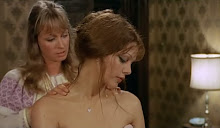
Unlike his natural brothers Sonny (James Caan) and Fredo (John Cazale) and his adoptive brother Tom Hagen (Robert Duvall), Michael Corleone has elected not to join the family business but enlist in the Marine Corps. And when the family business is crime and the credo, as the Don chastens Sonny early in the film, is “never let anyone outside the family know what you’re thinking”, this is a decidedly unSicilian thing to do. In fact, it’s downright American, patriotic and commendable. No wonder Michael’s the black sheep of the family. Oh, then there’s the matter of the white-than-white nice girl, Kay (Diane Keaton) he gets involved with.

Then there’s an assassination attempt on the Don and Michael finds himself filling the breech. What happens like is like ‘Richard III’ if the Richard III was quite a likeable and all-round kind of guy in the first act. Michael’s transition from war hero to mob boss, from hero to anti-hero, from humanity to villainy isn’t a gradual or incremental thing; it all hinges on one act. Michael proposes and carries out the execution of rival mobster Sollozzo (Al Lettieri), the guy who ordered the hit on his father, as well as Sollozzo’s partner, the corrupt policeman McCluskey (Sterling Hayden).

Michael is quickly whisked off to Italy while the heat dies down. Deserting Kay in more ways than one, he romances and marries local beauty Appollonia (Simonetta Stefanelli). When she dies in a car bomb meant for him, Michael returns to America and glibly takes up with Kay again. Sonny’s betrayal and death at a toll booth ambush (I’m not bothering with any spoiler alerts in this post – really, if you haven’t seen ‘The Godfather’ there’s no hope for you), and the Don’s retirement following a reluctant making of peace with his enemies, sees the family business turned over wholesale to Michael.

Here’s where the real ‘Richard III’ stuff kicks in: Michael becomes corrupted by power and villainy, not in an egomaniacal or even necessarily a psychotic sense, by characterised more by an utter coldness and inhumanity; a complete moral and emotion disconnection.

One of the most quoted lines is “it’s not personal, it’s strictly business” – a sentiment Michael certainly adheres to, and with bitter irony since those were Sollozzo’s words to him following the unsuccessful hit on the Don.

Coppola continues to chart Michael’s heinous premiership of the Corleone clan in ‘The Godfather Part II’, contrasting his barren life against the rise to power of the young Don Corleone (Robert de Niro). The Don’s actions, while undeniably criminal, are socially motivated (his murder of a neighbourhood crime boss is done for the betterment of the community). The seeds of the first film’s focus on family and loyalty are sown here. And also cut down as Michael alienates his wife – after losing her baby, Kay confronts Michael with the truth: “It wasn’t a miscarriage, it was an abortion. An abortion, Michael … I had it killed because all this must end … this Sicilian thing that’s been going on for two thousand years” – and, in the most shocking scene, orders the death of his brother, the weak-willed Fredo after he’s coerced into a business agreement than compels him to betray Michael. That he has this order carried out after feigning forgiveness and welcoming Fredo back into the household is the final bastardisation of everything his father held sacrosanct. It is this – and never mind the quasi-religious musings of ‘Part III’ – that completes Michael’s transition to the monstrous; that places him beyond redemption.

Monday, April 20, 2009

PERSONAL FAVES: Goodfellas

“As far back as I can remember, I’ve always wanted to be a gangster.”

Has any film ever set out its stall so simply, so iconically and with such cocksure swagger as ‘Goodfellas’?

Number 15 on IMDb’s Top 250, a personal favourite of virtually everyone I know, endlessly imitated by other film-makers (would Danny Boyle’s ‘Trainspotting’ or Paul Thomas Anderson’s ‘Boogie Nights’ have such verve if it weren’t for Scorsese’s template?), there’s either a book-length thesis to be written on ‘Goodfellas’ or nothing more to say but simply take one’s hat off to a powerhouse cast, an ace cinematographer (Michael Balhaus), an editor whose contribution to the film verges on genius (Thelma Schoonmaker) and a director at the top of his game.

Aw, the hell with it. I’m taking the easy way out on this one. Here’s ten classic moments from one of the all-time classic films:

The 1950s-set sequence where the young Henry Hill (Christopher Serrone) is seduced into the mob lifestyle even at the cost of his pissed-off father taking a belt to him: “the way I see it, everyone takes a beating now and then”.

The twenty-something Henry Hill (Ray Liotta) on a date with Karen (Lorraine Bracco), jumping the queue outside a nightclub, sliding in a side entrance, waltzing her through kitchens and corridors, glad-handing and slipping twenties to the employees, emerging near the stage and catching the eye of the maitre d’ who has a table carried in and set up in the premiere position. Karen, agog at Henry’s panache and connections, asks him what he does for a living. “I’m in construction,” he says.

Tommy DeVito (Joe Pesci) having everyone in tucks with his foul-mouthed account of a beating he took from an overzealous cop. “You’re a funny guy,” Henry avers. Oh-oh. “Funny how?”

Sonny Bunz (Tony Darrow) discovers the reality of having Paulie Cicero (Paul Sorvino) as a business partner: “Any problems, he goes to Paulie. Trouble with the bill? He can go to Paulie. Trouble with the cops, deliveries, Tommy. He can call Paulie. But now the guy’s gotta come up with Paulie’s money every week’ no matter what. Business bad? Fuck you, pay me. Oh, you had a fire? Fuck you, pay me. Place got hit by lightning? Fuck you, pay me.”

Henry responding to a distraught call from Karen after she’s been improperly treated by a guy on the block. In future online editions of the Oxford English Dictionary, when you look up “pistol whipping”, there’ll be a YouTube clip of Ray Liotta stalking up a driveway and using a gun butt to turn some football jock’s nose into gruyére.

Billy Batts (Frank Vincent) recently released from prison and somewhat belligerent during his celebratory drink. Running into a clearly not-in-the-mood-for-it Tommy DeVito, Billy makes the fatal mistake of bringing up Tommy’s youthful employment as a shoeshine boy. “Now go home and get your fuckin’ shinebox.” Bad mistake. Baaaaad mistake.

Jimmy Conway (Robert de Niro) engages in a little housecleaning when he decides he can’t trust his old crew. Cue ‘Layla’ and a whole bunch of corpses. “When they found Carbone in the meat truck he was frozen so stiff it took them three days to thaw him out for the autopsy.”

The increasingly coke-addled Henry spending a frenetic day trying to take care of business, look after his wheelchair-bound brother and cook a family meal while nursing a case of severe paranoia exacerbated by the omnipresence of a police helicopter. Remember: it’s not paranoia if they’re really out to get you.

Henry’s testimony when he sings like a canary to save his own skin: “When I was broke, I’d go out and rob some more. We ran everything. We paid off cops. We paid off lawyers. We paid off judges. Everybody had their hands out. Everything was for the taking. And now it’s all over … And that’s the hardest part ... Now I’m an average nobody. I get to live the rest of my life like a schmuck.” Lessons learned: none.

That final, brutal, chilling image – superimposed – of Tommy unloading a pistol right into the camera. Right into Henry’s subconscious. What goes around, comes around.

Friday, February 29, 2008

Stardust

I seem to recall the tag-line on the poster for 'Stardust' being something like "the fairytale that won't behave itself".

Good call.

The works of Neil Gaiman have never slotted neatly into categories, even when the genre touchstones seem to be present and correct. There are elements of horror, fantasy and mystery throughout his ouevre, but the only way you could accurately categorise Neil Gaiman is by coming up with a new genre - and you'd have to call it Neil Gaiman.

Maybe it's the enigmatic quality to his work, maybe it's because his imagination overarches the mainstream and goes heading off into new territories that are completely his own, but Gaiman adaptations are thin on the ground. In the 90s, he developed 'Neverwhere' for the BBC, then reimagined it as a novel. A couple of years ago, Gaiman's long-standing collaborator, the illustrator Dave McKean, made his directorial debut with the Gaiman-scripted 'MirrorMask', an offbeat, under-rated, often bizarre but ultimately beautiful film.

'Stardust', however, is Neil Gaiman's introduction to the mainstream: a decently budgeted adaptation, its cast balancing out newcomers (Charlie Cox, Kate Magowan) and flavours du jour (Sienna Miller, Ricky Gervais) with Hollywood heavyweights (Michelle Pfeiffer, Robert de Niro). If the cast is oddball, so is the director: Matthew Vaughn following up duties as producer to Guy Ritchie and his decidedly Ritchie-esque debut 'Layer Cake' with something that resolutely does not feature guns, gangsters, swearing and shell suits. The change of direction is quite pleasant.

The plot, in a nutshell, involves a quest by young idealist Tristan (Cox) to retrieve a fallen star, as a token of his love for Victoria (Miller), from an enchanted kingdom whose boundary borders his village. Also in pursuit of the star are a band of fratricidal princely brothers (their numbers including Jason Flemyng and Rupert Everett) hell-bent on killing each to secure their ascension to the throne, and narcissistic witch Lamia (Pfeiffer, at her best in ages) who wants to take the heart of the star for its powers of youthful reinvigoration.

Ah yes, the star itself. Upon falling from the heavens, it takes human form, that of Yvaine (Claire Danes), a young woman who vacillates between dreamy romanticism and acidic stroppiness. It's giving nothing away to say that Tristan finds her first and that romance eventually blossoms - it's what happens along the way that counts.

Despite a few contrivances and coincidences, 'Stardust' emerges as a fun, frothy concoction, its occasional moments of the macabre giving the production a bit of weight. It's not quite a masterpiece (maybe one day we'll get a Gaiman adaptation that truly captures the flavour of Gaiman's uncosseted imagination), but it's well worth your time, if for no other reason than de Niro's hilarious, flamboyant turn as a camp, cross-dressing sky pirate.