Showing posts with label Al Pacino. Show all posts

Saturday, April 09, 2011

Serpico

Posted in memory of Sidney Lumet


Sidney Lumet had a run of straight-up masterworks during the 70s which included ‘The Offence’, ‘Dog Day Afternoon’ and ‘Network’. All are dynamic, character-driven and provide investigations into their protagonists’ state of mind. In particular, ‘The Offence’ and ‘Serpico’ are probing and disquieting enquiries into police work and moral compromise. Their main characters are a study in opposites. Whereas, in ‘The Office’, Detective Sergeant Johnson (Sean Connery) is a man in psychological meltdown who finally crosses the line during the interrogation of a suspected child molester, Frank Serpico (Al Pacino) is an idealistic but ambitious New York cop who admits early on that he’s looking for a fast-track to promotion, but whose sense of morality is challenged at every turn by cynicism, apathy and corruption.

Adapted by Waldo Salt and Norman Wexler from Peter Maas’s biography of Serpico, Lumet’s film kicks off in high gear with a police car tearing through the nocturnal streets, Serpico in the back seat, shot and bleeding badly. When word reaches the station house, the first comment is, “Wonder if a cop did it.”

It sets the tone. Lumet flashes back to Serpico as a rookie, his strict moral code soon coming to the fore. Partnered with an older cop who doesn’t bother to respond when the dispatcher puts out a call about a rape in progress, Serpico hauls ass to the scene. There are four perpetrators: three escape. Serpico collars the fourth. Back at the station, the youth takes a kick to the balls and a beating with a telephone directory. Serpico has no part of it.


As he tries to establish a career, moving to plainclothes assignments and taking courses in fingerprint analysis, he gets a worm’s-eye view of corruption, from bribe-taking to pay-offs. His friend Tom Keough (Jack Kehoe), who was wangled a mayor’s office assignment thanks to political connections, becomes Serpico’s unlikely ally as he tries to take his concerns through the proper channels while at the same time protecting himself. A string of transfers convinces him that corruption is endemic across the force; and as the higher-ups increasingly stonewall him, he realizes that it encompasses many levels.


Coming a year after his flawless performance as Michael Corleone in ‘The Godfather, and with his reprisal of the role in ‘The Godfather Part II’ still a year away, ‘Serpico’ basically sealed the deal for Al Pacino, confirming him as one of the great acting talents in contemporary American cinema. Lumet surrounded him with a wealth of great character actors: John Randolph, Tony Roberts, John McQuade (in his final role) and M Emmet Walsh. Even the uncredited swathe of the cast list contains F Murray Abraham, Judd Hirsh and Tony Lo Blanco.

Does anything need to be said about Pacino’s performance. He’s unafraid to delve into the personal consequences of Serpico’s rigid morality, showing him venting his frustrations on the women in his life, losing the flamboyant Leslie (Cordelia Sharpe) and driving away the loyal Laurie (Barbara Eda-Young) as he vents the frustrations of the job on her. He also captures, with chilling immediacy, Serpico’s professional isolation, culminating in a scene where Serpico goes into a drug den only to find himself (quite literally) trapped and facing down the business end of a small calibre gun while his colleagues hang back and let him take a bullet.

Lumet’s direction is unshowy and unobtrusive – a hallmark of his career. He makes superb use of the location work. There is also a great understanding at work of the dynamics of mise en scene, particularly in a scene where Serpico is upbraided by a group of fellow cops during an off-the-record meeting in a park. Lumet contrasts the uncluttered openness of the exterior with a sequence of shots where the heads of Serpico’s colleagues fill the screen, their cheap shirts and bad ties all but out of shot. What remains is the hatred in their eyes. It’s one of the best representations I’ve seen of someone being surrounded.

Lumet pulled off a comparable seen a couple of decades later in ‘Night Falls on Manhattan’ where Andy Garcia is the only character seated as a group of men in suits surround him, firing off questions. There’s the obvious metaphor of standing (as in “standing in judgement”), but more than this Lumet frames the shot to cut off Garcia’s questioners at shoulder-height: effectively, they’re faceless.

‘Night Falls on Manhattan’ was underrated, as was ‘Q&A’ – unjustly so – but both demonstrate that Lumet’s fascination with the machinations of bureaucracy and the moral compromises of the law and those who are entrusted to withhold it were lifelong concerns. Lumet’s swansong, ‘Before the Devil Knows You’re Dead’, was again a crime thriller, shot on the streets with a fierce realism, and proved that the man never lost his edge. Cinema is poorer for losing him.


i.m. Sidney Lumet, 25 June 1924 – 9 April 2011

Saturday, November 13, 2010

PERSONAL FAVES: Glengarry Glen Ross

There are still quite a few items on my “bucket list” that I haven’t ticked off. I have yet to demand of Michael Bay that he refund the ticket price for ‘Pearl Harbor’ and make adequate fiscal recompense for the three hours of my life that I’ll never have again. I have yet to take the stage drunkenly at a staff karaoke night and deliver a tuneless and slurred account of the UK Sub’s ‘So Fucking What’. I have yet to visit Paris, Vienna, New York and San Francisco. I have yet to see Iron Maiden and the Berlin Philharmonic in concert (obviously not at the same time … unless Simon Rattle wants to get Steve Harris a call and work something out, stranger things have happened!)

And I have yet to deliver – in a team meeting, committee meeting, one-to-one or appraisal – the phrase “you fairy, you company man.” (Because it would doubtless cost me my job, I would probably tailor it to include an appropriately Cartman-like “screw you guys, I’m going home” on my way out.)

Like most people, there are moments where I dwell upon the fact that I don’t like my job. I ought to start taking comfort in the fact that what I do for a living doesn’t inspire the levels of desperation demonstrated by the protagonists of ‘Glengarry Glen Ross’. Based on the stage play by David Mamet (less a piece of a theatre than a stake through the heart, a nail in the coffin and a stream of urine on the tombstone of the American dream), James Foley’s black-hearted adaptation throws the viewer into the mercilessly cynical world of Mitch & Murray, a firm whose salesmen are expected to sell entire tracts of real estate to people who are either not interested or don’t have the money (or both); a world where more business is done at a seedy bar than at their desks (“if anybody calls, I’m over at the office”), cold calls are made from pay phones and over the hill salesmen in cheap suits lie through their teeth, pass themselves off as vice presidents of corporations and say or promise anything that might lead to a sale.

Let’s meet the team: we’ve got Ricky Roma (Al Pacino), on a roll and talking a line that’s even slicker than the suits he wears; we’ve got Shelley “The Machine” Levene (Jack Lemmon), old school but down on his luck; we’ve got George Aaronow (Alan Arkin), who’s even more down on his luck – to the point where he’s lost confidence in himself; we’ve got Dave Moss (Ed Harris), a man whose hatred of the job is eclipsed only by his jealousy towards Roma; and we’ve got jobsworth office manager John Williamson (Kevin Spacey), the object of their collective contempt.

Only when the film opens, they’ve got more on their plate than just a grudge against Williamson. Blake (Alec Baldwin) has just arrived from downtown to deliver a motivational seminar. This is how he motivates them:

Blake: I’m here from downtown. I’m here from Mitch and Murray. And I'm here on a mission of mercy … You call yourself a salesman you son of a bitch?
Moss: I don’t gotta sit here and listen to this shit.
Blake: You certainly don’t pal, coz the good news is: you’re fired. The bad news is, all of you’ve got just one week to regain your jobs starting with tonight … Have I got your attention now? Good. Coz we're adding a little something to this month’s sales contest. As you all know first prize is a Cadillac El Dorado … Second prize is a set of steak knives. Third prize is you’re fired. Get the picture? You laughing now? You got leads. Mitch & Murray paid good money, get their names to sell them. You can’t close the leads you’re given, you can’t close shit. You are shit. Hit the bricks pal, and beat it coz you are going OUT.
Levene: The leads are weak.
Blake: The leads are weak? ... You’re weak. I've been in this business fifteen years –
Moss: What’s your name?
Blake: Fuck you. That's my name. You know why, mister? You drove a Hyundai to get here, I drove an eighty-thousand dollar BMW. That’s my name. And your name is you’re wanting. You can’t play in the man’s game, you can’t close them - go home and tell your wife your troubles. Because only one thing counts in this life: Get them to sign on the line which is dotted. You hear me, you fucking faggots? A-B-C. A: always. B: be. C: closing. Always be closing. ALWAYS BE CLOSING. A-I-D-A. Attention, Interest, Decision, Action. Attention: do I have you attention? Interest: are you interested? I know you are, because it’s fuck or walk. You close or you hit the bricks. Decision: have you made your decision for Christ? Action. A-I-D-A. Get out there. You got the prospects coming in ... They’re sitting out there waiting to give you their money. Are you gonna take it? Are you man enough to take it?

Blake’s appearance (and in a film jam-packed with legendary acting talent, Alec fuckin’ Baldwin damn near steals the show!) is the cause of our boys’ desperation. After he departs, Levene wheedles with Williamson, trying to persuade him to break out some of the new leads, the Glengarry leads, that Blake has instructed Williamson are to be locked away in the safe and given only to closers. Aaronow and Moss hit a bar, bitch endlessly about the job, reminisce over the good old days when they were selling Glen Ross real estate, and gradually come round to discussing the possibility of ripping off the office. Stealing the Glengarry leads and taking them to a rival firm.

Only Roma seems unconcerned by the Blake imperative. And that’s mainly because he skipped the meeting. Roma was otherwise engaged at the bar, spieling a line of bullshit so amorally magnificent that Joseph Goebells might have been tempted to rise up from his grave and make with a round of applause. Roma was busy talking to poor dumb shmuck James Lingk (Jonathan Pryce), romancing him the way a player would bring a girl round to the idea of going back to his place and getting her knickers off.

Meanwhile, Levene – pressurized to pony up the money for his wife’s medical care – gets the brush off from Williamson and heads out into the night to try to cultivate a sale from leads he himself recognizes as “dreck”.

Thus does the first half of the film play out. Act two takes place the following morning. The office has been burgled, the Glengarry leads stolen, the police are all over the place and Williamson is pissed off. Nonetheless, Roma and Levene turn up in ebullient spirits, the former having closed a deal with Lingk and Levene having made an early start by selling $82,000 (this in the early 90s) of land. The jubilation is short lived. Roma is faced with the unexpected arrival of Lingk, suffering from a world-class case of buyer’s remorse, while Levene has a nasty surprise in store about his deal, and Williamson and the cops have some thorny questions for everyone.

‘Glengarry Glen Ross’ is almost a comedy. Mamet’s ear for the endless repetitions and petty evasions of the salesmen is acute. The dialogue between Aaronow and Moss in particular is like a verbal tennis match, the little black core of bitterness that is the ball flying back and forth between two players evenly matched in their irascibility. Levene, in his rumpled suit, trying to pass himself off as one of the senior executives of American Express is hilarious. The whole film would be laugh-out-loud funny if it weren’t so bitterly, horribly, unflinchingly true to life.

What makes it more effective is the baggage the cast bring with them. Levene, because he’s played by Jack Lemmon, conjures an old and almost defeated C.C. Baxter from ‘The Apartment’, passed over for every promotion, left behind, sat at the same desk for thirty years, a joke to the younger guys. It’s easy to imagine Pacino’s Roma as a Michael Corleone who never got into the family business, whose best days were in the army, who came out and took a middle-level job that he coasted by one by dint of his personality and the gift of the gab, a man who’s still doing the job because, really, what else is there? Ed Harris’s everyman persona is just below the surface of Moss’s bitterness, a remind of how easily a decent guy can be beaten down by the bullshit of everyday life. And Alan Arkin, who flew dazed through the horrors of war as Yossarian in ‘Catch-22’, finds himself a prisoner of peacetime and a casualty of the day job here.

“God, I hate this job,” Arkin moans near the end of the film. It’s sometimes misquoted as the last line. It’s a key line, but it’s not the last line. That would mean that one of Mitch & Murray’s beleaguered and desperate salesmen would at least get the last word. And Mamet and Foley know the world doesn’t work that way.

Sunday, July 12, 2009

PERSONAL FAVES: Carlito's Way

Made ten years later, 'Carlito's Way' plays out like the flipside to 'Scarface'. In place of an aggressive young hothead on the rise, a middle-aged career criminal trying to go straight after an appeal frees him from prison. In place of glamorous locations and opulence, broken down neighbourhoods and a sense of lives wasted. In place of "THE WORLD IS YOURS" on the side of a blimp, "ESCAPE TO PARADISE" on a travel agent's poster. What both films share is the illusion of these promises.

Both protagonists share a self-declared integrity that proves their downfall. Tony Montana tells anyone who'll listen that he only has two things "my word and my balls" and quickly comes to believe his own publicity - comes to believe, in other words, that he's invulnerable. Carlito Brigante (Pacino) is fiercely loyal - a debt owed is one he's honour-bound to discharge. And he owes lawyer Dave Kleinfeld (Sean Penn) big time.

Kleinfeld has exploited an irregularity in the District Attorney investigation that put Carlito behind bars, launching an appeal that gets him out after just five years of a thirty stretch. Determining to go straight, Carlito devotes himself to putting together the money he needs to buy a legitimate business. A favour to his cousin on his first day out sees him mixed up in drug deal that goes bad; within minutes there's bodies all over the place, Carlito's wounded and he's on a hiding right back to the slammer if he doesn't get out of there PDQ. On the plus side, with all the other participants dead, the $30K that finds its way into his pocket makes for a decent bit of start-up capital.

Another favour, to debt-addled nightclub owner Saso (Jorge Porcel), sees Carlito running the joint, assisted by Pachanga (the great Luis Guzman*). The money's coming in, he's rekindled a romance with old flame Gail (Penelope Ann Miller) and his dream of a normal life is looking more and more real. There are just two flies in the ointment.

One is Benny Blanco (John Leguizamo), a big-talking wannabe who's squeezing Sosa for money owed. Carlito has him ejected from the nightclub after he starts some shit but goes against his deeply ingrained instincts to whack Benny and instead lets him walk away.

The other is Kleinfeld. One of his clients, Tony Taglialucci (Frank Minucci), has a line of credit with Kleinfeld to the tune of a million dollars he entrusted to Kleinfeld to make a payoff but which went into the lawyer's back pocket. Taglialucci is terminally ill and doing time on the Riker's Island Prison Barge. It's his dying wish to break out. An inside man can get him off the barge. All he needs is someone to fish him out of the river. Kleinfeld owns a boat. Taglialucci orders Kleinfeld to liaise with his sons and be on the river at the appointed time. Convinced the Taglialucci boys will summarily dispose of him once their dad's safe and sound, Kleinfeld asks Carlito to repay the favour.

And Carlito has no choice but to help. As he puts it when Gail pleads with him not to get involved: "Dave is my friend. I owe him. That's what I am. Right or wrong, I can't change that."

Things go wrong. Kleinfeld, coked to the gills, takes matters into his own hands and crosses the line. Sosa tips Carlito off that Pachanga's loyalties are divided, then proves to be duplicitous himself when Carlito finds that money is missing from the club. Some made guys who were associated with Taglialucci want answers over the break-out snafu. Then the DA comes calling ...

If 'Scarface' is an exercise in surface value, 'Carlito's Way' is deeper, more considered, much more accomplished. Pacino's Carlito Brigante is introspective and complex where Tony Montana was extrovert and brutally simplistic. Carlito's relationship with Gail provides an emotional crux. In 'Scarface', the stakes were purely monetary. Here, they're infinitely higher. So when the net begins to tighten and Carlito's bid for freedom turns into a desparate race against both time and a bunch of men with guns, de Palma ratchets the tension to an unbearable level. In one extended, heart-pounding sequence, a battle of wits at the nightclub segues into a skin-of-the-teeth escape, leading to a tense subway pursuit and culminating in a cat-and-mouse showdown at Grand Central Station.

What makes de Palma's achievement so impressive is that he's already revealed how it ends - in the opening credits. Two hours spent building up to an ending the audience already know - and a real downer of an ending at that - yet you barely breathe for the fifteen minutes Carlito spends running for his life, running for a future summed up by three words on a poster; an advert; something crafted to fool people into believing.


*Amazingly, this is the first time I've featured a Luis Guzman film on the blog. He's one of those actors who automatically makes you smile when you see his name in the opening credits; you know, however else the film might pan out, that you're in for at least one great performance.

Scarface

An oft-repeated criticism of 'Scarface' is its portrayal of Cubans. Which is kind of laughable given the American government's attitude towards Cuba. I don't really think there's much American film-makers can do to compound the insult. Nonetheless, it's an easy criticism to understand. Opening with a news footage montage showing the boat people arriving in the US, title cards inform us that of the quarter of a million refugees who left Cuba in 1980, an estimated 25,000 had criminal records.

It's swiftly insinuated that Tony Montana (Al Pacino) counts for one of them. Detained, along with his friend Manny (Steven Bauer) at the ironically-named Freedomland (a refugee camp situated beneath an underpass), Tony embraces the American dream by undertaking a hit on a political dissident in return for a green card. Oh, and a job. If you can call sweating over a greasy stove in a burger van a job. Needless to say, Tony and Manny soon investigate career opportunities outside of the catering industry.

Omar Suarez (F. Murray Abraham), number two to paunchy mob boss Frank Lopez (Robert Loggia), gives them a taste of the criminal underworld - both its dangers (Tony is almost eviscerated by a chainsaw when his contact on his first job pulls a double-cross) and its rewards. One of the rewards is that a balding declasse middle-aged guy with a fake tan and a lot of bling gets the svelte, smart-mouthed and sexily contemptuous Elvira (Michelle Pfeiffer) on his arm. Tony decides he wants what Frank has. Particularly Elvira.

Tony strengthens his powerbase after Frank sends him and Omar to lay the groundwork for a deal with Bolivian drug lord Alejandro Sosa (Paul Shenar). Sosa recognises Omar as a stool pigeon and has him taken care of. Sensing he can trust Tony, Sosa makes the deal directly with him. This doesn't go over too well with Frank, who decides Tony's becoming a liability.

The key scene for me - and one of de Palma's trademark set-pieces - takes place in a nightclub. Plot points and narrative developments converge in such a cluster it's surprising one of the staff doesn't show them over to a table of their own. One near the stage. That way they could enjoy the cavortings of Octavio the Clown, though they'd have to scoot out the way PDQ as soon as the shoot-out starts. But I'm getting ahead of myself ...

Tony and Manny show up, the former not impressed to see his sister Gina (Mary Elizabeth Mastrantonio) enjoying a bit of the old bump and grind with some greasy lowlife, the latter not impressed that he's not the object of said bumping and grinding (Manny's hots for Tony's sister is something that has serious ramifications later on). When Gina's bit of rough leads her off to the toilets for a quick fumble and a line of coke (classy guy!), Tony sees red. His mood is already tense after a conversation with bent cop Mel Bernstein (Harris Yulin) who wants monthly payoffs from Tony and his holidays paid for. Then Frank and Elvira turn up, the latter unresponsive (as yet) to Tony's attentions and there's an altercation.

So we've had, in one ten minute scene, the Tony/Gina/Gina's boyfriend situation, the simmering Gina/Manny tension, the Tony/Bernstein issue, the unresolved Tony/Elvira tension, and the Tony/Frank stand-off. Throw into the mix the two gunmen waiting for the spotlight to drift away from Octavio's performance and light up Tony's table ...

De Palma's camera navigates the nightclub, and the intricacies of the scene, with effortless panache. In a film that has more than its share of set-pieces - the aforementioned business with the chainsaw, Tony's settling of the score with Frank, the abortive hit Tony undertakes at Sosa's behest, the 'Wild Bunch'-style shoot-out at Tony's mansion - this is a stand-out both technically and in terms of advancement of narrative. It's after Tony survives the ensuing gunplay that his ruthless ambition really drives him forward; ten minutes later, we're in montage territory, hundred dollar bills whizzing through a counting machine, Elvira on Tony's arm, vans pulling up in front of a bank and tough guys in sharp suits hauling bulking sacks of currency inside. All cut to Giorgio Morodor's pumped-up score.

And from here, 'Scarface' enters the downward curve of its narrative arc. If 'Little Caesar' is perhaps cinema's first rise-and-fall gangster epic (albeit shoehorned into 77 minutes), then 'Scarface' is one of its fullest expositions, the narrative arc charted across a properly epic running time of two and three quarter hours.

'Scarface' blew me away the first time I saw it, in my late teens. Everything about it was big: its length, the performances, the production design, the verbal outbursts (particularly Pacino's "take a look at the bad guy" rant in an upmarket restaurant) and the violence. I watched the video quite a few times in my twenties. I picked up the DVD as part of a Pacino box set recently and this afternoon is the first time I've seen it in maybe a decade. It's still a hell of movie, for all of the reasons mentioned. But it's an empty one. All surface: glossy and immediate and superficial. Which is kind of the point - the theme is moral bankrupcy, and de Palma achieves some 'Citizen Kane'-style images of his protagonist alone by his own actions in a mansion filled with very expensive but worthless things - but the bravura staging of the final massacre (with its all-together-now iconic line "say hello to my little friend") strives to make a martyr of Tony Montana. Unlike Henry Hill in 'Goodfellas', he doesn't get to live out the rest of his life like a shmuck - he gets to be the messiah of movie violence, instead, only defeated when someone shoots him in the back; the poster boy for everything de Palma and writer Oliver Stone were meant to be criticising.

"First you get the money, then you get the power," Tony declares soon after he and Manny get their start with Frank, opining that it's only after these two achievements that you get the women; "that's the way it works in this country." From the outset, Tony's vision of America is as a big fat dollar sign waiting for him to grab a chunk of it. The blimp he sees shortly after taking over Frank's operation - the message "THE WORLD IS YOURS" blinking out in huge letters - is at once his mission statement, his epitaph and the big lie he fell for.

A film criticised for its depiction of Cubans? As much as 'Scarface' can be said to be about anything, it's about how the American dream, no matter how villainous those who pursue it, is always the bigger bad guy.

Al Pacino double bill

I enjoyed last weekend's James Cagney double-bill. The hit-and-run style of reviewing - watch the film, hammer out the article, post it online, watch the next film, repeat - made the experience a lot more immediate than my usual modus operandi of watch film, let my thoughts about it percolate in the back of my mind for a few days, draft out an article, revisit it the next day, edit, polish, correct typos, generally dick around with it for probably longer than necessary.

So I've decided to repeat the exercise today. Longer films this time, so expect the second review much later this evening.

Our subject: a pair of gangster movies (interesting that the general "crime movie" remit of Shots on the Blog seems to have gravitated so specifically towards the gangster movie), one made in the '80s and very redolent of the rampant materialism of that decade, the other in the '90s and more introspective in its approach - that pair Al Pacino with director Brian de Palma. I don't think I've written about a de Palma film yet on The Agitation of the Mind. Let's rectify that. He's an interesting if frustrating film-maker.

I've often heard this summarising comment applied to Stanley Kubrick's ouevre (and not without justification): that his films are technically brilliant but devoid of emotionalism. You could easily say the same of de Palma, and in fact use the comparison to point up that as technically-minded as Kubrick is at the cost of the human element, his films are also very accomplished narratively. Not only is de Palma's work generally lacking emotionally (although one of this afternoon's choices provides an exception to the rule as does, say, 'Blow Out'), he's not adverse to sacrificing narrative coherence for the sake of showmanship (pick your own example here; I can think of at least half a dozen without even flipping onto IMDb to refresh my memory).

De Palma's also an ideal director to engage with right now because, generally speaking, his best outings have a crime/mystery/gangster bent. In order to maintain the integrity of that statement, I am going to have to pretend that 'The Black Dahlia' doesn't exist - or, better still, imagine myself in an alternative reality where David Fincher had directed it and was currently in pre-production with James Ellroy's follow-up 'The Big Nowhere' and not some Facebook flick.

But I digress. The first film of the afternoon is sliding into the DVD player and a definitively dodgy dude is about to get off the boat from Cuba ...

Sunday, May 31, 2009

PERSONAL FAVES: The Godfather Part II

If ‘The Godfather’ can be said, broadly, to be about the old Don acceding to the new Don, then ‘The Godfather Part II’ is a tale of several Dons.

Principally, it documents the ruinous patriarchy of Michael Corleone (Al Pacino) following the death of his father (Marlon Brando) and his succession as the Don at the end of the first film in counterpoint with the origin story of the young Vito Corleone (Robert de Niro) and the events that made him the Godfather.

‘The Godfather Part II’ opens with Vito Andolini, a young boy, solemnly following his father’s coffin. Cause of death: an insult to mafia chieftan Don Cicci (Joe Spinell). His mother pleads with Cicci for her son’s life, but he’s adamant: the boy must be killed lest he grow to a man and continue a vendetta. Vito’s elder brother is killed for this selfsame reason.

After his mother’s death at Don Cicci’s hands, Vito is smuggled out of the isolated village of Corleone and finds himself on a ship bound for America. At Ellis Island, an officer reads his name tag: “Vito Andolini from Corleone”; the clerk mishears and logs his name as Vito Corleone.

A couple of decades later another Don, this time a corpulent white-suited robber baron called Fanucci (Gaston Moschin), seals Vito’s fate. Already associating with snappily dressed petty criminal Clemenza (Bruno Kirby), Vito makes the jump from small-time to fully-fledged Don-hood when Fanucci tries to put the squeeze on them and Vito, sickened by the way he leeches off his fellow Sicilians, decides to take him out of the game.

Make no mistake about it: Vito Corleone does bad things. He steals, he fences (and not in the swordplay sense of the word either) and he commits murder. He benefits people’s respect – and the little gifts by which they show it – by trading on the reputation gained from dealing with Don Fanucci. And yet there’s honour in the way he conducts business. Whereas Don Fanucci operated to the detriment of the fellow Sicilians in his neighbourhood, Don Corleone operates, by and large, to their betterment.

Soon he’s projecting the appearance of a legitimate businessman, importing olive oil from his native country. A business trip to Sicily takes him back to Corleone and some unfinished business.

Michael Corleone, however, is moving further away from the family business inherited from his father. The Corleone family have moved lock, stock and barrel to Lake Tahoe, Nevada, and sold off the olive oil business preparatory to a move into the entertainment sector, principally casinos. Michael wants a piece of the action owned by ageing shyster Hyman Roth (Lee Strasberg), a man whose incessant talk of retirement and his own mortality, sprinkled with promises that he’s going to turn over his interests to his “friends”, keeps his would-be rivals hanging on for an easy share out instead of becoming embroiled in a messy war for control. Keep your friends close and your enemies closer: Hyman Roth could have coined the saying.

Things quickly go wrong. There’s a traitor in the Corleone’s midst, and an attempt on Michael’s life. A potentially lucrative move into the casinos of Cuba goes tits up when Castro’s revolution topples the old guard and a rich man’s playground suddenly becomes a maelstrom, with mobsters, politicians and playboys alike falling over each other to leave the country. Michael becomes increasingly insular. Paranoia gradually informs his decisions and he spurns the advice of trusted consgilieri Tom Hagen (Robert Duvall). His marriage to Kay (Diane Keaton) disintegrates. Congressional hearings on organised crime single out the Corleones, with the promise of a star witness who will give direct testimony against Michael.

Pacino and de Niro are both – no other way of putting it – fucking awesome. The script, by Francis Ford Coppola and Mario Puzo, cleverly juxtaposes father and son at roughly similar ages. De Niro reverse-engineers Brando’s characterisation in a pitch-perfect performance, capturing both Vito’s steely resolve and the magnanimity and family-based code of honour that underpins it. Pacino continues the character arc from the first film, drilling down deeper into Michael’s heart of darkness.

With its extended running time (just shy of three and a quarter hours), multiplicity of characters and events, and detailed examination of the dynamics of families, businesses and allegiances, ‘The Godfather Part II’ could easily have degenerated into big screen soap opera. With Coppola at the absolute top of his game – this is one of the very few sequels in the history of cinema to surpass the original – the effect, instead, is more akin to grand opera.

Or to Shakespearean tragedy. The comparison is almost clumsy – the temptation to facile epithets like “‘Hamlet’ with a tommy-gun” or “‘King Lear’ in a fedora” are irresistible – but ‘The Godfather Part II’ deserves comparison to the Bard. Shakespeare’s tragedies are shot through with the understanding that it’s never as simple as good vs bad; that revenge is a muddied, muddled and compromised business from the off; that plotting and betrayal are only part of it, and what William Ernest Henley called “the bludgeonings of chance” are just as instrumental in the shaping of events.

Coppola’s masterpiece, too, is freighted with these understandings; and also with the grimly irony that it’s not the sins of the father that are at the heart of this particular tragedy but the sins of the son.

Sunday, April 26, 2009

PERSONAL FAVES: The Godfather and The Godfather Part II

‘The Godfather’ is not so much an adaptation as an act of alchemy, taking the base metal (or rather purple prose) of Mario Puzo’s potboiler and rendering it into cinematic gold.

‘The Godfather’ is quite simply one of American cinema’s finest achievements, an instant classic on its original release and a film that continues to improve with age. Its sequel, if anything, is even better.
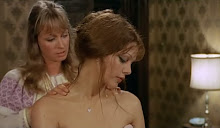
Both films (let’s leave the occasionally inspired but mostly just average ‘Godfather Part III’ out of it) are about family, honour and loyalty. They’re also about how these concepts are variously rationalised, compromised and bastardised.

‘The Godfather’ opens with an extended set-piece in which Don Corleone (Marlon Brando) is obliged, on the occasion of his daughter’s wedding, to grant favour to any who seek it. “I believe in America,” the craven Bonasera (Salvatore Corsitto) declares, then goes on to ask the Don to do violence on his behalf where the legal system has failed him. Like anyone else granted favour, he is counselled that “some day, and this day may never come, I might call upon you to do me a service”. All of this takes place in a darkened room, while the celebrations unfold in bright daylight outside. Still, even as a heart-throb crooner entertains the crowd and guests applaud the bride, tension is in the air: the Don’s son Michael (Al Pacino) has arrived – in uniform.

Unlike his natural brothers Sonny (James Caan) and Fredo (John Cazale) and his adoptive brother Tom Hagen (Robert Duvall), Michael Corleone has elected not to join the family business but enlist in the Marine Corps. And when the family business is crime and the credo, as the Don chastens Sonny early in the film, is “never let anyone outside the family know what you’re thinking”, this is a decidedly unSicilian thing to do. In fact, it’s downright American, patriotic and commendable. No wonder Michael’s the black sheep of the family. Oh, then there’s the matter of the white-than-white nice girl, Kay (Diane Keaton) he gets involved with.

Then there’s an assassination attempt on the Don and Michael finds himself filling the breech. What happens like is like ‘Richard III’ if the Richard III was quite a likeable and all-round kind of guy in the first act. Michael’s transition from war hero to mob boss, from hero to anti-hero, from humanity to villainy isn’t a gradual or incremental thing; it all hinges on one act. Michael proposes and carries out the execution of rival mobster Sollozzo (Al Lettieri), the guy who ordered the hit on his father, as well as Sollozzo’s partner, the corrupt policeman McCluskey (Sterling Hayden).

Michael is quickly whisked off to Italy while the heat dies down. Deserting Kay in more ways than one, he romances and marries local beauty Appollonia (Simonetta Stefanelli). When she dies in a car bomb meant for him, Michael returns to America and glibly takes up with Kay again. Sonny’s betrayal and death at a toll booth ambush (I’m not bothering with any spoiler alerts in this post – really, if you haven’t seen ‘The Godfather’ there’s no hope for you), and the Don’s retirement following a reluctant making of peace with his enemies, sees the family business turned over wholesale to Michael.

Here’s where the real ‘Richard III’ stuff kicks in: Michael becomes corrupted by power and villainy, not in an egomaniacal or even necessarily a psychotic sense, by characterised more by an utter coldness and inhumanity; a complete moral and emotion disconnection.

One of the most quoted lines is “it’s not personal, it’s strictly business” – a sentiment Michael certainly adheres to, and with bitter irony since those were Sollozzo’s words to him following the unsuccessful hit on the Don.

Coppola continues to chart Michael’s heinous premiership of the Corleone clan in ‘The Godfather Part II’, contrasting his barren life against the rise to power of the young Don Corleone (Robert de Niro). The Don’s actions, while undeniably criminal, are socially motivated (his murder of a neighbourhood crime boss is done for the betterment of the community). The seeds of the first film’s focus on family and loyalty are sown here. And also cut down as Michael alienates his wife – after losing her baby, Kay confronts Michael with the truth: “It wasn’t a miscarriage, it was an abortion. An abortion, Michael … I had it killed because all this must end … this Sicilian thing that’s been going on for two thousand years” – and, in the most shocking scene, orders the death of his brother, the weak-willed Fredo after he’s coerced into a business agreement than compels him to betray Michael. That he has this order carried out after feigning forgiveness and welcoming Fredo back into the household is the final bastardisation of everything his father held sacrosanct. It is this – and never mind the quasi-religious musings of ‘Part III’ – that completes Michael’s transition to the monstrous; that places him beyond redemption.

Friday, March 20, 2009

PERSONAL FAVES: The Insider

Following on from his sumptuous, critically acclaimed adaptation ‘The Last of the Mohicans’, Michael Mann’s epic 1995 drama ‘Heat’ cemented his position as one of America’s finest directors. A visceral, moody existential re-examination of the crime movie, it teamed him with Robert de Niro, Al Pacino and a who’s who of dynamic actors. It was a hard act to follow.

Four years later, re-teaming with Pacino – and harnessing the talents of a post-‘L.A. Confidential’, pre-global-stardom Russell Crowe – Mann didn’t just follow it. He surpassed it. ‘The Insider’, one of the most intelligent and precisely directed mainstream films of the ’90s, boasts the gripping, compelling narrative and powerhouse acting performances of its iconic predecessor, as well as the same slow-burn intensity played out across a two-and-a-half hour running time, but does so without recourse to heists, shoot-outs and chases.

‘Heat’ is cerebral, suspenseful and packs in a goodly number of shit-hot action scenes. ‘The Insider’ is quite simply cerebral. It’s about corporate power, freedom of speech, the strictures of the law, the necessity of conscience, the pull of family, and the integrity of the serious journalist vs the machinations of big business. And that’s just for starters. On a human level, it’s also about one man trying to keep his word and another man coming to a decision about the wrongdoings of his employer and the public’s right to know, even though the imperatives for keeping his mouth shut are very real and freighted with heavy consequences.

Big, dramatic stuff. Now factor in the factual basis of the story, and ‘The Insider’ really takes off. The starting point was Marie Brenner’s 1996 article for Vanity Fair, ‘The Man Who Knew Too Much’. A suitably Hitchcockian title for the story of an inside man, a corporate whistle-blower, a man whose family life disintegrates under the weight of potential financial desuetude, pervasive media scrutiny and death threats. Apposite, then, that it was expanded and adapted into a movie whose most tense scenes – an unspoken threat at a golf range, a piranha-like lawyer trying to silence a key witness even as he attempts to give a deposition – achieve a level of cinematic frisson that Hitch himself would have been proud of.

Brenner’s article focuses almost exclusively on former Brown & Williamson employee (that’s employee as in high-ranking senior management type on six-figures and a fuckload of benefits a year, as opposed to how the rest of us understand it) Jeffrey Wigand, and how he went public with information pertaining to the deliberate manipulation of tobacco products for maximum addiction potential. His story was featured on the influential and high-rating public affairs show ‘60 Minutes’, produced by Lowell Bergman for the CBS network.

Mann’s film expands on Brenner’s article and counterpoints Wigand’s struggle against the legal shenanigans of his former employers with Bergman’s internal stand-off against the corporate and legal departments of CBS who balk at the possibility of litigation from Brown & Williamson, particularly with a buy-out in the offing that would net big dividends for the top brass. It’s in a lot of people’s interest to keep Bergman’s section, if not off the screen entirely, then certainly edited and self-censored.

The screenplay – co-written by Mann and Eric Roth, whose then still-unproduced script ‘The Good Shepherd’ Mann had admired – finds a tense through-line and ties together what could easily have been discursive, digressive and rambling. It gives a high-quality cast – Pacino and Crowe are supported by Christopher Plummer, Diane Venora, Bruce McGill, Colm Feore, Gina Gershon, Stephen Toblowsky, Lindsay Crouse and Michael Gambon – the opportunity to engage in the dialogue equivalent of swordplay which intermittently erupts into some of the most verbally volcanic explosions this side of ‘Glengarry Glen Ross’.

Pacino’s performance recalls the glory days of the ’70s, when he appeared in one masterpiece after another. Crowe’s is quite simply the best work he’s done onscreen, more than confirming the promise inherent in ‘L.A. Confidential’. It’s a crying bloody shame that he went on to become so famous so quickly and has essentially not been called upon to deliver acting of this calibre since.

Mann’s direction, too, represents his highest professional achievement thus far. Subsequently, ‘Ali’ proved incredibly well-made but perhaps a shade too reverent; ‘Collateral’ fell foul of an occasionally clichéd script and a stilted performance from Tom Cruise, while ‘Miami Vice’ was an exercise in the visual potential of digital film-making which offered a jargon-heavy script and zero chemistry between its leads. (Having said all that, the forthcoming ‘Public Enemies’ with Johnny Depp and Christian Bale has got me authentically excited.)

‘The Insider’ is a gem … and that’s not a lapse into cliché. Like a gem, it’s multi-faceted. It reflects and refracts and dazzles. It provides essays on the quality of light. In terms of recent American films, I can only think of Alexander Payne’s ‘Sideways’ that infuses the screen with the quality of light so effectively. Mann conjures images that are haunting, sometimes surreal (the sequence of images that open the golf range sequence are astounding), and effortlessly poetic.

‘The Last of the Mohicans’ is more romantic and audience friendly, ‘Heat’ more exciting, and I have no doubt that ‘Public Enemies’ will positively ooze cool from its every frame. But ‘The Insider’ is peerless. I am convinced it is the film Michael Mann will be remembered for.