Showing posts with label Charlize Theron. Show all posts

Friday, August 14, 2015

A Million Ways to Die in the West


In 2006, M. Night Shyamalan cast himself in a supporting role in his hugely divisive fairy tale ‘The Lady in the Water’. His character was a messaniac figure destined to bring about world peace or a successful two-state solution between Israel and Palestine, I forget which. Anyway, Shyamalan’s character was the impossibly saintly MacGuffin upon which the entire drama of the film turned. And it earned him an unholy amount of brickbats, a goodly number of critics reckoning him misguided at best and an arrogant tosspot at worst.

In 2014, Seth MacFarlane cast himself in the lead role in his hugely juvenile western ‘A Million Ways to Die in the West’ so that he could bring about world peace or a successful two-state solution between Israel and Palestine snog Charlize Theron.

MacFarlane plays Albert Stark, a self-deprecating sheep-farmer who lives with his parents, hates the wild west for its general ugliness and tendency to curtail lifespans, and finds his only solace in the arms of Louise (Amanda Seyfried). Well, he did for a while. The film opens with his wheedling his way out of a gunfight and earning Louise’s contempt for not acting like a man. Albert responds to rejection in the time-honoured male tradition of going out and getting drunk with his best bud. Said best bud is Edward (Giovanni Ribisi), a virginal shoe-seller whose hooker girlfriend Ruth (Sarah Silverman) is a Christian who doesn’t believe in sex before marriage. This concept, incidentally, is the film’s best joke. Just so you know what level of sophistication we’re dealing with here.

While Albert is licking his wounds, notorious outlaw Clinch Leatherwood* (Liam Neeson) relieves a prospector of his gold and his life. Clinch is riding with his wife Anna (Charlize Theron) and his gang. Tired of Anna’s continual haranguing (how dare she imply that robbery can be done without murder?), he entrusts her to the care of Lewis (Evan Jones), his loyal but knuckled-headed right-hand-man, instructing them to hole up in the township of Old Stump while he and the boys investigate the prospector’s stake.


Lewis instigates a bar fight during his first night in town and is promptly arrested. Albert saves Anna during the fracas (though later events indicate that she’d have handled herself pretty fine) and the two strike up an unlikely friendship which shades towards romance. When they encounter Louise and her new suitor, the oleaginous Foy (Neil Patrick Harris, stealing the show), Anna colludes in a scenario which sees Albert challenge Foy to a duel. There’s only one problem: Albert’s scared shitless and doesn’t know one end of a gun from the other.

Actually, two problems. But y’all knew Clinch was going to reappear at a crucial moment, didn’t you?

‘A Million Ways to Die in the West’ clings to a predictable sequence of narrative beats, the better to send them up. Clinch is a film-long riff on Jack Palance in ‘Shane’. Louise floats around dreamily in frills an a bonnet like Grace Kelly in ‘High Noon’. Ruth’s place of employment could well be the cathouse Hildy works at in ‘The Ballad of Cable Hogue’. Theron’s Anna is halfway between Jane Fonda’s Cat Ballou and the Waco Kid in ‘Blazing Saddles’ if the Waco Kid were a smoking hot blonde and didn’t have a drink problem.

Speaking of ‘Blazing Saddles’, the doffed hat scene is replicated, albeit not in honour of Randolph Scott but the withdrawing from a wallet of paper money (“take your hat off, boy, that’s a dollar bill!”), while the beanfeast transmogrifies here into an extended skit on bowel movements and the availability of cowboy hats.**


(To watch ‘Blazing Saddles’ straight after ‘A Million Ways to Die in the West’ is to laugh longer and harder at a film that runs a good twenty minutes shorter.)

MacFarlane’s film has two things working against it, and they work against it for much of its running time. The first is MacFarlane as actor. Whereas Albert in ‘A Million Ways to Die in the West’ and John in MacFarlane’s previous film ‘Ted’ are both emotionally retarded loser douchebags, John is played with a kind of coach potato rumpled charm by Mark Wahlberg. MacFarlane gives a one-note performance that lacks any of Wahlberg’s grace notes. (And seriously, folks, when “not as good as Mark Wahlberg” emerges as a critical touchstone, you know something is awry.) The second problem is the script’s dependency on scatological humour. The hat scene is low-brow but funny until MacFarlane decides to point the camera at what’s in the hat. An early scene involving shadow puppetry recycles a gag that was only funny in ‘Ted’ because of the absurdity of having a plush teddy bear enact it. The nadir involves an enuretic sheep.*** 

Mercifully, the film has enough moments where the humour’s earned to leave it not without merit. The Edward/Sarah subplot hits the target more often than it misses; a running joke about the arbitrariness of death in the west sets up some cynically effective sight gags; an unexpected musical number about moustaches turns a generic barn-dance into a triumph of kitsch; an Indian encampment scene in which Albert takes hallucinogenics and “sees” his future combines Francis Bacon and Salvador Dali (subject of art, Albert’s parents present a joyously foul-mouthed anti-Rockwell tableau); a ‘Back to the Future Part III’ homage earns kudos for how randomly its incorporated; and an end-credits coda proves spot-on bloody perfect.

‘A Million Ways to Die in the West’ is no classic – in fact, at least half of its running time functions on the level of okayish – but when it works (particularly in its last half hour) it achieves a demented energy. Ironically enough, this generally happens when MacFarlane quits self-reflexively referencing other movies and does his own thing instead.


*I told you it was unsophisticated. 

**Seriously, I told you. 

***See above.

Tuesday, August 07, 2012

Charlize Theron


Happy 37th birthday to Charlize Theron, who is eternally in my debt for vouchsafing that the ticket price I paid to go and see 'Snow White and the Huntsman' wasn't entirely wasted. Here's hoping for a Charlize-centric sequel: 'Evil Queen: Mad, Bad and Sexy With It'. Or something like that.

Monday, June 18, 2012

A tale of two Italian Jobs

Hang on, lads, I’ve had a great idea: let’s compare Peter Collinson’s 1969 Cock-er-nee crime caper with F Gary Gray’s Stateside remake.


What’s it all about?
The original starts with Charlie Croker (Michael Caine) getting out of prison, a job in Italy all nicely lined up for him. Unfortunately, his contact has met with a nasty accident courtesy of the Mafia who figure said job – the wholesale theft of several million in gold bullion – as a nice little earner for themselves. Still eager to pull off the heist, Charlie turns to upper class crime boss Mr Bridger (Noel Coward) – who runs his felonious empire from inside a prison cell (albeit a nicely appointed one) – for backing. Under Bridger’s aegis, Charlie puts together a team. They plan the heist meticulously then head to Turin. With the city crowded for an England vs Italy football match, and with Mafia supremo Altabani (Raf Vallone) on their case, the pressure is on to intercept the gold and make a clean getaway.

The remake starts in Venice as veteran safecracker John Bridger (Donald Sutherland) undertakes the proverbial one last job before handing the operation over to his protégé Charlie Croker (Mark Wahlberg). The heist goes smoothly and the getaway equally so … until one of Bridger’s team – Steve (Ed Norton) – double-crosses them, shoots Bridger, leaves the others for dead and absconds with the gold. A year later, in Philadelphia, Charlie gets a lead on Steve, who is fencing the gold a bar at a time. Charlie and the team join forces with Bridger’s daughter Stella (Charlize Theron) – who’s as much of a dab hand at opening safes as her old man but has thus far been putting her talents to legitimate use – and track Steve to California where they set out to steal back the gold from under his nose.

Conventional wisdom would have it that Collinson’s film is an evergreen classic while Gray’s is just another tired remake emblematic of Hollywood’s lack of originality. But we don’t do conventional here at Agitation. And we’re not renowned for doing wisdom either. So let’s put both movies on the starting blocks and see which pulls away faster, corners better and blasts past the chequered flag first.


Best guv’nor
Michael Caine – exudes 60s cool; gets to say “You’re only supposed to blow the bloody doors off.”

Mark Wahlberg – does an okay job; ain’t no Michael Caine.

WINNER: the original.

Best crew
Caine’s crew are a fairly anonymous bunch who are generally only there for comic relief. Perhaps the most famous face is Benny Hill. Let us never forget that the original ‘Italian Job’ is a film where Benny Hill gets third billing.

Wahlberg’s crew consists of Seth Green, Mos Def, Jason Statham and Charlize Theron. Green and Def I can take or leave, but when you’ve got The Stat on your team that means you’re serious.

WINNER: the remake.

Best plot Collinson’s film consists of: Charlie gets out of prison, pause for low-brow comedy, Charlie plans the job, pause for low-brow comedy, Charlie and the lads execute the job, pause while Benny Hill does some gurning, tyre-squealing getaway.

Gray’s film actually has a plot, as well as making an attempt at backstory and even tipping its hat in the direction of characterisation. Gor blimey, guv’nor!

WINNER: the remake.

Best heist
Caine and crew pull a very inelegant armoured car job before the real business of the stunt driving gets underway.

Wahlberg and his team pull two heists, and plan but are forced to avert another. Their heists are meticulously conceived and excitingly staged.

WINNER: the remake.

Best Mr Bridger Noel Coward mixes snobbery with menace and creates an unforgettably satirical character. His walk from cell to prison dining hall as his also-incarcerated minions cheer at the news of the successful heist is a show-stopper.

Donald Sutherland plays a character called Bridger.

WINNER: the original.


Best last scene
Caine and crew are left dangling over a precipice in a literal cliffhanger.

Wahlberg’s team celebrate a job well done as they leave town on a train.

WINNER: the original.

Best use of Italian locations The original depicts Turin as one big traffic jam and has some horribly stereotyped Italian characters; however, it earns the title ‘The Italian Job’ in way the remake doesn’t.

The remake gives us an evocative opening heist set in Venice, however the remaining hour and a quarter plays out in America.

WINNER? Let’s call it a draw.

Best music
Caine and his cohorts belt out a lusty tune about “the self-preservation society” as they abscond with the goods.

John Powell’s score ramps up the urgency and against-the-clock nature of the heists in the remake, but you’ll not find yourself humming it every time you see a Mini being driven above the speed limit.

WINNER: the original.

Best car chase
Twenty minutes of unsafe driving around, above and through the sewers of Turin.

Twenty minutes of unsafe driving around California and through its sewers and subway system. Oh, and there’s also a car vs helicopter set-piece.

WINNER? I’m almost tempted to declare this a draw, but for two things: (i) the business with the Minis is the only reason, if we’re being perfectly honest, to watch either version and Collinson’s film did it first; (ii) the Minis in the remake were retro-styled by BMW, while the Minis in the original are … well … the original!

Sexiest endorsement of the Mini
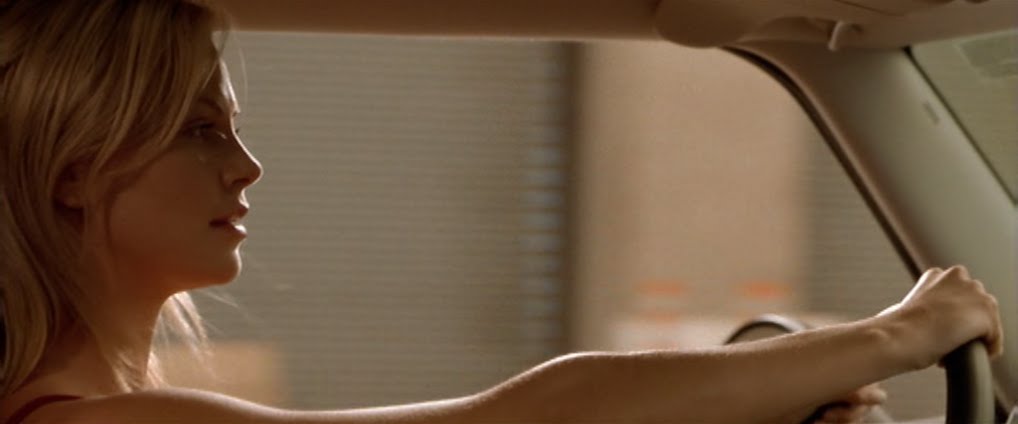
Charlize Theron drives one in the remake. No point even debating this one. WINNER: the remake.


Results
Based on ten criteria, Peter Collinson’s film scores five, F Gary Gray’s scores four, and they tie in one category. The kudos, then, should go to the original, but having watched them back-to-back I’d be a liar if I didn’t admit that I find the remake more satisfying in its script, direction and craftsmanship. The original, however, has the eminently quotable “you were only supposed to blow the bloody doors off” line, an unforgettable final scene and, in the final analysis, captures a cultural and national zeitgeist in a way the remake doesn’t … and, in fact, couldn’t. Let’s face it: does the sight of a group of Americans pulling a getaway in an American city at the wheels of three British-made cars with, respectively, red, white and blue paint jobs actually mean anything, let alone what it means in the original? F Gary Gray earns a raised glass and a tip of the chapeau for turning in the better example of filmmaking, but ultimately Peter Collinson’s film, for all its flaws, achieves something genuinely iconic.

Sunday, July 11, 2010

Monster

Posted as part of Operation 101010
Category: biopics / In category: 2 of 10 / Overall: 45 of 100


It is a truth universally acknowledged that the pre-credits title card “based on a true story” can strike fear into the heart of even the most hardened movie buff. The phrase often covers a multitude of sins. For “sins” read inconsistencies, inaccuracies, blatant fabrications, composite characters and redacted timelines. And to be fair, filmmakers kind of have to. Even if your subject is, say, Jim Morrison – who died at the age of 27 – a two and a half hour movie about that person’s life will still have to be incredibly selective in terms of what to feature, what to depict. Composite characters help reduce timelines; blatant fabrications are sometimes necessary to provide context.

All told, the biopic is something of a poisoned chalice. A filmmaker can draw as much flak for basing their movie on disputed material. Take Bernard Rose’s ‘Immortal Beloved’: a barnstorming performance by Gary Oldman, the music of Beethoven used contextually and often very imaginatively, a couple of inspired moments of visual poetry … and yet Rose bases his screenplay on Anton Schindler’s account of the maestro’s life – a version all but written off by academics and historians as spurious at best and almost certainly whitewashed by Schindler in order to claim a far greater importance as Beethoven’s friend and professional associate than was actually the case.

Patty Jenkins’s ‘Monster’ seems to draw from a multitude of sources. Aileen Wuornos’s own witness-stand account of the first killing – motivated by her rape at the hands of a client – is graphically depicted in the film; the other killings, however, have no sexual imperative beyond Wuornos picking the men up as potential clients, instead using the secluded areas they take her to as cover for robbery and murder. These scenes smack of Wuornos’s recanted story just before her execution – a recantation that Nick Broomfield’s second documentary on Wuornos exposes as a ploy to expedite said execution.

‘Monster’ also replaces Wuornos’ turncoat partner Tyria Moore with a fictional stand-in character, Shelby Wall (Christina Ricci), who serves the same narrative function as Moore (ie. requires Wuornos to go back to in-car prostitution in order to provide for her; and promptly sells her out to the cops the moment the heat comes down) but is demonstrably different in terms of characterisation. I guess this was a compromise Jenkins and her collaborators had little choice in since Moore is still alive (although thought to be living under an assumed name) and could conceivably sue.

Jenkins’s script probes Wuornos (Charlize Theron)’s troubled background in superficial depth, mainly concerning itself with depicting the relationship between Wuornos and Wall. This is both the film’s strength and weakness. For all that her film is called ‘Monster’, Jenkins is generally even-handed in depicting Wuornos as a flawed and temperamental human being but a human being nonetheless. On the minus side, any real psychological approach is jettisoned in favour of an increasingly shrill series of altercations between Wuornos and Wall (Ricci’s portrayal of Wall as clingy, demanding and immature – while a good piece of acting – adds up to a pathetic and annoying character) occasionally punctuated by a murder.

Nonetheless, Theron gives the performance of her career, the incredibly gorgeous actress disappearing into the old-before-her-time visage of Wuornos. Watching the film a day after the Broomfield documentaries (‘The Selling of a Serial Killer’ was apparently Theron’s go-to resource for her portrayal) is to marvel at how unnervingly convincing Theron is; it’s not just the look or the voice, but the entire panoply of facial expressions and mannerisms. The Oscar was richly deserved.

Elsewhere, the film has some minor flaws (the pacing is a tad uneven; the soundtrack is contrived instead of seeming organic; and there’s no real visual flair, Jenkins and her DoP Steven Bernstein conjuring far fewer grittily iconic images than you’d expect given the material), but there’s not an ounce of sensationalism, nor does Jenkins’s attempt to humanise Wuornos tip over into cloying melodrama of the “tragic heroine” school. Ultimately, ‘Monster’ – made just a year after Wuornos’s execution – is a good film that falls somewhat short of being great but is gifted with a simply awesome central performance.

Saturday, July 10, 2010

Wuornos weekend

Shots on the Blog goes into dark territory this weekend with three Aileen Wuornos related movies. Today, a double bill of the acclaimed Nick Broomfield documentaries – ‘Aileen Wuornos: The Selling of a Serial Killer’ and ‘Aileen: The Life and Death of a Serial Killer’ – and tomorrow Patty Jenkins’s ‘Monster’, for which Charlize Theron bagged a grimly deserved Oscar.


Wuornos hailed from a white-trash background and it doesn’t take a psychiatrist to join the dots of her troubled childhood and adolescence and arrive at the conclusion that her life was pretty much headed on a certain course from the outset. This from the Wikipedia article (which draws heavily on Michael Reynolds’s book ‘Dead Ends: The Pursuit, Conviction and Execution of Female Serial Killer Aileen Wuornos’):

“Her mother, Diane Pratt, was 15 years old when she married Leo Dale Pittman …Piittman was a child molester who spent most of his life in and out of prison. Wuornos never met her father, as he was imprisoned for the rape and attempted murder of an eight-year-old boy at the time of her birth. Leo Pittman hanged himself in prison in 1969 … From a young age, Wuornos engaged in sex with multiple partners, including her own brother. At the age of 13, she became pregnant, claiming the pregnancy was a result of being raped by an unknown man.”

When, at the age of 15, Wuornos’s grandfather (at this point her legal ward) threw her out of his house, she turned to prostitution to sustain herself. A brief (nine week) marriage to an older man in the mid-70s seems to have been a union of convenience. Wuornos unexpectedly came into some money following the death of her brother and the marriage ended.

Wuornos proved temperamental and several violent outbursts at a local bar, to the extent of her hurling a cue ball at the bartender’s head, landed her in jail for a spell. A convenience store robbery, the passing of forged cheques and grand theft auto rounded out her criminal credentials. She met Tyria Moore in 1986 and they moved in together. Wuornos was evidently deeply committed and referred to Moore as her “wife”. She supported them by continuing her career in prostitution.

Between November 1989 and November 1990, Wuornos shot and killed seven of her clients. It’s notable that the first, Richard Mallory, was a convicted rapist who had spent ten years in a psychiatric facility for his violent acts against women. Wuornos claimed her killing of him was self-defence. It may have been Mallory’s rape of her that brought all the demons of her childhood howling back. I’m going no further with that thought: this article is merely a prologue to the cinematic portrayals, either documentarian or fictional, of Aileen Wuornos and I’d rather base my opinions on the films themselves.

What is certain is that the story didn’t end with Wuornos’s arrest. There was a spectacular betrayal, some grossly inappropriate conduct by police and lawyers, the mammothly hypocritical involvement of a supposed Christian and wholesale exploitation. Pre-arrest, Wuornos was clearly the villain of the piece (whatever litigation may be offered in terms of her troubled background, the nature of her profession and the behaviour of her clients). Post-arrest, her role was recast as that of victim.

Sunday, May 18, 2008

The Life and Death of Peter Sellers

The Goons might belong to my parents' generation, but in my humble opinion their humour is more incisive, subversive and downright hilarious than anything that has crawled out from under the rock marked 'comedy' in the last three decades.

So when Stephen Hopkins's 'The Life and Death of Peter Sellers' opened with a splendid evocation of BBC radio comedy circa 'The Goon Show' - Bluebottle, Bloodknock and Neddie Seagoon springing to life in nostalgic sepia - I was immediately won over. And from thereon in, the film just got better.

Two hours and ten minutes later I found myself wondering why every review I'd read had been sniffy and snidely critical. Then I realised. Talk about a collective example of missing the point. The accepted critical line is that Hopkins's film fails because it gives us no impression of who the real Peter Sellers was.

That's exactly the point! Adapted from Roger Lewis's shelf-breaking biography (1,200 pages!!), the film is a character study of a man whose personality was entirely dictated by the character he happened to be playing at any given moment. In the title role, Geoffrey Rush gives a career best performance, inhabiting Sellers's onscreen roles - Closeau, Chance Gardner, the militaristic triumrvirate at the heart of 'Dr Strangelove' - with an under-the-skin conviction, whilst showing Sellers fumbling between roles, unsure of who he is, who he should be and what his fans, family and children want of him. It's a tour de force of screen acting.

He is ably supported by the wonderful Emily Watson, the emotional heart of the movie as Sellers's first wife Anne; Charlize Theron, who conjures Britt Ekland so perfectly that you'll be hard pressed to tell the two actresses apart; Miriam Margoyles, finding the human element in what could easily have been a demonic performance as Sellers's obsessive, manipulative mother; Peter Vaughan in one of his rare sympathetic turns as Sellers's overlooked father; and John Lithgow in his best turn for ages as director Blake Edwards.

Hopkins directs with wit and humour, conjuring the aesthetic of the Sixties (Sellers's halcyon days as a screen actor) in a series of playful vignettes. The scene where Sellers visits a car showroom, the oleaginous salesman (step forward Mackenzie Crook, Gareth in 'The Office') describing the vehicles in perversely feminine terms; before Sellers's eyes, the cars morph into archetypal Sixties dollybirds. An entire saucy seaside-postcard strand of British cinema is evoked within a few seconds.

The denouement, in which Sellers brings his dream project - 'Being There' - to fruition is incredibly poignant, the actor revelling in finally being able to portray a character who has no personality at all.