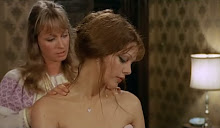
Hang on, lads, I’ve had a great idea: let’s compare Peter Collinson’s 1969 Cock-er-nee crime caper with F Gary Gray’s Stateside remake.
What’s it all about?
The original starts with Charlie Croker (Michael Caine) getting out of prison, a job in Italy all nicely lined up for him. Unfortunately, his contact has met with a nasty accident courtesy of the Mafia who figure said job – the wholesale theft of several million in gold bullion – as a nice little earner for themselves. Still eager to pull off the heist, Charlie turns to upper class crime boss Mr Bridger (Noel Coward) – who runs his felonious empire from inside a prison cell (albeit a nicely appointed one) – for backing. Under Bridger’s aegis, Charlie puts together a team. They plan the heist meticulously then head to Turin. With the city crowded for an England vs Italy football match, and with Mafia supremo Altabani (Raf Vallone) on their case, the pressure is on to intercept the gold and make a clean getaway.
The remake starts in Venice as veteran safecracker John Bridger (Donald Sutherland) undertakes the proverbial one last job before handing the operation over to his protégé Charlie Croker (Mark Wahlberg). The heist goes smoothly and the getaway equally so … until one of Bridger’s team – Steve (Ed Norton) – double-crosses them, shoots Bridger, leaves the others for dead and absconds with the gold. A year later, in Philadelphia, Charlie gets a lead on Steve, who is fencing the gold a bar at a time. Charlie and the team join forces with Bridger’s daughter Stella (Charlize Theron) – who’s as much of a dab hand at opening safes as her old man but has thus far been putting her talents to legitimate use – and track Steve to California where they set out to steal back the gold from under his nose.
Conventional wisdom would have it that Collinson’s film is an evergreen classic while Gray’s is just another tired remake emblematic of Hollywood’s lack of originality. But we don’t do conventional here at Agitation. And we’re not renowned for doing wisdom either. So let’s put both movies on the starting blocks and see which pulls away faster, corners better and blasts past the chequered flag first.
Best guv’nor
Michael Caine – exudes 60s cool; gets to say “You’re only supposed to blow the bloody doors off.”
Mark Wahlberg – does an okay job; ain’t no Michael Caine.
WINNER: the original.
Best crew
Caine’s crew are a fairly anonymous bunch who are generally only there for comic relief. Perhaps the most famous face is Benny Hill. Let us never forget that the original ‘Italian Job’ is a film where Benny Hill gets third billing.
Wahlberg’s crew consists of Seth Green, Mos Def, Jason Statham and Charlize Theron. Green and Def I can take or leave, but when you’ve got The Stat on your team that means you’re serious.
WINNER: the remake.
Best plot
Collinson’s film consists of: Charlie gets out of prison, pause for low-brow comedy, Charlie plans the job, pause for low-brow comedy, Charlie and the lads execute the job, pause while Benny Hill does some gurning, tyre-squealing getaway.
Gray’s film actually has a plot, as well as making an attempt at backstory and even tipping its hat in the direction of characterisation. Gor blimey, guv’nor!
WINNER: the remake.
Best heist
Caine and crew pull a very inelegant armoured car job before the real business of the stunt driving gets underway.
Wahlberg and his team pull two heists, and plan but are forced to avert another. Their heists are meticulously conceived and excitingly staged.
WINNER: the remake.
Best Mr Bridger
Noel Coward mixes snobbery with menace and creates an unforgettably satirical character. His walk from cell to prison dining hall as his also-incarcerated minions cheer at the news of the successful heist is a show-stopper.
Donald Sutherland plays a character called Bridger.
WINNER: the original.
Best last scene
Caine and crew are left dangling over a precipice in a literal cliffhanger.
Wahlberg’s team celebrate a job well done as they leave town on a train.
WINNER: the original.
Best use of Italian locations
The original depicts Turin as one big traffic jam and has some horribly stereotyped Italian characters; however, it earns the title ‘The Italian Job’ in way the remake doesn’t.
The remake gives us an evocative opening heist set in Venice, however the remaining hour and a quarter plays out in America.
WINNER? Let’s call it a draw.
Best music
Caine and his cohorts belt out a lusty tune about “the self-preservation society” as they abscond with the goods.
John Powell’s score ramps up the urgency and against-the-clock nature of the heists in the remake, but you’ll not find yourself humming it every time you see a Mini being driven above the speed limit.
WINNER: the original.
Best car chase
Twenty minutes of unsafe driving around, above and through the sewers of Turin.
Twenty minutes of unsafe driving around California and through its sewers and subway system. Oh, and there’s also a car vs helicopter set-piece.
WINNER? I’m almost tempted to declare this a draw, but for two things: (i) the business with the Minis is the only reason, if we’re being perfectly honest, to watch either version and Collinson’s film did it first; (ii) the Minis in the remake were retro-styled by BMW, while the Minis in the original are … well … the original!
Sexiest endorsement of the Mini
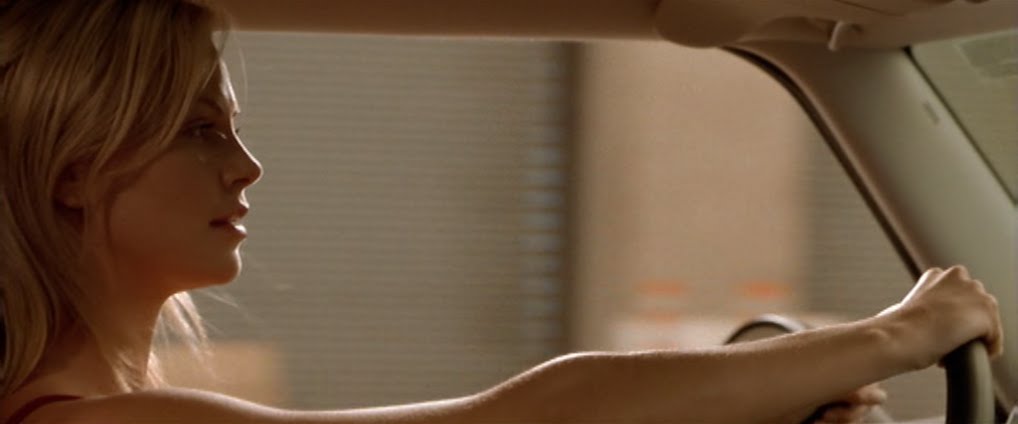
Charlize Theron drives one in the remake. No point even debating this one.
WINNER: the remake.
Results
Based on ten criteria, Peter Collinson’s film scores five, F Gary Gray’s scores four, and they tie in one category. The kudos, then, should go to the original, but having watched them back-to-back I’d be a liar if I didn’t admit that I find the remake more satisfying in its script, direction and craftsmanship. The original, however, has the eminently quotable “you were only supposed to blow the bloody doors off” line, an unforgettable final scene and, in the final analysis, captures a cultural and national zeitgeist in a way the remake doesn’t … and, in fact, couldn’t. Let’s face it: does the sight of a group of Americans pulling a getaway in an American city at the wheels of three British-made cars with, respectively, red, white and blue paint jobs actually mean anything, let alone what it means in the original? F Gary Gray earns a raised glass and a tip of the chapeau for turning in the better example of filmmaking, but ultimately Peter Collinson’s film, for all its flaws, achieves something genuinely iconic.
Showing posts with label F Gary Gray. Show all posts
Monday, June 18, 2012
Friday, January 01, 2010
Auld acquaintance/new acquaintance: 2010 on The Agitation of the Mind
First and foremost, Happy New Year to everyone who reads this blog.
Last month's Peckinpah tribute was the biggest project I've undertaken on The Agitation of the Mind, but incredibly rewarding. It's the second retrospective I've undertaken, following an on-off consideration of Andrei Tarkovsky's filmography which spanned August - November 2009.
Now my thoughts are turning to another retrospective, maybe mid-year. But who? Running through a list of some of my favourite directors - Werner Herzog, Powell & Pressburger, the Coen brothers, Pedro Almodovar, Martin Scorsese, Michael Mann, Dario Argento, Luis Bunuel, Don Siegel, Raoul Walsh, Quentin Tarantino, John Carpenter, Hayao Miyazaki, Krzysztof Kieslowski, Luchino Visconti, Francis Ford Coppola, David Lynch, Sergio Leone, Stanley Kubrick, Steven Soderbergh, Takeshi Kitano and probably about two dozen others whom I'll kick myself for omitting five minutes after I post this - I realised that I've already written about at least one of their films, if not a whole bunch of them. The point of a retrospective is a chronological journey through an entire filmography.
I nixed some directors for either having such an extensive filmography (Woody Allen, Sidney Lumet) that between my LoveFilm account and my limited budget for DVD acquisitions it would take me the whole of this year to work my way through them, or such a variable output in terms of quality control that the pleasure of acquainting or reacquainting myself with a couple of outright great movies doesn't quite compensate for journeyman work proliferating elsewhere on the CV.
There were only really three directors of whom I have any degree of knowledge that fit the bill: fabulists Jean-Pierre Jeunet and Tim Burton, and occasional realist/occasional poetic-realist Neil Jordan. A couple of not-so-great entries on Jordan's filmography, but on the whole a filmmaker whose career it would be interesting to take a good, in-depth look at.


I've seen nothing of Mira Nair's work beyond 'Monsoon Wedding', but damn if that film isn't good enough to make me want to correct this. True, 'Amelia' looks like flagrant Oscar-bait but who cares? A Mira Nair retrospective guarantees at least one modern classic as well as a good excuse to watch 'Kama Sutra: A Tale of Love' without my wife considering me a fully-paid-up member of the dirty raincoat brigade.

So, merrily appropriating an interactive/ask-the-audience approach used by Tim at Antagony & Ecstasy last year, the shortlist of Jean-Pierre Jeunet, Tim Burton, Neil Jordan, Alex de la Iglesia, Chan-wook Park, F. Gary Gray and Mira Nair is now the subject of the sidebar poll to the left. I'm leaving it open for three months, after which I'll clear my LoveFilm queue, prioritise the winner's filmography and whoever you the public decide upon will get the retrospective treatment beginning mid-2010.
Last month's Peckinpah tribute was the biggest project I've undertaken on The Agitation of the Mind, but incredibly rewarding. It's the second retrospective I've undertaken, following an on-off consideration of Andrei Tarkovsky's filmography which spanned August - November 2009.
Now my thoughts are turning to another retrospective, maybe mid-year. But who? Running through a list of some of my favourite directors - Werner Herzog, Powell & Pressburger, the Coen brothers, Pedro Almodovar, Martin Scorsese, Michael Mann, Dario Argento, Luis Bunuel, Don Siegel, Raoul Walsh, Quentin Tarantino, John Carpenter, Hayao Miyazaki, Krzysztof Kieslowski, Luchino Visconti, Francis Ford Coppola, David Lynch, Sergio Leone, Stanley Kubrick, Steven Soderbergh, Takeshi Kitano and probably about two dozen others whom I'll kick myself for omitting five minutes after I post this - I realised that I've already written about at least one of their films, if not a whole bunch of them. The point of a retrospective is a chronological journey through an entire filmography.
I nixed some directors for either having such an extensive filmography (Woody Allen, Sidney Lumet) that between my LoveFilm account and my limited budget for DVD acquisitions it would take me the whole of this year to work my way through them, or such a variable output in terms of quality control that the pleasure of acquainting or reacquainting myself with a couple of outright great movies doesn't quite compensate for journeyman work proliferating elsewhere on the CV.
There were only really three directors of whom I have any degree of knowledge that fit the bill: fabulists Jean-Pierre Jeunet and Tim Burton, and occasional realist/occasional poetic-realist Neil Jordan. A couple of not-so-great entries on Jordan's filmography, but on the whole a filmmaker whose career it would be interesting to take a good, in-depth look at.

Then it occurred to me to throw the remit open to directors whose ouevre I'm not overly familiar with, but have seen enough of to convince me that there will be some degree of consistency. Alex de la Iglesia, whose 'Day of the Beast' and 'Perdita Durango' I remember loving when I first saw them at Nottingham's Broadway Cinema, and who recently contributed 'The Baby's Room' to a series of six tales of the supernatural made for Spanish TV and boasting superior production values, was an immediate choice. Chan-wook Park wasn't far behind - the 'Vengeance' trilogy and 'I'm a Cyborg But That's OK' are all superb. I've only seen two movies by F. Gary Gray - 'Set it Off' and 'Be Cool' - but both of them contained enough, well, cool to convince me that even if it means sitting through the critically mauled 'Law Abiding Citizen', Gray's a director worth watching.

I've seen nothing of Mira Nair's work beyond 'Monsoon Wedding', but damn if that film isn't good enough to make me want to correct this. True, 'Amelia' looks like flagrant Oscar-bait but who cares? A Mira Nair retrospective guarantees at least one modern classic as well as a good excuse to watch 'Kama Sutra: A Tale of Love' without my wife considering me a fully-paid-up member of the dirty raincoat brigade.

So, merrily appropriating an interactive/ask-the-audience approach used by Tim at Antagony & Ecstasy last year, the shortlist of Jean-Pierre Jeunet, Tim Burton, Neil Jordan, Alex de la Iglesia, Chan-wook Park, F. Gary Gray and Mira Nair is now the subject of the sidebar poll to the left. I'm leaving it open for three months, after which I'll clear my LoveFilm queue, prioritise the winner's filmography and whoever you the public decide upon will get the retrospective treatment beginning mid-2010.
In the meantime, I've let things slip on the Personal Faves front so I'll be working my way through the remainder of that list over the next few months. I've neglected the Hellraisers series - a celebration of the films of Richard Burton, Richard Harris, Peter O'Toole and Oliver Reed, inspired by Robert Sellers' splendidly scurrilous book of the same name - so amends will be made there, as well. Shots on the Blog, my summertime celebration of crime cinema which replaces the sadly now defunct festival that Broadway used to run, will return in July. Finally, in honour of my one and only - but, boy, do I mean it - New Year Resolution (get a new job and get the hell out of the place I'm currently working), I'll be launching a new series: Work Sucks, an overview of films which tell the truth about how utterly crap earning a living can be.
So: plenty of movies to get stuck into. Just give me a few days to recuperate from the Hogmanay hangover and the 30,000 words I expended during the Peckinpah tribute and it'll be full steam ahead on The Agitation of the Mind.
Subscribe to:
Posts (Atom)