Showing posts with label Jason Statham. Show all posts

Saturday, August 24, 2013

Blitz


When I watched ‘Blitz’ on one of the UK freeview channels last night, it was the culmination of a 24-hour period in which I watched ‘Elysium’ on the big screen and was as disappointed by it as I’d been by Blomkamp’s earlier ‘District 9’ (both labour to establish a socio-political reality in the first half only to pussy out on making a genuine political statement in favour of an increasingly pointless and clichéd retinue of tired action scenes and genre tropes), then sat through ‘Insidious’ on DVD (look out for a full review as part of October’s 13 For Halloween fright-fest) and been frustrated at the brilliance of the first two thirds degenerating into near parody during the final stretches.

So I watched ‘Blitz’ and had a couple of beers and what I might ordinarily have dismissed as mindless and derivative actually delivered some solid thrilleramics and raced effortlessly into first place as the best of the bunch. Okay, so that’s not necessarily the most robust of recommendations – in fact, I could probably have watched a third-rate giallo like ‘Amuck’ and had more fun with it.

*stops typing*

*thinks about Rosalba Neri and Barbara Bouchet*

*takes cold shower*

*returns to review*

The first thing to say about ‘Blitz’ is that it’s not only derivative, but it wears its derivations on its sleeve. I’ve not read any of the DS Tom Brant novels by Ken Bruen (the author co-scripted the adaptation with Nathan Parker), but I can only assume he came up with ‘Blitz’ after watching a ‘Sweeney’ marathon followed by Don Siegel’s ‘Dirty Harry’ and thought “Hey, what if it was Jack Reagan who was after the Scorpio killer and he gave him a faakin’ good hiding rather than muck about with a Magnum .45?”

‘Blitz’ is ‘Sweeney’ to the nines, from the pounding foot chases through authentically shitty London locations (apart from a few overhead establishing shots of the London Eye etc that were obviously dropped in for the benefit of the overseas market, it presents the shabbiest vision of London this side of Mike Leigh’s ‘Naked’) to Brant (Jason Statham)’s casual homophobia: “You’re a good copper,” he tells his chalk ‘n’ cheese partner, newly-promoted DI Porter Nash (Paddy Considine) – “for a poofter.”

If Brant is basically a bastard, then he’s at least a bastard among bastards. Cop-killer Weiss (Aiden Gillen, having a field day) couldn’t be more hissable if he was appearing in panto (that wasn’t a spoiler by the way: his identity is revealed very early on); scuzzy journo Dunlop (David Morrissey), who keeps vital information from the cops to preserve his scoop, makes your average News of the World shit-raker look like a pillar of respectability; nark Radnor (Ned Dennehy) is little more than a sewer rat in human form; and Brant’s alcoholic colleague DS Roberts (Mark Rylance) blackmails his way back onto the force by threatening to blow the whistle on their boss Superintendent Brown (Nicky Henson)’s dalliances with an obese stripper.

It’s not a nice collection of individuals that ‘Blitz’ presents for our delectation. It says something that the two most sympathetic characters are Nash and DC Falls (Zawe Ashton), a young officer trying to put her troubled youth behind her … and of these two, Nash admits to rendering a paedophile he didn’t have enough evidence to arrest sexually inactive by repeated application of a baseball bat to the genitals, while Falls shakes down junkies and gets high on their supply.

But what it emphatically boils down to is the mano-a-mano duel between Brant and Weiss – motivated, it turns out, by a previous contretemps between the two men. ‘Blitz’ does nothing new. No insight is offered into any of its characters’ psychology. Director Elliott Lester seems to view the material as a delivery system for fast-paced chases, bone-crunching violence (Brant’s first act in the film is to discourage a group of would-be car thieves by smacking seven shades of shit out of them with a hockey stick), and smartarse authority-snubbing dialogue.

‘Blitz’ is a blunt yet fast-moving thriller; it’s unabashedly honest about what it is; and anyone who strays onto its manor and starts bleating about political correctness will probably find themselves nutted, cuffed, thrown in the back of a van and a nice “accidental” fall down some stairs back at the station.

Monday, June 18, 2012

A tale of two Italian Jobs

Hang on, lads, I’ve had a great idea: let’s compare Peter Collinson’s 1969 Cock-er-nee crime caper with F Gary Gray’s Stateside remake.


What’s it all about?
The original starts with Charlie Croker (Michael Caine) getting out of prison, a job in Italy all nicely lined up for him. Unfortunately, his contact has met with a nasty accident courtesy of the Mafia who figure said job – the wholesale theft of several million in gold bullion – as a nice little earner for themselves. Still eager to pull off the heist, Charlie turns to upper class crime boss Mr Bridger (Noel Coward) – who runs his felonious empire from inside a prison cell (albeit a nicely appointed one) – for backing. Under Bridger’s aegis, Charlie puts together a team. They plan the heist meticulously then head to Turin. With the city crowded for an England vs Italy football match, and with Mafia supremo Altabani (Raf Vallone) on their case, the pressure is on to intercept the gold and make a clean getaway.

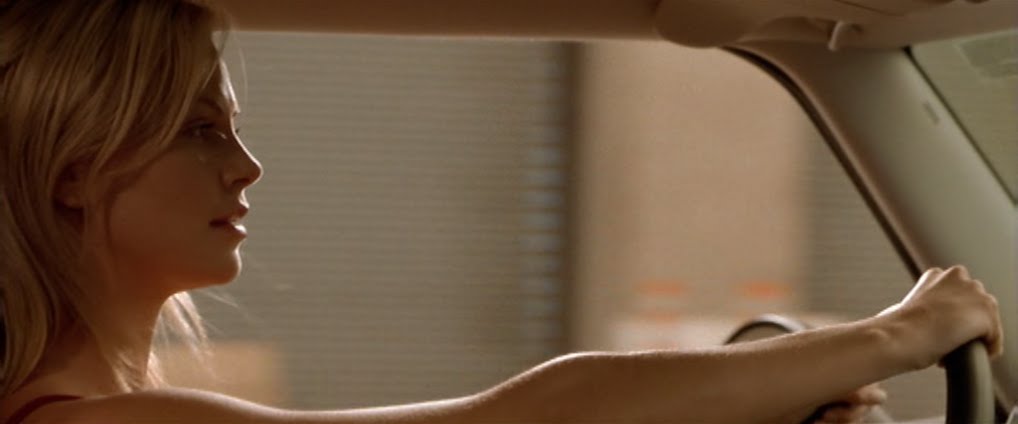
The remake starts in Venice as veteran safecracker John Bridger (Donald Sutherland) undertakes the proverbial one last job before handing the operation over to his protégé Charlie Croker (Mark Wahlberg). The heist goes smoothly and the getaway equally so … until one of Bridger’s team – Steve (Ed Norton) – double-crosses them, shoots Bridger, leaves the others for dead and absconds with the gold. A year later, in Philadelphia, Charlie gets a lead on Steve, who is fencing the gold a bar at a time. Charlie and the team join forces with Bridger’s daughter Stella (Charlize Theron) – who’s as much of a dab hand at opening safes as her old man but has thus far been putting her talents to legitimate use – and track Steve to California where they set out to steal back the gold from under his nose.

Conventional wisdom would have it that Collinson’s film is an evergreen classic while Gray’s is just another tired remake emblematic of Hollywood’s lack of originality. But we don’t do conventional here at Agitation. And we’re not renowned for doing wisdom either. So let’s put both movies on the starting blocks and see which pulls away faster, corners better and blasts past the chequered flag first.


Best guv’nor
Michael Caine – exudes 60s cool; gets to say “You’re only supposed to blow the bloody doors off.”

Mark Wahlberg – does an okay job; ain’t no Michael Caine.

WINNER: the original.

Best crew
Caine’s crew are a fairly anonymous bunch who are generally only there for comic relief. Perhaps the most famous face is Benny Hill. Let us never forget that the original ‘Italian Job’ is a film where Benny Hill gets third billing.

Wahlberg’s crew consists of Seth Green, Mos Def, Jason Statham and Charlize Theron. Green and Def I can take or leave, but when you’ve got The Stat on your team that means you’re serious.

WINNER: the remake.

Best plot Collinson’s film consists of: Charlie gets out of prison, pause for low-brow comedy, Charlie plans the job, pause for low-brow comedy, Charlie and the lads execute the job, pause while Benny Hill does some gurning, tyre-squealing getaway.

Gray’s film actually has a plot, as well as making an attempt at backstory and even tipping its hat in the direction of characterisation. Gor blimey, guv’nor!

WINNER: the remake.

Best heist
Caine and crew pull a very inelegant armoured car job before the real business of the stunt driving gets underway.

Wahlberg and his team pull two heists, and plan but are forced to avert another. Their heists are meticulously conceived and excitingly staged.

WINNER: the remake.

Best Mr Bridger Noel Coward mixes snobbery with menace and creates an unforgettably satirical character. His walk from cell to prison dining hall as his also-incarcerated minions cheer at the news of the successful heist is a show-stopper.

Donald Sutherland plays a character called Bridger.

WINNER: the original.


Best last scene
Caine and crew are left dangling over a precipice in a literal cliffhanger.

Wahlberg’s team celebrate a job well done as they leave town on a train.

WINNER: the original.

Best use of Italian locations The original depicts Turin as one big traffic jam and has some horribly stereotyped Italian characters; however, it earns the title ‘The Italian Job’ in way the remake doesn’t.

The remake gives us an evocative opening heist set in Venice, however the remaining hour and a quarter plays out in America.

WINNER? Let’s call it a draw.

Best music
Caine and his cohorts belt out a lusty tune about “the self-preservation society” as they abscond with the goods.

John Powell’s score ramps up the urgency and against-the-clock nature of the heists in the remake, but you’ll not find yourself humming it every time you see a Mini being driven above the speed limit.

WINNER: the original.

Best car chase
Twenty minutes of unsafe driving around, above and through the sewers of Turin.

Twenty minutes of unsafe driving around California and through its sewers and subway system. Oh, and there’s also a car vs helicopter set-piece.

WINNER? I’m almost tempted to declare this a draw, but for two things: (i) the business with the Minis is the only reason, if we’re being perfectly honest, to watch either version and Collinson’s film did it first; (ii) the Minis in the remake were retro-styled by BMW, while the Minis in the original are … well … the original!

Sexiest endorsement of the Mini
Charlize Theron drives one in the remake. No point even debating this one. WINNER: the remake.


Results
Based on ten criteria, Peter Collinson’s film scores five, F Gary Gray’s scores four, and they tie in one category. The kudos, then, should go to the original, but having watched them back-to-back I’d be a liar if I didn’t admit that I find the remake more satisfying in its script, direction and craftsmanship. The original, however, has the eminently quotable “you were only supposed to blow the bloody doors off” line, an unforgettable final scene and, in the final analysis, captures a cultural and national zeitgeist in a way the remake doesn’t … and, in fact, couldn’t. Let’s face it: does the sight of a group of Americans pulling a getaway in an American city at the wheels of three British-made cars with, respectively, red, white and blue paint jobs actually mean anything, let alone what it means in the original? F Gary Gray earns a raised glass and a tip of the chapeau for turning in the better example of filmmaking, but ultimately Peter Collinson’s film, for all its flaws, achieves something genuinely iconic.

Friday, April 08, 2011

Snatch


Let’s call it WTF Syndrome. Mainly because You’ve Never Seen [Insert Film Title] Syndrome is a bit long-winded, and the friend/colleague/family member uttering these words in a tone of diamond-hard incredulity will usually follow up with an equally disbelieving “what the fuck” anyway.

We all have WTF Syndrome movies is our lives. Movies that passed you by on their first release – sometimes for reasons that seemed valid at the time, sometimes for reasons you now can’t recall for the life of you, sometimes because they just plain disappeared under the radar – and which, for equally ephemeral reasons, it took you years to catch up with.

I seem to remember skipping ‘Snatch’ when it first came out because the general consensus was that Guy Ritchie had followed up his iconic debut ‘Lock, Stock and Two Smoking Barrels’ with basically more of the same, on a bigger budget, only not as good. This at a period in time when the multiplexes were awash with too-cool-for-school Tarantino copyists. (Which, to be honest, I’d pegged ‘Lock, Stock’ as, albeit better made and more genuinely witty than the norm.)

A few months ago, cruising Tesco for groceries and household goods beer, I noticed the box set of ‘Lock, Stock’ and ‘Snatch’ for £5. ‘Snatch’ was the 2-disc release. Bargain. Into the shopping trolley it went.

And on the shelf it sat for a while.

I finally slid it into the DVD player a few nights ago … and enjoyed an hour and thirty-nine minutes of top-flight, laugh-out-loud funny, Cockney-accented nonsense.

And I don’t mean “nonsense” in a pejorative term. The closest I can come to describing the plotting and overall aesthetic of ‘Lock, Stock’ and ‘Snatch’ is like a P.G. Wodehouse novel. Except with guns. And swearing. Your average Wodehouse novel consists of a foppish toff, a meddling aunt, a potential fiancée, a big social event and the always lurking potential for cringing embarrassment at same. The machinations of a handful of characters and a couple of overlapping incidents are shuffled with the blink-and-miss-it legerdemain of a game of find the lady. Sit down and try to unpick the narrative after you’ve set the novel aside and you’ll be engaging in an exercise in pointlessness. Best just to go along for the ride and laugh at some good clean fun.

Same deal with ‘Snatch’, only Turkish (Jason Statham) and Tommy (Stephen Graham) – the luckless protagonists at the centre of Ritchie’s filmic whirlwind – are about a million miles (and several postcodes) removed from Jeeves and Wooster. And Jeeves would never be seen dead at a bare-knuckle boxing match, even if it meant getting Bertie out of the soup. Nor could you imagine Aunt Agatha heisting a diamond the size of a fist under the auspices of American crime boss Avi (Dennis Farina).

But I digress. ‘Snatch’ basically boils down to these two plot strands: (i) two boxing promoters get caught up in a rigged match organized by the downright sociopathic Brick Top (Alan Ford); (ii) Franky Four Fingers (Benicio del Toro) nicks a fuck off big diamond and various individuals want it. Both deals go south. Very quickly.

This is how the boxing side of things goes south: Turkish sends Tommy and the heavyweight boxer they represent, Gorgeous George (Adam Fogerty) to buy a caravan from Mickey (Brad Pitt), a pikey* whose extended family talk a barely comprehensible lingo and spend their time drinking and brawling. A financial dispute sees George and Mickey get into a fight. Mickey soon demonstrates why he goes by the nicknamed “One Punch”. With George subsequently incapacitated, Brick Top gets a bit narked at Turkish, reminding him that Turkish is supposed to be providing him with a nice ringer who’ll take a dive on cue in the fourth round. Turkish’s one chance at avoided vivisection at the hands of Brick Top’s goons (after which he’ll be fed to Brick Top’s pigs) is to persuade Mickey to take George’s place. Except that One Punch Mickey knows as much about taking a dive as Bertie Wooster does about the criminal underworld. Fight night comes around, Mickey does his thing, and the shit hits the fan. Dahnit?


This is how the diamond heist goes south: Franky Four Fingers absconds from Antwerp with the hot rock, under instruction from Avi to lie low, acquire a piece from Russian expatriot Boris the Blade (Rade Sherbedgia), stay away from the casinos, and wait for Avi to set him up with his London contact Doug “The Head” Denovitz (Mike Reid). You know that big cliché in American cinema of a few years ago with white characters acting like they were black? Doug’s an East End dodgy geezer who acts like he’s Jewish. Franky hooks up with Boris, who asks him to place a bet on his behalf on an illegal boxing match at a bookies run by Brick Top. Boris owes a debt which precludes him placing the bet himself. Boris then recruits pawnbroker Sol (Lennie James), wannabe Yardie Vinnie (Robert Gee) and corpulent getaway driver Tyrone (Ade) to rob said bookies and remove the diamond from Franky’s possession at the same time. The robbery goes tits up; Sol, Vinnie and Tyrone find themselves on the receiving end of Brick Top’s less-than-tender mercies; Franky gets caught in the middle; and Avi, enraged that the diamond has dropped off the radar, immediately flies out to London and engages the services of professional hard nut Bullet Tooth Tony (played by professional hard nut Vinnie Jones) to track him down.

This is the simple part of the narrative.

From the opening scene, where the progress through a heavily guarded building by an equally heavily disguised Franky and his crew is charted on a succession of CCTV screens, it’s clear that Ritchie is in full-on style-over-substance mode. And why complain when the style is this stylish? Not to mention self-deprecating. Ritchie immediately segues from his ‘Peeping Tom’-style opening to a robbery scene of such ludicrous over-stylization, all jump cuts and freeze frames and OTT camera-work, that your average MTV video looks like an Andrei Tarkovsky film by comparison. The guy’s taking the piss – and he continues taking it, sometimes obviously and sometimes subtly, for the rest of the film.


In a collection of stereotypes that would be considered racist if they represented non-criminal social groupings, Ritchie gives us the dour but temperamental Russian arms dealer (“Boris the Blade, a.k.a. Boris the Bullet-Dodger.” “Why do they call him that?” “Because he dodges bullets”), the Oirish tinkers (“Da ye like dags?” “What?” “Dags.” “Oh, dogs. Yeah, I like dags”), the tea-drinking Lahdan gangster who snarls and threatens like he’s auditioning for an OAP remake of ‘Get Carter’, and the smart-talking wide-boy who comes across like he’s just stepped out of some bizarre unscreened episode of ‘Only Fools and Horses’ that got mixed up with a reel of ‘The Long Good Friday’ in the editing room.

He also draws brilliantly funny – and, in the case of Alan Ford, terrifying – performances out of an ostensibly mismatched cast. Seriously: in what other movie would you find Brad Pitt doing a pseudo-Irish accent with Jason Flemyng playing his brother and Sorcha Cusack as their dear old ma, or America’s go-to character actor for mob roles sharing a split-screen transatlantic phone call with ‘Eastenders’ regular Mike Reid?

The dialogue is priceless: Turkish’s continual “before ze Chermans arrive” line rips the piss out of many a bad UK sitcom, the bickering between Sol and Tyrone is hilarious; and every time Mickey opens his mouth and a blarney-tinged screed of gibberish rolls out, the result is pant-wettingly funny. The boxing scenes are like ‘Raging Bull’ kidnapped, re-edited and satirized by the Monty Python boys. The shoot outs are like John Woo on laughing gas. The set-to between Bullet Tooth Tony and Boris the Blade (a.k.a. Boris the Bullet-Dodger), when it becomes apparent how Boris earned the second of his nicknames, is easily the funniest thing Ritchie has put on film.


Like I said before, it’s total nonsense. But damn, it’s funny as fuck. As stylish as fuck. And quotable as fuck. And – I’ll go out on a limb here – probably more accomplished and more all-round entertaining than its kudos-grabbing predecessor.

Sadly, Ritchie’s reputation went as far south as Turkish’s boxing promotion and Franky’s diamond heist after ‘Swept Away’. ‘Revolver’ bemused critics, ‘RocknRolla’ went some way to restoring his standing and ‘Sherlock Holmes’ (which I must admit I haven’t seen and have very little interest in seeing) has given him his biggest box office returns to date. There’s a sequel in the works. Give me ‘Lock, Stock 2’ or ‘Snatch: The Next Chapter’ and reunited him with The Stat, Vinnie Jones and Jason Flemyng and things might start cooking again. Guv’nor.


*ie. a gypsy.

Sunday, March 23, 2008

The Bank Job

In September 1971, a gang of thieves tunnelled 40 feet from a fashion boutique, under a take-away joint, and up into the vault of Lloyds Bank on Baker Street, London. They'd stationed an accomplice on a nearby rooftop to ensure the noise generated by their tunnelling didn't draw undue attention, and communicated by two-way radios. While the robbery was in progress, their on-air conversations were picked up by a local radio ham who alerted police. The story was huge, the press dubbing them "the walkie talkie gang". Then the government issued a D-notice and the story effectively disappeared.

In 1975, black rights activist Michael X, who modelled himself right down to his name on Malcolm X, but lacked the moral centre of his hero - Michael X was said to have been a pimp and drug-pusher - was hanged in Trinidad for two murders: a fellow member of his organisation and a British national, Gale Benson, daughter of a Conversative MP. Michael X's file in the National Archive is classified until 2054.

Roger Donaldson's 'The Bank Job', scripted by sit-com legends Dick Clement and Ian la Frenais, pulls these two stories together in an entertaining 'what if?', factoring in a royal scandal, government manipulation, corrupt coppers, vicious villains and a brilliantly audacious heist.

The plot, briefly:

Car dealer Terry Leather (Jason Statham), needing ready cash to pay off a money lender whose goons are threatening all kind of nastiness, is approached by old flame Martine Love (Saffron Burrows) with some inside information on the alarm system at a branch of Lloyds. Terry, a bit player on the fringes of the underworld, assembles a gang of fellow small-timers and they come up with the aforementioned audacious scheme.

Backtrack: Martine's current squeeze, Home Office smoothie Tim Everett (Richard Lintern), has been charged by his boss, the decadent and degenerate Miles Urquhart (Peter Bowles), to recover photographs of an incriminating nature (a member of the Royal Famly in flagrante delecto) which thorn-in-the-side-of-the-establishment Michael X (Peter de Jersey) is using as a get-out-of-jail-free card. With Martine conveniently arrested for possession of a proscribed substance, Tim comes to her aid ... but with a condition attached.

Meanwhile, back in the criminal underworld: Michael X leaves his vice interests in the hands of East End blue-movie producer and strip-club owner Lew Vogel (David Suchet) while he returns to Trinidad to finalise the arrangements for a little drug running. Accompanying him and his entourage is Gale Benson (Hattie Morahan), who is also being controlled by Tim.

Martine and Gale are two operatives on the same mission: Martine is to find a bunch of suckers to do a bank job (her part: swipe the photos from Michael X's safety deposit box while Terry and co. are swiping everything else), whilst Gale is to infiltrate Michael's inner circle, again with retrieval of the photos the overriding priority.

Meanwhile, back at Lew Vogel's strip club: Lew's busily paying off any number of coppers who are on the take. Only, because he's as scrupulous with the paperwork as he's unscrupulous morally, Lew keeps detailed records in a ledger. Said ledger resides in a safety deposit box in guess which bank. Correcto-mundo. The same bank that Michael X uses. The same bank, in fact, that Sonia Bern (Sharon Maughan) uses.

Sonia who?

Oh sorry, forgot to mention Sonia. She runs a high-class bordello frequented by Urquhart and various other cabinet minister, all of whom she has photographs and cine-film of. Filthy minded little beggars, these governmental types.

Did I say I was going to synopsise the plot briefly? No chance really, since the above pretty much accounts for just the first half of the film. How shall I describe the second half, particularly without giving too much away? Let's just say that various parties converge on Terry and his gang. Or, more bluntly: the shit hits the fan. The flippant, pacy, almost playful tone that characterises the planning and execution of the robbery takes a turn here; things get darker, thornier. The stakes are higher.

But Donaldson's direction never gets bogged down. The pace never flags. Clement and la Frenais' script deftly plots a narrative through-line that never gets sidetracked, despite the plethora of subplots and secondary characters. Statham proves a solid lead, graduating from the unkillable, monosyllabic characters he's generally associated with, while Burrows takes what could have been a one-dimensional femme fatale role and turns in a nuanced, world-weary performance. David Suchet has a whale of a time with Vogel; after thirty seconds, all thoughts of him as Hercule Poirot get thrown out of the window.

There's a lot to like about 'The Bank Job', not least its attention to detail - for a seedier, more defiantly cynical evocation of the 70s, you'd have to go back to the decade itself and the likes of 'The Sweeney' and 'Get Carter' - but, for me, the key to the film, its chief pleasure, is this: of all the dodgy bleeders that make up its dramatis personae, the nominal villains are the most fundamentally decent and honest characters.