Sunday, August 28, 2016
Star Trek Beyond
From the outset, let me say that I wasn’t all that keen on the first two films in the rebooted franchise. In fact, I’m not that keen on J.J. Abrams as a filmmaker, period. (I’ll give him a pass for ‘Super 8’ but that’s more to do with how likeable its young cast is.) But even then I wondered how much of a trade-up it would actually be to have Justin Lin in the director’s chair … beyond, y’know, a better facility with action scenes and no fucking lens flares.
Turned out it could have been more or less anyone in the director’s chair; what makes ‘Star Trek Beyond’ the best instalment by a mile in the new timeline is Simon Pegg as co-writer of the script. He’s canny enough to keep the banter and interaction between the half dozen central characters to the forefront, and ensure that it’s their ingenuity and camaraderie which provides a response to the immediate threat rather than a rush of effects-driven techno-babble.
Not that the CGI doesn’t show off the budget to the full, particularly in an extended sequence where a rescue mission turns into a battle for survival and the USS Enterprise comes under attack from a ferocious and seemingly indestructible enemy. In short order, the starship is ripped apart, the command deck saucer crash lands in hostile territory, escape pods are swiped out of the sky and their occupants imprisoned, and Kirk (Chris Pine), Spock (Zachary Quinto), Bones (Karl Urban), Chekhov (Anton Yelchin) and Scotty (Pegg) find themselves split up behind enemy lines, the latter making contact with Jaylah (Sofia Boutella), a scavenger who has managed to evade the hostile forces.
And the hostile forces in question? Well, they’re under the command of Krall (Idris Elba, submerged under prosthetics), who wants to get his hands on a superweapon and wreak havoc on the nearby Yorktown, a Federation starbase that’s an orgasm of production design. Seriously, think Larry Niven’s Ringworld as designed by M.C. Escher. And why does Krall want to unleash hell on this peaceful and dizzyingly detailed settlement? Because he hates the Federation for their philosophy of unity and cooperation, and feels the only way forward is a doctrine of inward-looking fascistic aggressiveness. Which kind of makes ‘Star Trek Beyond’ a sci-fi Brexit parable with the Federation as the EU and Krall as Nigel Farage only more photogenic and in possession of opposable thumbs.
Or maybe I’m reading too much into it. Either way, what ‘Star Trek Beyond’ has is spades is fun (the dialogue zings where in the previous outings it was leaden and self-important) and a genuine sense of adventure. After all, this is a ‘Star Trek’ film which opens with a captain’s log that basically features Kirk going “I’m really really really bored” and even when, quarter of an hour later, his ship’s getting trashed and the odds are overwhelming, Pine conveys a real sense that Kirk would rather be at the epicentre of chaos than doing so paperwork and having an early night.
Speaking of Pine, a combination of script and performance lifts his characterisation of Kirk from annoying wiseass to someone you can actually root for. The rest of the cast do dependable work, though I found Urban – an actor I generally have a lot of time for – somewhat more stilted in his performance than previously. That, however, is my only real gripe.
Well, that and the absence of a semi-colon from the title. But then again ‘Star Trek’ revels in the most famous split infinitive in history, so maybe the Federation has no place for grammar Nazis, and that’s fair enough. This particular pedant had more fun with this movie than other summer tentpole offering this year, so here’s to more Trekking with Lin at the helm and Pegg on writing duties – and, gentlemen, you can do what you like with the English language.
Sunday, March 27, 2016
Zootropolis
Whereas Pixar’s ‘The Good Dinosaur’ starts with a fantastic concept – the comet that should have rendered the dinosaurs extinct misses the earth and dinosaurs gradually evolve to develop the power of speech, cognizance of the family unit, and a facility for agricultural self-sustainability – then proceeds to do absolutely sod all with it, Disney’s ‘Zootropolis’ establishes its anthropomorphised civilisation so rigorously in terms of backstory, geography and inventive world-building that its breathless first act is liable to leave you dizzy.
Basically: we’re in a world where animals talk and have created a recognisably contemporary society based on trade, upward mobility and lifestyle aspirations; a world where predators and prey co-exist peacefully if suspiciously. The lion might not be lying down with the lamb, but it’s odds-on they work in the same office building. In fact, there’s a lion in City Hall – Mayor Lionheart (J.K. Simmons) – and he’s ably, if nervously, assisted by a sheep, Deputy Mayor Bellwether (Jenny Slate).
It’s thanks to Lionheart’s Mammal Inclusion Programme that naïve but fiercely determined rabbit Judy Hopps (Ginnifer Goodwin) is able to join the Zootropolis Police Department, albeit in the face of cynicism and prejudice. Not that Hopps, for all her talk of inclusiveness, isn’t just a little species-ist herself, particularly when it comes to foxes. It doesn’t help that, first day on the force, she’s played for a sucker by vulpine con artist Nick Wilde (Jason Bateman). The Mammal Inclusion Programme is a curious wrong note in a script that’s otherwise whipsmart: every animal in the ZPD – indeed, every animal in Zootropolis itself (unless I missed some bird life or reptiles) – is a mammal.
This flub notwithstanding, ‘Zootropolis’ plays its cards perfectly as it settles down from its plot-free but exhaustively immersive transitioning of Hopp from her hick small town roots to the bustling capital city by way of a gruelling training montage at animal police academy, quickly becoming a follow-the-clues procedural Hopp, royally pissing off Chief Bogo (Idris Elba), is given the traditional 48 hours to solve a missing persons case, with the caveat of an unceremonious ejection from the force should she fail. When her first clue brings her back into Wilde’s orbit, she loses no time in turning the tables on him … and this is where the film really starts to get interesting.
Let me reiterate that ‘Zootropolis’ is a Disney film. Its first act is imbued with the kind of gently improving moral messages – everyone’s equal; never give up on your dreams – that you’d expect from the studio. And yet even these themes are tempered by jolts of reality. Hopp’s liberalism is challenged from the outset after an assault by a delinquent fox, while her dreams of making it as a police officer in the big city are oh-so-gently chiselled away at by her ultimately well-meaning parents. “It’s okay to have dreams as long as you don’t believe in them too much,” Hopp’s mother counsels at one point, one of several slaps in the face that ‘Zootropolis’ delivers to traditional Disney aesthetics.
So: Disney but not quite Disney, yeah? Disney with a bit of the stuffing knocked out of it after a backstreet scuffle. Now factor in these narrative developments: (a) having successfully beaten Wilde at his own game (“it’s called a hustle, sweetheart”), Hopp demonstrates no qualms in blackmailing him in order continue her investigation; and (b) with Hopp so new to the ZPD (not to mention unpopular enough with Bogo) that she’s effectively operating without resources, the rule book goes out of the window from the outset; indeed, by the time she encounters Mr Big (Maurice Lamarche), in a scene that’s gratuitously accurate in its lampooning of ‘The Godfather’, the rule book doesn’t just go out the window but straight into the sewer.
Between stoner witnesses, unreliable witnesses and witnesses who get the frighteners put on them in a favour Hopp accepts from Mr Big, our intrepid lupine heroine puts together a case that Rumpole of the Bailey would get thrown out of court with one withering turn of phrase; but this is Zootropolis and her efforts are rewarded … but elevation to the media’s poster bunny for law enforcement comes at a price: fear spreads through the city, old prejudices come to the fore, and Hopp’s nascent friendship with Wilde is severely tested.
‘Zootropolis’ constructs its slow-burn crime thriller narrative from meditations on racism, media manipulation, moral compromise, and the politics of fear. It references not only ‘The Godfather’ but ‘Breaking Bad’ and ‘The Taking of Pelham One Two Three’. The overriding theme is that the pursuit of one’s dreams will necessarily entail messy mistakes and some degree of failure. And that animals of different species (i.e. people of different races/cultures) will more often than not treat each other shittily.
This is a Disney film, folks. A Disney film that’s finally decided to quit sugar-coating it.
Sunday, March 18, 2012
RocknRolla

When, last year, I reviewed Guy Ritchie’s earlier crime caper ‘Snatch’, I drew this unlikely comparision: “the closest I can come to describing the plotting and overall aesthetic is like a P.G. Wodehouse novel. Except with guns. And swearing. Your average Wodehouse novel consists of a foppish toff, a meddling aunt, a potential fiancée, a big social event and the always lurking potential for cringing embarrassment at same. The machinations of a handful of characters and a couple of overlapping incidents are shuffled with the blink-and-miss-it legerdemain of a game of find the lady. Sit down and try to unpick the narrative after you’ve set the novel aside and you’ll be engaging in an exercise in pointlessness.”
You can’t quite say the same of ‘RocknRolla’, since the tone isn’t as rambunctious nor the laughs as frequent. And at nearly half an hour longer than ‘Snatch’, the narrative has a little more room to breathe. This is a generally a good thing, as breathlessly overcomplicated plotting can often ruin a movie; however, Ritchie does breathlessly overcomplicated plotting better than anyone and languorous scenes in his movies are as jarring as a shoot-out in a Tarkovsky flick.
‘RocknRolla’ kicks off with a demonstration of how mob boss Lenny Cole (Tom Wilkinson) – London is, apparently, “his town” – runs a real-estate racket; it’s four-and-a-half minutes of dizzying back and forth in which Lenny gets his mitts on a nice bit of property, a city councilor (Jimi Mistry) has his strings pulled till he doesn’t know which tune he’s dancing to let alone who’s calling it, and low-rent crims One Two (Gerard Butler) and Mumbles (Idris Elba) find themselves royally stiffed and owing Lenny two big ones.
One Two and Mumbles are part of a group of small-timers who style themselves, with Peckinpahesque delusions of grandeur, as “the Wild Bunch”. Their number includes Handsome Bob (Tom Hardy), who’s looking at a five stretch and wants a little favour from One Two before he goes down (and for those of you who’ve seen the film, yes that pun was intentional). The Wild Bunch pull occasional heists from information provided by Stella the Accountant (Thandie Newton).

Stella is currently working for Russian oligarch Uri Omovich (Karel Roden). Uri wants to build a stadium in London and is employing Lenny to grease the wheels of bureaucracy. Uri lends Lenny a painting in a gesture of largesse (in the film’s subtlest joke, Ritchie only ever shows the frame, not the painting), but finds his luck changes almost immediately as he’s ripped off, over two transactions, to the tune of £14million. Blaming ill-luck on the absence of the painting, he demands it back from Lenny. One little problem: Lenny’s had the painting stolen from him by his coked-up, wayward and dangerous unpredictable stepson, Johnny Quid (Toby Kebbell), frontman of a punk band called the Quid Lickers. The same Johnny Quid who’s just been reported drowned.
The usual mélange of double- and triple-crosses ensues as Lenny – suspecting, correctly, that Johnny is alive and milking the publicity for renewed album sales – tasks his enforcer Archie (Mark Strong) to find him and retrieve the painting, Uri steps up security in the form of two Chechnyan hardnuts who make the T-1000 look like Quentin Crisp, One Two and Mumbles have a bruising encounter with same, Handsome Bob coerces information regarding the informer who got him the five-stretch out of Stella’s gay marriage-of-convenience lawyer husband Bertie (David Bark-Jones), and Stella herself tries to extricate herself from Uri’s romantic overtures.
Out of these Altman-like criss-crossings come some inspired scenes. In particular: Archie’s masterclass on how to deliver a proper slap; One Two and Mumbles struggling to find reverse gear in a getaway car; a deliberately naff dance routine; and a heist sequence that starts out in ultra-proficient ‘Heat’-style and swiftly degenerates into a fracas in a sporting goods store. But it’s never quite as dementedly entertaining as ‘Snatch’. Nor is it ever fully clear who our protagonist is: Butler is first-billed, but One Two fades into the background several times in the second half, during which time Archie begins to play an increasingly important part in things. However both are given short shrift for the ascendancy of a pivotal – but, in terms of screen-time, almost peripheral – character.
The cast deliver in spades, right down to one- or two-scene supporting turns from Gemma Arterton as the dolled-up secretary at Johnny’s record label, Chris Bridges (a.k.a. Ludacris) as Johnny’s long-suffering manager, and Nonso Anozie as ticket tout and costume-drama fan Tank (Archie’s speculation as to the derivation of his name gives ‘RocknRolla’ its most memorable moment of political incorrectness). David Higgs’s slightly washed-out cinematography strikes a good balance between the flashy lifestyles of Uri and Lenny, and the grubby milieu of One Two and his ilk, between the well-lit artifice of the art gallery Stella patronises and the shadowy interior of the abandoned warehouse where Lenny conducts interrogations.


Best of all though, is Ritchie’s unrestrained love of film-making; every frame is shot through with a sort of wideboy joie de vivre. The end credits promise, in cheeky James Bond style, that the main players will return in ‘The Real RocknRolla’. Hope so.
Thursday, October 20, 2011
13 FOR HALLOWEEN #8: The Reaping

According to Exodus (chapters five to eleven inclusive) ten plagues were visited upon Egypt. The Egyptians assumed that God was a mite pissed off at them.
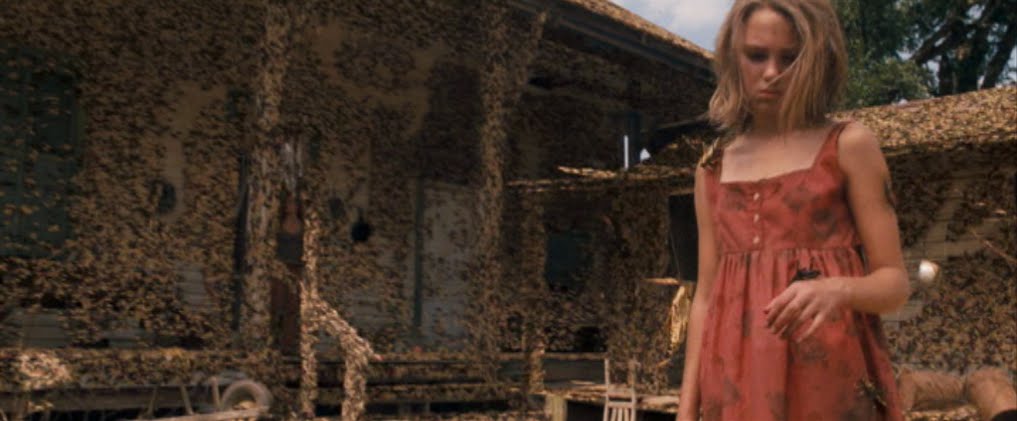
According to Katherine Winter (Hilary Swank), an erstwhile minister who now debunks religious phenomena, “In 1400 B.C., a group of nervous Egyptians saw the Nile turn red. But what they thought was blood was actually an algae bloom which killed the fish, which prior to that had been living off the eggs of frogs. Those uneaten eggs turned into record numbers of baby frogs who subsequently fled to the land and died. Their little rotting frog bodies attracted lice and flies. The lice carried the bluetongue virus, which killed 70% of Egypt’s livestock. The flies carried glanders, a bacterial infection which in humans causes boils. Soon afterwards, the Nile River Valley was hit with a three-day sandstorm otherwise known as the plague of darkness. During a sandstorm, intense heat can combine with an approaching cold front to create not only hail but also electrical storms which would have looked to the ancient Egyptians like fire from the sky. The subsequent wind would have blown the Ethiopian locust population off course and right into downtown Cairo. Hail is wet; locusts leave droppings. Spread both on grain, and you’ve got mycotoxins. Dinnertime in ancient Egypt meant the first-born child got the biggest portion which in this case meant he ate the most toxins, so he died. Ten plagues. Ten scientific explanations.”

Katherine has been asked by university colleague Doug (David Morrissey) to visit his hometown of Haven, a smiley and slightly-too-polite little place in the Louisiana Bible belt where an intolerant redneck mentality bubbles away just beneath the surface. It’s here that Loren (AnnaSophia Robb), the creepy daughter of a local outcast, is at the centre of a series of inexplicable events that are shaping up into a contemporary re-enactment of the plagues. Doug’s worried that Haven will invite the wrong kind of publicity and trusts to Katherine and her research assistant Ben (Idris Elba) to unearth a rational explanation.
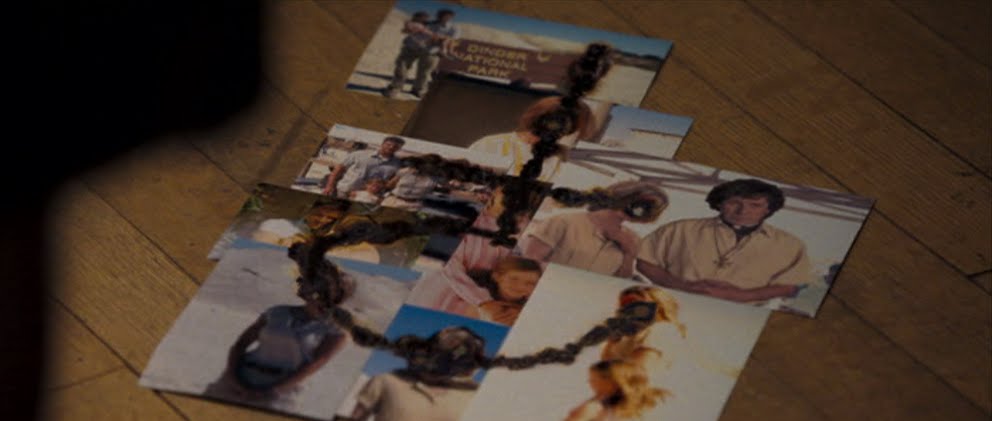
They arrive to a river whose waters have turned red. Lab result: blood. Ben witnesses a fall of frogs from the sky. Lice and flies attack a barbeque at the run-down colonial house where Doug is putting up Katherine and Ben, and where a mutual attraction is simmering away between Doug and Katherine. But before things can get too lovey-dovey, more plague-like activity is taking place, livestock keeling over and dying even though DNA samples indicate there’s nothing wrong with them. Katherine experiences strange dreams/hallucinations, as well as flashbacks to her disastrous experience as a minister in Africa, the fallout from which led her to turn her back on the church. Then there’s some spooky business involving her former mentor, Father Costigan (Stephen Rea), who comes to believe that Katherine is in danger.

Met with inexplicable indifference on its release, Stephen Hopkins’s ‘The Reaping’ is a gripping and atmospheric chiller that wrings maximum atmosphere from its small town setting (Haven has a David-Lynch-in-the-bayou kind of vibe) and benefits from a cluster of solid, understated performances. Swank plays Katherine as a skeptic with a margin for ambivalence, her logical and reasonable outlook skewed just enough by the vulnerability of her personal experience that she comes off as a rounded and sympathetic character rather than the Agent Scully clone she could easily have become in lesser hands. Rea’s hangdog look is employed effectively, his world-weary priest stumbling onto something cosmically bigger than he is equipped to deal with. Elba is also very good, conveying the calmness which belies Ben’s violent past; Elba plays what is essentially a character created for expositional purposes with a dignity that made me think of Morgan Freeman. I’ve seen little else of his work, but damn that needs rectifying!
Regarding AnnaSophia Robb: The Agitation of the Mind Award for Creepy Kid is in the mail. ’Nuff said.

Actor/writer brothers Carey and Chad Hayes deserve a mention for a screenplay that incorporates the ten plagues and Satanic cults without descending into abject cliché or hysteria and keeping things focused and slow-burn almost until the end. Which is where things almost – almost – tip over into parody. The plague is a well-effected and skin-crawling set-piece, only to be superseded by the fire from the sky part of things, which reminded me of nothing else than ‘The League of Gentlemen’s Apocalypse’. There were a few moments where I was thrown out of the film by the expectation of Papa Lazarou turning up and rasping “It’s my apocalypse now, Dave”. Or Hilary Briss agreeing a knock-down price for the dead cattle.
Fortunately, Hopkins is canny enough to not overplay his hand, and this sequence runs only as long as is necessary. The actual denouement is quieter and darker in its implications. Overall, ‘The Reaping’ works well. In the canon of supernatural-themed films which debate the existence, implications of and conflict between good and evil, most fixate on the chief players in the battle – the demon and the exorcist, the Satanist and the priest, the force of evil and the force of good. ‘The Reaping’, while paying its dues to the devil and the angels, never loses sight of the mortals caught in the middle.