Sunday, May 05, 2013

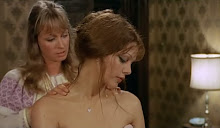
The Look of Love


There were two criticisms of ‘The Look of Love’ that followed me into the cinema like a couple of Chihuahuas snapping at my ankles. The first was that Steve Coogan’s central performance was little more than Steve Coogan plays Alan Partridge playing Paul Raymond; the second was that the film lacks a moral centre.

Both are accurate. Both are kind of the point.

‘The Look of Love’ – an examination of the life of British porn baron Paul Raymond, from his money-spinning property deals to his notoriety as owner of “revue bars” (i.e. strip clubs) and publisher of top-shelf magazine ‘Men Only’ – is so effective in its evocative of the grim seediness of Soho in the 1970s and 1980s (the principle decades in which the film is set) that the comic baggage Coogan will always be fated to bring to any role is a positive relief. His arch delivery of much of his dialogue sees him firmly in on the act. Having said that, a knowing directorial decision to play on his established persona should not detract from the due acknowledgement: this is Coogan’s best outing as an actor thus far.

The facts of Raymond’s life (as espoused by the film) boil down to a simple series of events: Raymond makes some serious money as a property baron, fancies himself as an impresario, opens a member’s only nightclub featuring exotic dancers, makes a shitload more money, drives his choreographer wife Jean (Anna Friel) away with all his philandering, takes up with soft porn starlet Fiona Richmond (Tamsin Egerton), and invests financially and emotionally in his daughter Debbie (Imogen Poots) as his corporate successor, only for her to go off the rails in spectacularly self-destructive style.

It’s referenced on at least four occasions in Matt Greenhalgh’s screenplay that Paul Raymond was born Jeffrey Quinn. That he reinvented himself on arrival in London as a young man, shedding his Liverpudlian background, is a snippet of backstory that Raymond delivers as well-rehearsed press-conference banter in two scenes set years apart. The inference is that ‘Paul Raymond’ was an elaborate façade that Jeffrey Quinn disappeared into. It’s a reading born out by a despairingly revealing sequence where his son from an early, previously unmentioned marriage, turns up at Raymond’s vulgarly over-designed penthouse and tries to learn something about the father he’s never known. Raymond gives him a slap up meal, breaks open some good champagne, and can’t wait to show him the door.

Coogan’s performance gives us Paul Raymond as, variously, a little-boy-lost charmer who (it would seem) invested his property millions in shows and wank mags purely to meet girls; a raconteur who throws out erudite conversational snippets and self-deprecating one-liners and effortlessly manipulates his associates into doing his bidding; and a man who, for all that he indulges his daughter to the max and dotes on his grandchildren, has a complete moral disconnect even when his lifestyle coils its licentious tentacles around those dearest to him. The two most shocking scenes portray Debbie’s cocaine use. In the first, Raymond catches her using for the first time, and his only admonition is that cheap shit bought on the street is cut and could contain anything – “if you’re going to do this, buy the good stuff”. In the second, Debbie announces, distraught, that she’s been diagnosed with breast cancer. Dad and daughter do a big fat line of commiseratory coke together.

Poots knocks it out of the stadium as Debbie Raymond. Her winningly gauche performance of the eponymous ballad over the end credits gives the film what small claim it has to a human element. She nails the character’s fluctuation between intense vulnerability and fierce competitiveness. In her scenes with Coogan, ‘The Look of Love’ has the focus of a Jacobean tragedy: the misguided patriarch, his personal relationships self-sabotaged, tries to justify his wanton excesses by living vicariously through his daughter, only to broker her destruction because she is unable to survive the very lifestyle that sustains him.

All told, ‘The Look of Love’ is downbeat and then some. Director Michael Winterbottom makes no bones that, for all Raymond’s protestations that he wasn’t a pornographer, ‘Men Only’ was a grubby and unaesthetic delivery system for gynaecologically blunt images of women. Two ‘Men Only’ photoshoots are depicted and, for all the T&A on display, they’re utterly unerotic. Same goes for the handful of sex scenes, bodies stacked up against each other like marble slabs.

In scene after scene, Raymond tries to convince people he’s living the dream. He name-drops; he parades his nubile girlfriends and the gadgets that litter his apartment; he laps it up when someone likens his penthouse to a set from a Bond film. He goes everywhere by Rolls Royce. He employs a chauffeur. And in scene after scene, Winterbottom takes a scalpel to his lifestyle: cuts through the pretence and the egomania and the self-delusion; hacks away at the absurdities – some of them pathetically funny, others just plain sad – of what a man becomes when he lets money define him.

Hence the necessity of Steve Coogan and the Alan Partridge persona. It takes a comedian to make all of this palatable. And it takes a comedian to give us, with just the right degree of pathos, the tears of a clown as the curtain falls.

Saturday, May 04, 2013

Audrey Hepburn


Audrey Hepburn, b. 4th May 1929.

Has anyone - anyone - in the history of cinema been quite so elegant?

Thursday, May 02, 2013

In brief: Iron Man 3


In scene after scene – dockyard shoot-out; protagonist chained up in basement; heroine chained up in villain’s lair; arbitrary shots of hookers and beauty pageant contestants – its clear that ‘Iron Man 3’ is un film de Shane Black. This works to its benefit and detriment in roughly equal measures. To its benefit in that Black’s script is a godsend after to Justin Theroux’s rambling, unfocused ‘Iron Man 2’ screenplay. To its detriment in that you can never quite shake the feeling that Black would have been happier if Tony Stark were a burnt-out alcoholic cop with a shady past and didn’t go around wearing a flying metal suit.

Which isn’t to say that Black doesn’t deliver two big-ass set-pieces involving the suit: one involving some sky-diving, the other at the aforementioned dockyard (involving, to be honest, a fuckload of flying metal suits). It’s just that the rest of the movie doesn’t seem to be in the same key.

Herein the problem: the bits of the film that work do so because they’re demonstrably Shane Black moments; but these moments are not in the key of Tony Stark. And what made the first ‘Iron Man’ such an unexpected delight – and such a smash success; it was ‘Iron Man’, after all, that kickstarted Marvel’s five-year box office supremacy – was Robert Downey Jnr’s unapologetically showboating performance as Stark. Billionaire, genius and philanthropist wrapped up in the same flamboyant package as playboy, smartarse and arrogant twat – every facet of his character held in such perfect equilibrium as to make him irresistibly entertaining.

And yet ‘Iron Man 2’ had him depleted and riddled with self-doubt, while this new instalment sees him traumatised by the events of ‘Avengers Assemble’. Hence, a Tony Stark who suffers panic attacks, a Tony Stark who burrows into a cocoon of introversion, a Tony Stark whose latest refinements on the suit are riddled with tech issues that leave him vulnerable. Hey, folks, remember the Tony Stark who partied with hot chicks, dealt one-liners like a card-sharp cutting a deck, and drove the most expensive model Audi have ever built like the freeway was his own personal race track? Yeah, I remember him too, and I miss the dude. Can we have him back next time, please?

Tuesday, April 30, 2013

Oblivion


‘Oblivion’ is a masterpiece of production design that desperately wants to be a cerebral Tarkovskian study of ravaged landscapes, existential turmoil and questions of identity … but has to, y’know, throw in some hamfisted mainstream narrative tropes in order to justify its budget.

Opening with a slab of voiceover exposition, we learn that an alien antagonist destroyed the moon (causing all manner of natural catastrophe) prior to invading Earth. Someone on Earth authorised the use of something called “the nimbus” (I’m guessing the President of the United States in the first instance and a heavy duty piece of thermo-nuclear kit in the second), effectively “winning the war but losing the planet”. Now there’s a radiation zone, a number of power plants that process Earth’s remaining air and water power to provide energy for off-world space station The Tet, and an atmosphere-straddling platform occupied by Jack (Tom Cruise) and Victoria (Andrea Riseborough), technicians who maintain the power plants and the drones that safeguard them. Oh, we also learn that Jack and Victoria had “memory wipes” in order to protect “the security of their mission” prior to taking the job. I assume this was done before their induction course. As the film begins, Jack is experiencing pre-destruction-of-Earth hallucinations which he assumes are memories, while by-the-book Victoria just wants to dot the i’s and cross the t’s and jet off to Titan (Jupiter’s moon, where the last enclave of humanity are holed up) when their detail ends in a fortnight.

Anyone who hasn’t even hazarded a guess about where this is going by now will probably view ‘Oblivion’ as an entirely original and genre-defining work. The rest of us will happily tick off its many and unsubtly referenced influences while we sit back and bathe in the visuals.

Because that’s the thing. For all that ‘Oblivion’ is a derivate piece of work (particularly in the increasingly hackneyed second half where it becomes a patchwork quilt of ‘Independence Day’, ‘I, Robot’ and ‘Moon’), it’s the most genuinely gorgeous thing I’ve seen on the big screen this year. Jack and Victoria’s cloud-based operations centre is kind of like a two-up-to-down designed by Frank Lloyd Wright complete with helipad and swimming pool. A scene in said swimming pool comes close to a sort of visual poetry. Director Joseph Kosinski and DoP Claudio Miranda conjure eerily effective visions of a dune-covered New York which are a million miles away from the usual post-apocalypse imaginings. The technology is memorably rendered, too: Jack’s scout craft and the drones themselves have a propulsive sense of movement and engineering, while also looking careworn and, despite their sleek profiles, realistically utilitarian in their design. Only the late-in-the-day visualisation of a maleficent supercomputer as a slightly misshapen amplifier covered in sentient mould lets the side down.

Performances vary: Cruise delivers with a likeable everyman persona; Riseborough finds nuances in a character who could have been decidedly one-note; Olga Kurylenko is saddled with a nothing role and does even less with it; Morgan Freeman continues to be one of the coolest blokes on the planet, claiming entire scenes for himself by doing little more than lighting a cigar or wearing a knee-length leather jacket.

The script is anodyne at best, edging into total mess on more than one occasion. Example: Jack gets shot in the shoulder at one point and the wound is never reference, depicted or treated for the rest of the movie. He’s shot and then, oh fuck it, he needs to do some heroic running, jumping and falling down stuff, so let’s all pretend he never took that bullet in the first place, ’kay?

Ordinarily, I’d have marked ‘Oblivion’ down for its failings, consigned it to the file marked “ho hum” and probably not ever bothered writing about it for Agitation. But I keep coming back to how damned good it looks, and to the world-building and attention to detail of its first half as Jack goes through the motions of a routine job in an extraordinary situation; a guy who punches the clock, patches up the drones, patrols the wastelands and somehow isn’t satisfied with the way things are; a guy who’s just starting to think beyond the accepted parameters.

Wednesday, April 17, 2013

The Place Beyond the Pines


I’ve always been suspicious of people who describe the narrative of cinema as “acts” – that’s the argot (and indeed the structure) of theatre. Film is different medium, and fluid in a way that theatre could never be. Theatre doesn’t have edits and, as Bunuel pointed out, where you cut from one scene to another is where the magic happens.

But fuck me, it’s difficult to approach Derek Cianfrance’s ‘The Place Beyond the Pines’ without discussing its three acts. And believe me, I really don’t want to talk about the structure because that would mean, at the very least, heavily hinting at a spoiler which occurs at roughly the one-hour mark. A spoiler, moreover, that genuinely took me by surprise since the trailers and advertising for the film had led me to expect a self-contained crime drama focussing entirely on Ryan Gosling’s stunt rider turned bank robber.

What we have instead is a sprawling melodrama that stretches across two generations. The basic set up is simple: the circus comes back to town after a year (“town” being Schenectady; a tip of the hat to the American friend who explained that the name is a Mohawk word for which the title is a literal translation, otherwise I’d have scratched my head for two hours twenty minutes wondering what bearing it had on anything) and Gosling tries to rekindle things with old flame Eva Mendes. Only to find that she has a child and a new bloke. Discovering the child is his, he tries to edge out the competition but when he’s reminded that his familial responsibilities have a fiscal element, he resorts to desperate measures. So far so good. In fact, so far so freaking excellent. The first hour of ‘The Place Beyond the Pines’ showcases a measured but intense filmmaking style redolent of the 1970s. Gosling is superb and the robbery scenes are immediate, exciting and squeamishly tense.

Then the focus drifts from Gosling’s loose cannon with, if not a heart of gold, then at least a vaguely human centre, and Bradley Cooper’s idealistic rookie cop assumes centre stage. An idealist rookie cop who soon finds himself hemmed in by his colleagues’ corruption. And before you can say “ ‘Serpico’-lite” we’re hauling ass for Cliché Central. But even this second act benefits from the best work Cooper has done onscreen, and a genuinely murky moral quandary as, in trying to extricate himself honourably, he comes to rely on the Mephistophelean guidance of his high court judge father, a man whose whiskey exterior belies a cynically political mindset.

Even with this dip in quality control, I’d happily have considered ‘The Place Beyond the Pines’ something of a success. Sadly, the third act swandives from the top storey of Cliché Central into the fetid alleyways of Shit City. A jarring flash forward has Cooper’s character simultaneously enjoying the rewards and paying the price for his earlier decision while his over privileged asshole son forms a manipulative relationship with guess who’s offspring. At this point I was face-palming in the cinema, wondering if even Dickens would have back-pedalled from this kind of coincidence. Not only are the stakes lower in this concluding section, but the young actors do a pretty shabby job. Whether this is due to their lack of facility, or Cianfrance being more at home with mature actors, I’m still not sure.

The prosecution would also like to introduce into evidence how little Mendes, third-billed, is given to do, and how similarly wasted the talented and highly capable Rose Byrne is.

Following the Cianfrance’s previous collaboration with Gosling on the unflinching honest ‘Blue Valentine’, it’s tempting to file ‘The Place Beyond the Pines’ under D for disappointment … except that its first hour is just so damn good. I almost wish the whole thing had been a POS. That would have hurt less than watching it lose the way on what should have been a straight-as-an-arrow route to modern classic status.

Sunday, April 14, 2013

Papadopoulous & Sons


In some respects, writing about film should be easy. When every narrative beat plays out exactly as you anticipated, when the romantic subplots conclude with pairings-off straight out of Rom-Com 101, and when the central conflict that gives the film such dynamic as it has is resolved in crowd-pleasing, heart-warming fashion, writing about that film should be easy, right? Toss out the words “formulaic” and “predictable”, cite a couple of examples, job done. And given the aforementioned tendency to crowd-pleasing and being heartwarming, you could write the thing up for schmaltz, as well.

But here’s the rub. Occasionally – very occasionally – you come across a film like ‘Papadopoulos & Sons’. The debut feature of writer/director Marcus Markou, it trades on a highly familiar narrative arc, some stock characters, and an ending of such unalloyed optimism that the protagonists literally dance in the streets. It doesn’t have a single original idea. And yet it’s the most pleasurable hour and three quarters I’ve spent in a cinema auditorium this year.

Opening with a montage of London as a monument to Big Business, Harry Papadopoulos (Stephen Dillane), a heavily Anglicized Greek immigrant, is introduced as the recipient of a European Business Award. He’s a restaurateur and food manufacturer, and he’s about to move into the property market with a mall development – the grandiloquently named Papadopoulos Plaza. In doing so, and demonstrating the kind of hubris that’s almost guaranteed to presage failure, he overstretches himself to the tune of £30million. And when the banking crisis suddenly explodes, he finds his business on the knife-edge and his palatial home swiftly inventoried by the administrators.

Harry’s a widower; his three children – eldest son and reluctant heir to the business James (Frank Dillane), daughter Katie (Georgia Groome) and wannabe businessman youngster Theo (Thomas Underhill) – react in different ways to the loss of their privileged lifestyle, the reappearance of black sheep uncle Spiros (Georges Corraface), and their removal to a cramped and decaying bedsit above The Three Brothers chip shop, the last untouchable bit of Papadopoulos property on account of Spiros’s joint ownership. Estranged for a decade, Harry sheepishly implores Spiros to sell the property (it hasn’t been an active business in years) and let him have his share. Spiros, however, sees it as a chance for them to rebuild their relationship and insists instead that they reopen the chippie as joint managers. This doesn’t go down well with Hassan (George Savvides), owner of the kebab shop across the road, and tempers are further inflamed when Katie strikes up a relationship with Hassan’s son Mehmet (Cesara Taurasi).

Meanwhile, Harry engages shady business advisor Rob (Ed Stoppard) and his ex-pat American colleague Sophie (Selina Cadell) to put together a rescue package, even at the cost of selling out the Papadopoulos name. The oily Rob eagerly courts a Scandinavian bank who propose a Mephistophelean solution while Sophie, increasingly drawn to Harry, suffers pangs of conscience at the inimical financial brutality at the heart of the business world.

There’s a lot going on, and all of it treads a well-worn path. Riches to rags moralising. The importance of family. (The incremental Harry/Spiros reconciliation is played out against Sophie’s transatlantic separation from her family.) Heritage. The villainy of corporationism vs the heroism of the independent trader. Love conquering all. Additionally, there’s a handful of caricatures, character-wise, not least the shiny-suited Rob, a Viking-obsessed Nordic banking executive, and two gay repossession agents. Fortunately, though, the script delivers a proper degree of characterisation and emotional investment in the main characters.

In almost every scene, the sense of familiarity works. It made me think of P.G. Wodehouse’s ‘Jeeves and Wooster’ stories, or John Mortimer’s ‘Rumpole’ tales: there’s a formula at work and it’s aesthetically (but not rigidly) adhered to; and the result is that you relax in the company of the characters. They become like old friends. And when you don’t have to bother about the narrative with Wodehouse, you can concentrate on and enjoy all the more the wit and wordplay. With Mortimer, you get a whole lot more out of the satirical broadsides by dint of letting the plot get on with itself.

‘Papadopoulos & Sons’ pulls off the same trick: you know exactly where it’s going (the predictability staying just on the right side of comfortable and never lapsing into tedium), which makes it easier to appreciate the performances – Markou definitely has a facility with actors; Dillane is pitch perfect, Corraface does his best work in ages, and Groome is often hilarious as the spoiled fashionista gradually dipping a toe into the real world – and the script’s inherent warmth and simple faith in the things that truly matter.

Friday, April 12, 2013

Marley Shelton


Happy 39th to Marley Shelton. I feel a viewing of 'Planet Terror' coming on ....

Saturday, April 06, 2013

Possession


Imagine you’re a highly respected director, albeit one working under the strictures of state censorship. You’ve poured two years of your life and all of your creative endeavours into an epic science fiction movie. So epic that it’s going to boast a running time of three and a half hours. So epic that it’s the biggest budgeted movie ever to come out of your home country. Imagine that it’s almost in the bag when the Minister for Fucking Over Artistic Endeavours (or whatever title the shitty little apparatchik is glorying in) decides on a complete whim that your film is contentious. Before you know what’s happening, the production’s been shitcanned, the sets torn down and burned and even the motherfucking costumes have been buried in fucking big hole in the middle of nowhere. You’re left sans film, there’s a very real possibility that your career is over, and the powers that be have marked your card as a dissident.

That’s a pretty grim scenario, right? Now imagine, on top of all this, that your marriage disintegrates and your home is snatched away from you as brutally as your film was. I’m guessing that you’d be a tad pissed off. You’d be pissed off at the government, pissed off at politics, pissed off at petty bureaucrats who are allowed to wield too much power. Pissed off your ex, pissed off at whomever she’d throw you over for, and pissed off at the callous, unfeeling, utterly disinterested world that was continuing to go about its business without giving a shit about the heartache, rejection and soul-destroyed angst that you were going through.


Ladies and gentleman, please give an empathetic Agitation of the Mind welcome to Andrzej Zulawski. And someone get the guy a drink, he’s earned it!

‘Possession’ – a film as brutally cathartic as David Cronenberg’s ‘The Brood’ (also inspired by the director’s divorce) – starts with Mark (Sam Neill) trying to reintegrate with his wife Anna (Isabelle Adjani) after a period of separation. It’s quickly established that during their time apart he’s been engaged in some level of espionage. The exact nature of his mission is never made clear, even when Zulawski revisits the subplot as Mark’s enticement back into the field ends violently in the final reel. Whatever Mark was engaged in, all we see is the aftermath – a debrief by a bunch of pompous men in suits; a payoff in grubby used notes; and finally a burst of gunfire. This, Zulawski’s saying, is politics.

A similar aesthetic characterises the scenes between Mark and Anna. They tear into each at every opportunity. Jealousy, recrimination, suspicion, dependency issues, sexual hang-ups – so much dirty laundry gets aired you’d be forgiven for thinking that the address Anna goes sneaking off to (much to Mark’s chagrin) is a laundrette. This, Zulawski’s saying, is marriage. Or, more explicitly, marriage in its death throes. Caught between the couple is their son, Bob (Michael Hogben). Between the significance of Anna’s name and the importance of their son in the drama that unfolds (or rather, the drama that spills messily across the screen), I’ll throw out a one-off reference to Tolstoy: ‘Possession’ as the most fucked-up take on ‘Anna Karenina’ ever made. Discuss.


In fact, file under “fucked up” in general. Let’s revisit that address Anna keeps sneaking off to. It’s a tenement in a shabby area of Berlin, the wall running alongside it like a scar. The wall is almost a character in its own right, but it never gets the monolith iconography that even the most dour spy thrillers afford it; here, it’s more of a presence, forever in the background or glimpsed from a window; unwanted, but a constant. Mark has a private detective follow her. MILD SPOILER (because frankly, when an overtly gay detective takes any case in a European film he’s got very little chance of making it to the end credits): a scene of violence ensues that’s as grand guignol as anything in Argento, but without the rococo stylisations. The lurch from downbeat character drama to geysers of bloodletting is sudden and disorientating, but it’s only a prelude to the major revelation: Anna’s liaisons with …

Ah, and there’s the rub. If you’ve seen ‘Possession’, or even know it by reputation, you’ll know what I’m referring to. If you haven’t seen, then I really don’t want to ruin the headfuck for you. Let’s just say that ‘Possession’ comes complete with the kind of imagery that earned it a place on the DPP’s “video nasties” list back in the 80s. European arthouse rubbing shoulders with exploitation quickies? Thank the tabloid-wielding guardians of public morality that my home country seems to breed. Needless to say, they missed the point.


‘Possession’, despite its title and imagery, is not horror. It is not exploitation. It exists at a pitch of emotional hysteria, the intensity of which never wavers. There’s a heightened emotionalism to all of Zulawski’s work. It’s present here in Mark’s confrontation with Anna’s new lover, Heinrich (Heinz Bennent) – a confrontation that commences with Heinrich’s homoerotic overtures to Mark and culminates in the revelation that he, too, has been cuckolded; in the scene where Heinrich’s fragile, self-delusive mother (Johanna Hofer) comes belatedly to terms with her son’s philandering; in Mark’s burgeoning obsession with Helen, Bob’s teacher and a dead ringer (if polar opposite personality-wise) for Anna; in Bob’s imploration to Helen at the end of the film, after an act of rebirth/substitution has brought an entirely new and unexpected dimension to the proceedings, not to open the door and admit … ah, but that would be telling; and it’s present, most spectacularly and disturbingly, in Anna’s almost balletic meltdown in a subway, a scene that seems to last longer than you can bear to watch it, that proves Adjani as both an utterly fearless actress and a force of nature, and that – cumulatively – renders Anna as desperate, delirious and – again, despite the title, dispossessed.

‘Possession’ is a difficult film to watch, even harder to like, and one that you’re only likely to forget if you’re clinically dead.

Sunday, March 31, 2013

In brief: Wreck-It Ralph


So: there’s an arcade game called Fix-It Felix in which a muscle-bound vandal goes around smashing up a tenement building and terrorizing its occupants. A Super-Mario-a-like with a golden hammer, the aforementioned Felix, racks up the points while repairing the damage and is the hero of the residents. When the arcade closes at the end of the day, Felix is feted and enjoys the champagne lifestyle at a series of parties, while Ralph (voiced by John C Reilly) is ostracized to a pile of bricks behind the tenement building that serves as his home. Periodically, he takes a train to Game Central and attends a Bad-Guys Anonymous meeting. Finally, disaffected with his lot in life, Ralph game jumps … only to discover other characters in other games with equally debilitating problems.

‘Wreck-It Ralph’ is gorgeously animated and visually inventive, but suffers from two main problems. Firstly, only the Fix-It Felix game feels like a genuine old-school arcade game. The other two main games are a backstory-heavy RPG epic that looks more suited to PS3 or X-Box, and a ludicrously pastel-coloured racing game that I can only describe as what you’d get if the cast of ‘Priscilla, Queen of the Desert’ kidnapped the programmers of Gran Turismo and brainwashed them by playing the Katy Perry ‘California Gurls’ video on a loop. For the story to work, the characters have to exist in a world of arcade games. Do kids even play games at arcades anymore? Every frame of ‘Wreck-It Ralph’ feels like it belongs in the mid-80s.

Secondly, the game jumping concept – so to-the-fore in the trailers – isn’t explored or exploited beyond the two games mentioned above. Indeed, most of the film takes place in the KatyPerryVille racing game, a milieu that’s overdesigned and oversaturated with primary colours. This is where Ralph meets fellow pariah Vanellope (Sarah Silverman) – a frontrunner for Most Annoying Sidekick of the Year. It’s also where the gently improving themes of humility and the value of friendship are ladled out and spoon-fed to the audience. 

A much funnier narrative strand has the squeaky clean Felix (Jack McBrayer) join forces with gung-ho, weaponry-obsessed shoot-’em-up heroine Calhoun (Jane Lynch). It’s one of several moments in the film where the surface is briefly peeled back and the all possibilities of how much better it could have been are suddenly glimpsed.

Thursday, March 28, 2013

In brief: Flight


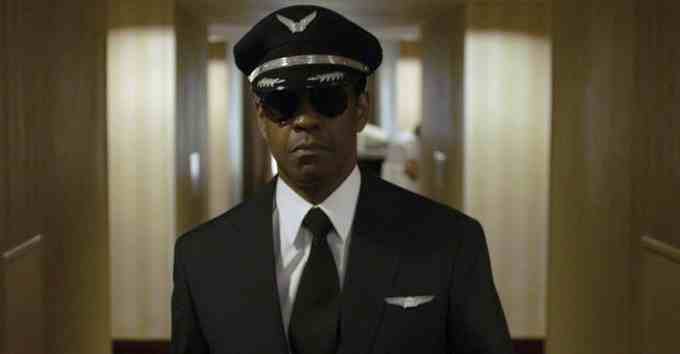
And the Agitation Award for Having Your Cake and Eating It goes to … ‘Flight’. In scene after scene, director Robert Zemeckis revels in the beer-guzzling, vodka-gulping, snoke-snorting, cuss-word-spewing and generally smartass bad behaviour of emotional fuck up and genius pilot Whip Whitaker (Denzel Washington). Gasp as Whip cops off with a foxy air hostess, toots a line of the Colombian marching powder just to wake up, then heads off to a fly a plane! Cringe as Whip uses said plane as a battering ram to power through clouds, rain and turbulence in a convergence of meteorological circumstances that could easily be mistaken for the wrath of God! Shudder as mechanical failure sends the plane hurtling earth-wards and Whip flips it over in mid-air then pulls off an audacious crash landing with a minimal loss of life! Watch in stupefaction as Whip disses the airline lawyer (Don Cheadle) who knows he was incapacitated at the controls but tries his damnest to keep him from going down! Yawn as Whip slides into a tediously protracted and doomed-from-the-start relationship with a fellow recovering addict (Kelly Reilly)! Snigger as Whip’s on-call drug dealer (John Goodman) spews profanity and politically incorrect homilies left, right and centre, happily stealing every scene he’s in! Be a little bit sick in your mouth as Whip gets a mammoth (and mammothly unconvincing) case of moral conscience in the last act! Punch yourself multiple times in the groin as Whip is finally able to bond with his estranged son by dint of being in prison! 

Ooops, sorry. Spoiler.

‘Flight’ has a fucking great first hour, an increasingly redundant second hour and an utterly abysmal last ten minutes. It’s blatantly in love with its protagonist while he’s being an irresponsible arsehole, but still wants to sell you on the redemptive/clean ‘n’ sober final act. It fails.

Saturday, March 23, 2013

Haunted


In ‘Danse Macabre’, Stephen King describes James Herbert’s writing style as that of someone who puts on his combat boots and goes out to assault the reader with horror. ‘Danse Macabre’ was published in 1981 and the statement is fairly appropriate to the seven or eight titles Herbert had published by then (with the possible exception of ‘Fluke’). Certainly, the one-two punch of ‘The Rats’ and ‘The Fog’ – the former blithely disregarding, within its first ten pages, any audience pleasing aesthetic of having a baby or a cute dog survive; and the latter containing a scene in an elite boarding school gymnasium that you’ll probably never get out of your head – announced two simple facts: here was a horror writer who put balls-to-the-wall propulsive narrative first; and here was someone who wasn’t afraid to go to some pretty dark places.

James Herbert died a few days, less than a year after publishing his 23rd novel, ‘Ash’, completing a trilogy that began with ‘Haunted’ and ‘The Ghosts of Sleath’. There had been a six-year gap between ‘Ash’ and his previous novel, ‘The Secret of Crickley Hall’, which was adapted to general acclaim by the BBC last year. The hiatus was indicative of a reduced output in the latter stages of Herbert’s career. ‘Ash’ was his only work this decade; there were just three books from him last decade. Not as excessive as the decade-long gaps in Donna Tartt’s bibliography, but poignant and frustrating in roughly equal measures now that he’s gone and there will be no new James Herbert novels.


A key observation in the many tributes that have pervaded the internet like a effulgent fog (sorry, couldn’t resist) is the discovery of Herbert’s novels in one’s teenage years. The illicit reading of well-thumbed paperbacks, gasping in shock at the visceral horror, eyes widening over the tactile sex scenes. As a kid, I went to a school where you were liable to get thumped if you were seen with a book in your hands; the exception was the black cover and glossy gold or silver lettering of a James Herbert title. A salivating rat on the cover, or the dead eyes of a doll’s head (I’ll never forget that cover of ‘The Survivor’, the first Herbert novel I read. I was thirteen). 

And it’s for those novels – full-on, gory, shouldn’t-really-have-been-reading-this-stuff-as-kids – that Herbert will be remembered. Which is a tad unfair to him. Because his style and his approach changed, and he made a committed attempt – whilst never sacrificing narrative, entertainment and the love of his readers – to develop as a novelist. ‘Fluke’ was an anthropomorphic fable, kind of Disney by way of Edgar Allan Poe. ‘The Magic Cottage’ and ‘Once’ deconstruct fairy tale tropes. ‘Shrine’ is a provocative discourse on theological politics, economic exploitation and the nature of faith. ‘Creed’ and ‘Nobody True’ are essentially cross-genre detective stories. ‘48’ is an alterative history tale which, for my money, is a fuckload more entertaining than, say, Len Deighton’s ‘SSGB’ or Robert Harris’s ‘Fatherland’. Throw in Herbert’s demonstrable interest in the atmospherics of the traditional ghost over the graphic horror of the earlier works, and you have an author who really shouldn’t have been pigeonholed.

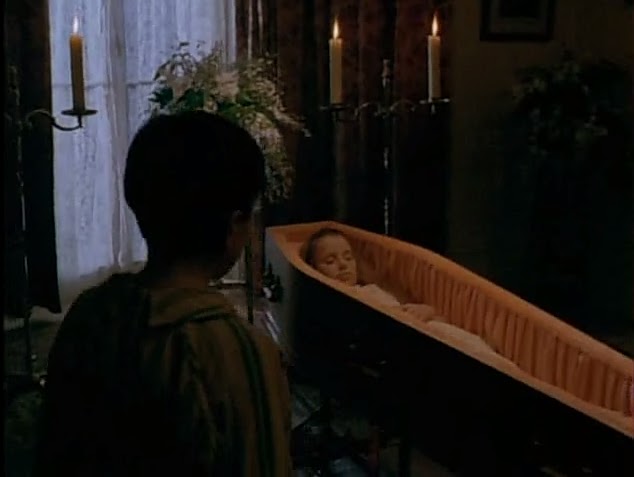
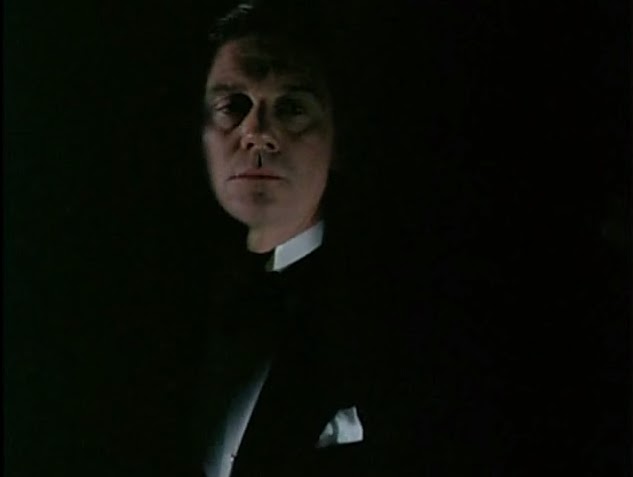
‘Haunted’ is perhaps Herbert’s most distilled imagining of the traditional ghost story, even if it raised some eyebrows on publication. I recall Fear magazine, latching onto the novel’s lack of big gruesome set pieces, wondering if a ‘Woman’s Hour’ serialization was on the cards. And while it’s not necessarily my favourite Herbert (I’d probably go with ‘Moon’ or ‘48’), it introduced arguably his most enduring character: David Ash, a guilt-ridden, cynical, borderline alcoholic parapsychologist. And if this description doesn’t sound anything like Aidan Quinn’s character in Lewis Gilbert’s 1995 adaptation, then here we come to an awkward segue into the film review part of this article, and our first indication that there are quite a few things wrong with ‘Haunted’ the movie.


So why in the name of buggery am I reviewing it on Agitation? Two reasons. One: I wanted to write about Herbert and dedicate a post to his memory. He was one of those magnificently unpretentious, politically incorrect writers for whom story was everything and fuck the naysayers – i.e. the kind of writer I discovered at exactly the right age and to whom, even though my bookshelves are now piled with writers who are considered “better”, I owe my love of reading. Two: as a comment on how badly served Herbert was in terms of adaptations.

For a man who became a bestselling writer with his first novel in 1974 (‘The Rats’ sold out its first print run in three weeks!), it wasn’t until 1981 that anything of his was filmed. ‘The Survivor’ is an intermittently intriguing but ultimately flawed adaptation of Herbert’s third novel, written for the screen by David Ambrose and directed by David Hemmings. A good cast – Robert Powell, Joseph Cotten and Jenny Agutter – wander through an evasive storyline, while heavy cuts pre-release (the film clocks in at barely over an hour twenty minutes) don’t help the narrative coherence. A pre-production decision to attempt a cerebral rather than scary movie was ill-advised.

Although not as ill-advised as dressing dachshunds up as rats in the big screen (oh all right then, direct-to-video screen) version of ‘The Rats’ a year later. It was inexplicably retitled ‘Deadly Eyes’. Which essentially gives us a film version of ‘The Rats’ with dogs as rats and a title that sounds like a Zalman King top-shelf trouser-arouser. Oh dear. Over a decade passed, then 1995 gave us two Herbert adaptations: ‘Haunted’, and Carlo Carlei’s ‘Fluke’. This is the poster for ‘Fluke’:


I think we can see where this one misses the mark. Of how ‘Haunted’ misses the mark, more later.

‘The Secret of Crickley Hall’, a three-part mini-series, emerges as the most faithful, and best written of the bunch. And when television is besting what’s being done for the big screen, that’s a pretty depressing state of affairs. It’s to be hoped that more of his work reaches the big screen and is done properly. ‘48’ would make for one hell of a good movie, budget permitting. Or how about an 18-rated-and-earning-it headfuck based on ‘The Jonah’ and directed by the guy behind ‘A Serbian Film’? Brad Anderson ratcheting the tension up on ‘Moon’? Fuck, let’s give Mel Gibson a chunk of money, a copy of ‘Shrine’ and let him revisit the religious controversy of ‘The Passion of the Christ’. Note to Hollywood: I’ll settle for an executive producer credit and a small fee. Aw, hell, consider the fee waved – just make a really good James Herbert movie. Please?

Okay: 1,100 words of avoidance in the can. Deep breath. ‘Haunted’: un film de Lewis Gilbert. Let’s deal with this mo’ fo’. Originally written as a screenplay for the BBC, Herbert recrafted the story into a novel when the script went unproduced. The book has David Ash undertake an assignment to disprove a haunting at a crumbling stately home inhabited by three siblings – brothers Simon and Robert Mariell and their seductive sister Christina – and their elderly housekeeper whom they rather patronisingly called “Nanny” Tess. Ash is haunted (the novel’s title works on several levels) by the death of his sister in childhood, a drowning he not only failed to prevent but benefited from in terms of the abrupt cessation (at least in a worldly form) of her constant and malicious bullying. Ash is temperamental and a heavy drinker. He takes against the Mariell brothers from the off, resenting their toffee-nosed demeanour and their petty little games. He just wants to scientifically disprove the haunting of Edbrook (their family pile) and split. Only Christina proves immensely distracting, and a series of occurrences leave him wondering if there isn’t something supernatural lurking in Edbrook after all.


Gilbert’s film – his penultimate as director, after 51 years calling the shots (he’d shoot his final movie, an adaptation of Shelagh Stephenson’s play ‘Before You Go’ in 2002 at the age of 82) – strips Ash of all his emotional baggage. Even the death of his sister, delineated in a frankly ridiculous pre-credits scene (she plunges into a stream barely a foot wide that, as soon as the camera plunges underwater, opens out into something deeper and wider than the River Styx), is depicted as an unfortunate accident rather than the wished-for deus ex machina that ends the young Ash’s physical torments and kicks off his spiritual ones in the novel. Likewise, the nature of his sister’s reappearance towards the end of the film – as well as the provenance behind the haunting – drastically differ from the novel to such an extent that the entire point is missed and you wonder why Gilbert and co didn’t just cook up their own haunted house story.

The largest and most curious deviation of all is the decision to make ‘Haunted’ a period drama. The novel is set contemporaneously but deliberately evokes the isolationism and trappings of, say, an M.R. James story. It’s the dynamic between gothicism and the modern world that give the Ash trilogy their edge. That, and the fact that Ash himself is an unpredictable and vicariously fucked-up protagonist. The Ash of the film is about as edgy and fucked-up as an unrefrigerated lettuce leaf. The period paraphernalia serve only to prettify the film version. Watching it today, for only the second time since it first came out, I was struck by the similarity to James Watkins’ recent take on ‘The Woman in Black’: a Sunday afternoon glossing over of source material that is not only cruel and cynical, but whose cruelness and cynicism is the entire fucking point

There are a few grace notes to Gilbert’s film, though. As Simon and Robert, Alex Lowe and Anthony Andrews strike the right note of sybaritic smugness. Stalwarts Anna Massey and John Gielgud bring some old-school gravitas to the proceedings. And Kate Beckinsale, in her early twenties and already starting to chalk up some memorable feature film appearances, knocks it out of the park as Christina, flipping between dreamily coquettish and spikily vampish without missing a beat. She gives the film a beating heart (and a quickened pulse!) where otherwise it would have remained moribund.


A few scenes come close to evoking the novel, particularly a wine-cellar conflagration, and the siblings’ creepily childish insistence on parlour games. Mostly, though, opportunities are squandered. A tense and sustained chapter where Ash is menaced by the Mariells’ hunting dog as he flees through the woodland and discovers the family tomb is completely missing. His claustrophobic submergence in a lichen-scummed ornamental pond is reimagined as a scene on a jetty that just looks silly. The last-moment resurgence of horror when Ash thinks himself free of Edbrook and its spirits is rendered as a yawnsomely predictable final shot. And sad to say, Quinn – an actor who I usually have a lot of time for – is wooden and unappealing here.

‘Haunted’ could do with another outing – set contemporarily, with a fucked-up Ash, tormented by nightmares and fuelled by neat vodka; a David Ash who’s on the verge of meltdown. Paddy Consodine, full of intensity and keeping it real? Hayley Atwell as Christina? Nick Murphy in the director’s chair? Stick to the novel. Embrace the real darkness of the backstory. A good James Herbert movie.

Anyone?


(i.m. James Herbert, 8 April 1943 – 20 March 2013)

Wednesday, March 20, 2013

In brief: Zero Dark Thirty


I wrote a piece about a month ago on the controversies surrounding ‘Django Unchained’ and ‘Zero Dark Thirty’, the idea being to acknowledge the elephant in the room and make any necessary refutations or counter-arguments. I’d then follow up with in-depth reviews of both films, concentrating on them purely as films and not having to get bogged down with the baggage attached to them.

That was the theory, anyway. In practice, I wrote the follow up ‘Django Unchained’ review then I pressganged every avoidance tactic I knew in order to postpone writing about ‘Zero Dark Thirty’. Why? Simple reason: I enjoyed the hell out of ‘Django Unchained’, despite a few minor flaws, but I found ‘Zero Dark Thirty’ ever so slightly boring. Yes, Jessica Chastain’s performance was as on key as we’ve come to expect from her; yes, Mark Strong’s single scene cameo did for the film what Alec Baldwin’s “fuck you, that’s my name” expostulation did for ‘Glengarry Glen Ross’; and yes, that superb last scene effectively underlined the essential pointlessness of everything Chastain’s character had gone through, everything she’d lost to the passage of time, everything her obsession had taken away from her.

Yes, the torture scenes were wincingly horrible. Yes, the attack on the compound was well staged. But I fidgeted for much of the two hour running time. I sneaked glances at my watch. I came out of the cinema in a fug of “meh”. Essentially, ‘Zero Dark Thirty’ is a two-hour espionage drama followed by a single but sustained action sequence. The problem is that the potentially fascinating espionage/intellence agency shenanigans come across under Bigelow’s direction as leaden and uninteresting. It doesn’t help when shaky-cam and whiplash tracking shots seem to conspire to direct attention away from the minutiae of undercover work.

It’s a difficult genre to get right. ‘Tinker Tailor Soldier Spy’ made the world of files and tradecraft riveting. ‘Zero Dark Thirty’ almost expects you to be bored by it. The battle’s lost before the attack helicopters even launch. And an action finale where a tooled-up black ops team take down a largely unarmed enemy force comprising mostly women and children doesn’t give you anything to holler for. A grunt’s radio confirmation that the target – one Osama bin Laden – has been executed “for God and country” is about as far from cathartic as you can get.

Monday, March 18, 2013

The way we respond to light: a Q&A with Jeremiah Kipp


Watching your short films ‘Contact’, ‘Crestfallen’ and ‘Drool’, the first thing that struck me was their use of light. Is this a deliberate technique to open up an aesthetic dialogue with the dark themes you focus on?
I’ll use CRESTFALLEN as a way to make the answer specific. The story is built around a possible suicide, and I remember while we were planning the film being haunted by the way Bart Mastronardi handled the suicide film in his independent horror feature VINDICATION. His scene was gritty, raw, naturalistic; it was a gateway scene in a film about a man transforming into a monster and that’s the scene where it slips out of reality. But the suicide is shot with total frankness. And since we wanted to find our own direction, we thought about ways to make our film operatic and epic. Completely different than VINDICATION, with light and a smoky atmosphere. My friend and cinematographer Dominick Sivilli lit the suicide scene in a bathroom with beautiful beams of light coming through the solitary window without being afraid of letting the rest of the room go totally black. He said it reminded him of BEOWULF, which was absolutely the right way to go. He’s a brave photographer, and we encourage each other to be as bold with our choices as possible. The feelings inside of us are huge: love, hate, fear, envy, compassion. Cinema can reflect that back to us. Light is emotional, and the way we respond to light is laden with pleasure or dread. We thrive in the light, we fear the unknown of the dark. That’s why deep shadows are such a useful tool for the genre film.

‘Crestfallen’ and ‘Drool’ are entirely free of dialogue; ‘Contact’ contains probably no more than a dozen words. All three burrow towards their own emotional truth without any need for exposition. Is dialogue of any real importance in the short film?
I’m not against dialogue per se, it really depends on the film. CRESTFALLEN is about snapshots in time, and there’s no audio in a snapshot. It felt more poetic and appropriate to just use our composer Harry Manfredini’s evocative track. DROOL was purely sensory, in a hallucinatory world where there are no words. And CONTACT was a conscious decision to pare back everything to the bare essentials: plot, dialogue, backstory, even color were cut down so hopefully what we were left with was pure cinema. But there was some dialogue. As much as we needed. In the film we’re finishing up right now, THE DAYS GOD SLEPT, the fever dream narrative is anchored around a dialogue between a man and a woman, and the story she tells him. It’s written by a New York playwright named Joe Fiorillo who has a strong way with words; I feel like his text are as necessary as Dominick’s cinematography or Harry’s score. One is not more important than the other; they are all part of the film which is what we’re serving. And in that film, the words are our guide. People can view the trailer right here: http://kippfilms.com/daysgodslept.html


‘Drool’ is credited as being made in collaboration with the Mandragoras Project. Who else was involved and what was the impetus behind the project?
That was a wonderful group of people. I’d been friends with Laura Lona, an actress who runs Mandragoras with Julian Navarro, a brilliant gallery owner who promotes artists from around the world. Laura and a filmmaker named Salinoch had been exploring the possibilities of video and sound art, and I pitched them the idea for DROOL. It combines the art world and the horror world (Salinoch had a great enthusiasm for George Romero’s DAY OF THE DEAD, and would point to the white brick walls and say, “Doesn’t that remind you of DAY…?” The impetus was art for art’s sake, with everyone contributing, but you can’t hide from who you are. The project was an extreme version of the same themes in CONTACT.

Your work seems to contain a very specific and unsettling erotic element. Is this something that you are continuing to explore as a filmmaker?
It must be something bubbling up from my subconscious. I was raised in New England, which has its roots in Puritanism. Lately, I’ve been reading stories by Nathaniel Hawthorne, who wrote THE SCARLET LETTER. His short stories have a tremendous intensity about them, a nightmare quality where the characters are shrieking on the inside, either yearning for something more or afraid to go to that place where all inhibitions are cut off. Hawthorne’s characters are afraid of the monster or devil either outside wanting to tempt them, or inside being kept at bay. I’m sure that, in some way, ties in with the notion of the erotic in these films. The characters have desires and fears, and connection with another human is a primal need. In CONTACT, they were going to take the drug and make love, but something happens, the experience gets too close. The closer we get to another person, the more mysterious they become.

Both Zoë Daelman Chlanda in ‘Contact’ and Deneen Melody in ‘Crestfallen’ give incredibly heartfelt and expressive performances. Do you work very closely with your actors to develop character and empathy, or trust more to their intuition?
You meet them halfway. I wouldn’t have cast them if I didn’t want to draw from their talent. There has to be mutual trust and respect. Both of those actors know how much I love what they do, so when I’m there guiding them or giving an alternate direction or image at them during the shoot, they go with me. They know I will never humiliate them. If something doesn’t work, I won’t use it. But I love actors who are open to exploring. Zoë was unafraid; she wanted that role and she went for it. She’s one of the most committed, fearless and tenacious actors I’ve ever worked with. I’d love to make another movie with her soon. CRESTFALLEN’s writer-producer Russ Penning and I knew Deneen from her work with genre filmmaker Anthony G Sumner. Like Zoë, Deneen comes to the set very prepared, emotionally available and ready to work. This role was personal for her, since she based the character on a friend of hers who had committed suicide. That’s what she was drawing from.


Your feature ‘The Sadist’, starring the legendary Tom Savini, is out later this year. Can you tell us more about the film and your experience of working with Savini?
THE SADIST is a work-for-hire slasher film I made for two producers in Connecticut. It’s about a combat veteran suffering from extreme PTSD and destroying everything that comes into his path. We should have just called the film EVIL RAMBO. The producers have been re-cutting the film and doing their own reshoots, so I’m as curious as you are as to how it will all turn out. But working with Tom Savini was fantastic. I’ve heard he can be a difficult personality from folks who meet him at conventions, but on set he was a dream come true. Enthusiastic, hard-working, and if he trusts you he’ll go above and beyond. Tom is a force of nature, and when he arrives on set to shoot his scene where he’s killing everything in sight, it’s like you’re up against a Panzer tank. But he’s also hilarious, and had great stories about various film sets he’s been on. And it was great fun visiting him on the set of THE THEATER BIZARRE, an anthology film where he directed one of the episodes. He was as happy behind the camera as in front of it, and is clearly a guy who loves his work. I had good times working with Tom, and am grateful he was in the movie.

Saturday, March 16, 2013

Light and dark: three short films by Jeremiah Kipp


Let’s start with ‘Drool’. It’s an experimental four-minute movie shot in tactile black and white. It fixates on the body. Its aesthetic is intrinsically queasy. And it defies easy description. Here’s my best shot: imagine the massage scene in ‘Emmanuelle 2’ if Lars von Trier had challenged Brian Yuzna to remake it.

Welcome to the world of Jeremiah Kipp.

‘Drool’ is a film to be experienced, rather than simply watched and then discussed or reviewed under a conventional set of critical or intellectual parameters. It taps into a primal – even natal – part of the subconscious. It’s erotic in a way that challenges your perception of eroticism if you dwell on it for too long. And there’s a strange beauty inherent in the film even as it lives up to its title in the most unambiguous manner.


One more thing about ‘Drool’ – appropriately for a film that defies the structures and strictures of the reviewer’s so-called art – it doesn’t contain a syllable of dialogue.

Nor does ‘Crestfallen’, which is only slightly longer but packs a concentrated emotional punch, beginning with the biting irony of the title. Lo (Deneen Melody) is beyond crestfallen. She’s not even in the same league as dejected. In a swift rug-pull that transits from attractive young woman slipping off her robe to knife/vein/bathwater running red, Kipp plunges the viewer into the mental turmoil of Lo’s suicide attempt. The double betrayal that has brought her to this desperate act is a small masterclass in visual narrative and the editor’s art. Just a few shots, timed precisely and juxtaposed in a specific sequence, and we know all we need to about Lo’s state of mind and the pain she’s feeling. Melody’s poignantly expressive performance seals the deal.

Kipp’s evocation of Russ Penning’s script as a non-verbal experience – I almost used the description “purely visual”, but that would have done a disservice to Harry Manfredini’s elegant score – benefits immeasurably from Dominick Sivilli’s cinematography. Take these three shots:


That first image – window, light, woman – is strikingly beautiful. Light is key to Kipp’s work. Light is one of the hardest elements to capture artistically: prose doesn’t have a chance; the paintings of Edward Hopper come close; still photography and cinema have it within their grasp. And yet in so few pictures or films does light truly suffuse.

That second image: the knife assumes almost as much of the screen as Lo’s face (and doesn’t Deneen Melody just nail the emotion with that one look?); the positioning is precise, likewise the balance of light and shadow. In the third – perhaps the darkest moment in the film, Lo’s life quite literally in the balance – Kipp and Sivilli capture the darkness through the application of light.

‘Crestfallen’ is proof positive of Sivilli’s collaborative importance, but his talent was already on show in ‘Contact’, made two years earlier. An opening sequence, almost elegiac in its simplicity, has a retired couple tread warily (and indeed wearily) around something unsaid as the table is laid for a meal. Light spills into the frame from a window. Whatever is beyond is indeterminate. This single visual prompt accretes greater and greater meaning during the eleven minutes through which ‘Contact’ unfolds, and by the end the title itself has assumed extra layers of meaning.


Briefly – because once again I don’t want to spoil the emotional and immersive qualities of the work – ‘Contact’ concerns sex, drugs and reunion. Specifically, it’s about a monstrously bad trip – and I use the term “monstrous” advisedly. Kipp deals out some repellent imagery as Koreen (Zoë Daelman Chlanda)’s mind is opened not to the doors of perception but a tunnel of grotesquerie. But he takes a subtle and measured route to get there. Koreen and partner Westy (Robb Leigh Davis)’s journey to the wasteland fiefdom of Machiavellian dealer Rowan (Alan Rowe Kelly) is reminiscent of Tarkovsky (‘Stalker’ in particular), a desolate and ruined landscape providing a sociological commentary on the characters’ lives.


The closing scene brings the narrative full circle, in a scenario that could best be described as Mike Leigh gone metaphysical. Do the comparisons I’ve studded this review with make Kipp’s cinema sound derivative? Nothing could be further from the truth. Kipp – a talented director with the nous to surround himself with equally talented collaborators – is steadily building a body of work that confirms him as filmmaker with a voice and confidence that are his own.


For more information on Jeremiah Kipp, and to view the films discussed in this article, please visit his website here. I’ll be featuring a Q&A with him on The Agitation of the Mind next week.

Tuesday, March 12, 2013

Iron Maiden: Flight 666

Reposting this from three years ago, in honour of Steve Harris's 57th birthday. 

Given their thirty-five year history and the carousel of line-up changes that saw two vocalists come and go before they even recorded their first track, Paul Di’Anno ousted on the verge of mainstream success and replacement Bruce Dickinson (having departed to pursue a solo career after two world-conquering decades) being swiftly recruited back into the ranks when his replacement Blaze Bailey failed to find favour with the fans – never mind the comings and goings of drummers and guitarists – there is probably an incisive, provocative and controversial documentary to be made about Iron Maiden.

Scot McFadyen and Sam Dunn’s ‘Iron Maiden: Flight 666’ is not that documentary. However, it was quite evidently not meant to be and should therefore be judged under different criteria.

If James Brown is synonymous with – and doubtlessly deserves – the soubriquet “the hardest working man in rock ‘n’ roll” – then Iron Maiden are most definitely the hardest working band in heavy metal. ‘Flight 666’ documents their 2008 “Somewhere Back in Time” tour, involving 23 stadium shows in 13 countries over 45 days, Maiden clocking up somewhere in the region of 50,000 miles and appearing in front of half a million fans. (The title ‘Flight 666’ refers to the Boeing 757 the band used to ferry themselves and their crew between these engagements. Dickinson, a qualified pilot, captained the airliner, nicknamed “Ed Force One” after Iron Maiden’s mascot Eddie the Head, a huge illustration of whom bedecks the tailfin.)

Now, I’ll freely confess – as much as I love the ‘Number of the Beast’ and ‘Powerslave’ albums (released in 1982 and 1984 respectively) – I’d considered Iron Maiden a spent force. Until their blistering reinvention with the 2006 album ‘A Matter of Life and Death’, that is.

‘Flight 666’ shows up me as a fair-weather fan, with the screaming hordes who greet Steve Harris et al in Mumbai, Sydney, Tokyo, Mexico City, Costa Rica, Bogota, São Paulo, Buenos Aires, Santiago and Puerto Rico providing an object lesson in what the concept of being a fan truly means. And kudos to the band for playing in half of these places, putting on fully-fledged arena stage shows in parts of the world where, as one tearful aficionado puts in, seeing Maiden live is a “once in a lifetime” event.

Elsewhere, a fan in Mumbai – a kid who was probably ten years away from being born when ‘Number of the Beast’ came out – grins at the camera and shouts, “Up the Irons”. A Japanese fan salutes Maiden for always being true to themselves and to the fans. This is the root of their appeal, and the point that ‘Flight 666’ effortlessly puts across: Iron Maiden have never given a shit about being cool or relevant or fitting in; all they’ve ever wanted to do is put on the best show imaginable because their fans deserve nothing less. Again I say: kudos.

Does all this sound like an exercise in Maiden publicity rather than a documentary? Perhaps it is. But let’s face it, ladies and gents, we’re talking about Iron Maiden here. Not only are they the hardest working band in metal, they’re also the most unpretentious and least self-analytical. Whereas Metallica are represented cinematically by ‘Some Kind of Monster’, an epic account of a band in therapy, no film about Iron Maiden would ever tread that kind of path; and that’s simply because Maiden would never waste time or money hiring shrinks or “performance coaches” – they’d just talk it out over a couple of jars down the pub.

Therefore ‘Flight 666’ is the film is it because Maiden is the band it is: tight knit, focussed, fans first and no bullshit. Essentially, ‘Flight 666’ is a concert film with an unobtrusive amount of documentary footage, mostly showing the band as a bunch of down-to-earth guys, enjoying what they do and ribbing their manager Rob Smallwood for his gruff Yorkshire pragmatism, who seem entirely unaffected by their fame.

The closest analogue I can find to ‘Flight 666’ is Martin Scorsese’s ‘Shine a Light’, in which 15 minutes of documentary footage upfront is all that differentiates the project from a straightforward concert film. But whereas, in Scorsese’s film, the Rolling Stones are introduced by Bill Clinton in a performance in front of an exclusive crowd who probably shelled enough per ticked to pay off my mortgage, Iron Maiden keep it real by demonstrating a refreshing lack of agenda, a commendable commitment to their fans and a palpable energy and exuberance in their stage shows.

Tuesday, March 05, 2013

The Tourist


In 2006, the magnificently named Florian Henckel von Donnersmarck made ‘The Lives of Others’, a real labour of love which he’d spent five years bringing to the screen. It was released to almost universal acclaim, netted an Oscar for Best Foreign Film and announced the arrival of a major new filmmaking talent.

In 2010, von Donnersmarck made ‘The Tourist’, a Hollywood star vehicle in which he invested less than a year, only coming on board after Lasse Hallestrom and Alfonso Cuaron (among others) had come and gone. It was released to almost universal dismissal and the only thing it won was a couple of Teen Choice Awards. There seemed genuine surprise when its overseas box office took it into profit.

There’s no real critical love for ‘The Tourist’ – and it would be difficult to put a spin on the film worthy of a revisionist appraisal – but it’s not without a few hokey pleasures and it certainly isn’t the unmitigated waste of time and talent that most reviewers would have you believe. There are, however, a couple of problems which it struggles to overcome and with which it eventually reaches stalemate. Of which more, to use a pleasantly old-fashioned phrase, later.

‘The Tourist’ opens with Elise Clifton-Ward (Angelina Jolie) under surveillance in Paris by Interpol agents under the coordination of tenacious Scotland Yard detective John Acheson (Paul Bettany). Acheson is on the trail of elusive financial crook Alexander Payne, who owes Her Majesty’s government £744 million in taxes. Her Majesty’s government being something of a capricious entity, non-payment of £744 million is deemed a bad thing, while Acheson being allowed to run up an £8 million bill at the taxpayer’s expense for an operation that has produced exactly one lead is apparently quite acceptable. Well, maybe not to Acheson’s boss, Chief Inspector Jones (Timothy Dalton), who has to sign the receipts and is on the verge of pulling and plug.

Acheson’s single and highly tenuous lead? That’ll be the elegant Elise.


And when Elise receives a mysterious note and immediately quits the pavement café culture of Paris and hops a train for Venice, Acheson intuits that Venice is where he’ll find Payne and goes behind his superior’s back as he attempts to close the net. Meanwhile, a mole in his department blabs details of the Venice connection to mobster Reginald Shaw (Steven Berkoff). Payne might not have paid his taxes to Her Majesty’s government, but he’s actively stolen from Shaw and that pisses Shaw off right royally. And this point I’ll simply reiterate that Shaw is played by Steven Berkoff and leave it to your imagination.

En route to Venice, Elise meets widowed American maths teacher Frank Tupelo (Johnny Depp) and part-seduces, part-confuses him and all-round plays him for a sap. You see, that mysterious note Elise received instructed her to find someone her pursuers would believe was Payne in order to distract them. Thus, spy novel aficionado Tupelo finds himself in a for-real web of intrigue and double-bluff when all he really wants is the affections of the alluring Elise. Instead, he finds himself targeted by Acheson and Shaw alike, as well as running afoul of the Venezian police. (Incidentally, if your idea of the Venezian police is formed by the novels of Donna Leon, check in your aesthetics at the popcorn stand. This lot are like the Keystone Kops with kanals.*)

This is where the film runs into the first of its problems. For the plot to work, Frank Tupelo has to be an everyman. A quite literal innocent abroad. A dupe with a streak of the hopeless romantic. You have to be able to – by turns – feel sorry for him, laugh at him, and root for him. Johnny Depp is a remarkably talented actor, but one so associated with quirky characters (indeed, someone so associated with quirkiness simply because he’s Johnny Depp) that it’s basically impossible to cast him in an everyman role. And his attempt to play Tupelo in said manner leads to a leeching of charisma and, crucially, a lack of chemistry in his scenes with Jolie.


Lack of chemistry between the leads is a deal-breaker for any movie, but doubly for a romantic thriller that’s so obviously patterning itself on the ‘To Catch a Thief’ model. Which is where the second problem comes strolling through the piazza. The script is credited to von Donnersmarck, Julian Fellowes and Christopher McQuarrie, based on Jerome Salle’s script for his 2005 French language film ‘Anthony Zimmer’. Although von Donnersmarck rewrote the script prior to filming, it’s very easy to delineate the individual contributions: anything elegant, witty and Hitchcockian probably came from the pen of Fellowes; the thrilleramics, double-bluffs and sadistic villain from McQuarrie; and the minutiae of surveillance from von Donnersmarck. ‘The Tourist’ could have been an immediately and infinitely better film had it settled on just one approach. In fact, I’d wager that if script duties had been solely left to Fellowes, it would have been a pure joy.

Still, there’s enough to like. The sheen of artifice suits the Hitchcockian elements well, and DoP John Seale shoots everything in a sun-dappled palette that has probably earned him a crate of champagne from the Venice Tourist Board. (Here’s a quick game: write down all the movies set in Venice you can think of, and give them a 1 – 5 rating based on how desirable a holiday destination they portray the city as. I’m guessing you’ve got ‘Death in Venice’, ‘Don’t Look Now’, ‘The Comfort of Strangers’, the last scene of ‘Casino Royale’ and a handful of gialli and you’d run a mile rather than ride a gondola. Now watch ‘The Tourist’; you’ll be looking at travel agents’ brochures before you know it.)

The few action scenes that the movie delivers and well constructed, and a rooftop chase nicely punctures the free-running extravaganzas that Hollywood usually delivers when characters race across the skyline; here, tiles give way, characters stumble and the pace is hilariously (and realistically) slow.

Apart from Depp’s somewhat wooden turn, performances are generally good. Dalton takes what is essentially a glorified cameo and has great fun with it. Rufus Sewell turns up for all of a minute and a half and damn near steals the show. Berkoff reins in his usual manic twitchiness and Shaw emerges as all the more dangerous for it. But the jewel in the crown, the shining star of ‘The Tourist’ is Angelina Jolie. I don’t think she’s ever looked more the old-school effortlessly elegant movie star than she does here. Her English accent, while a tad more cut-glass than even the most upper class British inflection, is much more convincing than in her outings as Lara Croft. But mainly it’s the air of intrigue, allure and teasingly aloof sophistication that virtually emanates from her as she glides seductively across the screen. I’ve always associated Jolie with an earthier, raunchier persona and to see the transformation wrought here is to be mesmerised. Hmmm, maybe the Venice Tourist Board owes her a crate of bubbly as well.


*I apologise unreservedly for that so-called joke.