Saturday, March 23, 2013

Haunted


In ‘Danse Macabre’, Stephen King describes James Herbert’s writing style as that of someone who puts on his combat boots and goes out to assault the reader with horror. ‘Danse Macabre’ was published in 1981 and the statement is fairly appropriate to the seven or eight titles Herbert had published by then (with the possible exception of ‘Fluke’). Certainly, the one-two punch of ‘The Rats’ and ‘The Fog’ – the former blithely disregarding, within its first ten pages, any audience pleasing aesthetic of having a baby or a cute dog survive; and the latter containing a scene in an elite boarding school gymnasium that you’ll probably never get out of your head – announced two simple facts: here was a horror writer who put balls-to-the-wall propulsive narrative first; and here was someone who wasn’t afraid to go to some pretty dark places.

James Herbert died a few days, less than a year after publishing his 23rd novel, ‘Ash’, completing a trilogy that began with ‘Haunted’ and ‘The Ghosts of Sleath’. There had been a six-year gap between ‘Ash’ and his previous novel, ‘The Secret of Crickley Hall’, which was adapted to general acclaim by the BBC last year. The hiatus was indicative of a reduced output in the latter stages of Herbert’s career. ‘Ash’ was his only work this decade; there were just three books from him last decade. Not as excessive as the decade-long gaps in Donna Tartt’s bibliography, but poignant and frustrating in roughly equal measures now that he’s gone and there will be no new James Herbert novels.

A key observation in the many tributes that have pervaded the internet like a effulgent fog (sorry, couldn’t resist) is the discovery of Herbert’s novels in one’s teenage years. The illicit reading of well-thumbed paperbacks, gasping in shock at the visceral horror, eyes widening over the tactile sex scenes. As a kid, I went to a school where you were liable to get thumped if you were seen with a book in your hands; the exception was the black cover and glossy gold or silver lettering of a James Herbert title. A salivating rat on the cover, or the dead eyes of a doll’s head (I’ll never forget that cover of ‘The Survivor’, the first Herbert novel I read. I was thirteen). 

And it’s for those novels – full-on, gory, shouldn’t-really-have-been-reading-this-stuff-as-kids – that Herbert will be remembered. Which is a tad unfair to him. Because his style and his approach changed, and he made a committed attempt – whilst never sacrificing narrative, entertainment and the love of his readers – to develop as a novelist. ‘Fluke’ was an anthropomorphic fable, kind of Disney by way of Edgar Allan Poe. ‘The Magic Cottage’ and ‘Once’ deconstruct fairy tale tropes. ‘Shrine’ is a provocative discourse on theological politics, economic exploitation and the nature of faith. ‘Creed’ and ‘Nobody True’ are essentially cross-genre detective stories. ‘48’ is an alterative history tale which, for my money, is a fuckload more entertaining than, say, Len Deighton’s ‘SSGB’ or Robert Harris’s ‘Fatherland’. Throw in Herbert’s demonstrable interest in the atmospherics of the traditional ghost over the graphic horror of the earlier works, and you have an author who really shouldn’t have been pigeonholed.

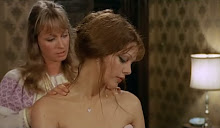
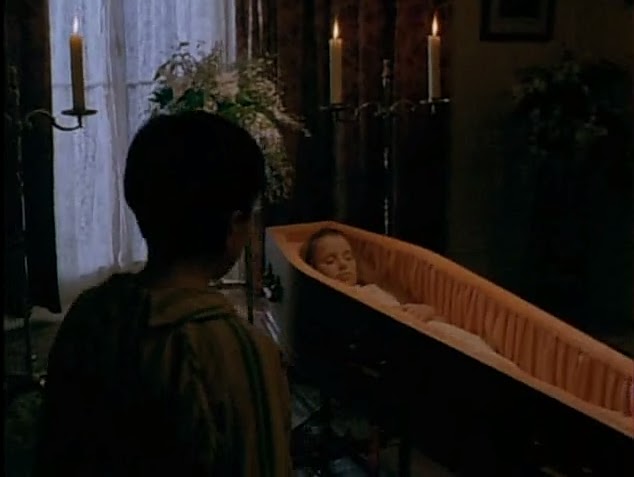
‘Haunted’ is perhaps Herbert’s most distilled imagining of the traditional ghost story, even if it raised some eyebrows on publication. I recall Fear magazine, latching onto the novel’s lack of big gruesome set pieces, wondering if a ‘Woman’s Hour’ serialization was on the cards. And while it’s not necessarily my favourite Herbert (I’d probably go with ‘Moon’ or ‘48’), it introduced arguably his most enduring character: David Ash, a guilt-ridden, cynical, borderline alcoholic parapsychologist. And if this description doesn’t sound anything like Aidan Quinn’s character in Lewis Gilbert’s 1995 adaptation, then here we come to an awkward segue into the film review part of this article, and our first indication that there are quite a few things wrong with ‘Haunted’ the movie.


So why in the name of buggery am I reviewing it on Agitation? Two reasons. One: I wanted to write about Herbert and dedicate a post to his memory. He was one of those magnificently unpretentious, politically incorrect writers for whom story was everything and fuck the naysayers – i.e. the kind of writer I discovered at exactly the right age and to whom, even though my bookshelves are now piled with writers who are considered “better”, I owe my love of reading. Two: as a comment on how badly served Herbert was in terms of adaptations.

For a man who became a bestselling writer with his first novel in 1974 (‘The Rats’ sold out its first print run in three weeks!), it wasn’t until 1981 that anything of his was filmed. ‘The Survivor’ is an intermittently intriguing but ultimately flawed adaptation of Herbert’s third novel, written for the screen by David Ambrose and directed by David Hemmings. A good cast – Robert Powell, Joseph Cotten and Jenny Agutter – wander through an evasive storyline, while heavy cuts pre-release (the film clocks in at barely over an hour twenty minutes) don’t help the narrative coherence. A pre-production decision to attempt a cerebral rather than scary movie was ill-advised.

Although not as ill-advised as dressing dachshunds up as rats in the big screen (oh all right then, direct-to-video screen) version of ‘The Rats’ a year later. It was inexplicably retitled ‘Deadly Eyes’. Which essentially gives us a film version of ‘The Rats’ with dogs as rats and a title that sounds like a Zalman King top-shelf trouser-arouser. Oh dear. Over a decade passed, then 1995 gave us two Herbert adaptations: ‘Haunted’, and Carlo Carlei’s ‘Fluke’. This is the poster for ‘Fluke’:


I think we can see where this one misses the mark. Of how ‘Haunted’ misses the mark, more later.

‘The Secret of Crickley Hall’, a three-part mini-series, emerges as the most faithful, and best written of the bunch. And when television is besting what’s being done for the big screen, that’s a pretty depressing state of affairs. It’s to be hoped that more of his work reaches the big screen and is done properly. ‘48’ would make for one hell of a good movie, budget permitting. Or how about an 18-rated-and-earning-it headfuck based on ‘The Jonah’ and directed by the guy behind ‘A Serbian Film’? Brad Anderson ratcheting the tension up on ‘Moon’? Fuck, let’s give Mel Gibson a chunk of money, a copy of ‘Shrine’ and let him revisit the religious controversy of ‘The Passion of the Christ’. Note to Hollywood: I’ll settle for an executive producer credit and a small fee. Aw, hell, consider the fee waved – just make a really good James Herbert movie. Please?

Okay: 1,100 words of avoidance in the can. Deep breath. ‘Haunted’: un film de Lewis Gilbert. Let’s deal with this mo’ fo’. Originally written as a screenplay for the BBC, Herbert recrafted the story into a novel when the script went unproduced. The book has David Ash undertake an assignment to disprove a haunting at a crumbling stately home inhabited by three siblings – brothers Simon and Robert Mariell and their seductive sister Christina – and their elderly housekeeper whom they rather patronisingly called “Nanny” Tess. Ash is haunted (the novel’s title works on several levels) by the death of his sister in childhood, a drowning he not only failed to prevent but benefited from in terms of the abrupt cessation (at least in a worldly form) of her constant and malicious bullying. Ash is temperamental and a heavy drinker. He takes against the Mariell brothers from the off, resenting their toffee-nosed demeanour and their petty little games. He just wants to scientifically disprove the haunting of Edbrook (their family pile) and split. Only Christina proves immensely distracting, and a series of occurrences leave him wondering if there isn’t something supernatural lurking in Edbrook after all.


Gilbert’s film – his penultimate as director, after 51 years calling the shots (he’d shoot his final movie, an adaptation of Shelagh Stephenson’s play ‘Before You Go’ in 2002 at the age of 82) – strips Ash of all his emotional baggage. Even the death of his sister, delineated in a frankly ridiculous pre-credits scene (she plunges into a stream barely a foot wide that, as soon as the camera plunges underwater, opens out into something deeper and wider than the River Styx), is depicted as an unfortunate accident rather than the wished-for deus ex machina that ends the young Ash’s physical torments and kicks off his spiritual ones in the novel. Likewise, the nature of his sister’s reappearance towards the end of the film – as well as the provenance behind the haunting – drastically differ from the novel to such an extent that the entire point is missed and you wonder why Gilbert and co didn’t just cook up their own haunted house story.

The largest and most curious deviation of all is the decision to make ‘Haunted’ a period drama. The novel is set contemporaneously but deliberately evokes the isolationism and trappings of, say, an M.R. James story. It’s the dynamic between gothicism and the modern world that give the Ash trilogy their edge. That, and the fact that Ash himself is an unpredictable and vicariously fucked-up protagonist. The Ash of the film is about as edgy and fucked-up as an unrefrigerated lettuce leaf. The period paraphernalia serve only to prettify the film version. Watching it today, for only the second time since it first came out, I was struck by the similarity to James Watkins’ recent take on ‘The Woman in Black’: a Sunday afternoon glossing over of source material that is not only cruel and cynical, but whose cruelness and cynicism is the entire fucking point. 

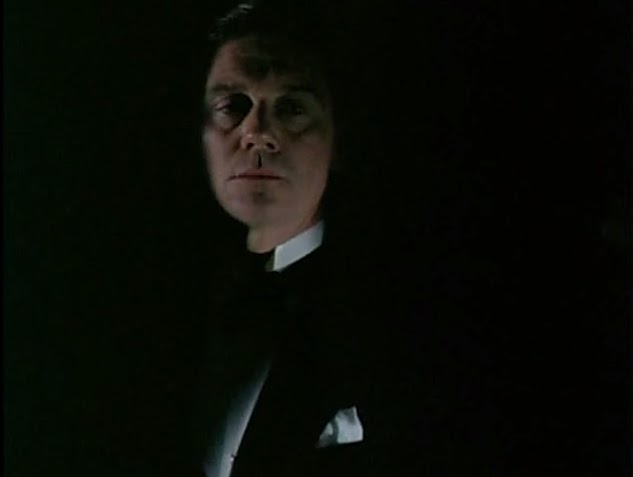
There are a few grace notes to Gilbert’s film, though. As Simon and Robert, Alex Lowe and Anthony Andrews strike the right note of sybaritic smugness. Stalwarts Anna Massey and John Gielgud bring some old-school gravitas to the proceedings. And Kate Beckinsale, in her early twenties and already starting to chalk up some memorable feature film appearances, knocks it out of the park as Christina, flipping between dreamily coquettish and spikily vampish without missing a beat. She gives the film a beating heart (and a quickened pulse!) where otherwise it would have remained moribund.


A few scenes come close to evoking the novel, particularly a wine-cellar conflagration, and the siblings’ creepily childish insistence on parlour games. Mostly, though, opportunities are squandered. A tense and sustained chapter where Ash is menaced by the Mariells’ hunting dog as he flees through the woodland and discovers the family tomb is completely missing. His claustrophobic submergence in a lichen-scummed ornamental pond is reimagined as a scene on a jetty that just looks silly. The last-moment resurgence of horror when Ash thinks himself free of Edbrook and its spirits is rendered as a yawnsomely predictable final shot. And sad to say, Quinn – an actor who I usually have a lot of time for – is wooden and unappealing here.

‘Haunted’ could do with another outing – set contemporarily, with a fucked-up Ash, tormented by nightmares and fuelled by neat vodka; a David Ash who’s on the verge of meltdown. Paddy Consodine, full of intensity and keeping it real? Hayley Atwell as Christina? Nick Murphy in the director’s chair? Stick to the novel. Embrace the real darkness of the backstory. A good James Herbert movie.

Anyone?


(i.m. James Herbert, 8 April 1943 – 20 March 2013)

Wednesday, March 20, 2013

In brief: Zero Dark Thirty


I wrote a piece about a month ago on the controversies surrounding ‘Django Unchained’ and ‘Zero Dark Thirty’, the idea being to acknowledge the elephant in the room and make any necessary refutations or counter-arguments. I’d then follow up with in-depth reviews of both films, concentrating on them purely as films and not having to get bogged down with the baggage attached to them.

That was the theory, anyway. In practice, I wrote the follow up ‘Django Unchained’ review then I pressganged every avoidance tactic I knew in order to postpone writing about ‘Zero Dark Thirty’. Why? Simple reason: I enjoyed the hell out of ‘Django Unchained’, despite a few minor flaws, but I found ‘Zero Dark Thirty’ ever so slightly boring. Yes, Jessica Chastain’s performance was as on key as we’ve come to expect from her; yes, Mark Strong’s single scene cameo did for the film what Alec Baldwin’s “fuck you, that’s my name” expostulation did for ‘Glengarry Glen Ross’; and yes, that superb last scene effectively underlined the essential pointlessness of everything Chastain’s character had gone through, everything she’d lost to the passage of time, everything her obsession had taken away from her.

Yes, the torture scenes were wincingly horrible. Yes, the attack on the compound was well staged. But I fidgeted for much of the two hour running time. I sneaked glances at my watch. I came out of the cinema in a fug of “meh”. Essentially, ‘Zero Dark Thirty’ is a two-hour espionage drama followed by a single but sustained action sequence. The problem is that the potentially fascinating espionage/intellence agency shenanigans come across under Bigelow’s direction as leaden and uninteresting. It doesn’t help when shaky-cam and whiplash tracking shots seem to conspire to direct attention away from the minutiae of undercover work.

It’s a difficult genre to get right. ‘Tinker Tailor Soldier Spy’ made the world of files and tradecraft riveting. ‘Zero Dark Thirty’ almost expects you to be bored by it. The battle’s lost before the attack helicopters even launch. And an action finale where a tooled-up black ops team take down a largely unarmed enemy force comprising mostly women and children doesn’t give you anything to holler for. A grunt’s radio confirmation that the target – one Osama bin Laden – has been executed “for God and country” is about as far from cathartic as you can get.

Monday, March 18, 2013

The way we respond to light: a Q&A with Jeremiah Kipp


Watching your short films ‘Contact’, ‘Crestfallen’ and ‘Drool’, the first thing that struck me was their use of light. Is this a deliberate technique to open up an aesthetic dialogue with the dark themes you focus on?
I’ll use CRESTFALLEN as a way to make the answer specific. The story is built around a possible suicide, and I remember while we were planning the film being haunted by the way Bart Mastronardi handled the suicide film in his independent horror feature VINDICATION. His scene was gritty, raw, naturalistic; it was a gateway scene in a film about a man transforming into a monster and that’s the scene where it slips out of reality. But the suicide is shot with total frankness. And since we wanted to find our own direction, we thought about ways to make our film operatic and epic. Completely different than VINDICATION, with light and a smoky atmosphere. My friend and cinematographer Dominick Sivilli lit the suicide scene in a bathroom with beautiful beams of light coming through the solitary window without being afraid of letting the rest of the room go totally black. He said it reminded him of BEOWULF, which was absolutely the right way to go. He’s a brave photographer, and we encourage each other to be as bold with our choices as possible. The feelings inside of us are huge: love, hate, fear, envy, compassion. Cinema can reflect that back to us. Light is emotional, and the way we respond to light is laden with pleasure or dread. We thrive in the light, we fear the unknown of the dark. That’s why deep shadows are such a useful tool for the genre film.

‘Crestfallen’ and ‘Drool’ are entirely free of dialogue; ‘Contact’ contains probably no more than a dozen words. All three burrow towards their own emotional truth without any need for exposition. Is dialogue of any real importance in the short film?
I’m not against dialogue per se, it really depends on the film. CRESTFALLEN is about snapshots in time, and there’s no audio in a snapshot. It felt more poetic and appropriate to just use our composer Harry Manfredini’s evocative track. DROOL was purely sensory, in a hallucinatory world where there are no words. And CONTACT was a conscious decision to pare back everything to the bare essentials: plot, dialogue, backstory, even color were cut down so hopefully what we were left with was pure cinema. But there was some dialogue. As much as we needed. In the film we’re finishing up right now, THE DAYS GOD SLEPT, the fever dream narrative is anchored around a dialogue between a man and a woman, and the story she tells him. It’s written by a New York playwright named Joe Fiorillo who has a strong way with words; I feel like his text are as necessary as Dominick’s cinematography or Harry’s score. One is not more important than the other; they are all part of the film which is what we’re serving. And in that film, the words are our guide. People can view the trailer right here: http://kippfilms.com/daysgodslept.html


‘Drool’ is credited as being made in collaboration with the Mandragoras Project. Who else was involved and what was the impetus behind the project?
That was a wonderful group of people. I’d been friends with Laura Lona, an actress who runs Mandragoras with Julian Navarro, a brilliant gallery owner who promotes artists from around the world. Laura and a filmmaker named Salinoch had been exploring the possibilities of video and sound art, and I pitched them the idea for DROOL. It combines the art world and the horror world (Salinoch had a great enthusiasm for George Romero’s DAY OF THE DEAD, and would point to the white brick walls and say, “Doesn’t that remind you of DAY…?” The impetus was art for art’s sake, with everyone contributing, but you can’t hide from who you are. The project was an extreme version of the same themes in CONTACT.

Your work seems to contain a very specific and unsettling erotic element. Is this something that you are continuing to explore as a filmmaker?
It must be something bubbling up from my subconscious. I was raised in New England, which has its roots in Puritanism. Lately, I’ve been reading stories by Nathaniel Hawthorne, who wrote THE SCARLET LETTER. His short stories have a tremendous intensity about them, a nightmare quality where the characters are shrieking on the inside, either yearning for something more or afraid to go to that place where all inhibitions are cut off. Hawthorne’s characters are afraid of the monster or devil either outside wanting to tempt them, or inside being kept at bay. I’m sure that, in some way, ties in with the notion of the erotic in these films. The characters have desires and fears, and connection with another human is a primal need. In CONTACT, they were going to take the drug and make love, but something happens, the experience gets too close. The closer we get to another person, the more mysterious they become.

Both Zoë Daelman Chlanda in ‘Contact’ and Deneen Melody in ‘Crestfallen’ give incredibly heartfelt and expressive performances. Do you work very closely with your actors to develop character and empathy, or trust more to their intuition?
You meet them halfway. I wouldn’t have cast them if I didn’t want to draw from their talent. There has to be mutual trust and respect. Both of those actors know how much I love what they do, so when I’m there guiding them or giving an alternate direction or image at them during the shoot, they go with me. They know I will never humiliate them. If something doesn’t work, I won’t use it. But I love actors who are open to exploring. Zoë was unafraid; she wanted that role and she went for it. She’s one of the most committed, fearless and tenacious actors I’ve ever worked with. I’d love to make another movie with her soon. CRESTFALLEN’s writer-producer Russ Penning and I knew Deneen from her work with genre filmmaker Anthony G Sumner. Like Zoë, Deneen comes to the set very prepared, emotionally available and ready to work. This role was personal for her, since she based the character on a friend of hers who had committed suicide. That’s what she was drawing from.


Your feature ‘The Sadist’, starring the legendary Tom Savini, is out later this year. Can you tell us more about the film and your experience of working with Savini?
THE SADIST is a work-for-hire slasher film I made for two producers in Connecticut. It’s about a combat veteran suffering from extreme PTSD and destroying everything that comes into his path. We should have just called the film EVIL RAMBO. The producers have been re-cutting the film and doing their own reshoots, so I’m as curious as you are as to how it will all turn out. But working with Tom Savini was fantastic. I’ve heard he can be a difficult personality from folks who meet him at conventions, but on set he was a dream come true. Enthusiastic, hard-working, and if he trusts you he’ll go above and beyond. Tom is a force of nature, and when he arrives on set to shoot his scene where he’s killing everything in sight, it’s like you’re up against a Panzer tank. But he’s also hilarious, and had great stories about various film sets he’s been on. And it was great fun visiting him on the set of THE THEATER BIZARRE, an anthology film where he directed one of the episodes. He was as happy behind the camera as in front of it, and is clearly a guy who loves his work. I had good times working with Tom, and am grateful he was in the movie.

Saturday, March 16, 2013

Light and dark: three short films by Jeremiah Kipp


Let’s start with ‘Drool’. It’s an experimental four-minute movie shot in tactile black and white. It fixates on the body. Its aesthetic is intrinsically queasy. And it defies easy description. Here’s my best shot: imagine the massage scene in ‘Emmanuelle 2’ if Lars von Trier had challenged Brian Yuzna to remake it.

Welcome to the world of Jeremiah Kipp.

‘Drool’ is a film to be experienced, rather than simply watched and then discussed or reviewed under a conventional set of critical or intellectual parameters. It taps into a primal – even natal – part of the subconscious. It’s erotic in a way that challenges your perception of eroticism if you dwell on it for too long. And there’s a strange beauty inherent in the film even as it lives up to its title in the most unambiguous manner.


One more thing about ‘Drool’ – appropriately for a film that defies the structures and strictures of the reviewer’s so-called art – it doesn’t contain a syllable of dialogue.

Nor does ‘Crestfallen’, which is only slightly longer but packs a concentrated emotional punch, beginning with the biting irony of the title. Lo (Deneen Melody) is beyond crestfallen. She’s not even in the same league as dejected. In a swift rug-pull that transits from attractive young woman slipping off her robe to knife/vein/bathwater running red, Kipp plunges the viewer into the mental turmoil of Lo’s suicide attempt. The double betrayal that has brought her to this desperate act is a small masterclass in visual narrative and the editor’s art. Just a few shots, timed precisely and juxtaposed in a specific sequence, and we know all we need to about Lo’s state of mind and the pain she’s feeling. Melody’s poignantly expressive performance seals the deal.

Kipp’s evocation of Russ Penning’s script as a non-verbal experience – I almost used the description “purely visual”, but that would have done a disservice to Harry Manfredini’s elegant score – benefits immeasurably from Dominick Sivilli’s cinematography. Take these three shots:


That first image – window, light, woman – is strikingly beautiful. Light is key to Kipp’s work. Light is one of the hardest elements to capture artistically: prose doesn’t have a chance; the paintings of Edward Hopper come close; still photography and cinema have it within their grasp. And yet in so few pictures or films does light truly suffuse.

That second image: the knife assumes almost as much of the screen as Lo’s face (and doesn’t Deneen Melody just nail the emotion with that one look?); the positioning is precise, likewise the balance of light and shadow. In the third – perhaps the darkest moment in the film, Lo’s life quite literally in the balance – Kipp and Sivilli capture the darkness through the application of light.

‘Crestfallen’ is proof positive of Sivilli’s collaborative importance, but his talent was already on show in ‘Contact’, made two years earlier. An opening sequence, almost elegiac in its simplicity, has a retired couple tread warily (and indeed wearily) around something unsaid as the table is laid for a meal. Light spills into the frame from a window. Whatever is beyond is indeterminate. This single visual prompt accretes greater and greater meaning during the eleven minutes through which ‘Contact’ unfolds, and by the end the title itself has assumed extra layers of meaning.


Briefly – because once again I don’t want to spoil the emotional and immersive qualities of the work – ‘Contact’ concerns sex, drugs and reunion. Specifically, it’s about a monstrously bad trip – and I use the term “monstrous” advisedly. Kipp deals out some repellent imagery as Koreen (Zoë Daelman Chlanda)’s mind is opened not to the doors of perception but a tunnel of grotesquerie. But he takes a subtle and measured route to get there. Koreen and partner Westy (Robb Leigh Davis)’s journey to the wasteland fiefdom of Machiavellian dealer Rowan (Alan Rowe Kelly) is reminiscent of Tarkovsky (‘Stalker’ in particular), a desolate and ruined landscape providing a sociological commentary on the characters’ lives.


The closing scene brings the narrative full circle, in a scenario that could best be described as Mike Leigh gone metaphysical. Do the comparisons I’ve studded this review with make Kipp’s cinema sound derivative? Nothing could be further from the truth. Kipp – a talented director with the nous to surround himself with equally talented collaborators – is steadily building a body of work that confirms him as filmmaker with a voice and confidence that are his own.


For more information on Jeremiah Kipp, and to view the films discussed in this article, please visit his website here. I’ll be featuring a Q&A with him on The Agitation of the Mind next week.

Tuesday, March 12, 2013

Iron Maiden: Flight 666

Reposting this from three years ago, in honour of Steve Harris's 57th birthday. 

Given their thirty-five year history and the carousel of line-up changes that saw two vocalists come and go before they even recorded their first track, Paul Di’Anno ousted on the verge of mainstream success and replacement Bruce Dickinson (having departed to pursue a solo career after two world-conquering decades) being swiftly recruited back into the ranks when his replacement Blaze Bailey failed to find favour with the fans – never mind the comings and goings of drummers and guitarists – there is probably an incisive, provocative and controversial documentary to be made about Iron Maiden.

Scot McFadyen and Sam Dunn’s ‘Iron Maiden: Flight 666’ is not that documentary. However, it was quite evidently not meant to be and should therefore be judged under different criteria.

If James Brown is synonymous with – and doubtlessly deserves – the soubriquet “the hardest working man in rock ‘n’ roll” – then Iron Maiden are most definitely the hardest working band in heavy metal. ‘Flight 666’ documents their 2008 “Somewhere Back in Time” tour, involving 23 stadium shows in 13 countries over 45 days, Maiden clocking up somewhere in the region of 50,000 miles and appearing in front of half a million fans. (The title ‘Flight 666’ refers to the Boeing 757 the band used to ferry themselves and their crew between these engagements. Dickinson, a qualified pilot, captained the airliner, nicknamed “Ed Force One” after Iron Maiden’s mascot Eddie the Head, a huge illustration of whom bedecks the tailfin.)

Now, I’ll freely confess – as much as I love the ‘Number of the Beast’ and ‘Powerslave’ albums (released in 1982 and 1984 respectively) – I’d considered Iron Maiden a spent force. Until their blistering reinvention with the 2006 album ‘A Matter of Life and Death’, that is.

‘Flight 666’ shows up me as a fair-weather fan, with the screaming hordes who greet Steve Harris et al in Mumbai, Sydney, Tokyo, Mexico City, Costa Rica, Bogota, São Paulo, Buenos Aires, Santiago and Puerto Rico providing an object lesson in what the concept of being a fan truly means. And kudos to the band for playing in half of these places, putting on fully-fledged arena stage shows in parts of the world where, as one tearful aficionado puts in, seeing Maiden live is a “once in a lifetime” event.

Elsewhere, a fan in Mumbai – a kid who was probably ten years away from being born when ‘Number of the Beast’ came out – grins at the camera and shouts, “Up the Irons”. A Japanese fan salutes Maiden for always being true to themselves and to the fans. This is the root of their appeal, and the point that ‘Flight 666’ effortlessly puts across: Iron Maiden have never given a shit about being cool or relevant or fitting in; all they’ve ever wanted to do is put on the best show imaginable because their fans deserve nothing less. Again I say: kudos.

Does all this sound like an exercise in Maiden publicity rather than a documentary? Perhaps it is. But let’s face it, ladies and gents, we’re talking about Iron Maiden here. Not only are they the hardest working band in metal, they’re also the most unpretentious and least self-analytical. Whereas Metallica are represented cinematically by ‘Some Kind of Monster’, an epic account of a band in therapy, no film about Iron Maiden would ever tread that kind of path; and that’s simply because Maiden would never waste time or money hiring shrinks or “performance coaches” – they’d just talk it out over a couple of jars down the pub.

Therefore ‘Flight 666’ is the film is it because Maiden is the band it is: tight knit, focussed, fans first and no bullshit. Essentially, ‘Flight 666’ is a concert film with an unobtrusive amount of documentary footage, mostly showing the band as a bunch of down-to-earth guys, enjoying what they do and ribbing their manager Rob Smallwood for his gruff Yorkshire pragmatism, who seem entirely unaffected by their fame.

The closest analogue I can find to ‘Flight 666’ is Martin Scorsese’s ‘Shine a Light’, in which 15 minutes of documentary footage upfront is all that differentiates the project from a straightforward concert film. But whereas, in Scorsese’s film, the Rolling Stones are introduced by Bill Clinton in a performance in front of an exclusive crowd who probably shelled enough per ticked to pay off my mortgage, Iron Maiden keep it real by demonstrating a refreshing lack of agenda, a commendable commitment to their fans and a palpable energy and exuberance in their stage shows.

Tuesday, March 05, 2013

The Tourist


In 2006, the magnificently named Florian Henckel von Donnersmarck made ‘The Lives of Others’, a real labour of love which he’d spent five years bringing to the screen. It was released to almost universal acclaim, netted an Oscar for Best Foreign Film and announced the arrival of a major new filmmaking talent.

In 2010, von Donnersmarck made ‘The Tourist’, a Hollywood star vehicle in which he invested less than a year, only coming on board after Lasse Hallestrom and Alfonso Cuaron (among others) had come and gone. It was released to almost universal dismissal and the only thing it won was a couple of Teen Choice Awards. There seemed genuine surprise when its overseas box office took it into profit.

There’s no real critical love for ‘The Tourist’ – and it would be difficult to put a spin on the film worthy of a revisionist appraisal – but it’s not without a few hokey pleasures and it certainly isn’t the unmitigated waste of time and talent that most reviewers would have you believe. There are, however, a couple of problems which it struggles to overcome and with which it eventually reaches stalemate. Of which more, to use a pleasantly old-fashioned phrase, later.

‘The Tourist’ opens with Elise Clifton-Ward (Angelina Jolie) under surveillance in Paris by Interpol agents under the coordination of tenacious Scotland Yard detective John Acheson (Paul Bettany). Acheson is on the trail of elusive financial crook Alexander Payne, who owes Her Majesty’s government £744 million in taxes. Her Majesty’s government being something of a capricious entity, non-payment of £744 million is deemed a bad thing, while Acheson being allowed to run up an £8 million bill at the taxpayer’s expense for an operation that has produced exactly one lead is apparently quite acceptable. Well, maybe not to Acheson’s boss, Chief Inspector Jones (Timothy Dalton), who has to sign the receipts and is on the verge of pulling and plug.

Acheson’s single and highly tenuous lead? That’ll be the elegant Elise.


And when Elise receives a mysterious note and immediately quits the pavement café culture of Paris and hops a train for Venice, Acheson intuits that Venice is where he’ll find Payne and goes behind his superior’s back as he attempts to close the net. Meanwhile, a mole in his department blabs details of the Venice connection to mobster Reginald Shaw (Steven Berkoff). Payne might not have paid his taxes to Her Majesty’s government, but he’s actively stolen from Shaw and that pisses Shaw off right royally. And this point I’ll simply reiterate that Shaw is played by Steven Berkoff and leave it to your imagination.

En route to Venice, Elise meets widowed American maths teacher Frank Tupelo (Johnny Depp) and part-seduces, part-confuses him and all-round plays him for a sap. You see, that mysterious note Elise received instructed her to find someone her pursuers would believe was Payne in order to distract them. Thus, spy novel aficionado Tupelo finds himself in a for-real web of intrigue and double-bluff when all he really wants is the affections of the alluring Elise. Instead, he finds himself targeted by Acheson and Shaw alike, as well as running afoul of the Venezian police. (Incidentally, if your idea of the Venezian police is formed by the novels of Donna Leon, check in your aesthetics at the popcorn stand. This lot are like the Keystone Kops with kanals.*)

This is where the film runs into the first of its problems. For the plot to work, Frank Tupelo has to be an everyman. A quite literal innocent abroad. A dupe with a streak of the hopeless romantic. You have to be able to – by turns – feel sorry for him, laugh at him, and root for him. Johnny Depp is a remarkably talented actor, but one so associated with quirky characters (indeed, someone so associated with quirkiness simply because he’s Johnny Depp) that it’s basically impossible to cast him in an everyman role. And his attempt to play Tupelo in said manner leads to a leeching of charisma and, crucially, a lack of chemistry in his scenes with Jolie.


Lack of chemistry between the leads is a deal-breaker for any movie, but doubly for a romantic thriller that’s so obviously patterning itself on the ‘To Catch a Thief’ model. Which is where the second problem comes strolling through the piazza. The script is credited to von Donnersmarck, Julian Fellowes and Christopher McQuarrie, based on Jerome Salle’s script for his 2005 French language film ‘Anthony Zimmer’. Although von Donnersmarck rewrote the script prior to filming, it’s very easy to delineate the individual contributions: anything elegant, witty and Hitchcockian probably came from the pen of Fellowes; the thrilleramics, double-bluffs and sadistic villain from McQuarrie; and the minutiae of surveillance from von Donnersmarck. ‘The Tourist’ could have been an immediately and infinitely better film had it settled on just one approach. In fact, I’d wager that if script duties had been solely left to Fellowes, it would have been a pure joy.

Still, there’s enough to like. The sheen of artifice suits the Hitchcockian elements well, and DoP John Seale shoots everything in a sun-dappled palette that has probably earned him a crate of champagne from the Venice Tourist Board. (Here’s a quick game: write down all the movies set in Venice you can think of, and give them a 1 – 5 rating based on how desirable a holiday destination they portray the city as. I’m guessing you’ve got ‘Death in Venice’, ‘Don’t Look Now’, ‘The Comfort of Strangers’, the last scene of ‘Casino Royale’ and a handful of gialli and you’d run a mile rather than ride a gondola. Now watch ‘The Tourist’; you’ll be looking at travel agents’ brochures before you know it.)

The few action scenes that the movie delivers and well constructed, and a rooftop chase nicely punctures the free-running extravaganzas that Hollywood usually delivers when characters race across the skyline; here, tiles give way, characters stumble and the pace is hilariously (and realistically) slow.

Apart from Depp’s somewhat wooden turn, performances are generally good. Dalton takes what is essentially a glorified cameo and has great fun with it. Rufus Sewell turns up for all of a minute and a half and damn near steals the show. Berkoff reins in his usual manic twitchiness and Shaw emerges as all the more dangerous for it. But the jewel in the crown, the shining star of ‘The Tourist’ is Angelina Jolie. I don’t think she’s ever looked more the old-school effortlessly elegant movie star than she does here. Her English accent, while a tad more cut-glass than even the most upper class British inflection, is much more convincing than in her outings as Lara Croft. But mainly it’s the air of intrigue, allure and teasingly aloof sophistication that virtually emanates from her as she glides seductively across the screen. I’ve always associated Jolie with an earthier, raunchier persona and to see the transformation wrought here is to be mesmerised. Hmmm, maybe the Venice Tourist Board owes her a crate of bubbly as well.


*I apologise unreservedly for that so-called joke.

Monday, February 25, 2013

No, no, Herr Waltz, here's to YOU!


That'll be two-for-two on the Tarantino-Waltz partnership, then.

Wednesday, February 20, 2013

Django Unchained


Where the hell do you start with a review of ‘Django Unchained’?

Do you outright ’fess up that it’s not perfect, that there are some flaws, then shrug your shoulders during a paragraph break and spend the rest of the review blathering on about how much you enjoyed it anyway?

Do you start out by enthusing about the many things that Tarantino gets right, then slowly peel back a few critical layers, saving the nit-picking for last?

Do you mourn the untimely loss of Sally Menke, whose contribution to the cinema of Tarantino is thrown into acute context by the occasionally indecisive editing rhythms of ‘Django Unchained’ that you just know wouldn’t have been there if she’d been in the editing room?

What you don’t do is start throwing around words like “self-indulgent”, “homage” and “no original ideas”, because – damn it! – Tarantino’s is the cinema of the cineaste, a synthesis of all the movies that most of us will never get round to seeing, and there are plenty of us who wouldn’t have it any other way. Complaining about self-indulgence in a Tarantino film is like tutting over the horror in James Herbert novel. It’s kind of the fucking point.

And it’s for this reason that any and every Tarantino film births itself across the screen in the amniotic fluids of movie lore. Thus ‘Inglourious Basterds’ emerges as more than just a revisionist “bunch of guys on a mission” movie if you approach it with, say, some foreknowledge of the UFA protégés who fled Germany during the rise of Nazism. And ‘Django Unchained’ ticks a lot more boxes if you know your Sergio Leone from your Sergio Corbucci. The very title, and a cameo by Franco Nero, riff on Corbucci’s most celebrate spaghetti western.

While ‘Django Unchained’ is most firmly rooted in the spaghetti western tradition – it’s OTT, often nihilistically violent, and utterly divorced from the moral cadences of the more traditional American western – it has to be noted that whereas Tarantino adheres to the iconography of the genre, he doesn’t necessarily hold to its conventions. Granted, I’m all in favour of artists being unconventional, but the western is one of those genres that benefits from a more conventional aesthetic.


To use a sweeping – but, I hope, justified – generalisation, westerns tell essentially simple stories. Even films as thematically deep as Peckinpah’s ‘Ride the High Country’ and ‘The Wild Bunch’ or Eastwood’s ‘Unforgiven’ have simple narratives. The greatest westerns are distillations of theme and character: haiku in widescreen and with six-shooters. ‘Django Unchained’ is anything but narratively simple; anything but a distillation. The script is a circuitous affair that rambles into ever greater contrivances in order to thread a veritable posse of genre touchstones into something resembling an actual story.

These range from aforementioned spaghetti western maestros Leone and Corbucci to the blaxploitation ‘Nigger Charley’ films by way of Mel Brooks’s ‘Blazing Saddles’ and, uh, Richard Fleischer’s ‘Mandingo’. It’s this latter – a slice of overboiled Suth’un melodrama – that informs the second half of Tarantino’s film and calls for the largest quota of narrative convolutions. ‘Mandingo’ is a curious touchstone for Tarantino, since the film trades on the sweaty physical violence of bare-knuckle fighting correlated with the sweaty forbidden lure of interracial sex.

Central to ‘Mandingo’ is sex. Central to Tarantino’s ‘Mandingo’ homage is fighting. ‘Django Unchained’ is typical of all of Tarantino’s work in that it is a sexless work of cinema. For all that Django (Jamie Foxx)’s quest is to free his enslaved wife (Kerry Washington) from an outwardly charming but cruel and hypocritical plantation owner, every frame suggests the mindset of a director who is a hopeless (possibly unrequited) romantic – nowhere more explicitly than in the already divisive final scene – rather than the interactions of two characters who enjoy sexual intimacy.

On the plus side, though, ‘Django Unchained’ represents as well as anything in Tarantino’s filmography the two reasons I will always have time for him as a filmmaker: he cares – cares deeply – about dialogue and performance. The dialogue might not have the crackle and immediate quotability of ‘Reservoir Dogs’ or ‘Pulp Fiction’, but that’s only because Tarantino is writing in a different idiom. And when he’s writing for his big villain, Calvin Candie (Leonardo di Caprio), Tarantino fashions dialogue that captures the character’s suavity, venality and egoism and wraps it into a simultaneously seductive and repellent package. Di Caprio’s performance rises to the occasion. Elsewhere, Samuel L Jackson essays a complex and dangerous character in a turn that’s his best in years, while Christoph Waltz, as German dentist-turned-bounty-hunter Dr King Schulz, makes it two-for-two following his star-making turn in ‘Inglourious Basterds’. Foxx meanwhile is all moody cool, iconography in motion, his vengeful anti-hero growing in stature as the film progresses.

Best of all, the whole cast – including some left-of-field cameos (when was the last time you saw ‘Dukes of Hazard’ regular Tom Wopat in anything?) – are obviously in on the joke. Sure, ‘Django Unchained’ is wincingly violent in places, and Tarantino makes no bones that slavery was a fucking awful business, but there’s nothing to say that the heaviest and headiest subjects can’t be tackled provocatively and/or satirically. No pun intended, but I really can’t think of another way to put it: ‘Django Unchained’ works best as a black comedy.

Thursday, February 07, 2013

A tale of two controversies

Public service announcement: this piece isn’t a review. It’s an attempt to address the controversies surrounding ‘Django Unchained’ and ‘Zero Dark Thirty’, and I’m writing it for no other reason than to get it out of my system so I can then write reviews of these two movies that assess them as movies rather than going tit-for-tat with some of their harsher critics.

In other words, if the next few paragraphs don’t seem like a fun night out at The Agitation of the Mind, please feel free to skip this entry and I’ll see you back here next week for the ‘Django Unchained’ review proper.


Spike Lee doesn’t like ‘Django Unchained’. Spike Lee doesn’t much like any Tarantino film, certainly since ‘Jackie Brown’. In fact, it’s pretty fair to say that Spike Lee doesn’t like Quentin Tarantino period. What riled Lee about ‘Jackie Brown’ was Tarantino’s wholesale use of what our PC and touchy-feely society dictates we should only refer to as “the N-word”. Lee felt that the degree to which it was used in a film written and directed by a white man was inappropriate. This argument is not without credence, but unfortunately it opens up a can of words as regards entitlement.

The rational let’s-all-be-grown-up-about-this approach should be that any artist should be able to tackle in subject in any manner which best serves the aesthetic imperative of the work. A film’s aesthetic can range from the utterly unrealistic flight of fantasy of, say, Powell and Pressburger’s ‘The Red Shoes’ to the unapologetically grim realism of Ken Loach’s ‘Ladybird Ladybird’. Both of these films use their aesthetic to make a statement; both succeed. ‘Jackie Brown’ is a crime film whose characters inhabit an economically depressed milieu with a specific ethic demographic. These characters are not going to address each other as if they’d just stepped out of a P.G. Wodehouse novel; they’re going to use the language of the street. 

Tarantino attempted to address this element of his screenplay at the time ‘Jackie Brown’ was released, noting that he had used the n-i-g-g-a spelling and not n-i-g-g-e-r. This was perhaps a tad disingenuous given that the variant in spelling makes not one iota of difference to the pronunciation. This might have been the point at which his name got scratched from Spike Lee’s Christmas card list. It was par for the course, then, that Lee wouldn’t be appreciative of Tarantino making a film with about slavery. And not the kind of hand-wringing film that most white directors would turn in, full of liberal sentiments marinated in several gallons of white man’s guilt, but the kind of film that only Tarantino could make, full of gleefully over the top iconography, swathes of non-PC humour and the unique brand of day-glo anti-realism that has been his stock-in-trade since the comparative subtleties of ‘Jackie Brown’ went unrewarded at the box office. Which is to say, ‘Django Unchained’ is a movie movie.

We’re back to the whole “as long as the aesthetic serves the work” caveat, and I’m throwing open the comments section for that to get debated in. The main question is whether Tarantino, as a white director, had any right making a film about slavery. At which point, the question of logical extremes rears its exaggerated head. Where do you draw the line if you disallow Tarantino that right as an artist? Can only Jewish directors make films about the Holocaust? Do we call time on male novelists creating female protagonists? Should a documentarist making a feature about a musician desist if he or she cannot read music or play an instrument? Herzog’s ‘Into the Abyss’ – should the dude have gone out and whacked somebody before he sat down to talk to a convicted murderer?

The question leads ultimately to absurdity. Absurd, too, is the idea of Tarantino as a racist. What racist would repeatedly write iconic roles for black actors (Samuel L Jackson in ‘Pulp Fiction’, Pam Grier in ‘Jackie Brown’, Jamie Foxx in ‘Django Unchained’)? What racist would, in his choice of subject matter, his choice of soundtrack music and his pop culture references, continually demonstrate such a passion for black culture that, had he been alive during the period that his latest movie is set, he’d no doubt have been lynched as a “nigger lover”.


Naomi Wolf doesn’t like ‘Zero Dark Thirty’. In a piece in The Guardian, Wolf castigates Kathryn Bigelow for peddling propaganda in suggesting that “what your script blithely calls ‘the detainee programme’” (i.e. the wholesale torture, post-9/11 of anyone suspected of Al Qaeda involvement) yielded information that led directly to the location – and by extension the execution – of Osama bin Laden.

The most damning paragraph of Wolf’s article is worth quoting in full: “In a time of darkness in America, you are being feted by Hollywood, and hailed by major media. But to me, the path your career has now taken reminds of no one so much as that other female film pioneer who became, eventually, an apologist for evil: Leni Riefenstahl. Riefenstahl's 1935 ‘Triumph of the Will’, which glorified Nazi military power, was a massive hit in Germany. Riefenstahl was the first female film director to be hailed worldwide.”

Up to this point, it’s difficult to argue with Wolf’s article. She pulls apart the “based on eyewitness accounts” tag which opens the film, and draws comparison with Alex Gibney’s ‘Taxi to the Dark Side’ and Rory Kennedy’s ‘Ghosts of Abu Ghraib’ – both documentary films with sourced and verifiable content – as well as citing academically sound studies which demonstrate that torture is ineffective as a method of sourcing military/political intelligence, studies which “rebut the very premise of ‘Zero Dark Thirty’.”

But it’s with the Riefenstahl comparison that the article loses focus. It paints a picture of ‘Zero Dark Thirty’ as a film about crusading American intel operatives, God and morality on their side, doing whatever they have to do to get information. I was expecting something akin to Inspector Regan knocking a suspect about in your average episode of ‘The Sweeney’: we know the lairy little nonce has done it, we despise him for giving Jack Regan some lip, and if our favourite hard-boiled Flying Squad ’tec has to give him a slapping to get a confession, well the little bastard deserved it. Instead, the torture scenes in ‘Zero Dark Thirty’ – which commence almost immediately – are fucking awful to watch: a succession of beatings and humiliations that are squalid and inhuman.

Riefenstahl made Nazism look Wagnerian, depicting the architects of the Third Reich as almost god-like. Bigelow portrays the purveyors of the US response to terrorism as, essentially, a bunch of low-achievers harangued by their boss to “bring me people to kill”. The scene in question, all of them cowering as the bollocking is handed out, is reminiscent of Alec Baldwin’s “always be closing” speech in ‘Glengarry Glen Ross’ – it simultaneously communicates the pointlessness and the banal intensity of a bunch of small people being forced to up their game to secure a worthless result.

Oh, and the film makes no bones about how basically fucking illegal the whole bin Laden thing was. If ‘Zero Dark Thirty’ was intended, as Wolf implies, as a work of propaganda, it’s a total failure. Leni Riefenstahl would have laughed it out of the cinema. Goebbels would probably have had somebody shot.

Monday, February 04, 2013

The Grey


At the beginning of ‘The Ballad of Cable Hogue’, weary saddle-tramp Hogue (Jason Robards) finds himself betrayed and left to die in the blistering desert. He implores God, “Yesterday I told you I was thirsty and I thought you might turn up some water! Now if I’ve sinned, you just send me a drop or two and I won’t do it no more. Whatever in the hell it was I did. I mean that, Lord.”

Towards the end of ‘The Grey’, beleaguered company man Ottway (Liam Neeson), lost in the Alaskan wilderness and hunted by a pack of wolves, sends out this little homily to the Almighty: “Do something, you phony prick. Fraudulent motherfucker. Do something. Come on, prove it! Fuck faith – earn it! Show me something real. I need it now, not later. Now! Show me and I’ll believe in you until the day I die, I swear. I’m calling on you.”

In ‘The Ballad of Cable Hogue’, the vengeful but likeable Hogue finds water. In ‘The Grey’, the nothing-to-live-for Ottway is answered only by the tallness of the trees, the vastness of the sky and an overwhelmingly indifferent silence. “Fuck it,” he ruminates, forcing himself onwards, “I’ll do it myself.”

If ‘Hogue’ is the closest Sam Peckinpah ever came to a religious allegory, then Joe Carnahan’s ‘The Grey’ is a wintry blast of existentialism. Still, it shares some aesthetic territory with Peckinpah. There are explicit similarities, particularly when one character expires against the majesty of the age-old mountains in a shot that purposefully quotes the final scene of ‘Ride the High Country’.


And there are implicit parallels, most notably in that both filmmakers demonstrate a keen understanding of how men behave and interact; of the macho codes that simultaneously protect their sense of self-identity and threaten to tear them apart whilst under pressure.

Peckinpah’s film opens with Hogue stripped of his rifle and canteen of water by his so-called partners Bowen (Strother Martin) and Taggart (L.Q. Jones). The rifle’s immaterial except that he might have defended himself with it. The water delineates the difference between two of them living and three of them dying before they make it out of the desert. But Hogue survives and the next act of the film sees him become a property-owner, a businessman and a publican thanks to the discovery of water where there shouldn’t have been any, his success flourishing almost accidentally while he broods on the possibility of getting even with Bowen and Taggart. His sentiments thaw somewhat as he romances saloon girl Hildy (Stella Stevens), but he never fully commits and things sour between them.

Ottway, on the other hand, is introduced to us having lost love. His wife has died, he’s ended up a paid killer of wolves for a petroleum conglomerate, mired in a grim company town populated by braggarts, brawlers and bullshitters. He is, put it mildly, at the end of his tether. Five minutes in, having written (or rather orated, in voiceover) a letter to his beloved, he’s crouching over his rifle, the barrel in his mouth. A wolf howling in the distance makes him hesitate. Plus, it’d be an awfully short film if he went the “goodnight Vienna” route.


Instead he finds himself on a plane with a cluster of noisy stevedores and it’s a genuine surprise when the plane goes down because surely all of that testosterone should have kept it up indefinitely. But plummet from the sky it does and suddenly “cluster of noisy stevedores” thins out to “small band of survivors”. Masculine ciphers – the huntsman, the loquacious smart-ass, the myopic nerve-bag, the ex-con – are gradually revealed as actual people. There’s an astounding scene, very shortly after the crash, where Ottway tends to a badly injured co-worker, and unable to help him medically, basically talks him through the fact that he’s going to die and do so very shortly. It’s a scene that most of mainstream directors working today would have fucked up in any number of different ways – pitched just a tad either way it could have toppled into cloying sentiment or callous indifference – but Neeson’s gravitas and Carnahan’s unobtrusive, observational style of direction combine and hold the moment in perfect equilibrium.

Ottway emerges as de facto leader almost immediately, though he’s challenged more than once. His first assertion of authority is when the bullish Diaz (Frank Grillo) starts rifling through his dead colleagues’ wallets and pocketing the cash. The following exchange occurs:

Ottway: Put that back. We’re not looting dead bodies for swag.
Diaz: You got lucky today, Ottway. You should be lying there with them. Don’t push it.
Ottway: I’m not going to say it again.
Diaz: Motherfucker, take a big step back.
Ottway: I’m going to start beating the shit out of you in the next five seconds. And you’re going to swallow a lot of blood for a fucking billfold.

Or how about Diaz’s assertion later, when the wolves appear and their continued existence starts looking less and less likely, that “I don’t walk through this world with fear in my heart” – Ottway’s response is a curt enquiry as to whether he learned that homily in prison: “Did someone write it on the dayroom wall?” Diaz is mouthy twat for so much of the film that the viewer could easily start rooting for the wolves. Yet he is gifted with – and, in the final analysis, deserves – one of the film’s most poignant scenes.

In addition to the Peckinpahesque examination of masculine codes and the jewel-like moments wherein Diaz and others find their humanity, ‘The Grey’ is also a bloody good thriller. A vertiginous rope crossing over an abyss is executed with Hitchcockian aplomb, the camera hanging back from the cliff edge until the one member of the party with a serious fear of heights takes his turn, at which point a dizzying POV shot demonstrates exactly what he has to be scared about.


Likewise, the wolves’ predatory behaviour is suspensefully developed. Their first appearance is almost ghostly: a pair of eyes emerging from the darkness around the crashed aircraft … joined by another … then another … then suddenly the screen is full of them. Later, bivouacked around campfire, human argument and animosity (Ottway and Diaz are at each others’ throats) is thrown into sudden and brutal relief as howling erupts from all around them.

At its best – in the way a horror film is often at its best when keeping the monster unseen – ‘The Grey’ wrings maximum chills from suggesting the wolves’ presence rather than launching across the screen. (A comment on the animatronics: it seems a lazy choice when even a low-budgeter like ‘Burning Bright’ can be bothered to harness the physical threat of a real tiger … but it’s preferable, at least in the opinion of an old fogey like me, to CGI.)


The horror movie comparison bears out in terms of structure. The second half of the film is marked by dwindling numbers, a stalk ‘n’ slash opus with wild animals and inhospitable terrain instead of a mad axeman and a dark cellar. And as the best horror movies essentially play on the fears we never managed to shake off from childhood, Ottway’s internal journey (its arc in ragged but emotionally persuasive juxtaposition to his journey through the wilderness) finds him back with memories not of his late wife but of his father. A drunk, as Ottway remembers him – moreover, a maudlin one with a taste for poetry. More than once Ottway quotes a poem of his father’s composition. It seems like a palimpsest, the Robert Frost-like repeated last lines suggesting a longer work. Maybe nobody’s life ever stretches to the completion of their endeavours, not Ottway’s, not his father’s, certainly not his wife’s.

Once more into the fray
Into the last good fight I’ll ever know
Live and die on this day

Thus the poem, thus the words Ottway arms himself with when the time comes to stand his ground. Another poem comes to mind, a stanza from Tennyson’s ‘In Memorial A.H.H.’:

Who trusted God was love indeed
And love Creation’s final law
Tho’ nature, red in tooth and claw
With ravine, shriek’d against his creed

On so many levels, ‘The Grey’ is an upending, a subversion of the first two lines of that stanza (weigh up “who trusted God was love indeed” with Ottway’s bereavement and his imploration to the Almighty quoted at the beginning of this review) – and a visceral exercise in proving the last two. It’s a brutally existential thriller that debates Tennyson while getting in touch with its inner Peckinpah. I can’t think of many movies you can say that about.

Friday, February 01, 2013

Haywire


I’d had it on good authority that ‘Haywire’ was one of two things: an attempt (director Steven Soderbergh re-teaming with screenwriter Lem Dobbs) to recapture the reconstructive brilliance of ‘The Limey’ but here drawing on the tropes of the espionage thriller; or Soderbergh basically taking the piss with a decent chunk of studio money. And, on various levels, ‘Haywire’ is both of these things. More besides? Let’s amble through the next few paragraphs, then come back to that one.

Comparison with ‘The Limey’ will forever be the elephant in the room for ‘Haywire’, the phrase “suffering by comparison” never more true than here. ‘The Limey’ has the cleverer script and the artier direction, not to mention a more genuinely emotional hook and a powerhouse central performance, Soderbergh proving himself the first director in a couple of decades capable to giving Terence Stamp something cool and edgy and iconic to do. ‘Haywire’ on the other hand is built around Gina Carano and while there is much to be said in her favour, she ain’t no Terence Stamp and Dobbs doesn’t give her even a fraction of the salty dialogue that the earlier script is seasoned with. True, ‘Haywire’ is packed full of talented actors in subsidiary roles – Michael Fassbender, Ewan MacGregor, Bill Paxton, Antonio Banderas, Michael Douglas (hell, even Channing Tatum manages not to be a sop-ass pretty-boy in this one!) – but talented actors in subsidiary roles is all they are. Which is part of the joke.


Carano had made tentative forays before the camera – the documentary series ‘Fight Girls’, a bit part in ‘Blood and Bone’ – but ‘Haywire’ represents her first lead role and the responsibility which goes with it: that of carrying a movie. And in this respect, surrounding a nascent talent with established performers – generally done with the aim of “buoying up” the lead performance – can often be the kiss of death. Soderbergh is wise enough to pitch the entire timbre of the film to Carano’s strengths. A reductive critic would probably add “i.e. looking good and kicking ass” parenthetically at this point, but Carano definitely has a presence and a certain degree of charisma onscreen. Although she’s admitted that Soderbergh manipulated some of her dialogue in post-production, there’s enough going on in ‘Haywire’ to suggest Carano could carve herself a deserved niche as an action heroine. 

Story-wise, what we have is some fairly generic characters – The CIA-Trained Operative Gone Renegade, The Handler, The Shady Politician Outsourcing To Private Operatives, The Latino Connection With His Own Agenda – playing out a fairly generic game of Second Guess The Next Double-Cross, the needlessly convoluted intricacies of which are glued together by a succession of fight scenes and chases, either vehicular or on foot. Soderbergh, it has to be said, shoots the action like a man determined to show up Michael Bay as a big phoney and never mind that he’s only got a micro-fraction of a Bay-style budget. The action is the primary reason for watching ‘Haywire’ and the film delivers.


It delivers while simultaneously being a knowing homage to its genre. I’m tempted to say satire rather than homage, but satire implies if not outright parody then at least a comedic overtone to the aesthetic. And ‘Haywire’ certainly isn’t a laugh-out-loud funny movie. It’s not meant to be. Although the last scene is almost guaranteed to prompt a wry smile. What ‘Haywire’ is, is a supremely intelligent director employing a playful approach to material that’s been done ad nauseum and abandoning innovation on a narrative or conceptual level in order to indulge himself in a sleight-of-hand display of technique.

Which brings us back to that first paragraph question. Is there anything more to ‘Haywire’? My personal feeling is yes: the sheer pleasure of watching Soderbergh indulge himself as described above. He has fun reducing McGregor, Douglas and Banderas’s dialogue to little more than jargon-heavy white noise: spy-speak overlayered with corporate vagary; and he has fun with structure and set-pieces. The main narrative of Carano’s character, Mallory, hightailing it across the USA in flight from (and later pursuit of) her betrayers is intercut with flashbacks to two missions – one in Barcelona, one in Dublin – which directly relate to her current predicament. Soderbergh stages the Barcelona job as a masterclass in dialogue-free exposition, and the Dublin escapade as an effortlessly effected segue from seductive Bondian elegance to Bourne-style smackdowns and rooftop chases.

‘Haywire’ is, in other words, extremely entertaining – and put together with a lot more élan than a film of this ilk would normally boast. And its leading lady is a knockout – in both senses of the word.

Friday, January 04, 2013

Son of Danse Macabre by Bryce Wilson


Bryce Wilson’s ‘Son of Danse Macabre’ was one of the most interesting blogging projects of the last couple of years. Especially for fans of the horror genre.

Taking as his Bible and starting point Stephen King’s seminal non-fiction overview of horror ‘Danse Macabre’ – and attuned to the fact that the book, originally published in 1981, concludes its consideration of all things dark and scary at the dawn of that decade – Bryce’s remit for ‘Son of Danse Macabre’ was to consider the American horror movie post-‘Danse Macabre’.

The title may have been an homage; the content emerged as anything but mere copyism. Bryce originally blogged ‘Son of Danse Macabre’ as a book-in-progress, a brave and confident approach for any writer as one’s first draft is essentially being launched into the public realm chapter by chapter. Also a daunting commitment to a writing discipline, particularly since real life has a tendency of up-ending the best laid of plans and the purest of good intentions.

It was while real life was doing just this and new material on the project was at a low ebb that I offered Bryce an essay called ‘Foreignness and Home Soil: The American Horror Movie Post 9-11’, which he duly published online. I was quietly proud of the article and heartened that he was able to use it.

When the project concluded and the final essays were posted, Bryce lost no time in kicking up ‘Son of Danse Macabre’ up a notch: drawing the material together, polishing and expanding it into the full-length book it had been envisioned as; and which can now be yours for the ridiculously low price of $2.99 (or £1.85 if, like me, you’re in the UK).

Before it went on sale, Bryce asked me if I wanted ‘Foreignness and Home Soil’ back to post on Agitation, with the alternative that he could include it as an appendix. I felt the essay needed the context of ‘Son of Danse Macabre’.

Thus I find myself at the crossroads marked “conflict of interest”. I’d love to write a straight-up review singing the praises of ‘Son of Danse Macabre’ – because it’s a hell of a good piece of writing, shot through with passionate, knowledge and insight. But I’m featured in it.

So what I’m saying is: it’s an accomplished piece of film criticism, it’s completely affordable and if you’re a fan of Bryce’s indispensable blog Things That Don’t Suck – or a fan of horror movies in general – there’s no reason it shouldn’t be on your reading list.

Sunday, December 30, 2012

And never brought to mind ...


This year’s Winter of Discontent has been a blast. We’ve had sex, violence and bad language; hard-nosed crims, seductive women, and a hobo with a shotgun. We’ve had vampires, cannibals and zombies. We’ve had “based on a true story” and “you couldn’t make this shit up”.

But now this third annual festival of filmic feculence is over and I find myself at a crossroads. Although I’m posting this at year’s end, I’m writing it on a spectacularly rainy evening in late November. I’ve spent October and November stockpiling material for the Winter of Discontent. The idea is that, throughout December, the blog will run itself and I’ll be able to concentration on other writing projects.

As regards The Agitation of the Mind in 2013 … well …

There seems to have been a diminution of interest in Agitation during the last year, with demonstrably fewer comments and page views. I’ve been tempted, on more than one occasion, to lock up the store, pull down the shutters and scrawl “CLOSED” in spray-can lettering over the home page. But then I get stuck into something like 13 For Halloween or the Winter of Discontent and I find myself having a good time with it, to the point where it wouldn’t matter if the blog only had one reader and that was my mum – although she’d probably bollock me for the language.

So, stats and comments notwithstanding, I’ll keep Agitation going while I still enjoy writing about film. And right now, I feel the best thing I can do is take a break for a couple of months until I’m suitably enthusiastic about it again.

In the meantime, I’d be happy to open Agitation to contributors. Any form, any style, any length. A list of your favourite movies and why you love them. The first film star you feel rapturously in love with and why they still beguile you. Your memories of movie-going: the picture palaces of your youth, be they arthouse or grindhouse. Or, y’know, just a straightforward review. Emails to slainte[at]inbox[dot]com.

The stage, my friends, is yours.

Saturday, December 29, 2012

WINTER OF DISCONTENT: Hobo with a Shotgun


Come listen to the story of a hobo who turned sour,
Dude got no name but he’s played by Rutger Hauer,
Rode into town on a freight train belchin’ steam*
But life on the streets is where it’s really unclean.

In a town called Hope, where actually there’s none
And the sign’s been repainted so the name’s now Scum,
Our hobo hero dude who ain’t go no name
Goes beggin’ on the sidewalk for a handful of change.

Ragged and dirty, ignored and overlooked,
All our guy wants to do is scrape up fifty bucks
To a buy a lawnmower from a pawn shop downtown,
Do yard work for cash, try to turn his life around.

But the seedy town of Scum (used to be called Hope)
Is ruled with fear by this crazy psycho bloke
Who wears a white suit though his deeds are deadly dark
And his psycho sons who are chips off the block.**

Then our hero meets a girl – a blameless innocent
(Or so he believes; she turns tricks to pay the rent).
When white suit psycho’s son starts jonesing for her bad
Cue hobo as a shotgun-wielding surrogate dad.

In a town that’s lawless, that’s morally destitute,
Where a paedophile cruises dressed in Santa suit,
Where the cops are corrupt and robberies are rife,
Death is dirt cheap but the cheapest thing is life.

In a place where the only career choice is crime,
Our hero cleans up the town, one deadbeat at a time,
Each pitiful pederast, each misogynistic male,
A join-the-dots corpse-strewn spent cartridge trail.

It’s a crusade that puts white suit and sonny-boy on edge;
Their empire crumbling, they call in The Pledge.
At this point a movie that’s already kind of mental
Buys a first class ticket to What The Fuck Central.

The Pledge are two bikers full-on dressed in armour,
Either they’re inhuman or they personify karma;
They’ve bumped off bishops and slaughtered men of state,
They keep a kraken in the cellar, a pet they love to bait.

‘Hobo with a Shotgun’ is one weird fucked-up flick:
Half of it is funny and the other half’s plain sick.
Viewed through alcoholic fug or substances proscribed
It’s an out-and-out cult classic, a trash fan’s wild ride.

But watch the thing cold sober and, buddy, you will find
It will (to quote Cartman) warp your fragile little mind;
It’ll leave your brain scrambled and your senses desiccated
And maroon you at a certain blog whose content’s agitated.


*All right, it’s a diesel. But I’m writing this mo’ fo’ in verse so I claim poetic licence. 

**Epic fail on the rhyming in this stanza.

Thursday, December 27, 2012

WINTER OF DISCONTENT: Lifeforce


It was a few months ago that I watched ‘Lifeforce’, already with a mind to writing it up for the Winter of Discontent. Reviewing my notes, I realise there’s no other way of engaging with the movie than to present, unedited and without contextualizing footnotes, the 500 words of appalled scribbling I produced during the two hours of this holy-fucking-awful excuse for a moving picture:

Five minutes in; first question: when Henry Mancini wrote the score, did he get really fucked up on peyote and hallucinate that he was Hindemith?

Okay, I can live with the shuttle being called the HMS Churchill, but does the alien planet have to look like a giant vulva?

So ... the alien planet: bats, a Nosferatu-like claw and naked chicks in crystal pods. And this was written by the same dude who scripted 'Alien'? Fuck my life!

“I’ve been in space for six months and she looks perfect to me.” No disrespect, bro, but a Tiffany album cover probably would after six months in zero g.

“Stand by for soft-dock.” Somehow I doubt this is a real astronautical term.


Somebody actually said: “Houston, we have a problem.” Please tell me this wasn’t scripted. Please tell me the actor was just taking the piss and it somehow made the final cut.

Interplanetary spaceflight is the norm and the ship’s log is recorded on BETAMAX???

“We were just talking about how to get it open and it popped open of its own accord.” They PAID someone to write this???

Mrs F has just called me “a pervert” for watching this film. It’s very difficult to mount a defence. 

The nudity-to-tedious-exposition ratio is so far swinging heavily in favour of tedious exposition.

Oooh, interesting. Naked alien DUDES. Being shot in phallocentric fashion by army guys. I do believe we’ve rendezvoused with a homoerotic subtext.

OMG! That is THE worst reanimated corpse in the history of cinema.


The hot-alien-brunette nudity to dead-leathery-person nudity ratio is also considerably out of whack.

For an exploitation movie based on the precept “hot naked alien chick wreaks havoc”, ‘Lifeforce’ sure as hell has some boring passages.

“How exactly did he die, Colonel?” “The life just drained out of him.” Yeah, same for the audience.

Jess Franco should have directed this. ‘Lifeforce’ is ‘Female Vampire’ is space, with Mathilda May standing in for Lina Romay.


Telepathy … Volvos … oh dear God in Heaven, Patrick Stewart’s in this POS. I am beginning to doubt my sanity.

Patrick Stewart is screaming fit to wake the dead. He must have got a look at the script.

In terms of production values, this can best be described as ‘Blake’s 7’ with boobs. Not that there have been any boobs for the last half hour. Tobe Hooper, you frickin’ owe me!

“Sterilization by thermonuclear device has been approved.” Whoa! Wait a minute! I work in healthcare and that goes waaaaayyy beyond sterilization. Like seriously, dudes.

15 minutes to go, London’s in the grip of a vampire/zombie invasion, the promised nudity has disappeared, and the level of cinematic craftsmanship on display is making your average Bruno Mattei quickie look like un film de Carl Dreyer.

Swords … bat creatures … columns of blue light. I just don’t have the words …


Peter Firth prevents Steve Railsback from getting it on with Mathilda May and THAT’S a happy ending? I must have missed something.