Thursday, March 12, 2009

McLibel

‘McLibel’ documents the longest-running case in British legal history, that of McDonald’s Restaurants vs. Morris and Steel. It dragged on for seven years. McDonald’s retained the best legal team money could buy*, haemorrhaging millions in legal fees. David Morris and Helen Steel, denied legal aid because this was a defamation case**, represented themselves and spent £30,000, a defence fund contributed by supporters and well-wishers.

It’s appropriate, then, that the film itself has a chequered eight-year history and was made for little or nothing. Not only was David and Helen’s battle with McDonald’s an according-to-Hoyle David and Goliath saga; so was the production of the film that tells their story.

Director Franny Armstrong originally made ‘McLibel’ as an hour-long TV documentary in 1997. Cuts demanded by the BBC brought the running time down to 40 minutes. Ten days before its scheduled transmission, legal pressure was brought to bear and the BBC pulled the plug. Channel 4 showed some interest, but their legal department balked: “McDonald’s would almost certainly sue Channel 4 and would almost certainly win” (quoted in Franny Armstrong’s article in The Guardian, 19 June 1998 – click here to read the full text).

In 2005, Armstrong updated the documentary in light of David and Helen’s appeal to the European Court of Human Rights, who found that the case had violated their rights to freedom of speech and to a fair trial. Accordingly, Armstrong documented their visit to Strasbourg for the hearing and updated ‘McLibel’ into a feature length (85 minute) film.

The no-budget ‘McLibel’ is almost overshadowed by the very story it documents. And yet it holds up as a piece of film-making. Besides, to criticise it for its production values is to miss the point. David Morris and Helen Steel (and, boy, does that lady have an apposite surname!) took on a corporation who had happily bullied everyone from Time Out to the BBC into retracting and apologising for negative reporting about them. They refused to be intimidated and they refused to back down. It’s utterly in keeping that the film which champions them is itself an underdog. So forget the utilitarian camerawork, occasional deficiencies in the sound quality and the surprisingly dull courtroom re-enactments (surprisingly given that Ken Loach directed those scenes – kudos to him, though, for offering his services gratis).

‘McLibel’ kicks off with an inspired bit of scene-setting. A title crawl in bright yellow letters, hilariously reminiscent of a certain George Lucas film, announces:

A long time ago there was a company that made lots of money by selling bits of meat between two bits of bread.

Many people were employed to put the meat between the bread and many animals were killed to be the meat. A friendly clown persuaded children to love the company.

Some decades passed and all was well. The company became very, very rich. Richer even than many countries.

And then some people wrote in their newspapers than eating lots of the meat and bread could make people ill. Other people said on television that too many trees had been cut down and that the workers were unhappy.

This made the company very angry.

The company looked around the world and saw that in England there was a special law that could stop people saying things the company didn't like.

And make them say sorry.


Using interviews, news footage and (mercifully) keeping the re-enactments to a minimum, Armstrong tells the story efficiently and, certainly during the latter stages of the documentary, with some sense of pace. It all started in 1989 when David and Helen, members of London Greenpeace (not affiliated with its significantly more famous oil-rig-protesting namesake) distributed a pamphlet entitled ‘What’s Wrong With McDonald’s’.

Private detectives infiltrated the group. There’s an irony to be relished that McDonald’s outsourced from more than one firm without letting on to the existing operatives: “The spies spent as much time spying on each other”. Then, in 1990, McDonald’s slapped David and Helen with writs. The corporation was confident of an easy victory within a few weeks.

They didn’t get it. As the case dragged on, McDonald’s offered on the QT to resolve things out of court. Their only stipulation was that David and Helen discontinue public criticism of the chain and limit their anti-McDonald’s comments to privately expressed opinions to immediate friends. Helen’s response was priceless: that McDonald’s similarly discontinue advertising and only recommended the restaurants to friends.

Despite a dearth of representation, staff or funds (barrister Keir Starmer, seeing how one-sided the trial was, offered his assistance; a group of volunteers ran their campaign HQ), David and Helen managed to find witnesses – including Stephen Gardener of the District Attorney’s office, Texas, who flew over to give evidence. Gardener had investigated McDonald’s in the mid-80s over deceptive marketing. Interviewed for the documentary, he says, “The point was, the whole advertising campaign – not just one claim in one little ad – the whole campaign was intrinsically deceptive … and I do believe that for McDonald’s to call its food nutritious is lie to the public, whether the British or the American public.”

Even more damning is a comment, apropos of McDonald’s specific targeting of children in the advertising campaigns, from Geoff Guiliano, a former Ronald McDonald: “I was like the guy in the Third Reich who was the propaganda minister.” That’s right, kiddies, Ronnie McD is Goebbels in greasepaint.

Perhaps the most pertinent quote is from Helen Steel herself – a summation not just of what ‘McLibel’ is about but why they refused to back down to McDonald’s in the first place: “The government referred to fact that the protection of freedom of speech should require that campaigners put the balance in their leaftlets, McDonald’s responses for example, but there’s no requirement for McDonald’s to put the balance in their advertising.” To which Dave adds: “The campaigners are the balance and we’ll continue to campaign till there’s a just world.”


*Led by Richard Rampton, QC, who is alleged to have charged £2,000 a day for his services. Am I alone in finding that almost obscene?

*They were also denied their right to a jury. In essence, a single judge heard everything and decided the whole thing himself. So much for our wonderful English legal system.


(More information on this film and McLibel trial itself, including witness statement transcripts, can be found on the McSpotlight website.)

Tuesday, March 10, 2009

Samantha Morton: respect!

Work commitments prevented me from attending, but I wish I’d been at the Old Market Square in my home town of Nottingham yesterday afternoon to hear Samantha Morton’s speech outside the Council House.

Lending her weight to healthcare union Unison, Ms Morton spoke out against proposed budget cuts that threaten closure of one of Nottingham’s four children’s homes.

Ms Morton was born in Clifton, a few miles outside the city centre, and spent her formative years in a children’s home. In the footage shown on last night’s local news, it was clear how passionate she is about the subject; that her success as an actress has definitely not eclipsed memories of her upbringing.

“I was in care most of my life,” she said. “I wouldn’t have got where I’ve got today without the care of the social workers and residential social workers.

“I’m proud of Nottingham,” she added, “I’m proud of being from Nottingham and I’m proud of being a kid in care. Children’s homes work, they really work.”

Fingers crossed that the council listen.


Click here to read an article in The Independent about Ms Morton’s protest.

Monday, March 09, 2009

French Connection II

I’m going to say something controversial:

William Friedkin directed ‘The French Connection’ and John Frankenheimer ‘French Connection II’ – it should have been the other way round.

Frankenheimer was at his best helming films where attention to detail was the key: the raison d’être for narrative and mise-en-scene. Please, before you haul me up against a wall, give me the kind of hiding that makes ‘The Sweeney’ look like the girl scouts and accuse me of picking my feet in Poughkeepsie – all of which I probably deserve for my two sins of (a) suggesting Friedkin shouldn’t have directed ‘The French Connection’ and (b) being a pretentious twat by using raison d’être and mise-en-scene in the same sentence – allow me to explain. Just give me one paragraph. That’s all I ask.

Okay. John Frankenheimer did his best work when close observation of a milieu and precise attention to detail were the watchwords of plot, narrative and aesthetic. Consider ‘The Train’, which I have described elsewhere in these pages as “a battle of wits between the two men, a game of forward thinking and low cunning, not unlike a chess match but with the French railway system as the board and a steam loco and a couple of dozen waggons for pieces. Frankenheimer's …talent for incorporating technical minutiae into the narrative - indeed, using it as the cornerstone of scenes of suspense - is pure genius.” Or ‘The Manchurian Candidate’, an exercise in documenting the logistics of a conspiracy – its planning and execution. Or atmosphere and routine of prison life in ‘Birdman of Alcatraz’. The procedural aspects of ‘The French Connection’ – surveillance, evidence, tailing suspects, putting the case together – would have seen Frankenheimer in his element. Friedkin, on the other hand, was renowned as a director who put his actors through the mill. Imagine his take on the cold turkey sequence which forms the centrepiece of ‘French Connection II’. Imagine the cultural clash element of the film shot through with Friedkin’s trademark sense of belligerence.

As it was, though, Friedkin directed the first film and made a classic. Frankenheimer helmed the second and, to be fair, came bloody close – the problem with ‘French Connection II’ is something no director could arguably have surmounted anyway.

The problem is the ending of the first film. Not only has Doyle shot a fellow cop, not only does the last frame of the film suggest he’s crossed the line between grimly determined policework and certifiably obsessional behaviour, but a closing credits title card informs us that Doyle and Russo were transferred out of narcotics and reassigned.

And yet the opening scene of the sequel has Doyle (Gene Hackman) happily – well, no, not happily: the man’s a total fucking grouch – arrive in Marseilles, on secondment to the local cops and hellbent on taking Charnier (Fernando Rey) down. Charnier, improbably living in the same house (after narrowly escaping a sting that sees the rest of his collaborators arrested, you’d think he’d have gone to ground), is still looking to corner the American market: in an undeveloped subplot, he’s seen making a deal with a corrupt US army officer.

Without Russo to provide double-act bantering possibilities, Doyle’s conversational imperative becomes a one-note exercise in how to offend his hosts (on national differences: “I’d rather be a lamp-post in New York than the President of France”; on the local cuisine: “What did you do, cremate it? Where’s the mayo?”). Meanwhile, the Marseilles PD prove more effective in putting a tail on Doyle than actually locating Charnier.

The first film was based on an actual case, Doyle and Russo prowling their home turf, knowing when something doesn’t add up, knowing when someone’s dirty. It’s immediate, edgy, gritty. The sequel – an entirely fictional work – squanders its first half on Doyle’s fish-out-of-water integration into a different city, a different country, a different culture. It’s only when Charnier’s men shanghai him and shoot him full of H that things get interesting.

The second half is one barnstorming set-piece after another: Doyle going cold turkey, the dry dock shoot-out, Doyle indulging in a little pyromania to flush out Charnier’s men, and a full-tilt exhausting chase scene (the car chase of the original here transmuting into something just as pounding but on foot) which climaxes in one of the most abrupt endings in mainstream film.

Ultimately though, I can only damn ‘French Connection II’ with faint praise: it’s a well-made and eminently watchable film that served no purpose in being made.

Saturday, March 07, 2009

PERSONAL FAVES: The French Connection

I’ve been laid up with a nasty case of the man ’flu (is there any other kind? can the man ’flu by its own definition ever be anything other than all-out life threatening?) for the last couple of days. Activity-wise, the pleasures of the cinema, the pub and my favourite Italian restaurant are out of the picture, so I’ve mainly been watching DVDs and surfing the net.

It was during the latter activity that I came across the latest in Jeremy’s Images from my all-time favourite films series on Moon in the Gutter: ‘The French Connection’. Out came the DVD and 100 minutes of classic cinema ensued. Thanks, Jeremy.

The film’s genesis was a non-fiction book by Robin Moore which detailed the efforts of New York narcotics cops Eddie Egan and Sonny Grosso to seize and nail the prime movers behind a shipment of heroine from France to the USA. They began by surveilling a known crim, the spectacularly named Pasquale Fuca, on little more than gut instinct. The trail led to French drug lord Jean Jehan, who was assisted in his innovative import scheme by TV celebrity Jacques Angelvin.

Ernest Tidyman, in adapting the book, took certain dramatic liberties, hence a fair bit of name changing: the cops are now Jimmy “Popeye” Doyle (Gene Hackman) and Buddy Russo (Roy Scheider), the neighbourhood hood is Sal Boca (Tony Lo Bianco) and the Marseilles mastermind, xenophobically nicknamed “Frog One” is Alain Charnier (Fernando Rey) and the celeb in his pay is Devereaux (Frederic De Pasquale).

I’ve not read the book and I have only the most cursory knowledge of the real life case. I have, however, seen the film – the first of William Friedkin’s two bona fide masterpieces – more times than I can count and it was still as immediate and uncompromising and dynamic when I watched it yesterday as it was the first time I saw it – as it was, I imagine, when it first hit cinema screens in 1971.

I probably don’t need to rehash any of the plot. I probably don’t need to issue a spoiler warning when I talk about my favourite scene. I seriously doubt that a litany of classic moments is necessary (just check out the sequence of images on Moon in the Gutter – if they don’t make you immediately want to rewatch it, you might want to take a cardiogram just to check you’re not clinically dead). But screw it, for the record:

Doyle, dressed in a Santa suit, punching the hell out of a suspect. “Do you pick your feet in Poughkeepsie? … You son of a bitch, you sat on the edge of the bed, you put your finger between your toes and you picked your feet.” Surely the greatest non-sequitur in the history of cinema.

Russo doing a B&E on Doyle’s apartment after Doyle’s last night’s pick-up leaves him restrained to the bed with his own cuffs.

Doyle and Russo shaking down a bar, cheerfully abusing the customers and punching out an informer just to protect his cover.

Doyle and Russo freezing their extremities off during a surveillance, scarfing junk food and chugging foul coffee while Charnier and an associate spin out a three-course meal at a luxurious restaurant.

Doyle almost coming to blows with the Federal Agent, Mulderig (Bill Hickman), who’s been seconded to the case. Mulderig has a low opinion of Doyle, holding him responsible for the death of a colleague in an earlier, botched operation. And where do they go at each other like men possessed? In front of the Chief, at the site of fatal traffic accident. Subtle!

Doyle tailing Charnier to the subway where the cunning European successfully evades him. Doyle hurls his trademark pork pie hat to the ground with such vehemence that the hatband bounces off.

Doyle taking an assassination attempt by Charnier’s hired gun very personally. Commandeered car / L-train / 80mph chase in downtown traffic. ’Nuff said. The best car chase in the movies. Ever. So says I and anyone who disagrees is welcome to accompany Doyle and Russo down the station and talk about it there.

Doyle haranguing a police mechanic when a suspected car is stripped to pieces. “I’m had everything off but the rocker panels,” the old-timer protests. “Aw, come on, Irv, what’s that?” Cut to: an air chisel slicing through the rockers. Guess where the stash is?

And then there’s that brilliantly, unforgettably cynical ending. As Charnier escapes (oh sorry: this is the plot spoilers bit, btw; so was the paragraph above, actually), leaving the rest of the conspirators, French and American, to take the rap, Doyle plunders about vengefully in a deserted factory. Russo joins him and almost gets shot for his pains. Then Doyle sees a figure in a doorway and empties his gun. It’s Mulderig: dead. Russo is shocked. Doyle barely registers what’s happened. “Frog One’s here and I’m going nail him,” he declares. He goes sprinting into another part of the factory. A single shot rings out. The screen goes black.

Damn near every frame of ‘The French Connection’ gives you a memorable image, a quotable line or some banter that zings (Hackman and Scheider play off each other effortlessly and with perfect timing); but it’s the ending I remember above all. It’s so chillingly ambiguous. Leaves just enough open.

Then, of course, they made a sequel. But that’s another story.

Thursday, March 05, 2009

Metallica: Some Kind of Monster

There are two Metallicas.

There’s the Metallica who recorded ‘Master of Puppets’, the black album and last year’s blistering (if ridiculously titled) return to form ‘Death Magnetic’; the Metallica who played an awesome gig at the O2 Arena on Monday night that left me pumped with adrenalin and half deaf.

Then there’s the Metallica of ‘Some Kind of Monster’, an epic (two hour twenty minute) account of a band in crisis. Directors Joe Berlinger and Bruce Sinofsky set out to put together a “making of” documentary on ‘St Anger’, Metallica’s first studio album in six years. They ended up with a portrait of egomania and vulnerability; rehab and therapy; struggles with interrelationships and the creative process; and the departure of Jason Newsted, their bassist of fifteen years since the death of original line-up member Cliff Burton in 1986.

The axis of the group – the Mick ‘n’ Keef as it were – are drummer Lars Ulrich and vocalist/rhythm guitarist James Hetfield. Their friendship/rivalry/power struggle similarly forms the axis of the film. Neither of them come out of it smelling of roses.

Hetfield’s leave of absence to enter rehab for what is diplomatically described as “drinking and other addictions” prompts Metallica’s management, concerned as to how long this will detract from the recording of the new album, to retain the services of a former therapist, Phil Towle, to act as a “performance-enhancing coach”. What follows, in essence, is that a middle-aged guy with a penchant for cardigans sits down with some middle-aged guys with a penchant for heavy metal and encourages them to share their feelings and resolve their issues.

Sounds excruciating, doesn’t it? And in a way it is. Let’s face it: we want our rock stars, our guitar heroes, our headbanging bad boys in the studio or on stage – not on the psychiatrist’s freakin’ couch. We want them acting out the lifestyle that would get the rest of us cuffed, booked and had up before the beak if we ever tried it – not analysing themselves. We want them stoned, drunk, loaded, rip-snorting and going through a bevy of nubile groupies like a dose of salts – not sitting around talking about their issues. After all, you don’t see a nebbish and neurotic Woody Allen alter ego grab an electric guitar, thrash out some power chords, scream “Raaaarrrrhhhhhrrrrrrr!” into a mike, chug a bottle of JD, hoover up some Colombian marching powder and chuck a TV out of a window, so what’s with the role-reversal on Metallica’s part?

And yet it’s this intrinsic incongruity that makes ‘Some Kind of Monster’ fascinating and compelling viewing. There’s the businesslike manner in which new bassist Robert Trujillo is signed up; you feel they ought to be wearing suits and sitting in a boardroom. Now compare that with Ulrich snapping during an argument with Hetfield and yelling “FUUUUUUUUUUUUCK!” right in his face at high volume. There’s producer Bob Rock encouraging Ulrich to get this anger out of his system and into the songs; Ulrich screams the same profanity into a microphone, screams himself hoarse, screams himself into a collapsed heap, exhausted and gasping for breath. “Good,” Rock says blandly. “Now do it four more times.”

There’s Ulrich selling his paintings (an impressive gallery of grotesquerie) for millions and desperately vying for the approbation of his father.* There’s lead guitarist Kirk Hammett fretting that the perceived direction of the new album – a raw, blunt, immediate sound – doesn’t allow for guitar solos. There’s Towle trying to talk the band into continuing their, ahem, counselling after they decide he’s outlived his usefulness and try to oust him from the ’Tallica camp.

And then there’s the music itself: ‘St Anger’ is a brutal, jagged album, as raw and immediate as the band intended it to be.

And every word of it was written in therapy sessions.


*I quit bothering what mine thought about me years ago and feel a whole lot better for it.

Sunday, March 01, 2009

Heads down, see you at the end

Springtime, and a young man’s thoughts turn to … headbanging. Off to see Metallica at London’s O2 Arena tomorrow, so I’m taking a few days’ break from The Agitation of the Mind.

‘Che – Part Two’ and ‘Gonzo: the Life and Work of Dr Hunter S Thompson’ are on the slate when I return, the latter giving me a hankering to watch ‘Fear and Loathing in Las Vegas’ again.

I’ve got a seven-film Luis Buñuel season planned for the latter part of the month. And who knows, if I survive the gig without incurring partial deafness, I might even reapproach the ’Tallica documentary ‘Some Kind of Monster’.

Right now, though, I’m ready to rock.

Saturday, February 28, 2009

Dial M for Murder

I watched ‘Dial M for Murder’ over the last two evenings. I don’t normally split films over two nights unless we’re talking ‘Lawrence of Arabia’ or ‘Fanny and Alexander’ type running times. In this case, however, I just couldn’t bring myself to watch the whole thing in one sitting. And not because the tension was eating away at my nerves, either.

‘Dial M for Murder’ scores 8.1 on IMDb and ranks at 204 in their top 250. I must be missing something.

The plot (spoilers abound) in a nutshell: Tony Wendice (Ray Milland) isn’t happy that his wife Margo (Grace Kelly) is two-timing him with American crime writer Mark Halliday (Robert Cummings). He engineers a meeting with former college friend Charles Swann (Anthony Dawson), on whom he has some incriminating information. Wendice coerces Swann into undertaking Margo’s murder. Wendice has it all worked out and Swann’s hardly in a position to say no, particularly when Wendice sweetens the deal with the promise of £1,000 in cash.

Only Margo proves more resilient than either man suspects and despatches Swann (in the most notorious – but not the best – scene) with a pair of scissors. Wendice calmly seizes upon the presence of a corpse on his living room floor and his wife in a state of shock, and sets Margo up to take the rap. Only he’s reckoned without the obstinacy of Halliday and the suspicions of Chief Inspector Hubbard (John Williams).

‘Dial M for Murder’ works – despite its staginess, its naff back-projection and its moments of overwrought melodrama – whenever Wendice is locked in a battle of wills with someone. Ray Milland delivers career-best acting: smooth, suave, cool, calculating; the villain par excellence. Grace Kelly is luminous and elegant in the early scenes and although she disappears from the screen for long periods in the second half, provides the only trace of a human element during the rampant plot mechanics of the finale. Anthony Dawson is by turns reptilian, pitiful and dangerous as Swann; he makes an excellent foil to Milland.

The supporting cast let things down badly. Cummings is stiff and unconvincing, nobody’s idea of the kind of romantic hero who could sweep Grace Kelly off her feet! Williams overdoes the old-school in his characterisation of Inspector Hubbard, tipping his every scene into cliché.

Worse, apart from the murder scene itself (hampered by some hamfisted editing and am-dram acting) and a bit of business involving a hidden key, there’s none of Hitchcock’s trademark suspenseful set-pieces. What there is, however, is a lot of talk.

Hitchcock’s source material is a play by Frederick Arnott. And boy, does it show! Even ‘Rope’ – an experiment in recreating a theatrical experience for the cinema screen – feels more like a movie than ‘Dial M for Murder’.

Granted, Arnott’s play is an intricate and well-thought-out treatise on the perfect murder, an ingenious improvisation when the plan goes awry, and the fatal flaw – the forgotten detail – that proves the perpetrator’s downfall. It probably grips and entertains on the stage. But I’ve never been that great a fan of the theatre – ‘The Royal Hunt of the Sun’ and ‘Taking Sides’ are probably the only two plays I’ve really enjoyed.

I’m a film fan, and ‘Dial M for Murder’ adds nothing to the language of film.

Thursday, February 26, 2009

Strangers on a Train

Trains feature prominently in some of Hitchcock’s best work: ‘The 39 Steps’, ‘The Lady Vanishes’, ‘Shadow of a Doubt’, ‘North by Northwest’. So when he sticks “train” in the freakin’ title it’s gonna be good, right?

Oh, yeah. Abso-bloody-lutely!

Hitchcock had already made a name for himself as cinema’s most accomplished purveyor of suspense films and thrillers before the war with a string of British films that delivered pacy narratives, tense set-pieces and brilliantly executed chase scenes. Then, in the ’40s, his integration into the American studio system saw him at the helm of some stagey, static productions such as ‘Rope’, ‘The Parradine Case’ and ‘Lifeboat’, as well as a couple of projects that took him out of his directorial comfort zone – costume (melo)drama ‘Under Capricorn’ and prestige literary adaptation ‘Rebecca’.

Of course, there were masterpieces during that decade: ‘Foreign Correspondent’, ‘Shadow of a Doubt’, ‘Spellbound’, ‘Notorious’. But as the ’40s ended and Hitchcock greeted the next decade with one the tired and creaky ‘Stage Fright’, there were definitely signs of depletion in the quality control department.

Then he scored a triumphant return to form with ‘Strangers on a Train’, kicking off the second half of his career and a decade-and-a-half run of classic films that would only occasionally flag (the remake of his own ‘The Man Who Knew Too Much’ is neither here nor there), and not stall until the twin disappointments of ‘Torn Curtain’ and ‘Topaz’.

‘Strangers on a Train’ is an adaptation of the debut novel by Patricia Highsmith, a writer who specialised in dark psychology, compromised morality and tangled webs. The set-up is ingeniously simple: two strangers meet on a train (the clue’s in the title) – Guy Haines (Farley Granger) is an up-and-coming young tennis player saddled with a two-timing wife who won’t agree to the divorce that would enable him to marry his new love Anne (Ruth Roman); Bruno Anthony (Robert Walker) is the layabout heir to a family fortune that his father is unwilling to subsidise him with.

Bruno posits a solution that rids them of the respective thorns in their side: he kills Guy’s wife; Guy bumps off Bruno’s dad; the perfect, motiveless murder. Guy humours him, agrees that it’s a fine idea and gets off the train PDQ.

It’s not long, however, before his wife is dispassionately murdered. Guy, horrified, keeps quiet; after all, as Bruno reminds him, he’s complicit. Furthermore, Bruno’s got his hands on a bit of evidence that would fit Guy up quite nicely were he to plant it at the murder scene. From hereon in, Bruno becomes a constant in Guy’s life, showing up at tennis matches, society parties, lurking outside his house … Waiting for Guy to fulfil his part of the bargain.

From an audience point of view, you can pick the level you want ‘Strangers on a Train’ to function on – straight thriller, black comedy, cynical character study, meditation on the nature of guilt and complicity, or all of the above – and it delivers the goods. Just after 101 minutes of entertainment? You got it! Want something more, something that makes you think, something that sneakily subverts audience expectations? Right there, same movie!

For me, the key scene is Bruno’s stalking of Guy’s wife (Laura Elliott) at a fairground. The juxtaposition of bright lights, chirpy music and gaudy spectacle with the dark business at hand is archetypal Hitchcock. Guy’s wife is running around behind his back with a couple of football jocks; on top of this, she catches a glance of Bruno and mistakes his stalking of her for flirtation and responds implicitly. (A key theme of the film is complicity; to what degree people determine their own fate, even if things then spiral out of their control.) Hitchcock manipulates audience expectation using shadows and suggestion, a scream heard offscreen, to imply a staging of the murder, before gleefully revealing it as a bit of misdirection. He allows you to laugh, almost lets you off … then hits you with the real murder scene. And it’s brutal. Not explicit, but cold and harsh. Then, rather than make a hurried getaway, Bruno deferentially stops to help a blind man across the road, accepting his thanks with a smile and a pat on the shoulder.

In contrast we have Guy: petulant, weak-willed, a man who – through his silence – puts Anne and her family at peril. A man who, with time running out when he needs to recover the vital piece of evidence, instead of throwing a tennis match wastes value time in his determination to win. A man who wishes his wife dead, gets his wish, endangers his new girlfriend and gets to keep her. A man who, for all that his wife is a two-timer, has himself taken up with someone else while still married.

Bruno’s a villain, no doubt about it. But he’s not always villainous. He certainly doesn’t kill for the sake for it. And he’s arguably one of the few characters in the film with any integrity. Ultimately, he does what he says he’ll do.

The fairground scene also lays the groundwork for the finale, a revisiting-the-scene-of-the-crime set-piece that’s a textbook example of Hitchcock’s mastery of suspense. That the out-of-control carousel is set on its destructive course when a trigger happy cop plugs the operator instead of Bruno is another indication that, as M. Night Shyamalan puts it in his appreciation of the film on the DVD special features, “the rules don’t apply”.

That’s an excellent summation of the film, and one steeped in Hitchcockian irony given how flawlessly ‘Strangers on a Train’ operates as mainstream entertainment.

Wednesday, February 25, 2009

Stage Fright

Wannabe actress Eve Gill (Jane Wyman) is carrying a torch for the dashing Jonathon Cooper (Richard Todd). Only problem is, Cooper’s the current boy-toy of middle-aged but still glamorous showbiz star Charlotte Inwood (Marlene Dietrich). When Charlotte’s husband suffers a nasty case of death, it’s Cooper that Charlotte prevails upon to help cover the whole thing up.

And when the cover up goes awry and Cooper finds himself on the run (yup, we’re definitely in Hitchcock territory), it’s Eve that he prevails upon to help prove his innocence and shelter him from the cops.

Eve obligingly stashes Cooper at her eccentric but resourceful father (Alistair Sim)’s seaside pad, adopts an alias and takes a job as Charlotte’s dresser in order to get close to the one person who knows the truth. To this end, she enlists the help of Nellie Woods (Kay Walsh), the woman who found the body. Only Nellie’s banking on the controversy surrounding Charlotte as her meal ticket, selling her exclusive story to the gutter press; and when it seems like Eve might be digging up a more profitable bit of dirt, Nellie turns blackmailer.

To compound Eve’s problems, Detective Inspector Smith (Michael Wilding) is on the case and wanting some answers, her father is playing amateur sleuth rather too enthusiastically, and Cooper has turned up back in London and in harm’s way …

On paper, ‘Stage Fright’ should be the perfect Hitchcock film: a man on the run; a plucky heroine putting herself in danger to save him; hidden identities; dark secrets; shadowy corridors and duplicitous shenanigans backstage. Throw in a couple of chase scenes, a couple of suspense scenes and a soupçon of humour, and you’re set for 105 minutes of rollicking entertainment, right?

Ummmm. No. Actually you’re not. ‘Stage Fright’ is perhaps the creakiest, wheeziest entry in Hitch’s canon. Wyman, best known for the melodramas ‘Magnificent Obsession’ and ‘All That Heaven Allows’, is a simperingly unengaging heroine, Todd mistakes sulky frowning for smouldering intensity, and Wilding shows his profile a lot.

Marlene Dietrich does her usual smoky, husky, seductive routine (but, hey, when it works that well, why step outside the comfort zone?). Unfortunately her big musical number was so effectively parodied by Madeleine Kahn in ‘Blazing Saddles’, that I kept thinking about that film during the last half of ‘Stage Fright’. By the end, I was willing Cleavon Little to run on stage and go “Hey, where’s the white women at?”

A typically British supporting cast – including Sybil Thorndike and Joyce Grenfell – are wasted in some excruciatingly unfunny comedic scenes; and things only really pep up when Alistair Sim is on screen.

The set-pieces seem curiously perfunctory and there’s only a grimly ironic finale, which takes the phrase ‘final curtain’ somewhat literally, to indicate that Hitchcock even showed up during the shoot. Maybe his mind was on his next project: ‘Strangers on a Train’.

Tuesday, February 24, 2009

The Wrong Man

What’s the scariest thing Hitchcock put on screen? Norman Bates dressed as his mother doing non-culinary things with a bloody great kitchen knife in ‘Psycho’? Scotty Ferguson making over a guilt-addled woman in the image of the dead woman he’s become morbidly obsessed with in ‘Vertigo’? The necktie killer assaulting and throttling his latest victim whilst murmuring “lovely, lovely” in ‘Frenzy’?

Or is it Manny Balestrero (Henry Fonda) helplessly trying to protest his innocence as the relentless wheels of the justice system grind him down in ‘The Wrong Man’?

Manny is a jazz musician whose unsociable hours take him away from his wife Rose (Vera Miles) and two children. Money is tight. Rose blames herself for being a bad housekeeper. Manny, brushing her self-criticism away, determines to raise some cash-in-hand by borrowing against his insurance policy.

Manny doesn’t go to the bank often; it’s usually Rose who does so. In his overcoat and hat, his angular frame striking, he reminds one of the tellers of an armed robber who held her up. She coolly finishes serving him, then alerts the police.

Manny is arrested outside his house and taken down the precinct. His pleas of innocence are met sympathetically, but it all comes down to witness identification. He’s put in a line-up. The teller picks him out without hesitation.

It’s a case of mistaken identity, simple as that. A coincidence of height and physical appearance. But the police have a key witness in the teller and she’s unwavering in her testimony. Suddenly, it’s not about being innocent until proven guilty. Manny’s locked in a cell, had up before a magistrate, bound over until a trial date’s set, bundled into a van and taken to the lock-up.

Hitchcock, in these scenes, achieves an almost documentary sense of realism. The police station, courtroom and holding cells are grim*. Scenes of Manny being transported from court to cell, he and his fellow defendants manacled and herded like cattle, a haunted and defeated look on his face, still pack a punch fifty years after the film was made. Hitchcock puts the audience through his hero’s ordeal like never before.

Plenty of Hitch heroes have found themselves in the frame and on the lam, wanted men, but they usually seize upon a chance to escape and the narrative evolves into a chase movie. The authorities in pursuit of a fugitive; the fugitive in pursuit of the truth.

Not here. Manny has no opportunity to flee. He doesn’t even get to mount a defence until his family put up his bail, and even then he’s reliant on well-intentioned but inexperience lawyer Frank O’Connor (Anthony Quayle) to take his case. O’Conner urges Manny to bring forward witnesses who can attest to his whereabouts on the day of the robbery. An easy task, you’d think, given that he was anywhere but at the bank with a gun in his hand.

Not so. As witness after witness is discounted (they’ve died, they’ve moved away), the strain starts to tell on Rose as badly as on Manny. Worse, in fact. Not just an innocent man accused, but in hock to his lawyer, his wife in a sanatorium and a date in court …

‘The Wrong Man’ is perhaps the most un-Hitchcock Hitchcock movie. It is devoid of suspenseful set-pieces, suave heroes, mysterious and alluring heroines, devious twists in the tail and sprigs of acidic humour. Nor is it founded on a set of narrative contrivances à la ‘North by Northwest’ or the machinations of Fifth Columnists as in ‘Saboteur’.

It’s a there-but-for-the-grace-of-God story (based on an actual case) where one person, the teller, without any motive of spite or malice, makes a mistake. A mistake that’s taken as gospel by the legal system. And an ordinary man is caught in the great unstoppable machine of legal process. Every frame of film emphasises that it could happen to anyone. It happened to Manny Balestrero.


*Hitchcock filmed at the Court Square prison, Queens, New York (Fonda is detained in the same cell the real Balestrero was put in), the actual sanatorium Rose was housed in and the night spot – the Stork Club – where Manny played. The locations bring the film to life.

Monday, February 23, 2009

I Confess

One aspect of Hitchcock’s films that has always irked me is his over-reliance on back projection and matte paintings. It’s jarringly evident in the later films, such as ‘Topaz’ or ‘Torn Curtain’ where horribly artificial studio-bound sequences contrast harshly with second-unit location footage.

‘Shadow of a Doubt’ – one of my favourite Hitchcocks – was shot chiefly on location and benefits from it immeasurably. The small town atmosphere is one of the key elements that makes it such a great movie. Much of ‘The Trouble with Harry’ was filmed on location in Vermont and the colour and vibrancy that results establishes the tone of the film beautifully.

‘I Confess’ and ‘The Wrong Man’ both use location shooting to maximum effect. They were released just three years apart (1953 and 1956 respectively), both are variations on one of Hitchcock’s favourite themes – the innocent man wrongly accused – and both are free of the dark, absurdist humour present in even such cynical Hitchcocks as ‘Psycho’ and ‘Vertigo’. They are arguably the darkest films he ever made.

‘I Confess’ was shot in Quebec, Canada, and from the outset the city’s distinctive architecture becomes an integral part of the fabric of the film. The steep, narrow cobble-stoned alleyways through which the murderer flees during the opening sequence could be a metaphor for the tortured mind of Father Michael Logan (Montgomery Clift), our morally compromised hero.

Logan knows that shady lawyer Vilette (Ovila Legare) has been killed by – I would say ‘spoiler alert’ but since Hitch has the guilty party make the eponymous confession five minutes in, I’m not really giving anything away – German immigrant Otto Keller (O.E. Hasse), but can’t say anything since it was Hasse himself who told him … in the sanctity of the confessional.

Hard-nosed copper Inspector Larrue (Karl Malden) isn’t impressed with Logan’s evasiveness, particularly when it comes out that Vilette was blackmailing Ruth (Anne Baxter), the wife of a D.A. Pierre Grandfort (Roger Dann) over her relationship with Logan, with whom she was in love before the war and still has feelings for.

With Keller, a verger at Logan’s church, continually torturing him with his very presence, Logan’s behaviour grows increasingly erratic, convincing Larrue that Logan is the guilty party. ‘I Confess’ is – pardon the pun – a something of a curate’s egg: part psychological character study (Keller’s fear and guilt provide counterpoint to Logan’s inner turmoil), part detective thriller (Larrue locks horns with his superiors who are decidedly uneasy at him pointing the finger of suspicion at a man of the cloth), part courtroom drama (Logan ends up in the dock, barely able to lock eyes with Keller, who’s seated amongst the crowd), part melodrama (Ruth’s histrionic narration of her ‘past’ with Logan feels like it was spliced in from a Douglas Sirk production), and the whole thing pays off with an archetypal Hitchcock set-piece (a chase through the kitchens and ballroom of a plush hotel).

When ‘I Confess’ works, it works well: Montogomery Clift and Karl Malden give fine, understated performances; the internal struggle of Father Logan is realised effectively; Hasse gives a venal but strangely compelling account of Keller, trace elements of corroded humanity occasionally evident amidst his increasing desperation.

It’s the middle section that lets things down badly, however, the script handing over the film’s narrative to Anne Baxter (a last minute casting decision after the studio nixed Hitch’s first choice*), who runs the gamut of misty eyes, trembling lips and pained expressions. It’s a hammy performance made worse by the naturalism of Clift and Malden’s acting, and it over-emphasises a character who serves, at best, as a plot device.

Hitchcock expanded on the themes and concerns of ‘I Confess’ in ‘The Wrong Man’. I’m tempted to describe ‘The Wrong Man’ as the flipside to ‘I Confess’, but that wouldn’t be quite right. ‘The Wrong Man’, avoiding the pitfalls of melodrama that beset ‘I Confess’, is definitely the A-side.


*Anita Björk, a Swedish actress Hitchcock had admired in Alf Sjöberg’s adaptation of Stringberg’s ‘Miss Julie’. Studio bosses were concerned that Björk, as an unmarried mother, would attract the wrong kind of publicity and the role went to Baxter. A damn shame, on all levels.


Tomorrow: ‘The Wrong Man’ – Hitchcock’s scariest film?

Saturday, February 21, 2009

PERSONAL FAVES: North by Northwest

In the late 50s, Alfred Hitchcock was attached to an adaptation of Hammond Innes’ novel ‘The Wreck of the Mary Deare’. At the suggestion of his frequent collaborator, the composer Bernard Herrmann, Hitchcock engaged Ernest Lehman to write the script. Lehman wrestled with the adaptation for a while, but couldn’t find a balance between the tense opening of the novel and the static courtroom drama it develops into. Hitch encourage him to write something else*. Lehman confessed that he’d always wanted to write “the ultimate Hitchcock movie”. Ideas were batted back and forth: some made it into the movie (a murder at the U.N., a crop-dusting plane, some vertiginous business on Mount Rushmore) and some didn’t (a murder at a Detroit auto plant, a tornado).

A decade beforehead, Hitchcock had discussed with journalist Otis Guernsey an idea based on a story Guernsey had stumbled on during the war: a fictitious British agent whose peregrinations had led his German counterparts a merry dance. Guernsey had prepared a treatment, but nothing progressed beyond that. With Lehman on board, the pieces started falling into place.

The plot – on the off-chance anyone reading this has been living in a cave for most of their life and hasn’t seen one of the most famous and oft-referenced (most recently in the ‘Family Guy’ episode “North by North Quahog”) movies ever made – involves slick ad man Roger Thornhill (Cary Grant) being mistaken for a secret agent called Kaplan. Thing is, Kaplan doesn’t exist. He’s a figment of the imagination of a spymaster known only as The Professor (Leo G. Carroll), invented to draw attention away from The Professor’s real operative, who has successfully infiltrated the ranks of an organisation run by the sophisticated but sinister Vandamm (James Mason).

When Vandamm’s men kidnap him, Thornhill protests that he’s not Kaplan. This cuts no ice. They force a bottle of bourbon down him and bundle him behind the wheel of a car. He survives, but is picked up by the police – to the social embarrassment of his mother (Jessie Royce Landis)**. The police disbelieve his story and Thornhill sets out to track down Kaplan. His investigations lead him to the United Nations, where he’s set up for a murder. On the run from the authorities, trying to survive the murderous overtures of Vandamm’s henchmen, Thornhill meets mysterious blonde Eve Kendall (Eva Marie Saint) and finds that romantic entanglements are just as compromising as anything in the murky world of espionage.

So: is ‘North by Northwest’ the ultimate Hitchcock film? I’ll leave that for others to decide. For my money, it’s certainly the quintessential Hitchcock film:

It’s got a cracking score by Bernard Herrmann (and perhaps his most recognisable after ‘Psycho’).

It’s got an iconic title sequence by Saul Bass – titles and music have seldom gelled to such masterful effect as they do here.

It’s got an innocent-man-on-the-run narrative so beloved of the director (from ‘The 39 Steps’ in 1935 to ‘Frenzy’ in 1972, it’s arguably the overriding theme in Hitchcock’s filmography).

It’s got a knockout blonde with a designer wardrobe to die for.

It’s got a MacGuffin (a bit of microfilm, but who cares about microfilm when there’s planes and trains and chases and elegant blondes to look at?).

Lehman’s script is a masterpiece of narrative propulsion, joining the dots between the set-pieces with such speed and glib humour that stopping to examine the construct under the critical lens would just be bad sportsmanship. The whole film is, let’s be honest, built upon nothing of any real substance. It’s a cinematic soufflé. In the hands of many a director, it would have collapsed the moment it emerged from post-production. Hitch keeps the pace fast without being hectic, the tone light without being spoofy, the story intriguing without being overly convoluted.

He’s served by a great cast: Cary Grant is the perfect choice for Thornhill, Landis is hilarious, Saint is arguably the most appealing of Hitchcock’s heroines, and Mason does cultured/amoral/sinister with stylish aplomb.

I really don’t need to talk about the set-pieces, do I?

Or the deeply unsubtle Freudian symbolism of the last shot? It says something that the cut from Grant helping Saint into a couchette bunk to the train thundering into the tunnel is pretty much the only bit of symbolism in a film loaded with visual iconography. It’s Hitchcock’s instruction to people like me who can’t watch a movie without feeling the need to hammer out 800 words afterwards: it’s entertainment: don’t analyse it – just enjoy it.


* ‘Wreck of the Mary Deare’, directed by Michael Anderson from a screenplay by Eric Ambler, was released the same year as ‘North by Northwest’. It proved Lehman’s point: the courtroom scenes are static and unengaging.

**Landis was 63 when the film was made, just eight years older than Grant.

Thursday, February 19, 2009

Stone walls do not a prison make? Yeah, right!

I’ve been temping for a healthcare trust for the last few weeks, and today they sent me over to a secure facility for patients with serious mental health disorders. Fortunately I’m just providing admin cover and not undertaking a patient facing role.

I’ll not name the facility; let’s just say that a couple of people who made the headlines in murder cases a few years ago are being kept here, and that the place was the subject of a headline-making TV documentary in the late ’70s.

Arriving this morning, I was photographed, searched and asked for ID; a call was also placed to the office I’m usually based to confirm my identity. The facility’s security is on par with that of a prison, as well as, architecturally and in terms of the high fences that surround it, the look of one.

Images of every prison movie I’ve ever seen floated through the corridors with me as doors clanged shut behind me and large keys turned in them.

If the atmosphere is heavy, my duties have been light. I’ve mainly been arranging logons and passwords for staff training and being on-hand to help with any queries. The actuality has been a couple of hours’ worth of surfing the net, catching up on my favourite film blogs and thinking about posting a top-five-prison-movies kind of entry.

Only I find myself not liking prison movies very much. Like courtroom thrillers and hostage dramas, the very nature of them denies much in the way of movement. With a very few exceptions (’12 Angry Men’, ‘Glengarry Glen Ross’), I can’t get on with stagey films. And also like courtroom thrillers and hostage dramas, there’s a sense of the lowest common denominator at work, humanity-wise.

In fact, I can only think of ‘The Shawshank Redemption’ (a perennial favourite since I first saw it) and ‘The Birdman of Alcatraz’ as examples of prison movies I can watch more than once. And after a day at this downbeat venue, it might be a while before I approach either of them.

Irony enough that, in preparation for next week’s Second Annual Hitch-Fest, I’ve got the claustrophobically intense classic of the innocent-man-caught-in-the-machinery-of-the-legal-system genre ‘The Wrong Man’ to look forward to. I think I’ll be kicking off with ‘North by Northwest’, just to keep things upbeat.

Tuesday, February 17, 2009

Slumdog Millionaire

I have an inverse reaction to hype. The more something gets talked up, the more buzz there is around it, the more pundits who exhort that I absolutely have to see it, the less inclined I am to bother with it … No, bother’s the wrong word. I don’t so much shut myself off against it, I simply shelve it as something I’ll approach later, months or maybe a year or two down the line. Let the hype and superlatives and the unrealistic expectations ebbs away. Thus ‘Slumdog Millionaire’. I’ve read so many glowing reviews, a couple of cautious ones, and one exceptionally well-argued piece that ravages it. I’ll wait a while. In the meantime, my thanks to Viv Apple for sharing her thoughts on the film.

When my friend Alex and I came out of the cinema after seeing ‘Slumdog Millionaire’, we agreed that the little inconsistencies and “what?” moments in the narrative were forgivable, because the whole thing was really a kind of fable. So in both senses of the word, it was a fabulous film.

Considering that it opens with a scene of excruciating torture in a police station - the first of many hide-behind-the-sofa scenes - it is perhaps strange that ‘Slumdog Millionaire’ has been described as a “feel-good” movie. But as the film progresses, its atmosphere becomes more and more electric, like that of the ‘Who Wants to be a Millionaire’ studios around which the story revolves. We know in our hearts that the main character, Jamal (Dev Patel) is bound to win his millions - but we don’t know how or why, and that is the crux of the matter.

This film is not afraid to go to extremes. Director Danny Boyle echoes the head-in-the-toilet scene in ‘Trainspotting’ with an even more disgusting one which I will not detail, which I could only watch by repeating to myself that the boy Jamal was actually covered in chocolate. Children are forced to work as beggars, some even blinded for the purpose, and yet we root for Jamal because he and the others somehow survive through it all to the up-beat ending of the film. But as I write this I can feel the discomfort of knowing that these kids are real, and this is a difficult feeling. The premise - that Jamal knew the answers to the ‘Millionaire’ questions through the experiences he’d had in his life - is dubious, and the happy ending even more so. But this is an attention grabbing fable, and should be judged as such.

by Viv Apple

Sunday, February 15, 2009

M.I.A.: the late period Dirk Bogarde

Jeremy has devoted February at Moon in the Gutter to twenty-eight films missing in action on DVD. He has already unearthed a cornucopia of curios and classics, all of them criminally overlooked.

I’d like to weigh in with four titles – one because it’s been at least fifteen years since I’ve seen it – and the others because I’ve never seen them and would welcome the opportunity. They represent four consecutive appearances in Dirk Bogarde’s filmography, the last proving of such great personal frustration to him following the director’s re-editing of the Bogarde-approved original cut (“he fucked up my performance and he fucked up the film”, as the great man unequivocally put it during a TV interview in the ’90s) that he withdrew from film-making for over a decade and would only return to the big screen once more, in 1991 for Bertrand Tavernier’s ‘These Foolish Things’.

If for no other reason than selfishness – it would greatly aid me in putting together the Third Annual Dirk-Fest later this year – here’s a big plea to whichever distribution companies have the rights to them for the following titles on DVD:


The Serpent (1974) – I’d love to see this purely because of its eclectic cast: Bogarde, Yul Brynner, Henry Fonda, Philippe Noiret and Virni Lisi. Apparently it’s something of a Euro-pudding, with locations (and languages) flitting between the UK, Germany and France. Bogarde, in a letter to Penelope Mortimer, describes the part as necessitating “very little except stand[ing] about in a black raincoat looking enigmatic”. Ah, but no-one did enigmatic like Dirk Bogarde … and surely the film’s worth it for that alone.

Permission to Kill (1975) – more spy shenanigans. Bogarde described this one, in another letter to regular correspondent Penelope Mortimer, as “a nice simple CIA-chase-round-the-airport” sort of movie, adding that his fee would foot the bill for a new terrace at Clermont, his home in France. Again, the film allays Bogarde with some interesting co-stars: Ava Gardner, Frederic Forrest and Timothy Dalton.

Providence (1978) – Alain Resnais’s darkly comic tale of a dying novelist and his dysfunctional family is a brilliant, multi-faceted meditation of life, death, art, memory and the blurred lines between fiction and reality. Bogarde co-stars with John Gielgud, Ellen Burstyn and David Warner. This is high-profile stuff and with the long-unavailable Tartan VHS release changing hands for upwards of £20 a copy, it’s long past due for the DVD treatment.

Despair (1978) – if ‘The League of Extraordinary Gentlemen’, the movie that well fucked Sean Connery off with film-making, can be readily acquired on small shiny disc, then why can’t we get a chance to make our own minds up about the production that was almost Sir Dirk’s final hour. With box-sets of director Rainer Werner Fassbinder’s earlier work on the market, surely ‘Despair’ – from a script by acclaimed playwright Tom Stoppard (loosely adapting a novel by Nabakov) and Bogarde in the lead role – has an audience of genuine movie-lovers eagerly awaiting its release?

Saturday, February 14, 2009

ST VALENTINE'S DAY SPECIAL: PERSONAL FAVES: Wings of Desire

Try this one on for size: there’s this angel who gives up his wings, gives up immortality and omniscience for the sake of the woman he’s in love with, a woman who doesn’t even know he exists.

Schmaltzy, right? Complete barf-fest. More Hollywood than Hollywood. And yes, it’s something that Hollywood’s already done – the 1998 Nic Cage and Meg Ryan starrer ‘City of Angels’. And yes, it was a pile of poo.

But, see, this German guy did it first, name of Wim Wenders. Bit of an individualist, like. Does things differently. Try this one on for size: he made this movie called ‘Paris, Texas’, road movie like, but the critical scene in it, the scene the whole movie hinges on, is just a close-up of someone talking for four minutes. Static, you know. Absence of movement … in a road movie. See what I mean?

Same kind of deal with his angel-who-falls-for-a-mortal-woman-and-gives-up-his-wings movie, innit? The angel doesn’t forsake Heaven until the last quarter of the film, doesn’t even talk to the girl until the last ten minutes. I mean, in Hollywood right they’d be up in arms at the script conference, they’d want the angel and the mortal woman lighting up the old post-coital smoke in the first reel. Know what I mean …

Apologies. It would seem that the motor-mouthed little spiv who hijacked the ‘Hell Drivers’ write-up has got in on the act again. Let’s escort him off the premises and hail a passing constable.

Now, where were we?


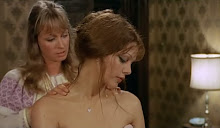
‘Wings of Desire’ – its original German title ‘Der Himmel über Berlin’ translates as the considerable less poetic ‘The Sky Over Berlin’ – contains enough narrative to fill its closing few minutes. What Hollywood would have taken as a conceptual starting point, Wenders arrives at after nearly two hours of philosophical enquiry; and when he arrives at it, the union of angel Damiel (Bruno Ganz) and trapeze artist Marion (Solveig Dommartin) isn’t a denouement as much as a re-beginning*.

So: two hours of philosophical enquiry. It sounds heavy, and in some respects it is. This is certainly not a film for anyone whose cinematic comfort zone is defined by narrative. It’s probably the closest Wenders – no stranger to long running times and extended takes – has come to what Andrei Tarkovsky called “sculpting in time”. Wenders also sculpts a very specific sense of place. ‘Wings of Desire’ was released in 1987, two years before the Wall fell, and it’s perhaps the most evocative portrait of Berlin as a divided city that cinema has ever achieved.

It sounds heavy, but in many respects it isn’t. You could easily watch it without subtitles, disregard the often portentous dialogue (although most of the film isn’t even dialogue: it’s the overheard thoughts of the people the angels encounter), and be spellbound by Wenders’ astounding gallery of black-and-white images. The film shifts to colour for the end sequence, as Damiel embraces the panoply of human experience. But it’s the black and white sequences that you remember. Wenders’ Berlin, part mythic part shatteringly realistic, is as detailed and memorable and alive as Dickens’s London.

‘Wings of Desire’ is a film-poem: at one an the same time, a hymn, an ode and an elegy. It is pure cinema, from its director’s astoundingly realised vision, to the pitch-perfect humanity of Bruno Ganz’s performance, to its captivating romantic heroine. The radiant Solveig Dommartin, Wenders’ then-girlfriend, also appeared in ‘Faraway, So Close’ and ‘Until the End of the World’ (which she co-wrote), as well as directing the short film ‘Il suffirait d'un pont’. She passed away in France two years ago at the age of forty-five.


* ‘Wings of Desire’ ends with the credit “to be continued”, a promise Wenders made good on six years later with ‘Faraway, So Close’.


i.m. Solveig Dommartin (16th May 1961 – 11th January 2007)

Thursday, February 12, 2009

Nicht echt Deutsch: The Reader and The Boy in the Striped Pyjamas

With ‘The Reader’ up for just about everything Oscar-wise apart from Best Tea-Boy, I feel the need to pull the plug, burst the bubble, spit on the icon and have a word with the sacred cow about McDonald’s.

‘The Reader’ isn’t that good a film. It is, at best, deeply average. The cast is heavyweight (Kate Winslet, Ralph Fiennes, Bruno Ganz, Lena Olin), the cinematography is by two of the best practitioners of the art currently working (Chris Menges and Roger Deakins), the script is courtesy of David Hare and Bernhard Schlink’s source novel a breakout success beyond its original German-language publication, and yet the whole thing never quite adds up to the sum of its parts. As a viewing experience, it’s curiously antiseptic.

I could almost feel sorry for director Stephen Daldry – if, that is, I wasn’t so sure that he’s going to clean up on the 22nd – because the man genuinely seems to want to make profound and thought-provoking films. There was the inexplicably popular ‘Billy Elliott’, which aimed for a triumph-of-the-spirit aesthetic set against the potent backdrop of the miners’ strike. There was ‘The Hours’, with another heavyweight cast and ‘literary’ source novel. But the former was bogged down with clichés – from the gay best friend to the gruff no-son-of-mine father who, awww bless, comes through for the lad at the end – and made ‘Brassed Off’ look like cinema vérité; while the latter was just plain bogged down.

Next up, Daldry is helming an adaptation of Michael Chabon’s ‘The Adventures of Kavalier and Clay’ and I could weep into my beer that such a wonderful and iconoclastic novel has fallen into his hands. Chabon’s prose deserves a Guillermo del Toro, a Christopher Nolan, a Darren Aronofsky. Not a Stephen Daldry.

I started this blog to rave about the films I love, so wasting words on ‘The Reader’ runs contrary to the remit. Besides, there’s a blandness, a tiredness to it that inspires a similar malaise in yours truly. One of my favourite bloggers on film, Tim at Antagony & Ecstacy, provided an eloquent review of some 1,200 words, and yet summed it up perfectly in his pullquote: “What if they threw a Nazi porno and nobody came?”

Similarly, you could throw at ‘The Boy in the Striped Pyjamas’ the question “What if they told a Nazi bedtime story and somebody died?” Okay, I’ll admit it: that was snide. I’m a little more inclined to be charitable to ‘TBITSP’ – it’s adapted from a children’s novel and I’ll make the assumption that director Mark Herman has pitched the film at an audience of similar age range. Not that I saw many children in the audience when I went to see it. They were probably in one of Cineworld’s thirteen other screens, pledging allegiance to Pixar, Dreamworks or Disney. I tip my hat to them.


The problems with ‘TBITSP’ are several. Like ‘The Reader’, it has a director who wants to be serious and challenging but just doesn’t have what it takes to engage with the material. His previous outings, the aforementioned ‘Brassed Off’ and the terminally confused ‘Little Voice’ (is it a comedy? is it a drama? is it meant to be realistic? is it meant to be theatrical? does Brenda Blethyn have to screech all the time?), are not the work of a director ready to tackle the Holocaust.

Never mind if you’re doing it from a child’s point of view, if you’re making a film about the Holocaust then you’re making a film about the Holocaust. That carries as serious a responsibility as any subject a film-maker can pick. A responsibility, first and foremost, to historical accuracy. And yes, John Boyne’s novel is narrated in a deliberately naïve ‘voice’, the better to show the scales falling from his young protagonist’s eyes as he realises the lies his high-ranking SS officer father has told about “Outwith” (his mis-heard name for Auschwitz) are just that – lies – but a novel is a construct of words. Film is visual. So if you’re showing a concentration camp through the eyes of a child, then you’re still showing a concentration camp.

This is where the disconnect occurs in Herman’s film. All of the key scenes between the SS officer’s son and the young Jewish boy, an expanse of barbed wire separating them, take place in some forgotten corner of the camp where no guards patrol, no-one notices anything from the watchtowers, the boy can skive off work detail for long periods at a time and the other inmates in his work gang are unsupervised by guards.

And yet ‘TBITSP’ at least tries to do something, I think. More so than ‘The Reader’, which just says look at me, I’m a profound and important film about a thorny subject, I’d like to thank God, the Academy, my agent … ‘TBITSP’ at least tries to use its child protagonists to make accessible (if that’s the right word) to a younger audience a subject they probably haven’t encountered before and likely have no foreknowledge of. Also it boasts some good performances, most notably from Vera Farmiga – her work here is the equal of anything by this year’s quintet of Best Actress nominees.

Ultimately, though, in the current climate of German cinema demonstrating the fearlessness to tackle its own difficult history, ‘The Reader’ and ‘TBITSP’ suffer from being English-language productions with British directors and chiefly British casts. Had they been made by German directors, I have no doubt that the results would have been a lot more interesting.

Tuesday, February 10, 2009

The Baader Meinhof Complex

There’s a scene early in ‘The Baader Meinhof Complex’ in which a group of German citizens are protesting a visit to their country by the Shah of Iran. Although theirs is a peaceful demonstration, the Shah’s supporters start in on them. The ensuing clash attracts police attention and things really get nasty. It’s all truncheons and jackboots and water-cannons and fired shots.

It put me in mind of Jim Sheridan’s ‘In the Name of the Father’, a powerhouse movie but one so determined to stir up outrage in the viewer that the cumulative effect is like being lectured by a coke-fiend for two hours while occasionally getting beaten around the head with a blunt instrument. Heads down, see you at the end, I thought to myself; this one’s going to be a long haul.

Two and a half hours later, still glued to the screen as the end credits rolled, I was in a different frame of mind. ‘The Baader Meinhof Complex’ impressed and provoked me. But it left me with mixed feelings. Subtle it isn’t – with Uwe Edel directing, it was never going to be – yet somewhere beyond Moritz Bleibtreu’s sneering, swaggering rock star take on Andreas Baader and numerous scenes of brutally realistic violence, some unexpected nuances emerge.

Martine Gedeck’s portrayal of Ulrike Meinhof is one of the film’s grace notes. She effortlessly maps Meinhof’s transition from outspoken journalist to political activist as well as inhabiting her vulnerability, particularly in the trial sequence which provides a gruelling final act.

Bruno Ganz’s thoughtful turn as Horst Herold, seeking to understand the reasons behind the Red Army Faction’s outrages even as his colleagues in the government call for swift and harsh countermeasures, demonstrates the film’s even-handedness. Nor does Edel lionise the Baader Meinhof gang. Their actions are brutal. There are casualties – on both sides. Although Edel lends weight to their ideologies and motivations, he doesn’t try to present a revisionist version of the Red Army Faction as noble, pure-minded freedom fighters. Make no mistake about it: this is a film about a terrorist organisation.

Nor is it all about politics. While Ulrike Meinhof comes across as a woman of intellect driven to desperate action after she discovers that words alone won’t change the world, Andreas Baader is shown as being equally in it for the good of the cause and the perks of the lifestyle: statuesque blonde on his arm*, gun in his hand, cool leather jacket and joyrides in stolen Mercs. Oh yeah, and a few acts of terrorism.

I know very little about the Baader beyond his leadership of the gang. But if the film is even partially accurate, he must have been an insufferable arse. Scene after scene has him throwing a wobbly, either refusing to listen to reason when Meinhof posits ideas and proposals contrary to his (never mind if hers are better thought-out), or getting into a slanging match with PLO members at a guerrilla training camp in Jordan where the Red Army Faction’s free-living ways angers their hosts. It’s beautifully ironic – whether an intended irony or not – that the Red Army Faction seems to get more motivated, and their campaigns more focused, after Baader, Ensslin and Meinhof are arrested and held pending trial.

There’s almost as much nudity and free love as there is revolutionary activity, and it would be almost too easy to accuse Boll of edging into exploitation territory. But I’d like to think it’s part of the aesthetic. ‘The Baader Meinhof Complex’ is set in the ’70s, and it has an authentic ’70s look and feel to it. Not ’70s-by-design à la Steven Spielberg’s ‘Munich’, but something much more in tune with the edgy, on-the-streets style of film-making of that decade.

Based on Stefan Aust’s non-fiction study of the Red Army Faction, ‘The Baader Meinhof Complex’ hurtles through a decade of civil unrest, making few concessions to anyone who doesn’t have a decent working knowledge of that period of time. Yours truly, for instance. Supporting characters pop up for key scenes and then disappear. I’m sure some of them aren’t even name-checked. Brigitte Mohnhaupt (Nadja Uhl), a major player in the second generation of the Red Army Faction, doesn’t take the stage until the movie is nearly over.

I’m looking forward to seeing the film again when it makes its appearance on DVD in April, but I’ll be sure to have read Aust’s book first. With the timeline and the key players more firmly defined in my mind, I’m sure I’ll get a lot more out of ‘The Baader Meinhof Complex’ second time around.


*Gudrun Ensslin, played by Johanna Wokalek - actually co-founder of the group, longer before Meinhof’s involvement.

Monday, February 09, 2009

The Lives of Others

Hauptmann Gerd Wiesler (Ulrich Mühe) is a Stasi surveillance and interrogation expert. Want a house bugging? Want to know a suspect’s movements? Want that suspect broken when you finally bring him in? Wiesler’s your man. He knows that the innocent will reformulate their answers while the guilty will recite the same cover story, the same lies, word-for-word. He knows how to pace an interrogation. He knows just how much sleep-deprivation to apply. He’s so good that he gives classes to the next generation of Stasi agents.

He speaks in quiet, precise tones. His face is devoid of expression or emotion; impenetrable. He’d be a shit-hot poker player if he weren’t such a Party man. Wiesler is in it for the ideological purity of it. Not so his boss, Oberstleutnant Anton Grubitz (Ulrich Tukur), a pragmatic career man whose latest promotion sees him beholden to Minister Bruno Hempf (Thomas Thieme).

Hempf is the corpulent, corrupt politician in excelsis. When he orders Grubitz to dig up some dirt on playwright Georg Dreymann (Sebastian Koch), it’s not because Dreymann has been known to associate with reactionary writer Paul Hauser (Hans Uew-Bauer) or is a close personal friend of recently blacklisted director Albert Jerska (Volkmar Kleinert) – for all his association with these individuals, Dreymann remains at one remove from their politicking, and tows the party line – no, it’s because Hempf wants him out of the way so he can stake his claim on Dreymann’s actress girlfriend Christa-Marie Sieland (Martine Gedeck), a woman he’s already co-erced into sexual favours.

This is East Germany, 1984, where They (ie. the Minister Hempfs of this world) decide who writes plays, who directs them, who acts in them; where They revoke even the privileges of the artist to practice his or her art – in a shockingly cynical scene, Grubitz tells Wiesler about a report he’s received on the most effective punishments for artists; ‘effective’ meaning a total eradication, post-release, of their artistic capabilities – should that artist fall out of favour.

Naturally, it’s Wiesler whom Grubitz entrusts with surveilling Dreymann. Wiesler’s not too happy when Grubitz reveals that the operation isn’t political, it’s simply about “getting a rival out of the way”. This isn’t what Wiesler joined up for. Nevertheless, he follows orders … for a while, anyway. It doesn’t take him long to realise that Dreymann’s as clean as a whistle. Hempf’s oleaginous pursuit of Christa-Marie sickens Wiesler and eventually he intervenes, persuading her away from a rendezvous with Hempf and back to Dreymann.

Hereafter, Wiesler’s professionalism nosedives as he falsifies reports and turns a blind eye when the hitherto unmotivated Dreymann rails against the system following Jerska’s suicide.

Essentially, ‘The Lives of Others’ is the story of two awakenings. Dreymann’s is political and takes the form of an article, which Hauser helps him get published in the West, about the high incidence of suicide in East Germany and how the Department of Records haven’t catalogued any statistics on suicide since 1977. Wiesler’s is emotional/humanitarian; a falling from his eyes of the scales of blind adherence to the Party. It takes the form of an exponential realisation, as he listens in on the world of an artist, that there are ideas and concepts and a whole world of art that expresses them which it has never occurred to him before to believe possible.

This realisation – which takes root just as his disaffection with the job, personified by Hempf and his abuses of power – leads him to a course of action which will have serious ramifications. Meanwhile Grubitz, under mounting pressure from Hempf to discredit Dreymann, takes matters in hand by having Christa-Marie arrested.

And that’s all I’m going to reveal of the plot. Not only does the film move inexorably forward with the momentum and inevitability of a Jacobean tragedy, but writer/director Florian Henckel von Donnersmarck takes it into unexpected realms in the final reel. The majority of the action takes place over a short period of time in 1984. An extended coda leaps forward to 1989 and the fall of the Berlin Wall, then to 1991, then to 1993. It’s a little disorientating on first viewing, but it’s done for a purpose. With its scenes of surveillance, secrets and clandestine meetings, it’s all too easy to latch onto the voyeuristic undertones of ‘The Lives of Others’ – particularly with the gorgeous Martine Gedeck in a major role – but the coda, a mirrored study in aftermath, reinforces what the film is truly about: the invisible yet parallel relationship between Wiesler and Dreymann.

And while it’s as politically and historically charged as ‘Downfall’, ‘The Lives of Others’ transcends, in its final stretch, the merely political and says things about art, inspiration and the human condition. It’s von Donnersmarck’s first film, he was just twenty-eight when he made it, and it’s a straight-up masterpiece.

Sunday, February 08, 2009

PERSONAL FAVES: Downfall

Bernd Eichinger is shaping up quite nicely as the enfant terrible of German cinema having produced two controversy baiting epics – ‘Downfall’ and ‘The Baader Meinhof Complex’ – in the last five years.

‘Downfall’, directed by Oliver Hirshbiegel, was always going to be a hot potato. Not enough that it was the first German film to depict Hitler onscreen, Eichinger and Hirshbiegel drew fire from critics who questioned their portrayal of Hitler in what they saw as a sympathetic light.

Which begs the first question that needs to be asked of ‘Downfall’: does it? I’m not convinced. Hitler (Bruno Ganz in a performance that descriptions like “barn-storming” and “full-throttle” were invented for) is variously shown as a stroppy old git with a hair-trigger temper; an utter delusional, issuing orders for the defence of Berlin and the defeat of the Allies to troops who are either in retreat or have been wiped out; and a pitiful wreck, bent double, hair unkempt, hands shaking.

No, what ‘Downfall’ does is portray Hitler not sympathetically but as a person. And people are fallible. They kid themselves, they fall out with other people, they lose their rag. They fuck up. Adolf Hitler fucked up on a global scale at the cost of millions of lives and untold human suffering. That’s the difference.

Next question: isn’t it a better decision, morally and intellectually, to depict a man like Hitler as just a man – albeit one with a sociopathic disconnect from any standard of normal or responsibly functional behaviour – and not some impenetrable force of darkness with a bristly ’tache and a bad comb-over? Isn’t the usual filmic depiction of Hitler – a scowling, stentorian, fiery-eyed, Hadean presence – actually a cheap and easy way out? Doesn’t this approach effectively reduce him to the status of a pantomime villain, and by extension lessen the enormity of his horrific legacy?

Better by far a film brave enough not to treat the Führer as a set of visual clichés and a square of glue-on bum-fluff on the upper lip. Better by far a film that seeks not to demonise, but neither sympathise; not to try to ‘understand’ Hitler and his actions, but neither deny or obfuscate them; a film, instead, that portrays him. As accurately as possible*.

Working from the books ‘Inside Hitler’s Bunker’ by Joachim Fest and ‘Until the Final Hour’ by Traudl Junge and Melissa Müller, Hirschbiegel charts the final catastrophic days, both in the bunker and on the shell-scarred streets of Berlin, leading up to – and beyond – Hitler’s suicide. That ‘Downfall’ continues for a good 40 minutes after Hitler and Eva Braun (Juliane Köhler) take their lives is telling. And it prompts the next question: is ‘Downfall’ necessarily about Hitler?

In one respect, it can’t not be. Hitler is the hub around which the action of the film moves. Even when he’s not centre-stage. And there are large amounts of screen time where he isn’t. Which is to say: Hitler is a major character, but none of the events are seen through his eyes. I don’t think a film could achieve that – not without straying into morally dubious territory.

‘Downfall’ is told from the perspectives of Traudl Junge (Alexandra Maria Lara), Hitler’s secretary**; humanitarian physican Professor Ernst-Günther Schenck (Christian Berkel); and a young boy drafted at an absurdly young age as part of an anti-tank patrol operating on the streets of Berlin and under almost constant fire from the approaching Russian troops. The title doesn’t refer just to Hitler’s downfall – his and Braun’s suicide is just one of many; the film is awash with high ranking officials, as well as mid ranking officers, putting guns to their heads or pulling the pins on hand grenades; the most unflinching scene has Goebbels’ wife Magda (Corinna Harfouch) poison their five children before he shoots her then turns the gun on himself – it’s the downfall of a government, a Reich, a monstrously misconceived political ideal; it’s the downfall of a city and its inhabitants; it’s the downfall of, to quote a line from Wilfred Owen, “half the seed of Europe”.

It’s bitterly and brutally honest; utterly unforgettable. It’s a German film.


*To the best of my knowledge only the final scene, detailing Junge’s escape through the Russian lines, is purely fictional.

**The opening scene, for me, defines the film. A group of young women are marched by soldiers through woodland to a heavily-fortified base. They are there for a job interview. Traudl Junge just happens to get the job. It could have been any of the others. Thus the film-makers neatly avoid the pitfall of giving every scene, every line the portentous relevance that only hindsight can bestow. Yes, they seem to be saying, much of this movie owes to Frau Junge’s testament, but her presence at such history-defining events was pure chance. She went for a job interview; simple as that.

Saturday, February 07, 2009

Good Bye Lenin!

Part 1: A few words on “high concept” (or: The Tao of Don and Jerry)

My son, would you be a writer on film?

Father, I would aspire to the status of a blogger. Also, a paying gig with ‘Sight and Sound’ would be good.

My son, do you consider yourself well-versed in film?

Father, my tastes in film are diverse, eclectic and wide-ranging.

My son, do you know what a ‘tautology’ is?

No, father.

Evidently … My son, are you a keen viewer of mainstream fare?

Father, I … I have seen ‘Transformers’.

I will hear your confession later –

But father, I only went to see it for Megan Fox who I believe to be a talented up-and-coming young actress and –

I said I will hear your confession later. For now, my son, can you explain the term “high concept”?

Yes, father. “High concept” is when a film has one single idea; usually an idea that can be expressed so succinctly that it serves as a pitch, a plot synopsis and a marketing campaign all rolled into one.

My son, whose films exemplify this most explicitly?

Those of Messrs Si—

My son, do you know what a lawsuit is?

Yes, father.

Then stick with first names only.

Yes, father. The films of, ahem, Don and Jerry are perfect exemplars of “high concept”.

My son, can you cite an example?

A street-talkin’ black cop from Detroit finds himself partnering a buttoned-down white cop in Beverley Hills in a culture-clash comedy thriller.

My son, is “high concept” a predominantly Hollywood phenomenon?

Not necessarily, father. European films can also be “high concept”.

And being European, are they generally better?

I believe so, father.

Can you cite an example?

Yes, father, I can …


Part 2: … and here’s how the Germans do “high concept”

It’s the late ’80s and Gorbachev’s policies of glasnost and perestroika are moving inexorably towards the fall of the Berlin wall and the reunification of a four-decades’ divided city. But not in the utilitarian apartment of staunch socialist Christiane Kerner (Katrin Sass). Since the departure to the West of her husband, the Party has been her life; her loyalty is unswervable.

Her children, already under the influence of Western culture, don’t toe the line quite so enthusiastically. In fact, her son Alex (Daniel Brühl), doesn’t toe the line at all. “On the evening of October 7 1989,” Alex explains in voiceover, “several hundred people got together for some evening exercise and marched for the right to go for walks without the Berlin Wall getting in their way.”

Naturally, the authorities intrude upon said perambulations. Naturally, there’s a clash. Alex scuffles with a cop before a truncheon to the midriff and a ride in a police van effectively curtail his involvement. Unfortunately Christiane, on her way to a Party function where she’s to be honoured for her work, witnesses this and the shock proves too much for her. She collapses of a heart attack.

Released from his holding cell on the basis of his mother’s good standing and her current hospitalisation, Alex visits Christiane only to find her in a coma. Eight months later, she wakes up with no recollection as to the circumstances that engineered her heart attack. Her doctor warns Alex and his free-living sister Ariane (Maria Simon) that any further shock to the system could kill her.

Such as: Ariane having redecorated the apartment and moved her new boyfriend in. Such as: Ariane having quit her studies and taken a job at Burger King. Such as: there actually being a Burger King in East Berlin thanks to the Wall having been pulled down, reunification underway, a fiscal changeover from old currency to Deutschmarks in progress, and signs of Westernization on every corner.

Those kind of shocks.

So Alex, aided by his friend and colleague Denis (Florian Lukas), a wannabe film-maker, hatches a plot to keep his mother in the dark. Step one: redecorate the apartment. Step two: scour Berlin for pre-reunification branded goods. Step three: initiate some of her friends and colleagues into the conspiracy in order to navigate a potentially awkward birthday party.

And for a while it all goes swimmingly. Until Christiane, bed-ridden, complains about the lack of entertainment and demands a TV in her room. Suddenly it’s not enough that Alex has concocted a time-capsule DDR within the four walls of his mother’s bedroom; now he has to get really creative. And when a “drink Coca-Cola” advert goes up on the wall of the high-rise opposite, that’s when his troubles really start …

‘Good Bye Lenin!’ – the title refers to an iconic shot of Lenin’s statue being helicoptered out of the city – is high concept meets high art … but it’s never artsy. It’s incredibly cleverly written and structured … but never comes across as clever-clever. In fact, the visual language of ‘Good Bye Lenin!’ – from speeded-up footage to edits designed for maximum comic effect to gleefully re-contextualised archive material (Alex and Denis’s videos pre-suppose the dime-store ingenuity of ‘Be Kind Rewind’) – is pure mainstream cinema.

All of which would make for a satirical slice of subtitled entertainment, except that director and co-writer Wolfgang Becker anchors his story with a beautifully understated emotional core. The finale is poignant and resonant; the metaphor is unforced: reunification, the family as a microcosm of the city.