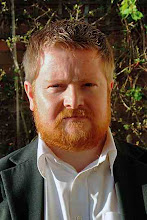
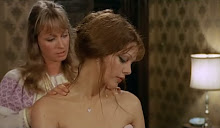
It's not just Jesus's birthday today, it's Rod Serling's too. He would have been 88. Dude created 'The Twilight Zone', a show that plugged itself directly into my imagination and threw the switch. Here's to you, sir!
Tuesday, December 25, 2012
Sunday, December 23, 2012
WINTER OF DISCONTENT: Late Night Trains
I’d been told that Aldo Lado’s ‘Late Night Trains’ was a pretty damn nasty movie. I’d been told it was ugly, brutal, squalid and cynical. That it was cold, hard and unflinching. That it made for uneasy viewing. That I’d come away from it feeling battered and soiled. And I’m glad I was given those warnings. But I didn’t realize how truly sickening its most horrible, most repulsive moment would be: four entire minutes in which my sense of aesthetics was viciously and incessantly abused. I refer, of course, to the opening credits sequence which plays out to Demis Roussos singing ‘A Flower is All You Need’.
It’s one thing making a rape/revenge exploitation which lifts set-pieces and plot points wholesale from ‘Last House on the Left’ (which itself happily rips off Ingmar Bergman’s ‘The Virgin Spring’); it’s quite another to assault the viewer with the tonsil-quivering falsetto of Demis fuckin’ Roussos. I call everyone involved a sick bastard of the highest order.
Of course, it’s easy to see what Lado’s up to in his use of ‘A Flower is All You Need’. It provides, at first, a mawkish accompaniment to scenes of shoppers making their purchases at a German Christmas market. And not a chintzy false one like we have in Nottingham every year. This is the real deal, since the film opens in Germany. During this montage we catch our first glimpse of our soon-to-be-very-beleaguered heroines Margaret (Irene Miracle) and Lisa (Laura D’Angelo), as well as a rather aloof middle-class blonde woman, who gets no appellation, in the film itself or the end credits, beyond The Lady on the Train (Macha Meril). We also get introduced to Blackie (Flavio Bucci) – so called for the colour of his hair – and Curly (Gianfranco Di Grassi) – also monikered for follicle-inspired reasons – who, it is swiftly revealed, are a pair of unlikeable thugs. Their first act? Beating up a stallholder dressed as Santa for a few lousy coins. Their second? Taking a knife to a rich woman’s fur coat. It’s at this point that Demis fuckin’ Rossous’s wailings cease being mawkish accompaniment and instead get pressganged into ironic counterpoint duties.
It’s from the fur-coated slicing incident that Blackie and Curly, pursued by the authorities, flee into a station and jump on a train just as it’s pulling out. The same train, as if none of us saw this one coming, that Margaret and Lisa are travelling on. They’re going to Verona to spend Christmas with Lisa’s well-to-do father, Professor Guilio Stradi (Enrico Maria Salerno), a consultant at a metropolitan hospital), and step-mother Laura (Marina Berti). Once onboard, Blackie encounters The Lady on the Train (hereafter TLotT), promptly sexually assaulting her. She responds to the rough treatment and is soon manipulating Blackie and Curly as they menace and inevitably assault the two girls.
Actually, scratch that; the word “soon” has no business in that last sentence. ‘Late Night Trains’ boasts the slowest first half in the history of exploitation cinema. There are endless vignettes sketching in the other passengers on the train – including a delegation from the Catholic church, and a compartment full of ex-Nazis – the end result being that the train is so overcrowded that Lado and his four screenwriters contrive to have Margaret and Lisa, Blackie and Curly, and TLotT change trains (this second one, by contrast, is almost deserted) just so the nasty stuff can take place without interruption. Also during these long, narratively encumbered 40 minutes or so, we’re treated to one of the least realistic operations ever performed on film (it basically consists of Stradi slicing into a piece of foam rubber while saying, more or less, “Scalpel … swab … keep swabbing … okay, we done”); Stradi talking about society’s problems during a hoity-toity dinner party and identifying himself as a peace-loving liberal; and Margaret and Lisa endlessly giggling about boys, the former having done the deed with a spotty fellow student while Lisa remains uninitiated into the global cult of snu-snu.
These moments are so unsubtle that Lado might as well have got the writers to stand in background holding up placards reading “HE’S A DOCTOR, THAT MEANS HE’S SWORN TO PROTECT LIFE, BUT LET’S SEE HOW LONG THAT LASTS WHEN HIS DAUGHTER GETS VIOLATED AND KILLED … IRONY, HUH?” and “SHE’S A VIRGIN. LIKE ‘THE VIRGIN SPRING’. DO YOU SEE WHAT WE DID THERE?” On the subject of the multiplicity of contributors to the screenplay, I’m not sure what depresses me the most – the fact that it took four people to rip off ‘Last House on the Left’, or that anyone wanted to rip off ‘Last House on the Left’ in the first place.
Lado ups the ante during the protracted middle section, though. The manipulation of lower class Blackie and Curly (muscle; no brains) by middle-class TLotT (elegant, seductive; amoral) contrasts effectively with the opulent but empty Christmas celebrations hosted by Stradi and his trophy girlfriend (tellingly, Guilio and Laura are on the precipice of a relationship-destroying argument when their guests arrive and things settle back into a brittle status quo). There’s a conceptually horrible and utterly unexpected payoff to the Blackie and Curly/Margaret and Lisa dynamic, and Lado conjures a shot of a corpse being hurled off a railway bridge that somehow achieves a weird visual poetry.
So: from dull as ditchwater to brutally effective … only for things to go south in the finale. This, folks, is the section in which the scripters might as well have turned up with another placard, this one reading “È L’ULTIMA CASA A SINISTRA … MA CON UN TRENO DEL CAZZO, VA BENE?” For this is, indeed, ‘The Last House on the Left’ … but with a fucking train, all right?
Trundling as I am towards the 1,000 word mark, I won’t belabour the suspension-of-disbelief-severing circumstances that land the killers at chez Stradi, or the unrealistic means by which relatives receive the bad news (because, yeah, you’d hear the victim’s name on the radio before the police had even commenced an investigation), or the utterly pointless scene, on Christmas morning, where a witness makes an anonymous tip off from a petrol station at which a truck driver is filling up. (Where the fuck is a truck driver delivering to on Christmas morning? Does Santa subcontract on the continent?) Suffice it to say that the last twenty minutes steer unambiguously into distraught-(formerly-peace-loving)-relatives-go-apeshit territory.
It’s to the detriment of ‘Late Night Trains’ that Lado and co. draw so slavishly on ‘Last House on the Left’. With its attempt at a genuine social commentary (class differences and exploitation), and its unsubtle but effective shifts between the girls’ ordeal on the train and the facile artifice of Christmas at the Stradis’, Lado’s film is certainly a more effective outing than Craven’s notorious-but-actually-not-very-good shocker. Wasn’t it Stephen King who described the film as “Abbott and Costello meet the rapists”? ‘Late Night Trains’ wants to be a much better film, wants to instigate social, political and ideological debate. But it homages, evokes and outright copies an inferior piece of work in frame after frame to the point where you wish it had simply done its own thing with the material.
‘Late Night Trains’, frustratingly, could have been so much more. More focused, more intelligent, more provocative. Nastier.
Friday, December 21, 2012
WINTER OF DISCONTENT: Inglorious Bastards
There’s most definitely a train in Castellari’s warsploitation opus. And it’s most definitely armoured. Damned? Given the amount of people who are shot, stabbed or blown up on or around it, that’s pretty much a definite as well. There’s no accusing ‘Quel Maledetto Treno Blindato’ of not delivering on its title.
Although it was made eleven years after ‘The Dirty Dozen’ – a rare example of an Italian exploitation director taking his sweet time in jumping on a bandwagon – Robert Aldrich’s cynical classic is unequivocally the primary source of inspiration in a film that also happily pilfers from John Frankenheimer’s ‘The Train’, John Sturges’s ‘The Great Escape’ and, uh, Umberto Lenzi’s ‘Battle of the Commandos’.
It’s 1944 in the Ardennes and a truck containing a dozen or so military prisoners leaves an American base under the command of a prissy sergeant played by John Loffredo who’s not important enough to have a name. He’s got a moustache that’s trimmed to within an inch of its life and a side parting you could use as a slide-rule, so let’s call him Sgt Wellgroomed. The truck sets off but a blow-out strands them out in the open and easy pickings for a passing German fighter plane. Sgt Wellgroomed and his fellow guards pile out and take cover, ordering the prisoners to remain in the truck. Some are killed when the fighter strafes them, others when they pile out of the truck and Sgt Wellgroomed opens fire on them. Once the attack is over and a righteously indignant Private Fred Canfield (Fred Williamson) has throttled Sgt Wellgroomed, the numbers have been reduced to five: the aforementioned Canfield, Lt Robert Yeager (Bo Svenson), and three others who, to the best of my recollection, are only outfitted with forenames: wisecracking asshole Tony (Peter Hooten), thief and forger Nick (Michael Pergolani) and the youthful and perpetually terrified Berle (Jackie Basehart). Together, under the nominal leadership of Yaeger, they decide to take their chances crossing Nazi-occupied territory in the direction of the Swiss border. Meeting up with a fellow deserter – if from the opposite side – Adolf Sachs (Raimund Harmstorf), he briefly becomes part of their merry band even if Tony doesn’t trust him. Mind you, Tony doesn’t much like Fred either on account of him being black. So really Tony’s an asshole is what it all comes down to. Anyway, with Adolf tagging along they have various adventures and narrow escapes until a misunderstanding of brobdingnagian proportions results in a firefight with a group of American commandos disguised as Germans en route to a rendezvous with their French Resistance contacts. Net result: dead commandos, extremely pissed off commanding officer Colonel Tom Buckner (Ian Bannen), and a Resistance cell still in need of assistance to accomplish one of those archetypal could-change-the-course-of-the-war missions.
Said mission involves a train. An armoured one.
Which is where we came in.
Enzo G. Castellari is one of the minor poets of trash cinema (his second division giallo ‘Cold Eyes of Fear’ has already been part of the Winter of Discontent); by the time he directed ‘Inglorious Bastards’, had chalked up spaghetti western classic ‘Keoma: The Violent Breed’ (another title that’s more than justified by the content) and the cracking crime thriller ‘The Heroin Busters’. Later, he’d helm the ‘Bronx Warriors’ trilogy, a mash-up of John Carpenter’s ‘Escape from New York’ and the expected tropes of the post-apocalypse subgenre that became its own epic saga. Castellari knows what makes genre cinema work: pace, story and incident. Plenty of it.
Barely ten minutes goes by without an explosion, an exchange of gunfire or a hair’s breadth escape. Exposition is slotted in as and when. There’s a hint of character dynamics, but not so much that it would slow things down. Castellari keeps the pedal to the metal – or, this being a movie prominently featuring a train, the firebox stoked and the regulator wide open – and gives the B-movie audience what they want: dangerous guys armed to the teeth cutting a swathe through the Hun, a perilous mission with no guarantee of survival and a token scene of nudity just so no-one can complain that the flick didn’t tick all of the boxes.
Thursday, December 20, 2012
The eye candy at the end of the world
Just in case the Mayans got it right, this is The Agitation of the Mind signing off in the company of 13 favourite femmes fatale. It's been a pleasure.
Wednesday, December 19, 2012
WINTER OF DISCONTENT: Cold Eyes of Fear
The phrase “London-set giallo” conjures some classics of the genre. Sergio Martino’s ‘All the Colours of the Dark’, Lucio Fulci’s ‘A Lizard in a Woman’s Skin’ and Massimo Dallamano’s ‘What Have You Done to Solange?’ spring immediately to mind, not to mention the latter half of Luciano Ercoli’s ‘Death Walks in High Heels’.
Enzo G. Castellari’s ‘Cold Eyes of Fear’ is set in London. And it’s kind of a giallo. That’s about all.
The opening credits sequence has a car driving through a foggy London during the evening. There is scant regard for geography, but I’m not holding that against the film. ‘A Lizard in a Woman’s Skin’ is a bona fide giallo classic and it has the Old Bailey across on the opposite side of the road to the Royal Albert Hall, so fuck the map.
We then immediately leap into obvious genre territory as a sexy blonde (Karin Schubert) is menaced by a man wielding a knife. Castellari spins the scene out for all its worth, and the sexualized threat of violence is about as politically incorrect as it gets. Cue the rug pull: this is just a performance piece in a sleazy club.
In the audience: Peter Flower (Gianni Garko), a solicitor with a taste for the lowbrow, and Anna (Giovanna Ralli), the original good-time girl had by all. They click, this mismatched pair, and Peter decides to “borrow” his uncle’s palatial house for the evening. The uncle (Fernando Rey) – a high court judge trying a big case, won’t be home till the early hours and a phone call is all it takes to persuade his butler Hawkins (Leonardo Scavino) to absent himself for the night. Only things don’t go according to plan and instead of getting his end away, Peter finds himself at the less than tender mercies of sexually ambiguous thug Quill (Julian Mateos). Then Arthur (Frank Wolff) joins the party and ulterior motives come to the surface.
‘Cold Eyes of Fear’ quickly segues from giallo to home invasion exploitationer, and gradually to political thriller. A third act debate on corruption in high places, the inviolate status of the upper classes and their manipulation of less privileged members of the social hierarchy takes things into interesting territory, albeit with a heavy reliance on cack-handed surrealism.
Castellari keeps things tense, directing with enough energy to distract from the script’s inherent staginess (with the exception of only a handful of exteriors, things delineate between the house and Peter’s uncle’s office). Exposition is trickled out sparingly and for much of the running time there’s a genuine mystery about Quill and Arthur’s objectives. The dynamics between hostages and villains shift in a variety of ways, with Anna proving the wild card. The Arthur/Peter antagonism is slow burn.
Where things fall down is in the filmmakers’ absolute rejection of continuity. ‘Cold Eyes of Fear’ plays out over a single night; the exact timeframe is ambiguous but I reckoned it as roughly early evening till about midnight. Shots vary between twilight, full dark and broad daylight, with weather conditions alternating between a pea-souper fog and cloudless night sky. Lighting levels in the house vacillate from soft and diffuse to harshly lit. A scene where a blown fuse renders everything pitch black, characters stumbling around and disoriented, forgets that there’s a blazing log fire and moonlight streaming through the windows. Moreover, various arrivals at the house necessitate the ornate wrought-iron gates at the end of the driveway repeatedly opening and closing themselves during the course of the night.
Continuity flubs happen in even the best produced movies (‘Goodfellas’ has more than its fair share) and often slip by unnoticed. In ‘Cold Eyes of Fear’, errors dance a conga-line across the screen, announcing themselves shamelessly. Already flawed, the movie doesn’t have any favours done for it by the Redemption DVD print that I watched; it looks like someone recorded it off the TV on a camera phone, while the soundtrack crackles and hisses like an old gramophone record.
Still, clocking in at less than an hour and a half, it doesn’t overstay its welcome; Castellari achieves a real sense of the unexpected as the narrative twists and turns its way towards the denouement; and Rey and Wolff – who died in his early forties just a couple of years after making this film – provide a welcome degree of gravitas.
London-set: yes. Giallo: partially. Exploitation status: minor league. ’Nuff said.
Monday, December 17, 2012
WINTER OF DISCONTENT: Les Demoniaques
Against a backdrop of flames brightening a shoreline by night, their faces superimposed as if in oval picture frames, Jean Rollin introduces us to the dramatis personae of ‘Les Demoniaques’. It would be appallingly cutesy if the flames weren’t the burning wreck of a ship and the characters in question a villainous bunch of wreckers.
Meet the Captain (John Rico):
And meet the Captain’s lady, Tina (Joelle Coeur) – although “lady” might be pushing it a bit:
Rounding out this crude and cruel crew are Bosco (Willy Braque) and Paul (Paul Bisciglia). Voiceover sketches in a power struggle between the Captain and Bosco while casting aspersions on Paul’s loyalty. Quite to what purpose I have no idea, since none of this is ever revisited.
The story – I’m using the word loosely since, as ever in the Rollin filmography, narrative counts for sweet f.a. – starts on that same dark shoreline as the wreckers haul some washed-up chests onto the beach and go through their contents. There’s no glimpse of a sinking ship, but then again budgets aren’t a staple of Rollin’s work either. Everything’s going swimmingly (drowningly?) and the Captain’s trading off some jewelry for sexual favours from Tina …
… when the night is pierced by cries for help, and out of the sea come two orphan girls. Anyone with Jean Rollin scorecard in front of them can tick off “beach” and “two orphan girls” immediately and get their pen ready for “gratuitous nudity” and “ridiculously protracted sex scene” in just a minute. Anyway, these two waifs (they’re not named, spend the virtually the whole film mute, and it’s chiefly thanks to IMDb that I can identify them as being played by Lieva Lone and Patricia Hermenier) don’t get any help from the wreckers whatsoever. Quite the contrary. They’re raped and left for dead, an ordeal that get’s Tina so hot under the collar that she peels off her duds, dances naked on a promontory and has awkward looking sex with the Captain on a rock.
This venal business occupies almost twenty minutes. Then we cut to a tavern at which El Captaino and his less-than-merry bunch are drinking, carousing with saloon girls, and generally blowing their ill-gotten gains. Louise (Louise Dhour), the madame of this establishment, baits the Captain with knowledge of his activities. He denies being a wrecker, but starts experiencing hallucinations of the dead girls.
Louise has the gift of second sight and intuits that something preternatural is going to happen. Eventually – and I do mean eventually: the tavern sequence drags on almost as long as the first scene – a terrified local runs in and announces that the dead are walking the streets. Guessing that what he’s seen is the pale and injured orphans who weren’t quite as left-for-dead as they thought, the wreckers set out to hunt them down and finish the job.
After a tense bit of cat and mouse amongst the wrecks of old ships that line the beach (easily the film’s best sequence, Rollin’s camera painting with shadows), the girls escape to some ruins on the outskirts of town which are said to be haunted; the reputation is enough to dissuade the Captain from pursuing, even though Tina, crazed with bloodlust, is well up for tackling the girls on her own.
We’re at the halfway mark now and ‘Les Demoniaques’ is about to go full-tilt into WTF territory. Still got that Jean Rollin scorecard handy? We’re about to tick off “ruined abbey”, “dark ritual (involving nudity)” and “outright surrealism”. The girls arrive at the ruins where they’re met by a strange woman dressed as a clown (Mireille Dargent) …
… who seems to live at the abbey with a guy who dresses a priest (albeit a somewhat new age-y one) and another guy who’s locked in a cell (the ruins are barely standing, but hey there’s perfectly secure cell) and can only be freed, apparently, by someone coming to him of their own accord. It seems to help if said someone is female. And naked. IMDb pegs these gentlemen as, respectively, the exorcist (Ben Zimet) and the devil (Miletic Zivomir). Specious descriptions at best.
The girls, seeking vengeance, agree to a ritual in which the devil transfers his powers to them. This involves having sex among the ruins …
… and only lasts till dawn. The powers, that is, not the sex. Although the devil probably has the stamina for it. Anyway, the girls make a right hash of their revenge and as dawn approaches the wreckers, unaware that they are soon to meet their own fate, have one last but extremely nasty surprise left in store for them.
As the 800 odd words above indicate, ‘Les Demoniaques’ has more of a plot than your average Rollin film, and the imagery (for the most part) works in the service of said plot. As opposed to many other Rollin films where ethereal women – often vampires, mostly naked – wander round old houses and other women (unclothed, natch) pop out of grandfather clocks and there’s generally no reason for any of it beyond (a) it looks cool and (b) it pads out the running time. Not that ‘Les Demoniaques’ doesn’t have its longueurs, certainly in the first half.
Nonetheless, this lip service to storytelling makes this one of the most entertaining of Rollin’s output, despite the grim commitment to being resolutely downbeat that characterizes the last twenty minutes or so. As ever, atmosphere is everything and there are some genuinely haunting moments. Also as is Rollin’s wont, these moments sit cheek-by-jowl with rampant what-the-fuckery. And that’s what makes his work infinitely watchable. That and the naked ladies.
Sunday, December 16, 2012
Thursday, December 13, 2012
WINTER OF DISCONTENT: Red State
In which Kevin Smith pulls the rug out from under his audience’s feet. And then the floorboards. And then the foundations. And then what you were kind of hoping was some semblance of solid ground. ‘Red State’, in short, is a film that sets out to fuck with you.
It fucks with you via its title and the way it’s advertised. ‘Red State’. The DVD cover art shows an attractive young woman clutching a fuck-off big semi-automatic rifle. Hmmmm, political thriller, you might well think. Patty Hearst type shenanigans, mayhap. Something of a change of pace for Smith.
Then you slide the DVD in and the film gets ready for its first rug-pull.
We’re in small town America and three high-school losers are looking to get laid via the internet. Our testosterone-addled triumvirate – Jarod (Kyle Gallner), Travis (Michael Angarano) and Billy-Ray (Nicholas Braun) – have hooked up with trailer park milf Sara (Melissa Leo), but when they fetch up at her trailer it’s not the older woman fantasy made flesh that they get but a mickey finn in their beer and they wake up bound and caged and at the mercy of bigoted preacher Abin Cooper (Michael Parks). Cooper has some very intractable ideas about sin and how to deal with sinners. Shooting them in the head seems to be a favourite. And he really has a beef about sins involving carnality.
Hmmmmm, you think, torture porn mise en scene ahoy. What we have here is a horror movie that takes some satirical broadsides at fundamentalist Christianity.
At which point another rug pull occurs as ATF agent Joseph Keenan (John Goodman) and his right hand man ASAC Brooks (Kevin Pollak) enter the picture. Keenan’s politically motivated boss has given the order, following an altercation with local law enforcement officers at Cooper’s compound that leaves a deputy dead, to go in with all guns blazing. And just in case there’s any negative publicity or hesitation over the order, Keenan and his men are instructed to regard Cooper and co. not as First Amendment protected citizens practising their right to freedom of religion but as a dangerous terrorist cell every man jack of whom should be shot on site. And by “every man jack”, that means the women and children who are also gathered at the compound.
Right, got it, you say to yourself. Took a while, but what Smith’s doing here is laying down an early John Carpenter siege movie vibe, making a scathing comment about America’s obsession with gun culture and getting into a debate on post-9/11 political heavy-handedness. You might also, at this point, resign yourself to the fact that Jay and Silent Bob aren’t going to be showing up in this one.
Then … well, whaddaya fuckin’ know … there’s another dang rug-pull. And all of a sudden we’re into some very weird territory. How weird? Imagine the conceptual ending of ‘Breaking the Waves’ spliced into a John Woo stylee shoot-out. Or ‘The Rapture’ if Sam Peckinpah had got hold of the script and decided that what all this metaphysical god-boy stuff needed to kick it up a notch was plenty of spent cartridges.
This particular rug-pull happens a smidgin before the hour mark; and for all that the end credits start rolling at one hour seventeen minutes, the Kevster has a couple more “fuck yous” to narrative consistency and thematic considerations before we get to check out who the head chef or accounting manager were.
In fact, it’s not till those selfsame credits that Smith finally plays his hand. The cast are divided into three camps, dependant on what their character represents: sex, religion or politics. It speaks for itself: as a cross-section of America, if not of humanity in general, most people are motivated by at least one of them. And a hell of a lot of people do some seriously fucking dumbass things as a result.
Tuesday, December 11, 2012
WINTER OF DISCONTENT: Who Can Kill a Child?
Narciso Ibanez Serrador’s controversial and disturbing 1976 offering is also known as ‘Death is Child’s Play’ and ‘Island of the Damned’ – the latter quite apposite since there’s more than a touch of ‘Village of the Damned’ in the film’s aesthetic. In fact, I’d be tempted to describe it as the juvenile delinquent offspring of ‘Village of the Damned’ and ‘Island of Death’, except that Nico Mastorakis’s slab of venality wasn’t released until a year after Serrador’s infinitely better movie.
Besides, the original title – a literal translation from ‘¿Quién puede matar a un niño?’ – is the most fitting. It sounds rhetorical at first but, as English tourists Tom (Lewis Fiander) and his heavily pregnant wife Evelyn (Prunella Ransome) encounter ever more disturbing behaviour among the children of an isolated island off the Spanish coast, it’s revealed as the reluctantly arrived at answer to an equally disturbing question, i.e. how the horrific events they uncover could have happened.
As regards the why … well, that’s what makes the film so disconcerting.
‘Who Can Kill a Child?’ opens with an eight-minute sequence during which blood-red credits in scrawly handwriting play out over stock footage of the atrocities of Auschwitz, starvation in Pakistan, children dying in Korea, and that shockingly unforgettable image of Vietnam: the girl running naked and crying down the middle of a road. In measured voiceover, these human rights violations are described in the context of their cost in children’s lives. The voiceover is intermittently interrupted by children’s voices singing a wordless babyish song then breaking off to giggle. It’s an unsettling opening, not least for being so protracted. It had me wondering if Serrador wasn’t being somewhat questionable in his aesthetic. But at that point, I was merely expecting a cheap exploitation movie.
The archive footage is immediately superseded by the image of a crowded beach; corpulent adults, pudgy children and lithe adolescents merge into a crush of holidaymakers concern only about their tan or their swim. The contrast couldn’t be greater. The camera follows a child into the water. A body is floating face down. Turned over, it’s a woman, a huge discoloured bruise on her face. Tom and Evelyn quit the beach as the ambulance turns up. Later, walking through the resort at night, every bar packed to standing room only and a seedy atmosphere prevalent, they decide to hire a boat and cross to a small island where they can enjoy some peace and quiet. Bad move.
On the boat, Evelyn notes that the noises from the mainland have faded away, but she can’t hear a single thing from the island – it’s as if it’s deserted. Tying up at the small harbour, a few children watch them. Going inland, the streets, houses, cafes, bars and hotels are empty. The very lack of sound seems almost discordant. The heat is oppressive. Evelyn feels unwell. Tom becomes increasingly edgy. Prowling a shop for food, he doesn’t notice a corpse stretched out behind a stack of goods. Weird little incidents occur. Evelyn’s encounter with a pre-teenage girl is creepy in a way it’s hard to define. Indeed, much of the first half relies entirely on the emptiness of the locale and the not-quite-right expressions on the children’s faces to create an unsettling atmosphere. When Serrador plays his first card and shows the children doing something that is at once utterly reprehensible and nothing more than a game, it’s over 50 minutes into the film. Slow-burn is an understatement. There are, in fact, a myriad of minutiae which seem, on first viewing, like padding … but which take on a deeper significance by the end of the film.
Tom and Evelyn encounter only a few other adults on the island: an old man who is quickly incapacitated by the children’s vicious ministrations; a middle-aged man who begins to recount the strange happenings but is lured away from the couple’s company by the appearance of his tearful daughter (the strength of his paternal feelings proves his downfall); a fellow vacationer who Tom tries to save, the operative word being “tries” and a two generations of a coast-dwelling family whose own children suddenly become infected by whatever madness has claimed their contemporaries just by making eye contact.
This particular scene, with its suggestion of telepathy or hypnosis, introduces a supernatural element that pulls against the opening credits’ intimation that the children have, as one, turn against the adult world out of a sense of betrayal. This hint of an explanation is introduced much earlier when Tom recounts to Evelyn the episode in Fellini’s ‘La Dolce Vita’ where Steiner (Alain Cuny) kills himself and his two children, speculating that he did it to spare them an intolerable future as they grew up.
Another interpretation – and I can’t claim credit; I came across it on an IMDb message board – focuses on Evelyn’s meeting with the young girl. She introduces herself as “Lourdes”, and since she’s the only one of the children who is given a name, we can only assume it’s for a reason. Lourdes being the spa town in France visited by pilgrims hoping for a vision of the Virgin Mary, the implication is that the children’s behaviour has been influenced (or they’re outright being controlled) by a higher power. I’ve not Juan Jose Plans’s novel – I don’t even know if it exists in an English translation – but I’m informed that it contains a scene where some sort of dust falls from the heavens by way of precipitation.
Serrador wisely allows it to remain an enigma, planting clues and symbols but keeping the narrative free of exposition. As a result, ‘Who Can Kill a Child?’ plays out like a waking nightmare, the more so because you can never quite shake your mind free of those first eight minutes. They eat into your subconscious while the rest of the movie unremittingly twists its barbed hooks in the pit of your stomach.
Subscribe to:
Posts (Atom)