Thursday, July 04, 2013

This is the End


Okay. Imagine that Tarkovsky’s ‘The Sacrifice’ took place not in a remote dacha but a couple of miles from the Hollywood sign, that its protagonists were not a group of moody cerebral eastern Europeans but a cluster of egomaniacal actors, and that its coming apocalypse was signalled not by portentous reports on the radio but by the arrival of a Godzilla-sized demon with a penis of fire …

I’m not selling you on this, am I?

Okay. Remember when one of your mates first got a camcorder and a whole bunch of you decided you’d make a movie over the weekend only you put effort into drinking, smoking weed and arguing about what topping to order on your pizza than you did actually scripting the thing or worrying too much about blocking, camera-work, direction and, y’know, general coherence? And remember when you watched the resultant opus, some time later, stone cold sober, and realised it was an egregious embarrassment that ought never be seen by another human being? ‘This is the End’ is kind of like that, but made by celebrities and with a special effects budget. Oh, and there are actually some decent lines and a few scenes manage to land the occasional satirical punch, and …

I’m still not selling you on this, am I?

Hey, guys: for anyone who’s ever wanted to see Michael Cera impaled by a street light, Rihanna swallowed by a pit of fire, Emma Watson wielding an axe, and a bunch of over-privileged celebrities degenerate into full-on slanging matches over rights to a bar of Milky Way, the dividing up of a piece of cheese, and who jizzed on James Franco’s porno mag, then buddy THIS IS THE MOTHERFUCKING MOVIE FOR YOU!!!!

By the way, that splurge of capital letters and overdose of exclamation marks, hammered home with the expletive, is intended to introduce the reader, gently, into the brash aesthetic of the movie. The, ahem, plot involves Jay Baruchel, Seth Rogen, Craig Robinson, Jonah Hill and Danny McBride – all playing versions, spoofs or public perceptions of themselves, sometimes all of these things within the same, ahem, characterisation – converging at James Franco’s house for a party. Franco also plays a version of himself. Baruchel and Rogen nip down the block for a pack of smokes. The rapture happens. They freak out and head back to the party and ostensibly safety. However, the End of Days doesn’t give a flying fuck about their combined box office clout and hellfire rains down, a pit of fire ruins Franco’s lawn, and demons run amok. A small band of survivors scream at each other, run around and trade in sick humour for the next hour and a half. The overriding impression is that you wouldn’t want to hang out with them on a good day, let alone the Day of Judgement.

‘This is the End’ is bludgeoningly unsubtle, juvenile to the point of emotional retardation, and vulgar in a way that makes you wonder whether the script was actually written or simply assembled from a horrible alphabet soup created by sticking the spleens and bowels of Roy Chubby Brown, Andrew Dice Clay and Sam Kinison in a blender until various combinations of dick, piss and man-boob titty-fucking jokes bubbled up to the surface.

It should be utterly dire. It should be reprehensible. It should be the kind of film that earns a zero-word count on Agitation. And it is, at multiple points in its running time, all of these things. But it’s also genuinely funny and unexpectedly inventive at times. A running gag about a possible sequel to ‘Pineapple Express’ pays off in a sequel that recalls ‘Be Kind Rewind’, and there’s a send-up of ‘The Exorcist’ that is much much funnier than it has any right to be.


‘This is the End’ is not, by any set of critical perameters, a good movie. It’s not a movie I’d have any reason to watch again. But I laughed more often than not while I was watching it, and sometimes that’s all that’s needed.

Monday, July 01, 2013

What passes for normal service will resume shortly

Not that I've been in any way prolific on Agitation this year, but an unexpected technical problem means that my only current access to the tinterweb is via my phone. This is not ideal for blogging 800  word reviews. I'm expecting things to be resolved within the next week, and I've pieces planned on a certain animated comedy (hint: little yellow things proliferate) and one of Herzog's weirder offerings (which doesn't narrow it down quite so much!)

Friday, June 28, 2013

Sweetgrass


‘Sweetgrass’ drifts so far from the expected narrative or expositional tenets of the documentary format that it’s possible to forget you are actually watching a documentary and feel that, instead, you’re immersed in some kind of Tarkovskian art movie or film-poem.

‘Sweetgrass’ exists without narration or “talking heads” interview footage. For the first half hour at least, before a group of unnamed ranchers drive a sizeable herd of sheep through Montana’s Beartooth Mountains in search of pasture, barely a word is spoken. For the first half hour, the focus is entirely on the sheep. The ranchers float around on the periphery, but say barely anything. The camera insinuates itself amongst the herd and it seems for a while as if film-makers Lucien Castaing-Taylor and Ilisa Barbash are going to remain with the sheep’s POV for the duration – a prospect nowhere near as unappealing as it may sound.

Incidentally: the use of “filmmakers” in that last sentence. ‘Sweetgrass’ bears no director’s credit. It was produced by Barbash and “recorded” by Castaing-Taylor. The credits are as spare as anything else in the film, and it’s immediately apparent that’s exactly what Castaing-Taylor did: let he his camera record what was happening.

Ah, but there’s the rub. ‘Sweetgrass’ was shot between 2001 and 2003 (it wasn’t released till 2009) and two years’ worth of footage, even if collected intermittently, still leaves the editor with subjective choices in terms of sculpting a 105-minute feature which, notwithstanding its jettisoning of conventional narrative techniques, still needs a rhythm, a flow and an overarching structure. To put it another way: language is the least of Castaing-Taylor and Barbash’s concerns, but grammar still applies – the grammar of cinema. And every cut, as Truffaut pointed out … well, you know the rest. There’s also an eminently sneaky non-naturalistic moment involving the overdubbing of an extreme long shot with soundtrack that seems like it might have been “lifted” from elsewhere during the two-years Castaing-Taylor recorded the work of the ranchers.

It’s a measure of how successful ‘Sweetgrass’ is, however, that these considerations didn’t come to mind until way after those stripped-down end credits had taken up their minute and a half of screen time (if that) and this exhausted viewer was giving thanks that he doesn’t have to herd sheep for a living. Granted, there seemed to be a total dearth of the kind of office politics, lying, backstabbing, and rampant careerist arrogance that makes my place of work such a Machiavellian shithole, but at least I don’t have to deal with grizzly bears, dead sheep, vertiginous mountainsides, adverse weather conditions, 18-hour days, amenities that redefine basic, and loneliness that must seem all the more crushing for the grandeur of the mountains and the endless emptiness of the landscape.

Maybe it’s the loneliness that informs the scene I mentioned earlier; maybe all of the above. Over a shot that reveals itself as ever more magisterial the further the camera pulls back, the sheep diminished to almost unidentifiable white dots making a slow progress, en masse, up a steep gradient in the kind of landscape that inspires epithets like “wilderness country”, the ranch boss lets forth with an expletive-peppered rant against the sheep, his dogs and probably every single thing under the sun, using the word “fuck” so many times in just a couple of minutes that a mash-up of ‘Casino’, ‘The Boondock Saints’ and ‘In Bruges’ would have a hard time staying the course.

It’s a curious moment – it rams home the thanklessness of the work and the wearying reality of the conditions, but it also feels out of place in a film where there has been no music, no narration, and the sound design up to this point has been rigorously diegetic. But, as entered into evidence earlier in this review, this didn’t occur to me until afterwards. So maybe the proof is in whether an aesthetic decision intrudes enough to throw you out of the film while you’re watching it. Besides, the doctrine of Herzog’s “ecstatic truth” – an intellectually and aesthetically valid option for the serious documentarist – can be said to apply.


‘Sweetgrass’, ultimately, is an elegy for a way of life. The film is offered in memoriam the very ranch it depicts: it ceased to be a going concern in 2004, just over a century after it was established. It depicts a way of life that was probably outdated several decades ago. There’s a scene of the ranch boss – a man of few words (when he’s not cussing, that is) and a chronic mumbler almost to the point of incoherence – is having a faltering conversation over a walky-talky. Between his linguistic deficiencies and a continual wash of static, it adds up to an awkward juxtaposition of the traditional and the contemporary. Remember Kirk Douglas riding across the scrubland in full cowboy gear in ‘Lonely are the Brave’, only to pull up his horse at the edge of a multi-lane freeway, huge Mack trucks thundering past? ‘Sweetgrass’ gives you that feeling for an hour and three quarters.

Friday, June 21, 2013

Excision


“Dear God, I have a lot on my plate at the moment: last week I had sex for the first time, my sister is slowly dying, and my mom – as I’m sure you know – is a total bitch.” Thus the prayer of sulky and socially inept teenager Pauline (Annalynne McCord). Prior to ‘Excision’, I was dimly aware that McCord was hugely popular in fuck-awful TV shows like ‘Nip, Tuck’ and the ‘90210’ reboot (and just typing “ ‘90201’ reboot” made me a little bit sick in my mouth). Post ‘Excision’, I have nothing but respect for the lady.

The objects of Pauline’s empathy and ire are, respectively, Grace (Ariel Winter) who is suffering from cystic fibrosis, and Phyllis (Traci Lords) who is suffering from being a stuck-up control freak suburbanite mom. Prior to ‘Excision’, I was dimly aware that Winter had done a hell of a lot of TV roles and been in ‘One Missed Call’, and was very significantly aware that Lords had a background in adult entertainment not to mention a shedload of equally exploitative B-movie roles. Both were infinitely better in this than I had any reason to expect.


In fact, I’ll go as far as saying that – with the exception of its somewhat abrupt ending – ‘Excision’ is one of the best horror movies I’ve seen in ages, and one of the best comedies. Note, I keep the categories separate. ‘Excision’ doesn’t slot into the comedy/horror subcategory as easily as, say, ‘Tremors’, ‘Slither’ or ‘Dale and Tucker vs Evil’. The comedic elements – and don’t let that trite little turn of phrase undersell it: this film is funny as fuck – are redolent of ‘Heathers’ or a nastier, less day-glo version of ‘Mean Girls’, while the horror tropes bring to mind the body horror of early Cronenberg infused with the in-yer-face grotesquery of Takeshi Miike or Kim Ki-Duk.

The set-up is basically an extrapolation of the interrelationships mentioned above. Pauline’s all-consuming love for her sister is the one constant by which she offsets being high school pariah, piggy-in-the-middle during her parents’ arguments, a lank-haired virgin, and dealing with an almost constant onslaught of cold sores which she blames on her father. His sin? Giving her mouth-to-mouth resuscitation after a swimming pool accident when she was younger. Pauline, in short has issues, and the film opens with the sublimation of her various psychological quirks into the dream state. It’s the first many dream sequences that punctuate the narrative, and they provide ‘Excision’ with most of its deliriously twisted iconography: dream sequences predicated on sexual imagery and clinical white backgrounds that generally don’t stay clinically white for very long. There’s also a lot of blood in Pauline’s dreams. Gallons of it.


But she’s not the kind of lass to dream her life away, is our Pauline. She quickly sets about resolving her issues. The virginity problem? Oh, look – there’s a football jock with an ice queen girlfriend who isn’t satiating his needs. Problem solved! (The payoff to this scene, channelling the imagery of Pauline’s dreams, will probably leave you feeling a little queasy.) The mom problem? A quick word with God: “Kill my mother. Kill her. You’ll probably want to make it painless. I get it – that’s your thing – but hear me out: a little pain never hurt anyone. And besides, you can always just blame it on the devil.” (Okay, jury’s still out on the efficacy of this method). Imminent death of beloved sister? Study to become a surgeon. Which is where Pauline encounters a couple of barriers: (i) timeframe, (ii) she’s a really crap student.

Can anyone guess where writer/director Richard Bates Jr is going with this? (And while you’re all jotting your answers on a postcard, let me take a moment to marvel at the serendipity of this fucked up little movie being directed by someone called Bates. Sometimes life is just priceless.)

‘Excision’ sets out its stall with such razor sharp efficiency (it clocks in at 81 minutes, five of which are the end credits) and sets up its denouement with such black-hearted delight that there are no real surprises on offer … except to wonder, as the sick jokes keep coming and McCord’s performance drills deeper and deeper into Pauline’s love-lacerated soul, just how far Bates and his anti-heroine can push things. And how they can possibly maintain the gallows humour.


The answer – without giving anything away – is that they know exactly when to cut off the laughing gas. ‘Excision’ is a body horror film with a surgery-obsessed protagonist. To use the obvious metaphor, once it’s finished operating on you, it doesn’t allow a gradual drifting awake in a recovery ward followed by a full clinical review before the ambulance carefully drives you home avoiding the potholes and speed bumps. No, siree. It stitches you up, tosses you back on the gurney like a sack of potatoes and sends you hurtling down the corridor, bashing through a fire door and out of the hospital, screaming.

Tuesday, June 18, 2013

Another thought on Now You See Me


Isla Fisher as a sexy escapologist? Check!

Really cool scene involving water tank, chains, padlocks and piranha? Check!

Major set piece later in the movie predicated on her escapology skills? D'oh!

Epic fail, all concerned; epic fail.

Monday, June 17, 2013

Now You See Me

Cineworld held a mystery film screening this evening, whipping up publicity by posting a series of downright oblique clues via Twitter. Messageboards were abuzz with speculation: many thought ‘Pacific Rim’, others plumbed for ‘The Lone Ranger’; when we booked the tickets, my wife was holding out for ‘The Wolverine’ while I had my fingers crossed for ‘The World’s End’. Ultimately, we were both disappointed. But at least it wasn’t two hours of CGI robots twatting aliens and then twatting each other. As we queued – interminably – I put a comment on FB to the effect that if it was ‘Pacific Rim’, I was going home.

We ended up not going home … well, not till the movie was over. We’d already agreed on the Half Hour Rule (if neither of us are digging a film at the half hour, we cut our losses and blow the joint). By minute thirty of ‘Now You See Me’, we were both enjoying it. By the time it was over, though, we had mixed feelings.

‘Now You See Me’ does several things right in very quick succession. It starts with a voiceover warning the audience that the closer they look, they less likely they’ll be to spot the trick. At the same time, a simple card trick plays out. The camera forces a very specific card on the viewer. It’s kind of a flipside to the opening of ‘The Prestige’. Where Christopher Nolan’s film clues you in to the three stages of an illusion, ‘Now You See Me’ deliberately sets out to obfuscate. It’s both a ballsy stroke of legerdemain and a self-defeating act: the longer ‘Now You See Me’ goes on, the more evident it is that director Louis Letterier wants his film to be a ‘Prestige’ for the Jerry Bruckheimer generation. But whereas ‘The Prestige’ has a genuine weighty human drama to anchor its more fanciful elements, ‘Now You See Me’ trades solely in the fanciful.

But let’s skip back to its opening reel. Having pulled a beautifully executed fast one on the audience, Letterier assembles his quartet of prestidigitatorial protagonists with superb economy, dealing out their vignettes like cards: street magician with a tendency to the theatrical J Daniel Atlas (Jesse Eisenberg), hypnotist/shakedown artist Merritt McKinney (Woody Harrelson), glamorous escapologist Henley Reeves (Isla Fisher), and new kid on the block Jack Wilder (Dave Franco). The narrative flings them together and has them pulled into the scheme of an unknown benefactor so quickly – the title card is a perfectly-timed punchline to the whole sequence – that their ineffably stupid names didn’t even begin to annoy me till a good halfway into the movie.

In equally quick succession, our foursome have been reimagined as a sell-out Vegas act who make headlines (and get themselves arrested) on account of an illusion based around a bank robbery. What pisses off the authorities, and gets Interpol newbie Alma Dray (Melanie Laurent) assigned to assisting rumpled sourpuss detective Dylan Rhodes (Mark Ruffalo) – this really is That Movie Where Really Talented People Play Really One-Dimension Characters With Really Stupid Names – is the disappearance of a fuckton of Euros from a Parisian bank that tallies exactly with the magic trick.

The rest of the movie – or at least, the 75% of it that conspires to make you take your eye off the ball prior to the big reveal – is essentially Dylan and Alma vs. The Four Horsemen (thus the collective name the illusionists bill themselves as, notwithstanding that one of them is a woman), while vengeful impresario Arthur Tressler (Michael Caine) and professional debunker Thaddeus Bradley (Morgan Freeman) hover in the wings nursing their own agendas.

‘Now You See Me’ is magnificently entertaining for a big chunk of its running time. Less than an hour in, I decided not to bother trying to second guess and just enjoy the ride. I’m glad I took that approach, because the whole improbably contrived plot pays off in a manner that, while not disappointing or in any way a cheat, is a little underwhelming. The essential problem with making a film about magic is that magic is a con. It’s smoke and mirrors; razzle dazzle; misdirection. It’s all surface and when you think about it too much, you dismiss it – rightly – as bullshit. ‘The Prestige’ is only superficially about magic – the real point of the film is the cost of the illusion; what you have to sacrifice to accomplish the seemingly impossible. To a lesser degree, Neil Burger’s ‘The Illusionist’ sets out its box of tricks as a backdrop to a tale of romance. ‘Now You See Me’ is entirely about the illusion, and as such starts to vaporise in a fog of its own insubstantiality the moment the end credits roll.

Sunday, June 09, 2013

The Iceman

Sometimes it’s the performance that makes a film. Off-the-top-of-the-head example: ‘Primal Fear’. An aesthetically redundant, narratively yawnsome courtroom drama transformed into something utterly watchable thanks to Ed Norton’s breakout role.

Notwithstanding that ‘The Iceman’ is an infinitely better crafted film than ‘Primal Fear’, much of it has the tang of the perfunctory while director Ariel Vromen never fully succeeds in engaging with the story’s key dynamic. Based on the true story (and if those words at the start of a movie don’t sound an alarm bell, then you’re probably a lot less jaded a film-goer than I) of hitman Richard Kuklinski, the story starts in 1964 with the inexpressive Kuklinski (Michael Shannon) having coffee with naïve girl-next-door Deborah Pellicotti (Winona Ryder, so not getting away with playing a twenty-something in these early scenes). Later, at a pool game, an acquaintance refuses to pay Kuklinski off over a bet then compounds the offence by making ugly remarks about Deborah. For which he ends up with his throat cut in an alleyway. Shannon plays this pivotal moment to perfection: there’s a moment when he genuinely convinces you – never mind that you’ve just shelled out for a ticket to see him playing one of the most notorious contract killers of his time – that Kuklinski might just let it go and walk away. And when he does walk away, albeit after effecting a straight-razor/jugular interface, the sense of dispassion is shattering. It’s one of a handful of moments where Vromen absolutely nails the tone he’s looking for. He’s not quite so successful elsewhere, though.

Jump forward a couple of years – the first of numerous and often inelegant lurches through a two-decade timeline – and Kuklinski and Deborah are married, with a baby daughter and looking to better themselves. Kuklinski’s working on the periphery of the criminal underworld, cutting film and delivering prints for a low-rent pornographer. A disagreement over a delivery date spins him into the orbit of mob boss Roy Demeo (Ray Liotta). Impressed by how little fear/emotion/give-a-shitness Kuklinski evinces in the face of his goons, Demeo hires him on the understanding that he works for no-one else. Kuklinski takes to the work like a duck to the proverbial. He doesn’t seem to relish killing, but it doesn’t bother him either. It’s just something that he happens to be very good act. Dude loves his family – “You and the girls,” he tells Deborah during the closest he comes to an emotionally-charged scene, “are the only thing I care about in this world” – but as far as the rest of humanity is concerned, he’s utterly cold. Ergo, the iceman.

After a brutally effective Kuklinski-straight-up-kills-a-fuckton-of-people montage, Vromen gets bogged down in the minutiae of underworld politics, mob hierarchy paranoia, rivalry, betrayal and bad decisions. It’s the kind of milieu that Scorsese or Coppola would sail through, sketching out the interrelationships and knife-edge tensions in a scintillating whirl of exposition of set-piece. Vromen isn’t quite in their league and there’s a palpable sense, as events snowball in the largely 70s-set mid-section, of the script stumbling and gasping for breath as it tries to keep up with everything. By now, Demeo’s fuck-up of a right hand man Josh Rosenthal (an almost unrecognisable David Schwimmer) has incurred the ire of another outfit whose consigliore Leonard Marks (Robert Davi) is putting pressure on Demeo to cut the kid loose (in the terminal sense of the word); Demeo’s pissed off at Kuklinski for not killing a witness (a 17 year old girl – his daughters are by now teenagers themselves); and Kuklinski, essentially unemployed, has teamed up with ice-cream van driving hippie assassin Mr Freezy (an equally unrecognisable Chris Evans) to pull in enough money to keep his family in the style to which they have become accustomed. Oh, and there’s also some business about Kuklinski’s nutcase brother Joey (Stephen Dorff), in prison for killing a young girl.

Buried in all of this is the film that the tagline on the poster – “loving husband, devoted father, ruthless killer” – hints at. Because here’s the fascinating thing: when the Feds arrested him after an undercover agent netted him in a classic bit of entrapment, his family genuinely had no idea that he was a mob-employed enforcer who had killed over 100 people. No idea. And if the mechanics of how an essentially amoral hitman not only kept work and home life separate but maintained a façade of domestic normality for two decades isn’t a great concept for a movie then I don’t know what is.

Unfortunately, Vromen is too busy leaping through the chronology (not that the film even considers the real Kuklinski’s already notable criminal activities during the 50s and his association with the DeCavalcante crime family that pre-dated his involvement with Demeo) to focus on this aspect. The script throws out a few lines about Deborah thinking that he works in investment banking, and the whole family man persona is dramatised by means of his daughters hero-worshipping him (why they venerate him is never contextualised).

So why – with the mission statement of this blog being the love, not the criticism, of film – am I spewing 1,000 words on ‘The Iceman’? Three reasons, really. Firstly, its emulation of slow-burn 70s filmmaking is a welcome respite from the flashy tentpole nonsense that has dominated the screens of my local multiplex recently. Secondly, it looks great: akin to Roger Donaldson’s ‘The Bank Job’ and Tomas Alfredson’s ‘Tinker Tailor Soldier Spy’, it’s a film predominantly set in the 70s that both looks and feels like it was made in the 70s. Thirdly, the performances. There’s an entire cluster of great performances, with Shannon’s towering slab of subdued greatness at the centre. Liotta, in a career based on casting directors exploiting his iconic role in ‘Goodfellas’, is as engaged as I’ve seen him since that movie. Sure, he’s doing the same old gimlet-eyed Liotta shtick, but here it seems authentically dangerous. Davi does his best work for a couple of decades, and Schwimmer and Evans physically lose themselves in their characters in a way I would never have anticipated from either of them.

Above all, though, there’s Michael Shannon. A man without a bad turn on his CV. Who spectacularly graduates from character actor to compelling and commanding lead. The film itself might struggle to achieve bronze on the podium, but Shannon takes the gold.

Monday, June 03, 2013

Populaire

On the bus home from the cinema earlier this evening, I shared this little nugget on Facebook:

“Populaire: enjoyably cheesy feel good typewriter porn. And that’s not a sentence I envisaged writing when I got up this morning!”

The above functions as a reasonable enough capsule review. Here’s the more considered version:

Populaire is the kind of film that, if I got made in Hollywood – okay, so a Hollywood studio greenlighting a romcom set in the high-stakes world of typing competitions is a tad unlikely, but bear with me here – would star Katherine Heigl as the ditzy but gorgeous typist and Gerard Butler as the smarmy failed-athlete-turned-businessman who sees her as a ticket to exonerating his lack of competitive edge way back when. There would be training montages, awkward banter that pirouettes gradually into the suggestive, and an all-or-nothing finale on the eve of the world championship competition. All of which, to be fair, can be found in the non-Hollywood Populaire that exists here in the real world, directed by Regis Roinsard and starring Deborah Francois and Romain Duris. The difference is that Hollywood would meld this material into a tame romantic comedy with no real stakes and the typing just a quirky backdrop to the boy-meets-girl predictability.

Populaire takes its typing seriously. The various tournaments Rose (Francois) competes in are depicted either as endurance tests (one in particular comes across as They Shoot Horses, Don’t They? with typewriters instead of dancing) or outright duels. At one point, Roinsard whips the camera back and forth between the blurred fingers of two finalists, the motion suggesting a tennis match.

Nor are the romcom elements necessarily tame, no matter how much the swirling, pastel-coloured stylisations of the first half might conspire to kid you otherwise. The sexual tension between Rose and the sullen, driven Louis (Duris) resolves in what the BBFC guidance text calls “one moderate sex scene”, as a prelude to which the protagonists have a toe-to-toe argument and treat each other to a good hard slap before they get en sac.

This is a good place to consider Populaire’s unreconstructed worldview, and to make a tip of the hat to Roinsard for utterly nailing the aesthetic. The film is set in 1959 – it has to be, given the subject matter and the development in typewriter technology that it pays off with – and it both looks and feels like it. There’s a casual sexism that was pretty much the norm in cinema (and literature … and, hell, in society itself) in the 50s and 60s. It’s there in the parade of wannabe secretaries vying for a job with Louis. It’s there in the man-hungry vamp who practically throws herself at a coolly unresponsive Louis in a bar. It’s there in the sneering, leering mambo singer who practically oozes his performance at a smoky club.

Fortunately, all of this is balanced by the sheer irresistibility of Francois’s performance. (The most likeable heroine French cinema has given us since Amelie Poulain? I’m calling it!) It’s balanced by a cluster of hilarious moments, from an impromptu dance sequence to Rose’s colour coded nail varnish, an aid to touch typing.

Narratively, Populaire offers no surprises. It reminded me of Papadopoulos and Sons in its use of tried-and-trusted plot points: with the story taking care of itself, the script is free to investigate the oddball psychological struggle between Louis’s need to compete and his fear of fulfilment, as well as the familial underpinnings to Rose’s inveterate clumsiness and lack of confidence. The baby boom materialism of the late 50s – highlighted by the presence of expatriate American Bob (Shaun Benson) as Louis’s rival-cum-friend – makes for an effective counterpoint to the human story.


Populaire isn’t perfect – Louis’s recollections of his wartime past as a member of the Resistance freight the script with something entirely at odds with everything else in the film, and there’s some cringeworthy national stereotyping going on in the world championship sequence – but it makes for an entirely entertaining and just-quirky-enough two hours at the cinema, its ostensible superficialities masking a well-crafted grown-up piece of filmmaking. An excellent choice for the discerning populist.

Thursday, May 16, 2013

Danny Trejo


This is how you cut a birthday cake!

Happy 69th to Danny Trejo. I can't frickin' wait for 'Machete Kills'.

Tuesday, May 14, 2013

Into Darkness We Trek (guest review by Mark Poole)


Look, I’m a Trekkie, I have been and ever shall be a Trekkie (Trekkies will see what I did there). I’m not a Trekker. What’s the difference, you ask? Well, there are a lot of definitions, but mine is this: a Trekkie is a light hearted diehard fan who enjoys the ‘Star Trek’ franchise for what it is; good solid entertainment. A Trekker is the kind of fan who questions everything about the franchise, such as going to conventions and instead of thanking the actors who have appeared in the shows over the years, they question why in certain episodes the said actor pressed a certain button on a certain computer panel. You see the difference? Good! Where am I going with this you ask? Well, bear with me for a little while longer …

These days it’s Chic to be Geek, and I’m a Geek. Although I have never had sand kicked in my face (I’d like to see someone try), I have had to put up with the usual crap that comes with being a Geek. Until now; the current upturn for sci-fi demands that Hollywood make things cooler. And they don’t get cooler than J J Abrams’s ‘Star Trek’ films. The first one not only established new actors in old familiar roles, but also showed us how these characters came to be. We had Kirk, Spock and McCoy all enrol in to Starfleet Academy. We see how they became the great heroes we admire and love. We see the U.S.S. Enterprise on her maiden voyage, already knowing that this ship and crew will be best and brightest of the United Federation of Planets.
 
So now we’ve got the first film out of the way, it’s time for the sequel! And this film is so much bigger than the first! IT IS HUGE! But does it make it better? Short answer: Yes… Long answer: No… Confused?... Yes?... So was I, until I sat down to write this review. You see, there are certain events that I can’t discuss without revealing spoilers. So it’s really hard to say where the problems lie. So to explain how, let me take you back to 1982; the film is ‘Star Trek II: The Wrath of Khan’. This film is arguably the best of the original Trek films. The crew of the Enterprise is pitted against the villainous Khan played deliciously by Ricardo Montalbán. In the penultimate scene, Spock sacrifices his life to save the Enterprise from certain doom (anyone who says spoilers about a 1982 film, I have my phaser set to stun). While Spock lies dying Kirk is told to hurry down to engineering to see his fallen comrade. The emotion of this scene is raw and beautiful; it’s hard not to shed a tear, Kirk and Spock brothers in arms unable to touch through a glass wall, Kirk unable to save his best friend from the radiation that runs through Spock’s body. I defy anyone to say that this scene was not a fantastic moment in Trek history!

Fast forward to 2013 and ‘Star Trek: Into Darkness’. This film, as great as it is with its fantastic special effects and gripping story line, lacks the emotional depth, or soul as my better half put it. So whose fault is it? Well … it’s certainly not J J Abrams’ and it’s undoubtedly not the actors -  Chris Pine and Zachary Quinto excel as Kirk and Spock, as do the rest of the cast. Having said that, the rest of the cast are used sparingly and most of the time it’s just for comic relief, especially McCoy who in the original Trek films was the emotional counterpart to Spock’s logic. I can’t help thinking that downplaying McCoy as they did was a very bad decision, seeing as Karl Urban’s McCoy was by far my favourite character in the previous film. The antagonist of the piece is played by Benedict Cumberbatch of Sherlock fame, who in my eyes is a fantastic actor but seems to be very two dimensional in a three dimensional movie.

But I think the fault lies with the writers, it seems they started well but couldn’t be bothered to finish the story properly! It lacks originality, which is truly a shame. If they had taken the time to be more unique, this film would have seriously been off the chart! This brings me back to Trekkies vs Trekkers, if you are truly a Trekkie or have no Trek knowledge whatsoever you will love this movie. But if you are a Trekker, well ... don’t say I didn’t tell you so!

So what’s next for the crew of the Enterprise? Abrams is off to do another ‘Star’ movie, but it’s of the ‘Wars’ and not the ‘Trek’. Will he return to the franchise? Who knows? But if he does I will be there to welcome him with open arms.

Friday, May 10, 2013

In brief: Cave of Forgotten Dreams


There’s a scene in ‘Cave of Forgotten Dreams’ where the screen is filled with a computer-mapped image of the interior of Chauvet Cave in southern France – home to a veritable art gallery’s worth of pre-historic cave paintings – while Herzog delivers an unusually ordinary bit of expository voiceover. Cut to one of the technicians responsible for the mapping, sitting at a desk, computer in front of him, discussing the mapping work. Again, it’s all very typical of a documentary opening with the History Channel’s logo. Then the technician happens to mention that he comes from a non-scientific background; Herzog interrupts him and asks what he did before; the man gives a self-conscious grin and answers that he was in the circus. And – bingo! – we’re in Herzog territory good and proper.

While ‘Cave of Forgotten Dreams’ – haunting music and dream-like meditations on the unknowable past notwithstanding – is one of the more orthodox entries on Herzog’s CV, it’s still the kind of film that only Herzog could have made. The chance to film, in strictly regimented conditions and with an almost draconian time limit, an area that will never been seen except by a handful of scientific experts must have been irresistible to modern cinema’s most passionate explorer. The historic importance of the paintings was established very shortly after their discovery in 1994 and the cave was immediately sealed off. Restrictions around access were imposed to preserve the cave’s climate and conditions. Herzog and a crew of just three had to use battery powered equipment and use lighting which gave off no heat.

Sure, it’s not as crazy as the “hey, there’s a small island that might just get blown to shit by an active volcano, why not let’s fly in?” aesthetic of ‘La Soufriere’, but there’s that same sense of race-against-time filmmaking at work. Oh yeah, and he shot it in 3-D as well. (Full disclosure/bone of contention: ‘Cave of Forgotten Dreams’ came and went in Nottingham cinemas in something slightly faster than the blink of an eye. I’ve only seen it on DVD in bog standard 2D. It still rankles that I didn’t get to see it on the big screen and in the original format. I think it would have proved cinema’s only genuinely tactile use of the form.)

‘Cave of Forgotten Dreams’ is several things – the least of which is a documentary about cave paintings. It’s about memory, perception, dreams, and the passing of time. And it’s an act of liberation. It takes the sealed Chauvet cave, wrests it from the hands of researchers and academics, and makes a beautiful and richly textured gift of it to the world.

Sunday, May 05, 2013

The Look of Love


There were two criticisms of ‘The Look of Love’ that followed me into the cinema like a couple of Chihuahuas snapping at my ankles. The first was that Steve Coogan’s central performance was little more than Steve Coogan plays Alan Partridge playing Paul Raymond; the second was that the film lacks a moral centre.

Both are accurate. Both are kind of the point.

‘The Look of Love’ – an examination of the life of British porn baron Paul Raymond, from his money-spinning property deals to his notoriety as owner of “revue bars” (i.e. strip clubs) and publisher of top-shelf magazine ‘Men Only’ – is so effective in its evocative of the grim seediness of Soho in the 1970s and 1980s (the principle decades in which the film is set) that the comic baggage Coogan will always be fated to bring to any role is a positive relief. His arch delivery of much of his dialogue sees him firmly in on the act. Having said that, a knowing directorial decision to play on his established persona should not detract from the due acknowledgement: this is Coogan’s best outing as an actor thus far.

The facts of Raymond’s life (as espoused by the film) boil down to a simple series of events: Raymond makes some serious money as a property baron, fancies himself as an impresario, opens a member’s only nightclub featuring exotic dancers, makes a shitload more money, drives his choreographer wife Jean (Anna Friel) away with all his philandering, takes up with soft porn starlet Fiona Richmond (Tamsin Egerton), and invests financially and emotionally in his daughter Debbie (Imogen Poots) as his corporate successor, only for her to go off the rails in spectacularly self-destructive style.

It’s referenced on at least four occasions in Matt Greenhalgh’s screenplay that Paul Raymond was born Jeffrey Quinn. That he reinvented himself on arrival in London as a young man, shedding his Liverpudlian background, is a snippet of backstory that Raymond delivers as well-rehearsed press-conference banter in two scenes set years apart. The inference is that ‘Paul Raymond’ was an elaborate façade that Jeffrey Quinn disappeared into. It’s a reading born out by a despairingly revealing sequence where his son from an early, previously unmentioned marriage, turns up at Raymond’s vulgarly over-designed penthouse and tries to learn something about the father he’s never known. Raymond gives him a slap up meal, breaks open some good champagne, and can’t wait to show him the door.

Coogan’s performance gives us Paul Raymond as, variously, a little-boy-lost charmer who (it would seem) invested his property millions in shows and wank mags purely to meet girls; a raconteur who throws out erudite conversational snippets and self-deprecating one-liners and effortlessly manipulates his associates into doing his bidding; and a man who, for all that he indulges his daughter to the max and dotes on his grandchildren, has a complete moral disconnect even when his lifestyle coils its licentious tentacles around those dearest to him. The two most shocking scenes portray Debbie’s cocaine use. In the first, Raymond catches her using for the first time, and his only admonition is that cheap shit bought on the street is cut and could contain anything – “if you’re going to do this, buy the good stuff”. In the second, Debbie announces, distraught, that she’s been diagnosed with breast cancer. Dad and daughter do a big fat line of commiseratory coke together.

Poots knocks it out of the stadium as Debbie Raymond. Her winningly gauche performance of the eponymous ballad over the end credits gives the film what small claim it has to a human element. She nails the character’s fluctuation between intense vulnerability and fierce competitiveness. In her scenes with Coogan, ‘The Look of Love’ has the focus of a Jacobean tragedy: the misguided patriarch, his personal relationships self-sabotaged, tries to justify his wanton excesses by living vicariously through his daughter, only to broker her destruction because she is unable to survive the very lifestyle that sustains him.

All told, ‘The Look of Love’ is downbeat and then some. Director Michael Winterbottom makes no bones that, for all Raymond’s protestations that he wasn’t a pornographer, ‘Men Only’ was a grubby and unaesthetic delivery system for gynaecologically blunt images of women. Two ‘Men Only’ photoshoots are depicted and, for all the T&A on display, they’re utterly unerotic. Same goes for the handful of sex scenes, bodies stacked up against each other like marble slabs.

In scene after scene, Raymond tries to convince people he’s living the dream. He name-drops; he parades his nubile girlfriends and the gadgets that litter his apartment; he laps it up when someone likens his penthouse to a set from a Bond film. He goes everywhere by Rolls Royce. He employs a chauffeur. And in scene after scene, Winterbottom takes a scalpel to his lifestyle: cuts through the pretence and the egomania and the self-delusion; hacks away at the absurdities – some of them pathetically funny, others just plain sad – of what a man becomes when he lets money define him.

Hence the necessity of Steve Coogan and the Alan Partridge persona. It takes a comedian to make all of this palatable. And it takes a comedian to give us, with just the right degree of pathos, the tears of a clown as the curtain falls.

Saturday, May 04, 2013

Audrey Hepburn


Audrey Hepburn, b. 4th May 1929.

Has anyone - anyone - in the history of cinema been quite so elegant?

Thursday, May 02, 2013

In brief: Iron Man 3


In scene after scene – dockyard shoot-out; protagonist chained up in basement; heroine chained up in villain’s lair; arbitrary shots of hookers and beauty pageant contestants – its clear that ‘Iron Man 3’ is un film de Shane Black. This works to its benefit and detriment in roughly equal measures. To its benefit in that Black’s script is a godsend after to Justin Theroux’s rambling, unfocused ‘Iron Man 2’ screenplay. To its detriment in that you can never quite shake the feeling that Black would have been happier if Tony Stark were a burnt-out alcoholic cop with a shady past and didn’t go around wearing a flying metal suit.

Which isn’t to say that Black doesn’t deliver two big-ass set-pieces involving the suit: one involving some sky-diving, the other at the aforementioned dockyard (involving, to be honest, a fuckload of flying metal suits). It’s just that the rest of the movie doesn’t seem to be in the same key.

Herein the problem: the bits of the film that work do so because they’re demonstrably Shane Black moments; but these moments are not in the key of Tony Stark. And what made the first ‘Iron Man’ such an unexpected delight – and such a smash success; it was ‘Iron Man’, after all, that kickstarted Marvel’s five-year box office supremacy – was Robert Downey Jnr’s unapologetically showboating performance as Stark. Billionaire, genius and philanthropist wrapped up in the same flamboyant package as playboy, smartarse and arrogant twat – every facet of his character held in such perfect equilibrium as to make him irresistibly entertaining.

And yet ‘Iron Man 2’ had him depleted and riddled with self-doubt, while this new instalment sees him traumatised by the events of ‘Avengers Assemble’. Hence, a Tony Stark who suffers panic attacks, a Tony Stark who burrows into a cocoon of introversion, a Tony Stark whose latest refinements on the suit are riddled with tech issues that leave him vulnerable. Hey, folks, remember the Tony Stark who partied with hot chicks, dealt one-liners like a card-sharp cutting a deck, and drove the most expensive model Audi have ever built like the freeway was his own personal race track? Yeah, I remember him too, and I miss the dude. Can we have him back next time, please?

Tuesday, April 30, 2013

Oblivion


‘Oblivion’ is a masterpiece of production design that desperately wants to be a cerebral Tarkovskian study of ravaged landscapes, existential turmoil and questions of identity … but has to, y’know, throw in some hamfisted mainstream narrative tropes in order to justify its budget.

Opening with a slab of voiceover exposition, we learn that an alien antagonist destroyed the moon (causing all manner of natural catastrophe) prior to invading Earth. Someone on Earth authorised the use of something called “the nimbus” (I’m guessing the President of the United States in the first instance and a heavy duty piece of thermo-nuclear kit in the second), effectively “winning the war but losing the planet”. Now there’s a radiation zone, a number of power plants that process Earth’s remaining air and water power to provide energy for off-world space station The Tet, and an atmosphere-straddling platform occupied by Jack (Tom Cruise) and Victoria (Andrea Riseborough), technicians who maintain the power plants and the drones that safeguard them. Oh, we also learn that Jack and Victoria had “memory wipes” in order to protect “the security of their mission” prior to taking the job. I assume this was done before their induction course. As the film begins, Jack is experiencing pre-destruction-of-Earth hallucinations which he assumes are memories, while by-the-book Victoria just wants to dot the i’s and cross the t’s and jet off to Titan (Jupiter’s moon, where the last enclave of humanity are holed up) when their detail ends in a fortnight.

Anyone who hasn’t even hazarded a guess about where this is going by now will probably view ‘Oblivion’ as an entirely original and genre-defining work. The rest of us will happily tick off its many and unsubtly referenced influences while we sit back and bathe in the visuals.

Because that’s the thing. For all that ‘Oblivion’ is a derivate piece of work (particularly in the increasingly hackneyed second half where it becomes a patchwork quilt of ‘Independence Day’, ‘I, Robot’ and ‘Moon’), it’s the most genuinely gorgeous thing I’ve seen on the big screen this year. Jack and Victoria’s cloud-based operations centre is kind of like a two-up-to-down designed by Frank Lloyd Wright complete with helipad and swimming pool. A scene in said swimming pool comes close to a sort of visual poetry. Director Joseph Kosinski and DoP Claudio Miranda conjure eerily effective visions of a dune-covered New York which are a million miles away from the usual post-apocalypse imaginings. The technology is memorably rendered, too: Jack’s scout craft and the drones themselves have a propulsive sense of movement and engineering, while also looking careworn and, despite their sleek profiles, realistically utilitarian in their design. Only the late-in-the-day visualisation of a maleficent supercomputer as a slightly misshapen amplifier covered in sentient mould lets the side down.

Performances vary: Cruise delivers with a likeable everyman persona; Riseborough finds nuances in a character who could have been decidedly one-note; Olga Kurylenko is saddled with a nothing role and does even less with it; Morgan Freeman continues to be one of the coolest blokes on the planet, claiming entire scenes for himself by doing little more than lighting a cigar or wearing a knee-length leather jacket.

The script is anodyne at best, edging into total mess on more than one occasion. Example: Jack gets shot in the shoulder at one point and the wound is never reference, depicted or treated for the rest of the movie. He’s shot and then, oh fuck it, he needs to do some heroic running, jumping and falling down stuff, so let’s all pretend he never took that bullet in the first place, ’kay?

Ordinarily, I’d have marked ‘Oblivion’ down for its failings, consigned it to the file marked “ho hum” and probably not ever bothered writing about it for Agitation. But I keep coming back to how damned good it looks, and to the world-building and attention to detail of its first half as Jack goes through the motions of a routine job in an extraordinary situation; a guy who punches the clock, patches up the drones, patrols the wastelands and somehow isn’t satisfied with the way things are; a guy who’s just starting to think beyond the accepted parameters.

Wednesday, April 17, 2013

The Place Beyond the Pines


I’ve always been suspicious of people who describe the narrative of cinema as “acts” – that’s the argot (and indeed the structure) of theatre. Film is different medium, and fluid in a way that theatre could never be. Theatre doesn’t have edits and, as Bunuel pointed out, where you cut from one scene to another is where the magic happens.

But fuck me, it’s difficult to approach Derek Cianfrance’s ‘The Place Beyond the Pines’ without discussing its three acts. And believe me, I really don’t want to talk about the structure because that would mean, at the very least, heavily hinting at a spoiler which occurs at roughly the one-hour mark. A spoiler, moreover, that genuinely took me by surprise since the trailers and advertising for the film had led me to expect a self-contained crime drama focussing entirely on Ryan Gosling’s stunt rider turned bank robber.

What we have instead is a sprawling melodrama that stretches across two generations. The basic set up is simple: the circus comes back to town after a year (“town” being Schenectady; a tip of the hat to the American friend who explained that the name is a Mohawk word for which the title is a literal translation, otherwise I’d have scratched my head for two hours twenty minutes wondering what bearing it had on anything) and Gosling tries to rekindle things with old flame Eva Mendes. Only to find that she has a child and a new bloke. Discovering the child is his, he tries to edge out the competition but when he’s reminded that his familial responsibilities have a fiscal element, he resorts to desperate measures. So far so good. In fact, so far so freaking excellent. The first hour of ‘The Place Beyond the Pines’ showcases a measured but intense filmmaking style redolent of the 1970s. Gosling is superb and the robbery scenes are immediate, exciting and squeamishly tense.

Then the focus drifts from Gosling’s loose cannon with, if not a heart of gold, then at least a vaguely human centre, and Bradley Cooper’s idealistic rookie cop assumes centre stage. An idealist rookie cop who soon finds himself hemmed in by his colleagues’ corruption. And before you can say “ ‘Serpico’-lite” we’re hauling ass for Cliché Central. But even this second act benefits from the best work Cooper has done onscreen, and a genuinely murky moral quandary as, in trying to extricate himself honourably, he comes to rely on the Mephistophelean guidance of his high court judge father, a man whose whiskey exterior belies a cynically political mindset.

Even with this dip in quality control, I’d happily have considered ‘The Place Beyond the Pines’ something of a success. Sadly, the third act swandives from the top storey of Cliché Central into the fetid alleyways of Shit City. A jarring flash forward has Cooper’s character simultaneously enjoying the rewards and paying the price for his earlier decision while his over privileged asshole son forms a manipulative relationship with guess who’s offspring. At this point I was face-palming in the cinema, wondering if even Dickens would have back-pedalled from this kind of coincidence. Not only are the stakes lower in this concluding section, but the young actors do a pretty shabby job. Whether this is due to their lack of facility, or Cianfrance being more at home with mature actors, I’m still not sure.

The prosecution would also like to introduce into evidence how little Mendes, third-billed, is given to do, and how similarly wasted the talented and highly capable Rose Byrne is.

Following the Cianfrance’s previous collaboration with Gosling on the unflinching honest ‘Blue Valentine’, it’s tempting to file ‘The Place Beyond the Pines’ under D for disappointment … except that its first hour is just so damn good. I almost wish the whole thing had been a POS. That would have hurt less than watching it lose the way on what should have been a straight-as-an-arrow route to modern classic status.

Sunday, April 14, 2013

Papadopoulous & Sons


In some respects, writing about film should be easy. When every narrative beat plays out exactly as you anticipated, when the romantic subplots conclude with pairings-off straight out of Rom-Com 101, and when the central conflict that gives the film such dynamic as it has is resolved in crowd-pleasing, heart-warming fashion, writing about that film should be easy, right? Toss out the words “formulaic” and “predictable”, cite a couple of examples, job done. And given the aforementioned tendency to crowd-pleasing and being heartwarming, you could write the thing up for schmaltz, as well.

But here’s the rub. Occasionally – very occasionally – you come across a film like ‘Papadopoulos & Sons’. The debut feature of writer/director Marcus Markou, it trades on a highly familiar narrative arc, some stock characters, and an ending of such unalloyed optimism that the protagonists literally dance in the streets. It doesn’t have a single original idea. And yet it’s the most pleasurable hour and three quarters I’ve spent in a cinema auditorium this year.

Opening with a montage of London as a monument to Big Business, Harry Papadopoulos (Stephen Dillane), a heavily Anglicized Greek immigrant, is introduced as the recipient of a European Business Award. He’s a restaurateur and food manufacturer, and he’s about to move into the property market with a mall development – the grandiloquently named Papadopoulos Plaza. In doing so, and demonstrating the kind of hubris that’s almost guaranteed to presage failure, he overstretches himself to the tune of £30million. And when the banking crisis suddenly explodes, he finds his business on the knife-edge and his palatial home swiftly inventoried by the administrators.

Harry’s a widower; his three children – eldest son and reluctant heir to the business James (Frank Dillane), daughter Katie (Georgia Groome) and wannabe businessman youngster Theo (Thomas Underhill) – react in different ways to the loss of their privileged lifestyle, the reappearance of black sheep uncle Spiros (Georges Corraface), and their removal to a cramped and decaying bedsit above The Three Brothers chip shop, the last untouchable bit of Papadopoulos property on account of Spiros’s joint ownership. Estranged for a decade, Harry sheepishly implores Spiros to sell the property (it hasn’t been an active business in years) and let him have his share. Spiros, however, sees it as a chance for them to rebuild their relationship and insists instead that they reopen the chippie as joint managers. This doesn’t go down well with Hassan (George Savvides), owner of the kebab shop across the road, and tempers are further inflamed when Katie strikes up a relationship with Hassan’s son Mehmet (Cesara Taurasi).

Meanwhile, Harry engages shady business advisor Rob (Ed Stoppard) and his ex-pat American colleague Sophie (Selina Cadell) to put together a rescue package, even at the cost of selling out the Papadopoulos name. The oily Rob eagerly courts a Scandinavian bank who propose a Mephistophelean solution while Sophie, increasingly drawn to Harry, suffers pangs of conscience at the inimical financial brutality at the heart of the business world.

There’s a lot going on, and all of it treads a well-worn path. Riches to rags moralising. The importance of family. (The incremental Harry/Spiros reconciliation is played out against Sophie’s transatlantic separation from her family.) Heritage. The villainy of corporationism vs the heroism of the independent trader. Love conquering all. Additionally, there’s a handful of caricatures, character-wise, not least the shiny-suited Rob, a Viking-obsessed Nordic banking executive, and two gay repossession agents. Fortunately, though, the script delivers a proper degree of characterisation and emotional investment in the main characters.

In almost every scene, the sense of familiarity works. It made me think of P.G. Wodehouse’s ‘Jeeves and Wooster’ stories, or John Mortimer’s ‘Rumpole’ tales: there’s a formula at work and it’s aesthetically (but not rigidly) adhered to; and the result is that you relax in the company of the characters. They become like old friends. And when you don’t have to bother about the narrative with Wodehouse, you can concentrate on and enjoy all the more the wit and wordplay. With Mortimer, you get a whole lot more out of the satirical broadsides by dint of letting the plot get on with itself.

‘Papadopoulos & Sons’ pulls off the same trick: you know exactly where it’s going (the predictability staying just on the right side of comfortable and never lapsing into tedium), which makes it easier to appreciate the performances – Markou definitely has a facility with actors; Dillane is pitch perfect, Corraface does his best work in ages, and Groome is often hilarious as the spoiled fashionista gradually dipping a toe into the real world – and the script’s inherent warmth and simple faith in the things that truly matter.

Friday, April 12, 2013

Marley Shelton


Happy 39th to Marley Shelton. I feel a viewing of 'Planet Terror' coming on ....

Saturday, April 06, 2013

Possession


Imagine you’re a highly respected director, albeit one working under the strictures of state censorship. You’ve poured two years of your life and all of your creative endeavours into an epic science fiction movie. So epic that it’s going to boast a running time of three and a half hours. So epic that it’s the biggest budgeted movie ever to come out of your home country. Imagine that it’s almost in the bag when the Minister for Fucking Over Artistic Endeavours (or whatever title the shitty little apparatchik is glorying in) decides on a complete whim that your film is contentious. Before you know what’s happening, the production’s been shitcanned, the sets torn down and burned and even the motherfucking costumes have been buried in fucking big hole in the middle of nowhere. You’re left sans film, there’s a very real possibility that your career is over, and the powers that be have marked your card as a dissident.

That’s a pretty grim scenario, right? Now imagine, on top of all this, that your marriage disintegrates and your home is snatched away from you as brutally as your film was. I’m guessing that you’d be a tad pissed off. You’d be pissed off at the government, pissed off at politics, pissed off at petty bureaucrats who are allowed to wield too much power. Pissed off your ex, pissed off at whomever she’d throw you over for, and pissed off at the callous, unfeeling, utterly disinterested world that was continuing to go about its business without giving a shit about the heartache, rejection and soul-destroyed angst that you were going through.


Ladies and gentleman, please give an empathetic Agitation of the Mind welcome to Andrzej Zulawski. And someone get the guy a drink, he’s earned it!

‘Possession’ – a film as brutally cathartic as David Cronenberg’s ‘The Brood’ (also inspired by the director’s divorce) – starts with Mark (Sam Neill) trying to reintegrate with his wife Anna (Isabelle Adjani) after a period of separation. It’s quickly established that during their time apart he’s been engaged in some level of espionage. The exact nature of his mission is never made clear, even when Zulawski revisits the subplot as Mark’s enticement back into the field ends violently in the final reel. Whatever Mark was engaged in, all we see is the aftermath – a debrief by a bunch of pompous men in suits; a payoff in grubby used notes; and finally a burst of gunfire. This, Zulawski’s saying, is politics.

A similar aesthetic characterises the scenes between Mark and Anna. They tear into each at every opportunity. Jealousy, recrimination, suspicion, dependency issues, sexual hang-ups – so much dirty laundry gets aired you’d be forgiven for thinking that the address Anna goes sneaking off to (much to Mark’s chagrin) is a laundrette. This, Zulawski’s saying, is marriage. Or, more explicitly, marriage in its death throes. Caught between the couple is their son, Bob (Michael Hogben). Between the significance of Anna’s name and the importance of their son in the drama that unfolds (or rather, the drama that spills messily across the screen), I’ll throw out a one-off reference to Tolstoy: ‘Possession’ as the most fucked-up take on ‘Anna Karenina’ ever made. Discuss.


In fact, file under “fucked up” in general. Let’s revisit that address Anna keeps sneaking off to. It’s a tenement in a shabby area of Berlin, the wall running alongside it like a scar. The wall is almost a character in its own right, but it never gets the monolith iconography that even the most dour spy thrillers afford it; here, it’s more of a presence, forever in the background or glimpsed from a window; unwanted, but a constant. Mark has a private detective follow her. MILD SPOILER (because frankly, when an overtly gay detective takes any case in a European film he’s got very little chance of making it to the end credits): a scene of violence ensues that’s as grand guignol as anything in Argento, but without the rococo stylisations. The lurch from downbeat character drama to geysers of bloodletting is sudden and disorientating, but it’s only a prelude to the major revelation: Anna’s liaisons with …

Ah, and there’s the rub. If you’ve seen ‘Possession’, or even know it by reputation, you’ll know what I’m referring to. If you haven’t seen, then I really don’t want to ruin the headfuck for you. Let’s just say that ‘Possession’ comes complete with the kind of imagery that earned it a place on the DPP’s “video nasties” list back in the 80s. European arthouse rubbing shoulders with exploitation quickies? Thank the tabloid-wielding guardians of public morality that my home country seems to breed. Needless to say, they missed the point.


‘Possession’, despite its title and imagery, is not horror. It is not exploitation. It exists at a pitch of emotional hysteria, the intensity of which never wavers. There’s a heightened emotionalism to all of Zulawski’s work. It’s present here in Mark’s confrontation with Anna’s new lover, Heinrich (Heinz Bennent) – a confrontation that commences with Heinrich’s homoerotic overtures to Mark and culminates in the revelation that he, too, has been cuckolded; in the scene where Heinrich’s fragile, self-delusive mother (Johanna Hofer) comes belatedly to terms with her son’s philandering; in Mark’s burgeoning obsession with Helen, Bob’s teacher and a dead ringer (if polar opposite personality-wise) for Anna; in Bob’s imploration to Helen at the end of the film, after an act of rebirth/substitution has brought an entirely new and unexpected dimension to the proceedings, not to open the door and admit … ah, but that would be telling; and it’s present, most spectacularly and disturbingly, in Anna’s almost balletic meltdown in a subway, a scene that seems to last longer than you can bear to watch it, that proves Adjani as both an utterly fearless actress and a force of nature, and that – cumulatively – renders Anna as desperate, delirious and – again, despite the title, dispossessed.

‘Possession’ is a difficult film to watch, even harder to like, and one that you’re only likely to forget if you’re clinically dead.

Sunday, March 31, 2013

In brief: Wreck-It Ralph


So: there’s an arcade game called Fix-It Felix in which a muscle-bound vandal goes around smashing up a tenement building and terrorizing its occupants. A Super-Mario-a-like with a golden hammer, the aforementioned Felix, racks up the points while repairing the damage and is the hero of the residents. When the arcade closes at the end of the day, Felix is feted and enjoys the champagne lifestyle at a series of parties, while Ralph (voiced by John C Reilly) is ostracized to a pile of bricks behind the tenement building that serves as his home. Periodically, he takes a train to Game Central and attends a Bad-Guys Anonymous meeting. Finally, disaffected with his lot in life, Ralph game jumps … only to discover other characters in other games with equally debilitating problems.

‘Wreck-It Ralph’ is gorgeously animated and visually inventive, but suffers from two main problems. Firstly, only the Fix-It Felix game feels like a genuine old-school arcade game. The other two main games are a backstory-heavy RPG epic that looks more suited to PS3 or X-Box, and a ludicrously pastel-coloured racing game that I can only describe as what you’d get if the cast of ‘Priscilla, Queen of the Desert’ kidnapped the programmers of Gran Turismo and brainwashed them by playing the Katy Perry ‘California Gurls’ video on a loop. For the story to work, the characters have to exist in a world of arcade games. Do kids even play games at arcades anymore? Every frame of ‘Wreck-It Ralph’ feels like it belongs in the mid-80s.

Secondly, the game jumping concept – so to-the-fore in the trailers – isn’t explored or exploited beyond the two games mentioned above. Indeed, most of the film takes place in the KatyPerryVille racing game, a milieu that’s overdesigned and oversaturated with primary colours. This is where Ralph meets fellow pariah Vanellope (Sarah Silverman) – a frontrunner for Most Annoying Sidekick of the Year. It’s also where the gently improving themes of humility and the value of friendship are ladled out and spoon-fed to the audience. 

A much funnier narrative strand has the squeaky clean Felix (Jack McBrayer) join forces with gung-ho, weaponry-obsessed shoot-’em-up heroine Calhoun (Jane Lynch). It’s one of several moments in the film where the surface is briefly peeled back and the all possibilities of how much better it could have been are suddenly glimpsed.

Thursday, March 28, 2013

In brief: Flight


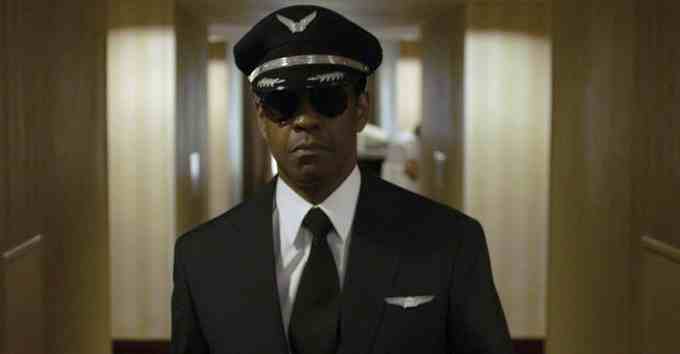
And the Agitation Award for Having Your Cake and Eating It goes to … ‘Flight’. In scene after scene, director Robert Zemeckis revels in the beer-guzzling, vodka-gulping, snoke-snorting, cuss-word-spewing and generally smartass bad behaviour of emotional fuck up and genius pilot Whip Whitaker (Denzel Washington). Gasp as Whip cops off with a foxy air hostess, toots a line of the Colombian marching powder just to wake up, then heads off to a fly a plane! Cringe as Whip uses said plane as a battering ram to power through clouds, rain and turbulence in a convergence of meteorological circumstances that could easily be mistaken for the wrath of God! Shudder as mechanical failure sends the plane hurtling earth-wards and Whip flips it over in mid-air then pulls off an audacious crash landing with a minimal loss of life! Watch in stupefaction as Whip disses the airline lawyer (Don Cheadle) who knows he was incapacitated at the controls but tries his damnest to keep him from going down! Yawn as Whip slides into a tediously protracted and doomed-from-the-start relationship with a fellow recovering addict (Kelly Reilly)! Snigger as Whip’s on-call drug dealer (John Goodman) spews profanity and politically incorrect homilies left, right and centre, happily stealing every scene he’s in! Be a little bit sick in your mouth as Whip gets a mammoth (and mammothly unconvincing) case of moral conscience in the last act! Punch yourself multiple times in the groin as Whip is finally able to bond with his estranged son by dint of being in prison! 

Ooops, sorry. Spoiler.

‘Flight’ has a fucking great first hour, an increasingly redundant second hour and an utterly abysmal last ten minutes. It’s blatantly in love with its protagonist while he’s being an irresponsible arsehole, but still wants to sell you on the redemptive/clean ‘n’ sober final act. It fails.