Tuesday, December 06, 2011

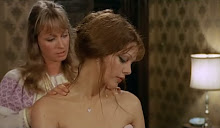
WINTER OF DISCONTENT: Deadgirl


In this charming romantic comedy, our affable heroes Ricky (Shiloh Fernandez) and JT (Noah Segan) – two fine upstanding college lads – make an intriguing discovery during a field trip and learn value life lessons about the value of friendship, the innocence of youth and how the love of a good woman just plain clinches the deal.

Meanwhile, back in reality and here on The Agitation of the Mind, Marcel Sarmiento and Gadi Harel’s thorny and cynical ‘Deadgirl’ concerns the edgy friendship between the moderately douchey Ricky and his full-on douchebag best bud JT, a friendship which is tested and found wanting when they cut class and head for a decaying and abandoned building that used to be a mental hospital.


Before you can say ‘Session 9: Douche Babies’, they’ve chugged some beer, tossed around some cuss words and smashed the place up a bit. Next stop: the basement. ‘Tis hear they discover the eponymous dead girl. Although ‘Undeadgirl’ would be a more appropriate title. Or even ‘Undeadnakedgirl’.

You see, our teenage twosome come across a woman (Jenny Spain) with the body of a model, the snarl of a wolf and the guttural communicative style of something Neanderthal; she’s manacled to a gurney and, of most pressing interest to JT, she’s stark naked. Deciding from the off that a naked, chained and (given the length of time the institution has been shut down) forgotten woman presents opportunities of the own-personal-sex-slave variety, JT gets in touch with his inner rapist.

The slightly more responsible Ricky reasons that they should just let her go, adding that they might go to jail if they keep her in captivity and force her into non-consensual sexual acts. Acute grasp of the law, this lad. An argument erupts and JT demonstrates a capacity for violence. Ricky slinks off, cowed, and goes back to his dead-end home life, his mom working all hours God send while his loser stepfather scrounges off them and taunts him about “acting like a man”. He tries to re-engage with his studies while carrying a torch for willowy redhead Joanne (Candice Accola), the girlfriend of jock asshole Johnny (Andrew DiPalma). But gradually he gravitates back into JT’s orbit, only to find that JT has reconfigured the asylum’s basement into a bona fide fuck pad and cut loudmouthed slacker Wheeler (Eric Podnar) in on the action.


Wheeler’s tendency to talk when he should be listening attracts the unwelcome attention of Johnny and his fellow jock asshole pal Dwyer (Nolan Gerard Funk) who insist on muscling in. They discover a morbidly transformed and dangerously purposeful JT, who eggs on Johnny to an act of fellatio. I’ll use the term “gag reflex” and leave it there. Johnny, injured right where it hurts, soon finds he has a much bigger problem than penile trauma when it becomes apparent that the dead girl is carrying some kind of infection. JT’s already disturbed mind leaps to the conclusion that he can use the now considerably-past-her-best dead girl to create other undead sex slaves.

Does it sound sickeningly exploitative, all this? The kind of thing that might send you running back to ‘Strange Circus’, ‘The Candy Snatchers’ or ‘Thriller – A Cruel Picture’ just to top up on something lighter and more life-affirming?

‘Deadgirl’, for all that it sounds like a horrible conflation of ‘Porkys’ and ‘Frankenstein Created Woman’, is pretty well-made film with some intelligence behind it and a definite and unflinching agenda. It’s about misogyny, misconceptions and how terribly easy it is to simply be complicit. JT emerges as the villain of the piece straightaway, in no small part thanks to Segan’s smirkingly convincing performance; but it’s Ricky who is proved a moral coward, a silent accomplice and, finally (SPOILER) the keeper of JT’s legacy (SPOILER ENDS).


Some scenes are truly despairing, and surprisingly they’re often the quieter, least explicit moments: JT’s heartlessly casual remarks about needing to invest in lubricant (“bone dry down there”); a picture cut from a porno mag placed over the dead girl’s face after she sustains extensive bruising; Ricky fantasizing about Joanne in a series of dreamy soft-focus tableau while he tries to put the dead girl’s ordeal at JT’s hands out of his mind; Wheeler stringing Christmas lights around the basement, presumably to create a more romantic ambience. And there’s also a scene of politically incorrect hilarity where JT and Wheeler attempt to kidnap a heftily built good-time girl only to discover that a tyre iron to the back of the head not only fails to incapacitate her, but provokes a humility ass-whupping by way of a counterattack.

It treads a fine line, does ‘Deadgirl’, and its denouement sails very close to outright melodrama. But the directors, working from a script by Trent Haaga keep the focus on character, situation and the ambiguous no-man’s-land of Ricky’s moral conflicts. The result is a film I’d be surprised if anyone enjoyed but which makes its point without pulling its punches.

Sunday, December 04, 2011

WINTER OF DISCONTENT: Bloodrayne


Has anything good ever come out of the movies-based-on-videogames subgenre? Is Uwe Boll’s reputation as the man who does for cinema what Jack the Ripper did for escort agencies actually deserved? To try to answer these two questions, I watched ‘Bloodrayne’.

Fuck my life.

The answer I’ve arrived at regarding the first question is: only if you’re a thirteen year old boy and the idea of Lara Croft being incarnated by Angelina Jolie, Alice from the ‘Resident Evil’ games by Milla Jovovich or Bloodrayne by Kristanna Lokken is enough to give you a stiffy without even watching a single frame of the resulting productions. Let’s face it, only a thirteen year old boy besieged by hormones and obsessed with video games could possibly feel any stirring of excitement over these largely sexless opuses.

So kudos to Uwe Boll for at least putting one sex scene in ‘Bloodrayne’, even if it is utterly joyless and perfunctory.


Are any more kudos due to our much-hated German director? Well, let’s spend a little time with the movie and attempt an answer.

‘Bloodrayne’ is about a vampire called Rayne (Lokken) who is first introduced in captivity, being paraded as a sideshow freak. Um. No. Let’s back up a tad. Rayne is sort-of vampire. A damphyr (I’m guessing at the spelling) – in other words, a product of a vampire/human union. The union in question being the rape of her mother by sadistic patriarchal vampire Kagan (Ben Kingsley).

Yes. Ben Kingsley. Sir Ben Kingsley. The guy who played Gandhi. In a Uwe Boll film.

Fuck my life part two.


Anyway, Rayne’s out for some payback against Kagan, while Kagan is more concerned with protecting his fiefdom against the ministrations of the Brimstone Society. This organisation is headed up by Vladimir (Michael Madsen), a man who comes across as a somewhat podgy Van Helsing with a haircut redolent of Bon Jovi circa 1986. Vlad’s retinue include Sebastian (Matthew Davis) and Katarin (Michelle Rodriguez). Katarin’s loyalties to the Brimstone Society are compromised by her relationship with her manipulative father Elrich (Billy Zane).

Vladimir and his team are seeking to destroy Kagan, Elrich has his own agenda, and all of the various parties have a vested interest in Rayne. Despite an attraction to Sebastian, Rayne’s own agenda – the simple, powerful and unambiguous desire for vengeance – dictates her choices, and she embarks on a quest for three talismanic items guaranteed to vouchsafe her an audience with Kagan. The risk is considerable, however, since to reunite the purposefully scattered talismans could provide Kagan with his passport to true immortality and absolutely power.


All of which sounds promising, ja? Vampires, vampire hunters, court intrigue, Machiavellian power plays … throw in swordplay, explosions, nudity and intense people galloping full tilt across rugged landscapes on horses, compress it all into a 90 minute running time and surely this has got to emerge as some kind of ballsy, fast-paced guilty pleasures and never mind the 2.8 IMDb rating. I mean, surely?

Wrong.

‘Bloodrayne’ is quite frankly dull. Boll clearly has no idea about pacing, characterization or simply engaging with his audience on even the most basic level. Some of the blame has to be laid at the door of screenwriter Guinevere Turner – virtually every line of dialogue is stilted and unconvincing. Not that Boll (yup, we’re back to the main offender) even tries to get more than the most lackadaisical line reading out of his cast. And anything approaching an actual performance – fuhgeddaboutit! Lokken, not the greatest thespian talent to begin with, handles the swordplay decently and looks hot in a leather waistcoat, but remains a bland heroine. Madsen is embarrassingly miscast. Rodriguez, always one of my favourite tough gals in the movies, looks cool but is given sod all to work with. Only Meat Loaf – deliberately hamming it up as a dissipated nobleman …


… and Billy Zane, who tosses off his few scenes with all the glib sarcasm the production deserves, emerge as memorable. It is better that we do not speak of Ben Kingsley. I will assume he had severe gambling debts, desperately needed the work, and not speak of his involvement in an Uwe Boll film again.

Every aspect of the film is perfunctory, as if Boll had a checklist that read: hot chicks, swashbuckling, neck-biting, crossbows, tits, blood; and randomly threw one or more of these elements into whatever scene he was currently filming. As a result, what should be trashy is tedious. What should be exploitative ends up an exercise in ennui. What should be a blood-drenched, decadent hour and a half seems to last twice as long. No joke, I can’t remember looking at my watch this often during any film I’ve seen in the past few years. Nor did I hit pause so many times to slope off for a pee, pour another drink, make some toast, watch cars passing on the street below or check Facebook. Somebody had posted a picture of their Christmas tree. It made for more entertaining viewing.

Saturday, December 03, 2011

Amanda Seyfried


The very glamorous Amanda Seyfried - on whose account I could actually consider watching 'Mamma Mia' - is 26 today. She shares a birthday with Julianne Moore. There's a scurrilous joke about a certain Atom Egoyan movie in there somewhere, but I'll simply lift a glass to the lady in question and not lower myself ...

Thursday, December 01, 2011

WINTER OF DISCONTENT: Switchblade Sisters


Meet the Dagger Debs, a girl-gang who are the de facto consorts of the Silver Daggers, a leather jacketed crew of high-school greasers. The Debs are led – rather implausibly – by Lace (Robbie Lee), a whiny pipsqueak with a lot of attitude but the kind of physicality that would see her defeated by your average Women’s Institute Committee member. Her right hand man woman is Patch (Monica Gayle), so named after her eye-patch, which she wears for no discernible reason other than ‘Switchblade Sisters’ came out a year after Christina Lindberg made the look iconic in ‘Thriller – A Cruel Picture’.

One day the Debs are happily terrorizing people at burger bar when new kid on the block Maggie (Joanne Nail) decides not to take Patch’s shit and effortlessly gets the drop on her. The cops break up the scene and Maggie finds herself in the slammer with a group of potential nemeses. A bull dyke (apologies to my lesbian friends, I’m simply mirroring the unreconstructed stereotypes the film trades in) warden gives Maggie a hard time and, putting their differences aside, the Debs intervene on Maggie’s behalf.

Later, when Maggie is released, she agrees to pass a message to Lace’s boyfriend, Silver Daggers supremo Dominic (Asher Brauner). Yes, folks, we’re watching an exploitation film where the gang leaders are called Lace and Dominic. But fear not – this isn’t the Noel Coward drive-in movie. As is immediately proved by Dominic’s decision that he kind of likes Maggie: he makes an overture by way of forcing his way into her house, forcing himself on her and terrifying her parents. Understandably, Maggie isn’t overly impressed with Dominic; nonetheless, she finds herself inducted into the Debs and part of the fight when Dominic’s high-school supremacy is threatened by the arrival of a new, politically motivated, gang headed by the sartorially-challenged Crabs (Chase Newhart).


Crabs and his boys come off more like a Morris dancing troupe with behavioural problems than an actually badass gang, but then again Dominic and Silver Daggers all look about a decade too old to be in high school, so who’s counting when it comes to verisimilitude? Besides, the real star of the show is director Jack Hill, already an exploitation veteran by the time he shot ‘Switchblade Sisters’, having already chalked up ‘Spider Baby’, ‘The Big Doll House’, ‘The Big Bird Cage’, ‘Coffy’ and ‘Foxy Brown’. Any man who can lay claim to directing not one but two Pam Grier blaxploitation classics is a director worth celebrating.

Hill brings his blaxploitation credentials to the table big stylee after an attack on Crabs’ boys goes tits up, Dominic’s followers are decimated, Lace is injured and Maggie responds to her inherited leadership of the Debs (now renamed The Jezebels) by hooking up with militant Afro-American girl-gang leader Muff (Marlene Clark) and her highly trained and motivated crew. In the film’s best sequence, the girls take it to the streets and royally kick the arse of their male counterparts. Think grindhouse version of ‘Battle of Algiers’ and you’re on the right track.


Hill could direct the hell out of an exploitationer, no question about it. ‘Switchblade Sisters’, with its touch of ‘Othello’ (think Patch as Iago and reverse engineer it from there), its plentiful action set-pieces and its cheerful amorality is never less than entertaining. And there are touches – such as a knife fight played out in balletic silhouette – that demonstrate a cinematic talent as laudable as any of his 1970s peers.


If there’s a criticism to be made it’s that no-one in the cast demonstrates as iconic a presence as Pam Grier in ‘Coffy’ or ‘Foxy Brown’. Lee never really convinces, Nail gives the impression of a girl-next-door trying to be badass, Gayle leaves you thinking she might have been pretty awesome if given more to do than lurk in background scowling, and not only do Crabs and co. more than earn the above insult but the other gentlemen of the cast project so little physical danger that they’d get their arses handed to them on a plate in a straight fight with the Dagenham Girl Pipers.

Still, if it’s trashy fun you’re after, ‘Switchblade Sisters’ definitely entertains.

Tuesday, November 29, 2011

WINTER OF DISCONTENT: Seven Women for Satan


A hunting dog stares moodily into the middle distance. A man on horseback thunders across a misty field. A naked woman runs like hell. From these elements, director Michel Lemoine fashions a not particularly suspenseful three and a half minute opening sequence. Then pulls the rug. It’s a daydream, which our protagonist Count Boris Zaroff (Lemoine, starring as well as directing) snaps out of as his secretary asks him to sign some papers. The day’s business done, Zaroff drives home to his newly acquired castle, picking up attractive hitchhiker Stephanie (Maria Mancini) en route. She rather naively tells him that she’s left home for no particular destination and that no-one’s expecting her. Hands up anyone who rates Stephanie’s chances of making to the end credits alive. Anyone? Anyone?

Advertised upon its release as “the French film banned in France” (it wasn’t), ‘Seven Women for Satan’ is the English-language market retitling of ‘Les week-ends maléfiques du Comte Zaroff’. The original title makes it sound like a slab of gothic; the English moniker like a giallo. Both assumptions are way off base. With its largely plotless noodlings, the architecture porn of its soft-focus castle setting, and its dichotomous aesthetic of nudity aplenty but little actual sex, the closest point of comparison is the work of Jean Rollin.


And there are moments where Lemoine very nearly captures that Rollin feeling: a woman disappearing into a lake as billows of mist drift across the screen; a woman enraptured by her reflection, turning away from a wall of mirrors and drawing back the gauze around a four poster bed only to be confronted with herself lying there supine and seductive; a couple waltzing through a deserted stables, a small drop of blood appearing on the back of the woman’s dress, the wound soaking through the material more and more each time her partner whirls her back into frame.

There are, unfortunately, just as many moments where the hand of Jess Franco or Joe D’Amato could easily have been the guiding force. Moments of utter crassness (the African statue that comes to life – racial stereotypes ahoy!) and/or complete ineptitude (a supposedly tense moment where someone is mauled by a dog, only it’s pitifully evident that the dog is actually nuzzling them in the friendliest manner imaginable). There’s an extended scene where a victim-in-waiting tries to persuade their partner that they’ve witnessed a murder only for the evidence to disappear; it plays out like an Abbott and Costello sketch but without the comedic talent. There are also two scenes where the victims are so complicit it’s impossible to root for them, including that most frustrating of cinematic lapses of logic: a character on foot, being chased by someone in a car, who runs desperately alongside a glade of trees without it ever apparently crossing their mind that simply veering into the trees would prevent their antagonist from running them over.

The narrative suffers, too, from a wooden protagonist in the form of Lemoine’s Zaroff, a man who looks like Cliff Richard’s evil twin …


… and is imbued with all the emotional complexity of a particularly short plank. A man whose idea of a chat-up line is “Would you like some champagne to help you dream pleasantly? Or would you rather that I pour it over your body and sip it slowly as if your substance were of crystal?” (The following scene, where he wastes a perfectly good bottle of champers and doesn’t sip it so much as slurp noisily whilst contorting himself into uncomfortable looking positions, is utterly unerotic. If you’re after a sex/alcohol combo, the J&B/Silvia Dionisio’s navel set-piece from ‘Waves of Lust’ is where it’s at.)

Then we have Zaroff’s Machiavellian manservant Karl, played by the eternally creepy Howard Vernon, a man blessed with the singular ability to deliver an over-the-top performance without actually doing anything. Whether it be staring bug-eyed off camera or walking in crab-like manner from point A to point B, there was always something forced, something unnatural about Vernon. Here, he plays a character who is trying to assuage the guilt of his father for the sins he committed as Zaroff’s father’s partner-in-crime by driving Zaroff Jnr to similar psychotic excesses. The logic behind this fails me, but as the film progresses Karl discovers that Zaroff’s obsession with his dead wife Ann (Joelle Coeur) is a more destructive force than any of his machinations.


This, more than anything, is where ‘Seven Women for Satan’ goes off the rails. If it had just been about Zaroff’s grief-stricken crack-up, it could have been a minor T&A classic. The nonsensical Karl-related subplot, which resolves in a groaningly hackneyed last-minute “twist”, is as perfunctory as it is unnecessary. Oh, and as far as the title goes, I make it six women and not a single reference to Satan.

Monday, November 28, 2011

Ken Russell


“Reality is a dirty word for me, I know it isn't for most people, but I am not interested. There's too much of it about.”


i.m. Ken Russell, 3 July 1927 – 27 November 2011

Friday, November 25, 2011

WINTER OF DISCONTENT: Mardi Gras Massacre

It’s never been definitively proved, but it’s a fairly safe assumption that a lot of the so-called “video nasties” ended up on the Department of Public Prosecutions’ radar for no other reason than their titles or their packaging. The process was probably as arbitrary as this:

SCENE: the back office of a government building. Several SELF-RIGHTEOUS OLD FARTS sit around a table drinking weak tea, smoking cigarettes from long silver holders and flicking ash off the arms of their tweed jackets.

SROF 1: Well, chaps, we’ve had another haul of those new-fangled video cassette thingies and I supposed we’d better decide if they’re fit for the hoi-polloi, what?

SROF 2: Watched any of them, old boy?

SROF 1: Oh, heavens no. Can’t even work the Beta-what’s-its-name machine. Don’t think I’d want to either. Not my cup of tea at all.

SROF 3: You can tell a lot by what they’re called.

SROF 1: Quite. And by the, ahem, “art work”. Right then, we’ve got quite a few with the word ‘Cannibal’ in them. Any thoughts.

SROF 3: Filth. Ban the lot of it.

SROF 1: Good show. Add the ‘Cannibal’ ones to the list, Miss Carruthers.

MISS CARRUTHERS: Very good, sir.

SROF 1: Something called ‘The Beast in Heat’ next.

SROF 2: Wildlife documentary, is it?

SROF 1: Hardly think so, old chap. Picture of a concentration camp and a young lady in a state of undress on the cover.

SROF 3: Bad show! Thought we’d seen the last of that kind of thing when we beat the Hun. I say we ban it.

SROF 1: Quite right, too. Pop it on the list, Miss Carruthers.

MISS CARRUTHERS: Very good, sir.

SROF 1: Hmm. Something called ‘Mardi Gras Massacre’. Looks a bit bloody unpalatable this one, excusing my language, Miss Carruthers.

SROF 3: Not keen on the sound of ‘Massacre’, what?

SROF 1: Not at all. But we might have a slight problem here, chaps.

SROF 2: How so?

SROF 1: Those BBFC wallahs gave the nod to something called ‘The Texas Chain Saw Massacre’. American drivel, don’t you know? Don’t think we can ban ‘Mardi Gras Massacre’ just on the title. Damned shame, really.

SROF 3: I say, pass around the box, would you? I rather think the cover illustration pushes the boundaries somewhat.

SROF 1: Ladies present, old chap. I shall have to ask Miss Carruthers to wait outside a moment. Don’t mind at all, do you, my dear?

MISS CARRUTHERS: Not at all, sir. Thank you very much, sir. God bless you for preserving my delicate English sensibilities.

(Exeunt MISS CARRUTHERS. The video case is passed around eagerly.)

SROF 3: Oh really. Just look at this. Young woman, very revealing costume, kneeling on a bed. Kneeling, I say. Sexual pose, don’t you know? Submissiveness, what? Hands bound behind her back, terrified look on the poor dear’s face. Then we have this hooded chappie in the background, bloody great knife in his hands. Damn it, man, this is filth of the highest order. We need every copy of this seized and pulped! Bloody disgraceful, begging no-one’s pardon, no ladies present and all that.

(There is a knock at the door. TARQUIN, the junior clerk, enters.)

TARQUIN: Sorry I’m late, gents. Delayed on the Tube.

SROF 1: Apology accepted, young man. Do take a seat. We were just debating the merits of this insalubrious piece of work.

TARQUIN: ‘Mardi Gras Massacre’, eh? Watched it with some university chums last night. Pretty shoddy affair, all told. Quite laughable, really.

SROF 3: Laughable?

TARQUIN: Wooden acting, murky photography, the story’s tedious and even at less than an hour and a half it’s got more padding than a feather cushion. The effects work is just appalling. The murder scenes are tired and repetitive. You’ll spend more time with your finger on the fast-forward control than you will being outraged. If I may take the liberty, gents, the only outrage this film will cause is that you paid good money to rent it.

SROF 3: But damn it, Tarquin, look at the cover! Filth, pure filth.

TARQUIN: Oh, there’s nothing like that in the movie. True, the antagonist kills young women, but none of it is remotely believable. Really, fellows, this presents no moral danger to the masses. None whatsoever.

SROF 1: Eloquently said, Tarquin. Good show. About time we had some common sense and objectivity on this committee.

TARQUIN: Thank you, sir.

SROF 1: Now, what say we ban this piece of rancid pabulum anyway?

SROF 3: I second that!

SROF 1: Carried. Add it to the list, Miss Carruthers. (Pause) Miss Carruthers? … Miss Carruthers?

Wednesday, November 23, 2011

WINTER OF DISCONTENT: Rolling Vengeance


Still unavailable on DVD – presumably because it’s largely crap, although that hasn’t stopped a bunch of other largely crap movies blighting the good name of the digital versatile disc – the VHS cover of ‘Rolling Vengeance’ boasted the awesomely awful tag line “use the right tool for the job”. The job, in this case, being the despatching to redneck hell of some, well, right tools.

Here’s the set-up: Big Joe Rosso (Lawrence Dane) has just made his son Joey (Don Michael Paul) partner in his trucking business. Joey spends his spare time working on a rig he’s customizing for a forthcoming monster truck show. He spends a bit less time with his socially conscious girlfriend Misty (Lisa Howard). Misty is part of a Mothers Against Drunk Drivers action group who are targeting a titty bar run by the loathsome Tiny Doyle (Ned Beatty) and his equally loathsome sons. There’s friction between Joey and Misty given that Rosso & Son make deliveries for the Doyles.

(Anyone pegged the scriptwriter as a big fan of ‘The French Connection’ yet?)

One day, Big Joe’s wife Kathy (Susan Hogan) and the younger Rosso children are driving into town when Doyle’s sons, barrelling along in a pick-up truck and thoroughly intoxicated, start playing cat-and-mouse with her. Things end in tragedy as they force Kathy’s car in front of a truck driven by Joey’s sometime pal Steve (Barclay Hope). Kathy and the kids are killed outright. At the inquest, the whole thing’s declared a misadventure and Doyle’s eldest son Vic (Todd Duckworth) is given a paltry fine. Not happy with the outcome, Big Joey and Joey head over to Tiny’s bar and start a fight.

In retaliation, the brothers Doyle pull a dangerous stunt dropping breezeblocks from a freeway bridge which ends up with Big Joe’s truck written off and Big Joe himself hospitalized. Joey responds by customizing his monster truck as a huge-tyred armour-plated crushing machine and lays waste to Tiny’s car dealership (quite the entrepreneur is our Tiny). When Misty gets caught in the crossfire and assaulted by a couple of the Doyles, the stakes are raised and Joey goes all out for vengeance. Rolling vengeance. Yeah, baby!


Steven H Stern’s by-the-numbers revenge thriller was made in 1987 and every frame attests to it. Ditto the soundtrack, a motley collection of soft rock ballads, one of which chugs away over the inevitable montage. Here, it’s a montage of Joey wandering around a scrapyard and welding things together. Remember that scene in ‘The Full Monty’ where a supposedly terpsichorean study of ‘Flashdance’ turns into a critique of Jennifer Beals’s welding technique? Well, Jennifer Beals uses an arc welder like a Tyneside ship-builder compared to this flop-haired wannabe tough guy.

The Doyle clan – lorded over by Ned Beatty in turn that goes beyond scenery-chewing and into the realms of outright production design cannibalism – are one-dimensional losers. Beatty’s bouffant back-comb is perhaps the only genuinely terrifying thing about them. And even that’s put unequivocally in the shade by Lisa Howard’s fright-perm.

The narrative is an exercise in unimaginative tit-for-tat: the Doyles fuck over the Rossos, Joey cuts loose with the monster truck; the Doyles rape Misty, Joey goes on the rampage with the monster truck; Big Joe takes a turn for the worse in hospital, Joey drives the monster truck through the titty bar. Now, I’m not suggesting that there isn’t a certain guilty pleasure in watch shit get crushed by a monster truck, particularly when buck-toothed rednecks are included in the catch-all description “shit”. What I am suggesting is that said guilty pleasure wanes a tad in the face of repetition. Nor does it help that the monster truck itself looks like the bastard offspring of a portable toilet and one of those fuck-off big dump trucks they use in quarrying.


In other words, there are myriad scenes where someone exclaims, “Jeez, what the hell is that?” before trying to outrun it, a look of naked fear painted across their face, when the more realistic response would be to laugh like hell and enquire of the driver whether he’s overcompensating for something. After all, the right tool for the job and all that. Throw the industrial sized auger that comes whirling out from between the two front wheels (a device which has all the sophistication of Q Department headed by a thirteen year-old heavy metal fan) and there’s probably an academic study to be written on ‘Rolling Vengeance’ as a study in penis envy. Either that, or it just means the film’s a load of old cock.

Monday, November 21, 2011

WINTER OF DISCONTENT: Strange Circus


There are films that pull the rug in the first reel. The credits roll, the narrative begins, things get very weird from the outset; the protagonist’s situation seems to be spiralling out of control; imagery and logic twist in upon themselves. Then – bang! – the whole thing’s revealed as a false start. A dream sequence. Or the main character’s imaginings.

Then there are films which bide their time, patiently and subtly fool the audience, then pull off that eleventh hour rug-pull, that head-fuck twist-in-the-tail that forces the audience to re-evaluate everything that’s gone before. Inferior films do this and send you stomping out of the cinema in disgust. Superior ones – case in point, Christopher Nolan’s ‘The Prestige’, leave you itching to watch them again, convinced there are a myriad clues you should be watching out for.

And yet other films blend reality (i.e. their internal reality), fiction (i.e. an admission that what is onscreen is a creation/manipulation) and meta-textuality to such effect that the boundaries become blurred, the narrative planes intertwine and the writer/director is revealed as some kind of prancing Machiavellian sprite, happily pulling the strings (including those of the audience) on any number of levels.


And – more rarely – there are films which tick all of the above boxes. These films are usually by Alain Resnais or David Lynch. Today’s offering, ‘Strange Circus’, is by Shion Sono, and it’s brilliant, accomplished, intellectual and despicably cynical in roughly equal measures.

‘Strange Circus’ starts with a performance by the grand guignol troupe of the title. A young girl is invited on stage to be guillotined. Her voiceover suggests that she was doomed to die the moment she was born. This scene is filmed subjectively, so that the circus-mistress’s implorations for a volunteer are seen from the girl’s point of view. When she reluctantly allows herself to be led onstage, the POV remains: the effect is akin to her stepping out from the audience, through the fourth wall, and into the fabric of the film. It’s the first of Sono’s many distortions of perspective.

The girl is Mitsuko (played by Rie Kunawa and Mai Takahashi are various stages of her girlhood, and Masumi Miyazaki as an adult). As she’s led towards the guillotine, she wakes up screaming. Five minutes in, and we’ve made the transition from dream sequence to narrative proper. Or have we? Awakened, Mitsuko hears violent noises from her parents’ room and investigates. She witnesses her father Gozo (Hiroshi Ohguchi), a headteacher, sexually dominating her mother Sayuri (also Miyazaki). Gozo punishes her by subjecting her to similar treatment.


Okay, then. Incestuous paedophilic rape. Still with me? Gozo also forces Mitsuko to watch his sexual domination of Sayuri from the confines of a cello case (I am not making this up), an ordeal Mitsuko gets through by imagining her mother is her place. During the actual incest, Mitsuko copes by imagining she has become her mother. So: throw in voyeurism and troilism on top of the incest/rape business.

Still with me?

Forty minutes in, Sono reveals that everything we’ve just seen is the embryonic plot of a novel by crippled pornographic author Taeko (Miyazaki once more), an elegant eccentric who surrounds herself with admirers and hangers-on. Or is it? And is Taeko genuinely conjuring her tale from the ethereal realms of imagination, or do her venal musings have their roots in reality?


‘Strange Circus’ – with its taboo subject matter, jarring imagery, and commendably sick sense of humour – is a walk on the cinematic wild side that can only be described as the bastard offspring of Chan-wook Park and Alain Resnais if they’d got loaded on peyote, watched a fuckton of Jean Rollin movies and decided to collaborate on a remake of ‘Whatever Happened to Baby Jane’ by way of the Adrian Lyne version of ‘Lolita’. But without the tact or restraint.

Sunday, November 20, 2011

Now is the winter of our discontent, made exploitative by this son of the blogosphere

Kicking off a tad later than anticipated – thanks to a combination of (a) social engagements, (b) illness and (c) the vagaries of my internet service provider – 2011’s Winter of Discontent starts here.

Assuming the dearth of (a), the forbearance of (b) and the cooperation of (c), we’ll be seeing out the year on The Agitation of the Mind with a smorgasbord of horror, controversy, violence, filth, revenge and general nastiness, every bit of it selected to demonstrate the bilious depths of man’s inhumanity to man and the reprehensible lengths that a film crew, a masochistic cast and a zero budget are willing to go in order to prod their audience into howls of protest.

In other words, welcome back.

Tomorrow, we’ll be get things started in fine style with a look at a particularly fucked up work of Japanese cinema, redolent in incest, troilism and a demonstrable reality/unreality dysfunction.

Friday, November 18, 2011

THE SILLITOE PROJECT: latest news

Karel Reisz’s classic film version of Alan Sillitoe’s ‘Saturday Night and Sunday Morning’ is the subject of two articles by Kimberly Lindbergs: one on the indispensable Movie Morlocks, the other on her equally essential blog Cinebeats. Myself and David Sillitoe, Alan’s son and the Chairman of the Alan Sillitoe Committee, were interviewed by Kimberly and the resulting article is a terrific appreciation of a great work of post-war British cinema that also glances behind the scenes and considers Alan’s input in this and the other film adaptations of his work.

In other news, thanks to everyone who contributed when we held a collection at the Nottingham Contemporary/LeftLion event 'Gunpowder, Treason and Pot' on 4th November, and special vote of thanks to musician and composer John Aram who, with his band, performed his ‘Saturday Night and Sunday Morning’ inspired jazz suite in Arnold, Nottingham, last month and supported the statue fund to the hilt.


The next event is on Thursday 1st December at The Maze, Mansfield Road, Nottingham, and features three great local bands playing in support of the fund.

For more information, or to make a donation, please visit The Alan Sillitoe Website.

Tuesday, November 15, 2011

Virginie Ledoyen

Virginie Ledoyen, already an Agitation of the Mind poster girl courtesy of her beautifully underplayed turn in ‘Saint-Ange’ …


… is 35 today. A large glass of rioja is being raised at chez Agitation and a triptych of deluxe cheesecake shots are being posted on this blog.


Bon anniversaire, madamoiselle.

Sunday, November 13, 2011

Spotswood


Heard the one about the Anthony Hopkins-Toni Collette-Ben Mendelsohn-Russell Crowe movie about a time and motion expert called in to fuck over the workforce of a small family-run business, directed by the guy who made ‘The Man Who Sued God’, that’s arguably one of the best movies you’ve never seen?

No joke. I saw ‘Spotswood’ at Nottingham’s Broadway Cinema – the East Midlands’ beacon for independent and arthouse cinema – on its first release in the early 1990s. Time robbed me of any definitive recollection of the movies, except for an hilarious extended set-piece based an a slot-car race, but I always remembered that I’d enjoyed it.

A couple of decades have passed and I’d got used to mentioning the film to people only to be met with quizzical expressions. Or responses along the lines of “Anthony Hopkins and Russell Crowe in the same movie? Nah, you must have dreamed. I’d have remembered that!” My assertions that, actually, not only did the movie exist but Crowe played a greaser in a hotrod with ambitions to become a corporate sell-out tended to meet with excuses being made and the other party swiftly departing.


I found ‘Spotswood’ for £2.49 on Amazon recently. A panned-and-scanned print that looks like a transfer – albeit an unnaturally good one – from VHS. But what the hell? I got to see it again. And it holds up. It holds up and then some.

Hopkins plays Errol Wallace, an efficiency expert who has just completed an exhaustive study of a major car manufacturer and whose report recommends the lay off of 480 workers. The MD (the film is set the late 1960s, before Managing Directors disappeared up their own rectal passageways and started calling themselves Chief Executive Officers) prevaricates, leading to Wallace’s partner engaging in underhanded practices in order to force the issue.

Meanwhile Wallace takes the reins on the next project, an assessment of Ball’s moccasin factory, a stuck-in-the-50s enterprise whose MD (Alwyn Kurts) is secretly selling off assets in order to keep his full complement of workers employed. Amongst these individuals are up-and-coming salesman Kim Barry (Crowe); good-natured but cringingly naïve despatch boy Carey (Mendelsohn); Wendy (Collette), Carey’s co-worker whose romantic overtures he blindly overlooks; and Cheryl (Rebecca Rigg), Ball’s daughter – temping at the firm prior to embarking on “a full-time modelling career” – for whose affections Kim and Carey find themselves unlikely rivals.


The story arc is predictable: things turn ugly at the auto-plant while Wallace re-engages with the human side of things at Ball’s ailing factory, eventually coming through with the business plan that revitalizes the business and safeguards the workforce’s jobs. I make no apologies for not throwing up a spoiler alert. ‘Spotswood’ is so whimsical and guileless, it’s up there with ‘Local Hero’ as the closest anyone has come to making an Ealing comedy in the last half a century.

The performances are pitch perfect, Mark Joffe’s direction is commendably underplayed (there’s barely a scene in this film that you can’t immediately imagine being utterly ruined and drowned in schmaltz by a Hollywood director), Ellery Ryan’s cinematography effortlessly evokes a time and a place, and there are some inspired and yet unforced musical cues on the soundtrack. Subject of which, the (deliberately) awful garage band cover of ‘House of the Rising Sun’ over the opening credits is toe-curlingly hilarious.

If you’ve never seen ‘Spotswood’ before – or, as seems to be the cultural denominator, even heard of it – I guarantee you’ll benefit from seeking it out. Not only do you get Hopkins and Crowe sharing the screen, but it’s the only movie that features a slot-car race as tense, gripping and imbued with everything-to-play-for desperation as the final bout in ‘Rocky’ or any of the green baize duels in ‘The Hustler’.

Friday, November 11, 2011

A brief word of apology

Dear Everyone on my Link List

I have been checking out your blogs. I have been enjoying your reviews. I haven't been ignoring you. I haven't fallen out with you. If I haven't been leaving comments anywhere near as frequently as I used to - if, in point of fact, I've barely left a comment on anyone's blog in the last couple of weeks - it's not for anti-social reasons.

I recently got my mojo back for writing fiction and have been working on a couple of projects. There's also been my ongoing work for the Alan Sillitoe Statue fund. Some exciting new events are coming up - please keep checking our website for details. I've also been hooked on some terrific books recently: James Robertson's masterpiece-in-waiting 'And the Land Lay Still', Michelle Paver's atmospheric ghost story 'Dark Matter', Niki Valentine's equally effective chiller 'The Haunted' and John le Carre's 'Our Kind of Traitor', an elegant and cynically incisive work that sees him on his best form since 'The Constant Gardener'.

Throw in the requirement that I present myself at the office eight hours a day purely to safeguard the income which I immediately pass on to my mortgage provider, and there's very little time left in the day.


Yours apologetically,

Neil

Wednesday, November 09, 2011

PERSONAL FAVES: The Constant Gardener

Posted to coincide with Fernando Meirelles’ 56th birthday


Reviewing ‘Tinker Tailor Soldier Spy’ got me thinking about how well-served John le Carre has been in terms of adaptations. The seven-part TV adaptation of that novel, starring Alec Guinness, is one of the small screen’s finest achievements. It’s big screen counterpart is arguably a classic-in-waiting. Martin Ritt’s ‘The Spy Who Came in from the Cold’ is one of the bleakest, most compelling cinematic renderings of the spy story, with a blistering performance from Richard Burton – one of his best.

Even the second tier of le Carre adaptations – Fred Schepisi’s ‘The Russia House’, George Roy Hill’s ‘The Little Drummer Girl’, John Boorman’s ‘The Tailor of Panama’ – are perfectly accomplished and entertaining films. There’s no reason to suspect that Anton Corbijn’s ‘A Most Wanted Man’ – currently in pre-production – will be anything less than a class act.

But above all of these – albeit only by a very short head where ‘The Spy Who Came in from the Cold’ and ‘Tinker Tailor Soldier Spy’ are concerned – is Fernando Meirelles’ ‘The Constant Gardener’, a riveting thriller, a humanitarian manifesto and a j’accuse against corporate greed and political chicanery. A beautiful and emotionally devastating work of cinema.


An opening scene peppered with lacunae gives us a deserted stretch of African coastal road, an overturned vehicle, men piling out of a jeep. The next scene has junior diplomat Justin Quayle (Ralph Fiennes) learning of the death of his wife Tessa (Rachel Weisz) from his seemingly avuncular superior Sandy Woodrow (Danny Huston). Tessa was quite the humanitarian – aid worker, activist; the kind of person it would be easily to mislabel a bleeding heart liberal except that the woman had the tenacity of a particularly stubborn bulldog. As well as an unfortunate tendency to rub Justin’s British High Commission colleagues up the wrong way.

The nature of how this extremely unlikely couple got together is the subject of an extended flashback. And as unlikely as their romance is, Meirelles’ portrayal of it is natural, convincing, unforced. It helps, of course, that Fiennes and Weisz – two actors who have never given a bad performance – are on absolute top form here. Weisz’s Academy Award was one of those stand-up-and-applaud moments of Oscar getting it right.


With the murder mystery element in place, and genuine emotionalism underpinning it, Meirelles begins to unravel – unhurriedly but with a palpable sense of tension – a complex web of deceit, secrecy, underhandedness and naïve political allegiance. In one of the most telling moments, a morally compromised but jingoistically indefatigable politico weighs the unholy alliance between government and pharmaceutical corporation in terms of 1,500 British jobs. Murder, conspiracy, malpractice and the violation of a depressed country’s already beleaguered human rights. But 1,500 British jobs, so what ho chaps?

Le Carre’s novel – his best, for my money – is that rarest of beasts: a literary thriller that powers through its narrative with balls-out ferocity; and an incredibly elegant piece of writing that nonetheless seethes with righteous outrage. And so it should. From the existential despair of Alex Leamas in ‘The Spy Who Came in from the Cold’ to the moment of almost unwitting complicity on which his latest novel ‘Our Kind of Traitor’ turns, John le Carre has, throughout his career, transcended the inherent cynicism of the espionage drama and grappled with the thorny moral conundrums at the heart of his characters’ tarnished lives.


If, however, le Carre approaches the material from the perspective of an Englishman sick of the snobbery and the bullshit and the old school tie network and all the sneaky nasty little things that are done by the establishment supposedly for the good of all, then Meirelles brings to the table the authenticity and immediacy of his breakthrough film, the magnificent ‘City of God’. With these two movies – ‘The Constant Gardener’ was his follow-up – Meirelles took shaky-cam to an art-form. The African scenes are vibrant, alive, as gorgeous as they are harrowing. Elsewhere, though, he knows when to step back from the action, when to frame his actors in long-shot. When to hold a shot and just let it play out, an all too rare capacity in contemporary filmmaking. Simply put, every frame of ‘The Constant Gardener’ contributes to its whole.

Two other things to mention: the film was produced by Simon Channing Williams, who died two years; le Carre’s latest novel is dedicated in memoriam. Whilst filming on location in Nairobi, the cast and crew were so appalled at the levels of poverty that they established The Constant Gardener Trust (go here and be amazed at what the Trust has achieved), of which le Carre, Meirelles, Weisz and Fiennes are patrons.

One great work of literature; one great work of cinema; one awe-inspiring humanitarian organisation. That’s a pretty good batting average.

Monday, November 07, 2011

Tinker Tailor Soldier Spy


Possibly the hardest challenge an actor can face is to take on a role already synonymous with someone else. ‘The Prisoner’ with Jim Cavaziel instead of Patrick McGoohan, for instance – it just didn’t work for me. It was as unthinkable as Inspector Morse not being played by John Thaw or Rumpole essayed by anyone other than Leo McKern.

So, despite the glowing reviews it opened to (glowing? incandescent, more like!), I approached ‘Tinker Tailor Soldier Spy’ with a certain degree of trepidation. A George Smiley who wasn’t Alec Guinness? Even an actor as accomplished as Gary Oldman? Hmmmmm.

I needn’t have worried. After ten minutes, my brain had stopped trying to impose Alec Guinness’s face over every scene. By the end of the film, I was convinced that Oldman was the George Smiley (big screen version) as definitively as Alec Guiness was the George Smiley (small screen version). In fact, walking back to the car afterwards, me and Mrs F solidly raved about Oldman’s performance and didn’t stop till we were back home.


Every rave review you’ve read is on the money: Oldman really is that good. And he’s not starved for supporting talent either. John Hurt is perfect as ‘Control’, the outgoing spymaster whose position is being jockeyed for by several slippery characters who have their own agendas, one of whom is a mole: Bill Hayden (Colin Firth), Percy Alleline (Toby Jones), Roy Bland (Ciaran Hinds) and Toby Esterhase (David Dencik).

Bulking out an already heavyweight cast, we have Tom Hardy as Ricki Tarr, the ‘in from the cold’ field agent whose allegations kick start the plot; Mark Strong as Jim Prideaux, a former agent who may or may not hold the key to uncovering the traitor; and Benedict Cumberpatch as Peter Guillam, Smiley’s right hand man.

The plot is labyrinthine, but Bridget O’Connor and Peter Straughan’s screenplay is an effective distillation of John le Carre’s novel, finding a narrative throughline, effortlessly handling the shifts between the various timelines and keeping things pacy even though the film is essentially a 127-minute thinking-caps-on job.

Kudos, as well, to director Tomas Alfredson, following the wintery 1970s-set ‘Let the Right One In’ with an equally atmospheric period piece. ‘Tinker Tailor Soldier Spy’ boasts not only a pitch-perfect evocation of run-down 70s London, but Alfredson achieves the style, pacing and edgy existentialism of 70s cinema.

So, any gripes at all? Save for an opening sequence that seems curiously artificial (although I think this might have been a stylistic choice on Alfredson’s part, since the scene details at set-up), and a moment towards the end which seems to pull its punches in the way the novel doesn’t, there’s not a single thing here to criticize. ‘Tinker Tailor Soldier Spy’ is confident, intelligent and incredibly satisfying filmmaking.

Thursday, November 03, 2011

The opera box or the peanut gallery?

Taking a short break from the blog till next week while I put the finishing touches to a new short story and attend this event at the Nottingham Contemporary tomorrow night.

In the meantime, a friend of mine asked if I was going to start reviewing “normal” films again, pointing out that between Black Valentines, Giallo Sundays, Summer of Satan, 13 For Halloween and the forthcoming Winter of Discontent – and with Video Nasties in the lead for next year’s big retrospective – Agitation is in danger of turning into a repository for sex ‘n’ violence exploitationers.

So I’m throwing it open. The poll still has 58 days to run and if you’d like to see Agitation square up to a more refined viewing list, then please hit up the sidebar and vote for something that doesn’t have “video” and “nasties” in the description. If, however, you do want to see a continued consideration of filmic filth and cinematic seediness on these pages … well, then, business as usual!