Showing posts with label Rachel Weisz. Show all posts

Friday, March 09, 2018

CROWHURST SEASON: The Mercy


So: over a month after I saw ‘The Mercy’ at a vastly under-attended screening at Nottingham’s Cineworld multiplex – during which I have watched several other Crowhurst features, ploughed through two-thirds of Peter Nichols’s book ‘A Voyage for Madmen’, added Tomalin and Hall’s ‘The Strange Last Voyage of Donald Crowhurst’ and Bernard Moitessier’s ‘The Long Way’ to my “must read” list, and cursed StudioCanal for not getting Simon Rumley’s ‘Crowhurst’ into theatres four to six weeks after ‘The Mercy’ as they promised – I find myself sitting down to write about ‘The Mercy’ and feeling like I’m about to be a bit of a heel.

I had sod all knowledge of Donald Crowhurst, Bernard Moitessier and the 1968 Golden Globe race before I saw ‘The Mercy’. I went to see it because of its stars – Colin Firth and the always watchable Rachel Weisz – and because it looked like something reasonably interesting amidst an otherwise lacklustre choice of cinema-going options. What ‘The Mercy’ did was to sink a hook in my imagination and pull the line attached to it taut as a piano wire. It made me want to know more. Not just about Crowhurst but the other contestants. Once payday has rolled around again and I can order a copy of Moitessier’s account and the Tomalin/Hall book, my next acquisitions will be Donald Finkel’s book-length poem ‘The Wake of the Electron’ and Robin Knox-Johnston’s memoir ‘A World of My Own’.

This from someone who never had any real interest in ocean voyages or yachtsmanship. And it’s thanks to ‘The Mercy’ that I owe this explosion of new-found fascination.

And yet – I was aware of this to a certain degree as I watched the film, and it’s been thrown into sharper relief by my viewing, reading and researches since – ‘The Mercy’ isn’t that great a movie. It’s decent, don’t get me wrong – nicely shot, good production values, a commendably taut hour forty minute running time, and Firth’s most committed performance in ages – but it falls short of greatness.

It falls short because, in some places, it elides fascinating details of Crowhurst and the Teignmouth Electron’s voyage that would have added to the drama; and in others it sanitises them. Example of the former: ‘The Mercy’ insinuates that the Teignmouth Electron was delivered to Crowhurst at the very eleventh hour, allowing him to set out on the very day of the deadline – 31 October 1968 – when in fact the vessel was launched in late September with the intention that Crowhurst would sail it from Brundall to Teignmouth (the Electron had been named after the harbour town as part of Rodney Hallworth’s publicity drive), a voyage that should have been a three day hop for any competent sailor but took Crowhurst a fortnight. Much, too, is made in the film of Crowhurst’s self-designed safety devices, particularly the “buoyancy bag”, and a genuinely vertiginous scene has a petrified Crowhurst (Firth) climbing a wobbling mast in order to effect a repair only to fail in his endeavours. In actuality, none of the safety features had been completed and/or installed before the Electron set sail, and it strikes me that for the film to have reflected this would have ramped up the tension from the get-go.

Examples of director James Marsh and writer Scott Z. Burns’s sanitisation are more prolific and more troubling. One needs only to consult two or three accounts of the Crowhurst story to identify Stanley Best and Rodney Hallworth as the puppet-masters who manoeuvred Crowhurst into his damned-if-I-do-damned-if-I-don’t dilemma. Yet Marsh and Burns almost seem to take pains to paint Best as a kindly old cove (he’s played by Ken Stott, who can do ruthless as well as any character actor, so we have to assume that the twinkly characterisation he delivers instead was specifically requested) who does what he does with the greatest of reluctance. Likewise, Hallworth (David Thewlis) comes across as a cheeky chappie who gratuitously embellishes Crowhurst’s claims because, hey folks, that’s what fast-talking 1960s newspaper were like, innit? Thewlis had already turned in a far more nuanced portrayal of a journalist in ‘The Fifth Estate’ so there’s no reason to doubt that, had Burns written Hallworth as such and Marsh requested it, Thewlis would have embodied the character and projected his motives in suitably eviscerating style.

Similarly, Crowhurst’s descent into madness is skirted around rather than providing the dramatic raw red meat of the film’s final act. Neither Marsh nor Burns seem to be up to the task of depicting their protagonist’s fragmenting mental state. A visual attempt to render Crowhurst’s disorientation against a seascape that renders him insignificant isn’t well enough thought-out to be impactful, and a sequence with a non-functional radio-telephone, which seems to have been shoehorned in purely to make mention of Crowhurst’s “cosmic being theory” (but without actually explicating it), is so predictable in its visual punchline to be crass.

Put simply, ‘The Mercy’ doesn’t go deep or dark enough. Its last half hour needs to be the kind of claustrophobic and immersive headfuck that Nic Roeg, Donald Cammell, David Lynch or Alejandro Jodorowsky would have rubbed their hands together and dived right into. But I guess that headfuck-inability is what you get when you engage the director of ‘The Theory of Everything’ instead of a visionary auteur.

Mercifully (bad pun: no apologies), the film does get some things right. It gives Firth one of the best roles he’s had and – despite being at least 15 years too old to play Crowhurst – he rises above the limitations of the script and direction. As does Rachel Weisz as Clare Crowhurst, whose final act j’accuse against the press is infinitely more powerful for the reserve and restraint she forces on herself as she delivers it. There are also a cluster of scenes which simply document Crowhurst, alone at sea, coming painfully to terms with how ill-prepared he is, how unsuited to purpose the Electron is, and how miserably lonely the undertaking. I often complain that contemporary films would benefit from having their running times reduced by 15 or 20 minutes, but in this case and extra quarter of an hour or so of Crowhurst battling to keep his trimaran afloat, battling his own lack of expertise and battling the crippling external forces by which he is unable to either turn back or go on, would have improved ‘The Mercy’ no end. That, and the balls to look right into the abyss the way Crowhurst must have done during those terrible final days.

Thursday, July 14, 2016

Youth


Paolo Sorrentino’s film is graced with many things: late period great performances by Michael Caine and Harvey Keitel (the latter of whom has been, ‘The Grand Budapest Hotel’ apart, ill-served by cinema this last decade or so); an eclectic soundtrack; elegant cinematography; and a cheek-by-jowl depiction of the realistic (ageing, regret, professional failure) and the surreal/metaphysical (no examples: I wouldn’t want to deprive the viewer of some delightful moments). What it doesn’t deal in is narrative.

Which is to say that there isn’t plenty go on – there is: an almost dumbfounding amount – but despite the characters’ clearly, even contrivedly, mapped interrelationships, there isn’t the inextricable interweaving of, say, ‘Short Cuts’ or even a sense of disparate material finding its rhythm and aesthetic in the editing room à la ‘Cloud Atlas’. Instead, we have a group of moderate-to-extremely eccentric people holed up at a spa in the Alps, some of whose lives have parallels, to varying degrees, with others’.


The guest list at this swish Swiss establishment includes a veritable roster of the famous and once-famous. We have Fred Ballinger (Caine), a composer remembered chiefly for his most throwaway work; Mick Boyle (Keitel), a film director trying to complete the script and drum up financing for a movie that might well be his last; prissy method actor Jimmy Tree (Paul Dano); corpulent former football legend Diego Maradona (Roly Serrano); and the newly crowned Miss Universe (Mădălina Diana Ghenea). Ballinger and Boyle are old friends and romantic rivals, a relationship further intertwined by the impending nuptials between Ballinger’s daughter Lena (Rachel Weisz) and Boyle’s son Julian (Ed Stoppard). Nuptials that get swiftly demoted from impending to ain’t happening when Julian throws over Lena for Paloma Faith (gamely playing a version of herself that the script is unflattering about to put it mildly).

As ‘Youth’ opens, Ballinger is visited the Queen’s emissary (Alex Macqueen), who implores him to conduct his most famous composition, ‘Simple Songs’, at a gala performance. Ballinger refuses for reasons he is reticent to cite. Of course, Ballinger recanting and the film reaching its denouement with said concert is a no-brainer. The two hours in between don’t so much sketch in the circumstances of Ballinger’s volte face as gently suggest them, mainly by playing him off against the spa’s various other residents in a series of wanly observed vignettes.

There’s the contrast between Ballinger and Boyle: the former retired and happy to have shucked off the highs and lows of creativity, the latter still desperate to complete another work. In a surreal moment late in the film, Boyle – rejected personally and professionally by his leading lady of many years, Brenda Morel (Jane Fonda) – hallucinates an alpine hillside full of the various actresses he worked with, all of them still young while he’s an old man, all of them garbed as they were in his films; just from their delivery of the hamfisted dialogue he saddled them with, it’s clear that Boyle wasn’t that great a filmmaker, that he stumbled from one low-budget no-hoper to the next purely to give a leading role to whichever B-movie beauty was his muse at any one time.

There’s the nexus of personal revelation shared by Ballinger and Tree: both are remembered for just one work – the composer for what was little more than a practice piece, the actor for playing a robot in a trashy sci-fi movie. Both have their dignity returned to them by children who are completely un-awed to meet them: a budding violinist who accepts that while Ballinger’s ‘Simple Songs’ are indeed simple, the simplicity is the key to their beauty; and a young film fan who rubbishes the robot movie and tells Tree that it was his delivery of one single line in a low-key family drama that proved his brilliance as an actor. Sorrentino is wise enough to let these rhymed scenes develop slowly and play them with absolute understatement. Much of ‘Youth’, when pinned down on the page in the context of a review, borders on the hokey. Many a director would have made a pig’s ear of it. (But again, no spoilers.)


There’s the shared moment of transcendentalism which sees an eastern mystic achieve nirvana and Maradona rediscover his old calling, no on a football field, but with a tennis ball on an immaculate court. There’s the contrast between Paloma Faith’s raucously unsubtle pop video and an amateur but heartfelt band performing Florence and the Machine’s ‘You’ve Got the Love’. There’s the experiential spectrum between Boyle’s idealistic young writing team and the world-weary pragmatism of Boyle himself. There’s the juxtaposition between Lena’s budding new relationship with a mono-emotional mountain climber and Boyle hiring the services of a young hooker only to task her to take a twilight walk with him. And there’s the stony-faced couple who take dinner every evening without saying a word to each other, who become a blank canvas upon which everyone else’s interrelationships are projected.

‘Youth’ winds its way to its inevitable but emotionally earned conclusion with all the affable digressiveness of a shaggy dog story, albeit one told by a once-great raconteur for whom this will be his last soliloquy of any real meaning. There is a great deal of melancholy here, but it’s offset by an acidic delight in the idiosyncrasies of its characters. The performances, without exception, are buoyant. Dano is the best he’s been since ‘Little Miss Sunshine’ and ‘There Will Be Blood’, Weisz is pitch-perfect, Macqueen steals both of his scenes with the polish of a jewel thief absconding with a priceless diamond, and Caine and Keitel’s double act is a wondrous thing to behold. How to describe it? Imagine a Jack Lemmon/Walter Matthau comedy reconceptualised by Lone Scherfig. Imagine, too, the best cinematic statement on ageing this side of ‘The Straight Story’. That’s ‘Youth’ for you – and don’t go thinking that the title is a bit of cheap irony. Sorrentino gives the explanation for it to one of the more subsidiary characters but the meaning is no less profound.

Wednesday, March 07, 2012

Rachel Weisz


Happy 42nd birthday to Rachel Weisz. A glass is being raised at chez Agitation and there's a distinct possibility that 'The Constant Gardener' might find its way into the DVD player.

Wednesday, November 09, 2011

PERSONAL FAVES: The Constant Gardener

Posted to coincide with Fernando Meirelles’ 56th birthday


Reviewing ‘Tinker Tailor Soldier Spy’ got me thinking about how well-served John le Carre has been in terms of adaptations. The seven-part TV adaptation of that novel, starring Alec Guinness, is one of the small screen’s finest achievements. It’s big screen counterpart is arguably a classic-in-waiting. Martin Ritt’s ‘The Spy Who Came in from the Cold’ is one of the bleakest, most compelling cinematic renderings of the spy story, with a blistering performance from Richard Burton – one of his best.

Even the second tier of le Carre adaptations – Fred Schepisi’s ‘The Russia House’, George Roy Hill’s ‘The Little Drummer Girl’, John Boorman’s ‘The Tailor of Panama’ – are perfectly accomplished and entertaining films. There’s no reason to suspect that Anton Corbijn’s ‘A Most Wanted Man’ – currently in pre-production – will be anything less than a class act.

But above all of these – albeit only by a very short head where ‘The Spy Who Came in from the Cold’ and ‘Tinker Tailor Soldier Spy’ are concerned – is Fernando Meirelles’ ‘The Constant Gardener’, a riveting thriller, a humanitarian manifesto and a j’accuse against corporate greed and political chicanery. A beautiful and emotionally devastating work of cinema.


An opening scene peppered with lacunae gives us a deserted stretch of African coastal road, an overturned vehicle, men piling out of a jeep. The next scene has junior diplomat Justin Quayle (Ralph Fiennes) learning of the death of his wife Tessa (Rachel Weisz) from his seemingly avuncular superior Sandy Woodrow (Danny Huston). Tessa was quite the humanitarian – aid worker, activist; the kind of person it would be easily to mislabel a bleeding heart liberal except that the woman had the tenacity of a particularly stubborn bulldog. As well as an unfortunate tendency to rub Justin’s British High Commission colleagues up the wrong way.

The nature of how this extremely unlikely couple got together is the subject of an extended flashback. And as unlikely as their romance is, Meirelles’ portrayal of it is natural, convincing, unforced. It helps, of course, that Fiennes and Weisz – two actors who have never given a bad performance – are on absolute top form here. Weisz’s Academy Award was one of those stand-up-and-applaud moments of Oscar getting it right.


With the murder mystery element in place, and genuine emotionalism underpinning it, Meirelles begins to unravel – unhurriedly but with a palpable sense of tension – a complex web of deceit, secrecy, underhandedness and naïve political allegiance. In one of the most telling moments, a morally compromised but jingoistically indefatigable politico weighs the unholy alliance between government and pharmaceutical corporation in terms of 1,500 British jobs. Murder, conspiracy, malpractice and the violation of a depressed country’s already beleaguered human rights. But 1,500 British jobs, so what ho chaps?

Le Carre’s novel – his best, for my money – is that rarest of beasts: a literary thriller that powers through its narrative with balls-out ferocity; and an incredibly elegant piece of writing that nonetheless seethes with righteous outrage. And so it should. From the existential despair of Alex Leamas in ‘The Spy Who Came in from the Cold’ to the moment of almost unwitting complicity on which his latest novel ‘Our Kind of Traitor’ turns, John le Carre has, throughout his career, transcended the inherent cynicism of the espionage drama and grappled with the thorny moral conundrums at the heart of his characters’ tarnished lives.


If, however, le Carre approaches the material from the perspective of an Englishman sick of the snobbery and the bullshit and the old school tie network and all the sneaky nasty little things that are done by the establishment supposedly for the good of all, then Meirelles brings to the table the authenticity and immediacy of his breakthrough film, the magnificent ‘City of God’. With these two movies – ‘The Constant Gardener’ was his follow-up – Meirelles took shaky-cam to an art-form. The African scenes are vibrant, alive, as gorgeous as they are harrowing. Elsewhere, though, he knows when to step back from the action, when to frame his actors in long-shot. When to hold a shot and just let it play out, an all too rare capacity in contemporary filmmaking. Simply put, every frame of ‘The Constant Gardener’ contributes to its whole.

Two other things to mention: the film was produced by Simon Channing Williams, who died two years; le Carre’s latest novel is dedicated in memoriam. Whilst filming on location in Nairobi, the cast and crew were so appalled at the levels of poverty that they established The Constant Gardener Trust (go here and be amazed at what the Trust has achieved), of which le Carre, Meirelles, Weisz and Fiennes are patrons.

One great work of literature; one great work of cinema; one awe-inspiring humanitarian organisation. That’s a pretty good batting average.

Monday, March 22, 2010

Rachel Weisz at the Oliver Awards


Congratulations to Rachel Weisz on receiving the Olivier Award for her performance as Blanche du Bois in ‘A Streetcar Named Desire’.

Sunday, March 07, 2010

Rachel Weisz

Even if it wasn't Oscar-winning actress Rachel Weisz's birthday today, I think I'd still have found some excuse to post these pictures.


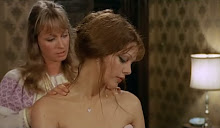
Rachel Weisz's big screen debut in Bertolucci's 'Stealing Beauty' is among the sultriest, most memorable introductions ever. Beyond the obvious appeal, she's also fearless and honest in her characterisations, perhaps most notably in the role that bagged her the Oscar, political activist Tessa in Fernando Meirelles' magnificent adaptation of John le Carre's novel 'The Constant Gardener'.

A large glass of chenin blanc is being raised to Ms Weisz at chez Agitation this evening.