Sunday, August 24, 2014
Werner Herzog Eats His Shoe
In the late 70s, Werner Herzog got so pissed off with kindred spirit Errol Morris not completing a film project that he made a bet: if Morris finished ‘Gates of Heaven’ and got it shown on the big screen, Herzog would … well, the clue’s in the title.
Thus it was that Herzog ate his shoe in front of a live audience at a screening of Morris’s film while Les Blank turned up to make a documentary about it. Herzog and Blank were already renowned documentarians at this point (Blank would later make ‘Burden of Dreams’, about Herzog’s arduous ‘Fitzcarraldo’ shoot) while Morris had just taken his first step along the road that would lead to ‘The Thin Blue Line’, ‘The Fog of War’ and ‘Standard Operating Procedure’.
The nexus of eccentric talent distilled into the twenty minutes of ‘Werner Herzog Eats His Shoe’ would be astounding even if the film was in any way conventional. Which it isn’t. ‘Werner Herzog Eats His Shoe’ is bonkers on many levels, beginning with its title.
The film opens with Herzog disembarking from a plane and offering a laconic wave to Blank’s camera, as if cheerfully acknowledging the absurdity of the undertaking. This to a soundtrack of ‘Old Whisky Shoes’ by the Walt Solek Band. In a car from the airport, Herzog muses in typically deadpan fashion on the interrelatedness of filmmaking and gastronomy. As usual with Herzog, you get the sense that pearls of wisdom are being formed in an oyster of satire.
The nature of the bet is only briefly touched on, with Herzog claiming encouragement of a protégé (it has been suggested that it was more in the way of a sarcastic aside, made in despair of the likelihood of Morris ever completing a project). Various other bits of business fill up the twenty minutes. There’s the culinary preparation, to start with: Herzog stews his shoes for five hours, having packed them with garlic, rosemary, red onions, duck fat and salsa. (Disclaimer: The Agitation of the Mind does not condone the consumption of footwear and accepts no responsibility for readers who attempt this recipe.)
There’s Herzog discoursing on Morris’s fully-formed maturity as a filmmaker on the basis of just one feature; and Herzog discussing earlier crazy escapades, such as jumping into a field of cacti on the set of ‘Even Dwarfs Started Small’. Clips from this film, as well as ‘Gates of Heaven’ and Charlie Chaplin in ‘The Gold Rush’ intersperse the interviews. The boots Chaplin eats in that film were actually crafted from liquorice. Herzog, however, munches on the real thing, cutting up one boot – he promises to eat the other if Morris’s film gets picked up by a major studio – with scissors and slowly chewing his way through the small pieces, washing them down with beer. The previous paragraph’s disclaimer still applies, by the way.
In all honesty, the shoe-eating is something of an anti-climax. Blank doesn’t linger on it, except to record Herzog’s caveat that he will not be eating the sole since one does not eat the bones of a chicken. Coming from a notorious hater of chickens, this comment tells its own story.
What really lingers in the mind from ‘Werner Herzog Eats His Shoe’ is his impassioned declamation (another word would be “rant”) on the inadequacy of images, particularly in advertising and commercial cinema. He calls for a holy war on bland and meaningless images. Yes, you read that right. A holy war. But then again this is the man who, in the Faber & Faber title ‘Herzog on Herzog’ warns that our grandchildren will blame us for not throwing hand grenades into TV studios because of adverts.
Herzog doesn’t want to see the Marlboro Man toking on a cigarette. Herzog wants to see something new; that redefines sensory perception. So when, at the end, he calls for “More shoes! More boots! More garlic!” it’s not because he’s developed a taste for Clarks’ finest – it’s a battle cry to the directors and film students and dreamers of the world to get behind him and take a different view and create images that will form a new filmic vocabularly. The shoe-eating was just to get their attention.
Labels:
documentary,
Errol Morris,
Les Blank,
Werner Herzog
Thursday, August 21, 2014
Gates of Heaven
The road to Errol Morris’s first feature would probably make a book in itself, never mind a couple of introductory paragraphs to a review; let’s just say that after studying immersing himself, but not continuing a career path, in musicianship and scholarship, Morris found his calling as a documentarian. An unfinished project on Ed Gein brought him into contact with Werner Herzog – of the Morris/Herzog connection, there will be more to say in tomorrow’s review – after which Morris considered turning the material he’d amassed into a manuscript. This potential career as a writer also stalled and instead he started work on a second documentary feature, about the so-called “Nub City” (i.e. Vernon, Florida), thus named because residents were committing acts of self-amputation in pursuit of insurance money. Morris received death threats and the “Nub City” documentary went the way of the Ed Gein documentary, although a very different film about Vernon would become Morris’s second film.
During the turmoil surrounding the “Nub City” project, Morris read of the exhumation of 450 corpses from a pet cemetery that had gone bankrupt. Intrigued, he set off to find out more. The result was ‘Gates of Heaven’. The film – devoid of narration and mostly shot in a “talking heads” style – recounts the efforts of nobly-minded Floyd McClure (Mac to his friends) to establish a pet cemetery and sensitively cater to bereaved pet owners. Mac recruits a few associates and they attempt to establish a viable business in a town where most dead animals end up at a rendering plant. Where they fail (Mac and his partners are estimated to have lost about $30,000 each – this in 1978!), local businessman John Harberts succeeds, and the second half of ‘Gates of Heaven’ shifts the focus to Harberts and his two sons, who run the Bubbling Well Pet Memorial Park on an admixture of hard-headed business acumen and barf-inducing sentimentality.
McClure, sincere and diffident, was never going to make a go of it. His rueful account of the affair is juxtaposed with the pragmatic worldview of the manager of the rendering plant, and the contrast speaks for itself. When Harberts and his horribly self-obsessed clan come into the picture, your heart breaks for McClure: his down-home good-heartedness is just so much chaff cast aside by the threshing machine of their money-fixated mindset.
Harbert Snr is a patriarch of the dollar-bottom-line school, but for all that he presents as a man who knows how to run a business and run it successfully. His sons, however, are quite something else.
The elder son blathers on about his time in the insurance business (it’s implied that he burned out and came back home to consider other options) and how he’s now learning the pet cemetery business and how he hopes to develop the business and if there’s even the most spurious opportunity to ram the word “business” into a sentence then goldarn it he’d make that his business. He’s given over to saying things like, “What does this mean for me? What does this opportunity mean for me? Well, it means a lot.” And the more he talks, embellishing his sentences with corporate buzzwords (yeah, they had corporate buzzwords back in the 70s: plus ça fucking change), the more his speech is drained of coherence and meaning until words just burble out of his mouth like so much white noise as he grins caprophagously from behind his trinket-lined desk.
The younger son, who perhaps engages a little more with the day-to-day operation of the Bubbling Well Pet Memorial Park, gives a less self-congratulatory account of himself but emerges as socially awkward and desperately lonely. He lives near the cemetery, in a house on the hillside (“the house on the hill, we call it,” he says without a shred of irony, winning himself 1978’s Statement of the Obvious Award). He rhapsodizes about his stereo system: “it’s a Pioneer SX1010,” he breathes huskily, in much the same tone Petrarch must have adopted when speaking of Laura. He makes tapes of his choppy and derivative electric guitar compositions. A key image has a single loudspeaker overlooking an empty valley while Harbert Jnr, offscreen, plays bad rock guitar to no-one.
By this point, ‘Gates of Heaven’ reveals itself as a film about the hollowness of the American dream and the individual’s isolation from society, a sort of ‘Great Gatsby’ with deceased pets.
Sunday, August 17, 2014
I Think We're Alone Now
Remember that somewhat creepy scene in ‘Ted’ where Giovanni Ribisi gyrates in tight pants to Tiffany’s ‘I Think We’re Alone Now’? Imagine that scene extrapolated to an hour. If you feel slightly ill and want to discontinue reading at this point, then go with my blessings, brethren, for there are no hard feelings.
‘I Think We’re Alone’ now tells the parallel stories of Jeff Turner and Kelly McCormick, both of whom are obsessed with Tiffany. The nature of their obsession is different, however, the most obvious touchstone being that Jeff has followed her everywhere and made ludicrous declarations of affection (and earned himself a restraining order in the process), while the Tiffany concert that Kelly attends towards the end of the film marks the first time she’s set eyes on the singer outside of videos and magazine article photographs.
Jeff has Aspergers, a capacious memory for ephemera, and comes across – superficially, at least – as gregarious and slightly self-effacing. Kelly identifies as intersex and is taking a long and what seems like a lonely journey towards gender reorientation. Jeff can talk the hind leg off a donkey – hell, the whole sanctuary! – while Kelly often struggles to express herself. Jeff has constructed an elaborate fantasy life where he and Tiff are already best buds, while Kelly is painfully, heartbreaking aware that she’s not apart of Tiffany’s life.
A lot of reviews that I’ve read of ‘I Think We’re Alone Now’ talk about Jeff as being likeable and sympathetic. Frankly, I found him a pompous windbag and something of a hypocrite, piously courting his pastor’s favour at church then happily swanning off to an erotica convention which Tiffany is attending by dint of her Playboy appearance. Jeff’s late-in-the-game transfer of his affections from Tiffany to Alyssa Milano, almost drooling as he holds up a DVD of ‘Poison Ivy 2’, only serves to point him up as a dirty old man. Aspergers accounts for some of his behaviours, but not all of them, and his wholehearted reliance on incapacity benefits when even his best friend admits he’s perfectly capable of working leaves him with vast quantities of free time on his hands. For a man like Jeff, free time is not necessarily a good thing.
Kelly, depressive and introverted, is also receiving benefits. However, she is a dedicated runner, genuinely seeks friends (albeit struggling socially) and by the end of the film is looking forward to the prospect of gainful employment. A couple of scenes document Kelly as being very close to emotional breakdown, whereas Jeff grins and gabs away throughout the film and doesn’t seem to be bothered by anything. Even reality. Jeff, in short, is the kind of person you can imagine losing his grip on orthodox social behaviours altogether and doing something dangerous (indeed, he was once arrested after trying to woo Tiffany with white chrysanthemums and a samurai sword). With Kelly, whose Tiffany obsession stems from a vision she had while comatose following a cycling accident, you worry for her fragility.
Director Sean Donnelly happily juxtaposes scenes from their lives for 40 minutes before bringing them together to attend a concert. That they don’t really take to each other is painfully evident, but there are none of the fireworks Donnelly was presumably expecting. Nor does Donnelly try to pin down why a two-hit wonder from the late 80s, with only a desperately attention-seeking girlie magazine appearance and a couple of roles in shit movies under the Asylum label as a claim to contemporary relevance, still inspires this degree of fandom. And it’s not just Jeff and Kelly who can’t get enough of her. In an intriguing but unfollowed-up scene, Donnelly films other fans eulogising to camera, including a guy who’s built like a brick shithouse and wouldn’t look out of place at a Pantera gig – the dude almost morphs into a puppy dog as he talks about his idol!
‘I Think We’re Alone Now’ could have been a fascinating look at the Tiffany cult. As it is, she’s an absence rather than a presence; a via negativa, almost. A narrative McGuffin to enable two terribly sad people (Kelly in the sympathetic sense of the word, Jeff not so much) to open up their shadow-lives like a vein in front of the camera.
I use the word “enable” deliberately, because I can’t help feeling that the villain of the piece, the enabler for both of these vulnerable adults, is Donnelly. I’d be very interested in knowing what consent processes were followed in eliciting Jeff and Kelly’s participation, and whether any medical or psychological provision was established during filming or kept in place afterwards. I really, really hope it was.
Thursday, August 14, 2014
Project Grizzly
Okay: imagine this. You’re hiking through a box canyon somewhere in the Canadian Rockies when a grizzly bear knocks you to the ground. Instead of treating you as a light snack, it then turns round and walks away. Do you:
(a) offer a small prayer to whatever deity you believe in that you’re still alive;
(b) stick to urban areas from now on;
(c) spend seven years and $150,00 developing a suit constructed primarily from titanium and chain mail so that you can go and find the bear and study it up close and let it wallop you as much as it likes?
If you answered (a) or (b), congratulations: you’re a sane and reasonable person. If you answered (c), you’re Troy Hurtubise and you make Timothy Treadwell, the subject of Werner Herzog’s ‘Grizzly Man’, look decidedly well-adjusted.
‘Project Grizzly’ is a film of two halves. The first half presents an overview of the suit’s development through various design changes. Early iterations make Hurtubise look like Robocop, a comparison director Peter Lynch points up by having said sci-fi opus play on a drive-in movie screen behind a suited-up Hurtubise, while the final model has a kind of astronaut/deep-sea diver combo thing going on. The second half has Hurtubise and his team take to the mountains to discover that the suit is basically fucking useless.
The first half is the most entertaining, with tree trunks being swung at Hurtubise to test the suit’s durability. Arrows are fired at it. An Olympic shooting competitor swings by to blast it with a shotgun. Hurtubise, wisely, stays out of the suit for this bit. Oh, no, wait, now he’s got the suit back on and he’s offering a quartet of bikers to go at him with baseball bats in the parking lot of their favourite bar. They get stuck in enthusiastically, reducing the bats to splinters. Most of us would sign the suit off as fit for purpose at this point, but Hurtubise has a pick-up truck do a couple of hit-and-run numbers on it just to be sure. Oh, and then walks through fire with it on.
And throughout it all, Hurtubise talks and talks. And talks some more. The inability of Troy Hurtubise to shut up long enough to take a breath swiftly becomes the documentary’s defining aesthetic, more so than bears or bodysuits. Here, again, it delineates neatly as a film of two halves. The first half has Hurtubise pitching himself as some kind of conservationist or researcher. “I’d like to be able to go anywhere in the world,” he drawls, “just take my suit and my team and go and do my research anywhere.” In case you’re wondering what the nature of said research would be, “behavioural activities of bears” is the closest he comes to providing specifics. There’s no discussion of what (if any) university or research body he’s affiliated with or funded by, and the matter of whose £150,000 funded the suit remains unmentioned.
Still, Hurtubise as researcher makes for better company than Hurtubise as mountain man, the persona he doesn’t so much slip into as smother all over himself in the second half. Here, he hooks up with a bunch of guys with guns and cowboy hats and they go into the mountains and the macho asshole levels go off the scale. If it’s not Hurtubise eulogising about Bowie knives as he alternately shaves with them or flings them at trees, it’s one of his team reminiscing about volunteering for ’Nam in order to enjoy the “travel and adventure” opportunities and, when the theatre of conflict got too boring, “playing the game called Outrun the Grenade.”
Imagine being stuck up a mountain with this doofus. In fact with half a dozen of these doofuses. And all of them packing rifles, shotguns and knives. Me, I’d rather take my chances with the bears!
The sense that all this bullshit is purely for the camera solidifies as the suit proves inoperable on rugged terrain. The mask slips: Hurtubise reveals himself as a man desperately trying to provide distraction in order to save face. The suit is quietly abandoned; Hurtubise and his buddies play at being trackers; when a bear finally shows up, Hurtubise opines that the snows are about to close in and it’s time to leave. Maybe next year.
‘Project Grizzly’ was made in 1996. Since then Hurtubise has drifted towards a more militaristic specialism, attempting to market to the US Army everything from flame-resistant face masks to landmine-resistant underseal for vehicles, by way of something called Angel Light which apparently sees through walls. Hmmm, perhaps the definitive cinematic account of Hurtubise as total lunatic has still to be made.
Monday, August 11, 2014
Aokigahara: Suicide Forest
The two minute pre-credits sequence to Santiago Stelley’s documentary short introduces us to geologist Azusa Hayano as he drives along country roads, the majestic sight of Mount Fuji drawing closer. Hayano tells us that he studies volcanic eruptions but is also interested in the expansive forest at the base of Fuji.
“In the year 864,” Hayano explains in voiceover, “Mount Fuji erupted and the forest that grew over the dried lava was named Jukai or Sea of Trees. Aokigahara is the actual name of the place but people started calling it Jukai because the forest, as seen from halfway up Mount Fuji, is green all year round and it looks like the ocean.”
A poetic start to a documentary. Then the title appears in stark white letters and things take a macabre turn very quickly. Hayano’s still in the car park when he discovers an abandoned vehicle and speculates whether the owner’s body is hanging somewhere in the vast acreage of Aokigahara. A few feet along the signposted trail, a large sign implores visitors not to waste the gift of life their parents gave them; to think of their families; to contact the Suicide Prevention Association.
It is immediately apparent that Aokigahara isn’t your average nature trail. On the contrary, it’s Japan’s most popular site for suicides – their equivalent of San Francisco’s Golden Gate Bridge. The comparison’s strengthened by the fact that both places have inspired documentaries. But while Eric Steel’s ‘The Bridge’ – a work that manages to be both snuff movie and liberal “gee, ain’t it sad that these people are so lonely” handwringing within the same awkward 93 minutes – focuses on the actual act of suicide, Hayano’s trek through the forest is study in aftermath.
Aokigahara is a beautiful stretch of woodland (though one can imagine that to be lost in it, or to be there after nightfall, would drain it of beauty and render it terrifying) and it’s surreal and disquieting to watch Hayano discover the remnants of human despair buried in the undergrowth or, in one startling moment, nailed to a tree: a stuffed toy, nailed upside down (“to express contempt for society” Hayano believes), and a small piece of wood upon which has been carved a suicide note. “I have come here because nothing good ever happened in my life,” Hayano reads, then coolly dismisses the theatricality as the work of someone indecisive about suicide, someone who probably trudged back out of the forest alive. Most suicides, Hayano explains, don’t bother with notes or scene-setting; they head into the forest and get it over and done with quickly. The most common means is hanging.
If this makes Hayano sound more like a psychologist than a geologist, that’s because his research in Aokigahara has brought him into contact with about 100 corpses over the years. Yet he remains pragmatic and even chats amiably with someone whose tent he comes across, pitched way off the official signposted route. Stelley’s camera maintains a dignified distance while Hayano and the camper converse. Hayano later explains that people often camp in the forest for a few days before they make up their minds.
Intelligent, softly spoken and deeply serious about ecology and humanity, Azusa Hayano anchors the documentary. Without him, ‘Aokigahara: Suicide Forest’ could easily have vacillated between morbidity and voyeurism. But as we tread carefully and respectfully through the forest with him – and as he discourses on changing attitudes to suicide in Japanese culture (from the honourable seppuku of the past to the more recognisable emotional malaise of the modern era), the modus operandi of the people who come to Aokigahara to die, and the indicators of their emotional state – the brief 21-minute running time extends beyond mere clinical enquiry and becomes a calm, quiet meditation on life, death, nature and the passing of time.
Saturday, August 09, 2014
Reports of my demise have been greatly exaggerated
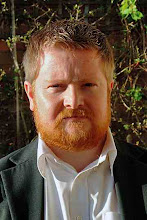
That picture? That’s me reading at a Palestine Solidarity Campaign demo in Nottingham just over a week ago, flanked by Muslims, Rabbis and the Brian Clough statue. I wrote a suite of poems for the event, one of which has subsequently been published on the Poetry24 website.
A couple of days ago, I read at a magazine launch at The Poetry Café in London, sharing the bill with some seriously talented poets. Fortunately, nobody asked me to stop making a nuisance of myself and leave the premises!
VerseWrights recently showcased four pieces, along with a profile. I’m currently shopping a pamphlet around, while zombie reviews continue to appear on the Dawn of the Unread blog and book reviews on the Five Leaves Bookshop website.
In other words, things have been pretty busy at chez Agitation. But look out for new content next week. ‘Dawn of the Planet of the Apes’ was an absolute belter and I’m looking forward to seeing if ‘Guardians of the Galaxy’ lives up to all the buzz.
Wednesday, July 30, 2014
My Summer of Love
I haven’t read the novel by Helen Cross that it’s based on, but I recall a press quote that featured prominently on the cover when Pawel Pawlikowski’s film adaptation herded it back onto the bookshelves: “a hand grenade of a novel”.
Pawlikowski’s film is more like an unexploded incendiary device buried deep in the Yorkshire countryside. Or like two volatile chemicals sloshing towards each other across the quiet streets of a small town. One of these chemicals is called Mona (Natalie Press), the other Tamsin (Emily Blunt).
Let’s pause for a second to shoot the elephant in the room. Yes, this was the film that launched Emily Blunt towards her Hollywood career. Yes, I’m a huge fan of Emily Blunt. No, I can’t account for why the fuck Blunt got the stellar career instead of Press. And I certainly can’t account for why Blunt’s choices and performances since ‘My Summer of Love’ have invariably tiptoed on the side of what’s safe and anodyne when she’s so gloriously and effervescently full of promise here.
Although, in retrospect, Blunt gets the easier role: sure, it’s more showy, but her portrayal of Tamsin requires less in the way of audience engagement. Throughout, she’s either a foil to Mona, or she spurs Mona on. Either way, it’s Natalie Press who carries the film and contains all of its emotionalism and she’s quite simply magnificent.
Mona is an almost archetypal working class girl, unemployed and living above the pub her brother, Phil (Paddy Consodine), once ran but has now turned into a Bible studies centre. Her affair with a married man has run its course, the flabby oik in question unwilling to walk out on his wife. She spends her days coasting along the high roads above her village on a motorbike that doesn’t have an engine.
It’s a life that has stultified – her sense of dislocation is exacerbated by the sense that she’s lost Phil, the volatile but full-of-life sibling she used to idolise, to born-again Christianity – but a single random encounter with the elegant, enigmatic and oh-so-fashionably bored Tamsin is all it takes to up-end the apple cart of her existence and explode her horizons beyond anything she thought possible.
Although self-evidently different in terms of class, intellectualism and general outlooks on life, Mona and Tamsin strike an immediate bond. Similarities appear: Tamsin opines the loss of a sister, Mona feels her brother has become a different, alien, person. Mona reacts to Tamsin’s father’s marital infidelity by vandalising the lovingly polished Jaguar that’s evidently his pride and joy, while Tamsin leads the charge in taking revenge on Mona’s ex-lover. Tamsin doesn’t look down on Mona’s vernacular speech and hardscrabble life; Mona doesn’t rail from Tamsin’s love of the classical music and erudite literature. The first half of the life is a sugar rush of visual and narrative enjoyment as an unconventional friendship gradually shades towards romance.
But a darker edge is always just on the periphery of things. Tamsin’s relentless fixation on tragedy sounds a warning bell. Phil’s veneer of love and godliness strains under reminders of the brawling bad boy he used to be – the one, let’s not forget, who Mona would prefer to have back. Meanwhile, Mona herself careens through the film, a deliriously excited woman-child one moment, a fizzing concoction of rebellious self-assertion the next. Throw into the mix Tamsin’s almost malevolent urge to expose Phil as a hypocrite and anything could happen.
Pawlikowski’s direction intuitively keys in to his characters’ psychology. The film has hazy, slightly wonky look about it that is both visually beautiful and disorientating. Rural Yorkshire looks more like a fever dream or a fantastist’s mindscape than the “grim oop north” backdrop that most British films would make of it. A ballroom dancing scene where sedately waltzing couples in the twilight of their years are interrupted and rendered aghast by Mona and Tamsin’s same-sex tango across the dance floor and up to the pathetically small stage which they then attempt to invade is a perfect example of Pawlikowski deconstructing social realism in the service of an impressionistic immersion in the all-too-brief emotional sugar rush that his heroines are experiencing.
Other scenes, though, could have come straight from the cinema of Loach or Meadows, not least in the denuded interior of the pub Phil runs into the ground in order to recreate as the unlikeliest temple in British cinema. Our first glimpse of Phil has him pouring away the contents of various bottles of spirits. Mona’s immediate reaction is to liberate a bottle of beer and question his sanity. One can empathise.
Tamsin instantly intuits that Phil is inhabiting a false persona – not wishing to give anything away, but the old saw of “it takes one to know one” applies – and takes it upon herself to reveal him as a fraud and a hypocrite. Of course, the likes of Phil will always lash out at life, Bible study or Bible study, and Consodine’s slow-burn performance gradually peels away the surface until the Phil of old is revealed. But, damn, Consodine’s a good actor when he’s got the right director to reign him in and keep him focused. His turn in ‘My Summer of Love’ shows up much of his CV as a retinue of easy/lazy choices.
The respective Mona-Phil and Phil-Tamsin payoffs make for electric viewing, but it’s the revelations about Tamsin that supercharge the drama of the final act, and Press comes into her own as the sweeping love to which Mona’s committed herself heart and soul breaks apart like a flooded dam. The film might be called ‘My Summer of Love’, but suggestion of an autumn of something else entirely gives the part-fiery/part-melancholy denouement its distilled power.
Labels:
Emily Blunt,
Natalie Press,
Paddy Considine,
Pawel Pawlikowski
Thursday, July 24, 2014
Weekend
And if that’s the only bad thing I’ve got to say about ‘Weekend’, then it’s safe to conclude that we’re in high quality indie territory and settle back to discuss a big-hearted but unsentimental relationships drama. Though perhaps it’s worth mentioning that if you don’t live in the city, there’s nothing to tip you off that ‘Weekend’ is a Nottingham film. There are no shots of the castle, the Robin Hood statue, the Forest ground, Trent Bridge or its adjacent cricket ground. There are no specifically local references in the dialogue. Even the names of the tram stops – David Lane, Phoenix Park – are generic and could crop up in any city.
Russell is quickly established as not so much closeted but preferring the social equilibrium of a “don’t ask don’t tell” approach to his sexuality. Taking his leave of the hetero bunch as Friday wanes, Russell heads into the city centre and finds a gay bar (Propaganda, in case you were wondering). He wakes up with Glen (Chris New) and the nuances, uncertainties and sweeping passions of the early stages of any new relationship are distilled into a short time frame that proves – for both of them – exhilarating, frustrating and bittersweet in roughly equal measures.
Unlike, say, Linklater’s ‘Before…’ trilogy, where the couple swan around various European cities as if their short time together were as endless as the films seem to be, the stakes in ‘Weekend’ seem immeasurably higher, the moment of separation hurtling towards both of them and so much yet to discover, so much remaining unsaid. Indeed, whereas Linklater’s moony pair are never short of verbiage, Haigh’s characters more often than not experience communication breakdowns, particularly in a single-take argument late in the film that runs for several minutes, during which both of them attempt to break through to each other only to inevitably reach for the wrong words and batter away at the brick wall of opposing opinions rather than trying for the neutral ground of compromise. Which is exactly how any passionate couple will behave: it’s the passion that blinds them.
‘Weekend’ throws itself against the horrible overwhelming totality of that question and finds, if not an answer, then at least a compelling justification for living for the moment.
Sunday, July 20, 2014
Shifty
Low-budget drama ‘Shifty’ covers 24 hours in the life of a London-based drug pusher as family pressures, the reappearance of a friend from the past, the attentions of an off-the-handle client and the escalating threat of violence close in on him; and, as such, sounds exactly like the kind of Brit-grim urban crime genre that’s been done to death since Guy Ritchie staked his claim to the territory with ‘Lock, Stock and Two Smoking Barrels’ sixteen years ago.
But Eran Creevy’s assured debut is so much more than just dodgy geezers, dubious deals and eff-word-heavy dialogue (although, in the interests of accuracy, all three of these ingredients are present and correct). What it’s actually about is family, friendship, responsibility, regret, paths not taken, possibilities that remain, and the gossamer-like hope of redemption … or at the very least a new start. These are big themes for an 85-minute genre movie shot on a meagre £100,000 budget (kudos to Ed Wild’s cinematography and Erik Rehl’s production design for making it look like they spent ten times that much on it) and ‘Shifty’ could easily have been a sombre, plodding, po-faced piece of work. Creevy’s droll screenplay and confident directorial style, however, dispel all potential pitfalls, and what emerges is a very well nuanced, wryly observed and often very funny slice-of-life.
Shifty (Riz Ahmed) is the titular pusher, living with his devout Muslim brother Rez (Nitin Ganatra) after a falling-out with his parents. He’s well-educated (four A-levels), well-spoken and has the nous to conduct business within a specifically defined area and not upset the apple cart vis-à-vis his necessary relationship with Glen (Jason Flemyng), a player who operates in a higher tier of the criminal fraternity. Not that relationships between the major players are that fraternal, as Shifty discovers when he’s mugged and relieved of a significant chunk of Glen’s merchandise.
Self-employed building contractor Trevor (Jay Simpson) is Shifty’s least-favourite client – his favourite is crazy cat lady Valerie (Francesca Annis: terrific in a brief cast-against-type scene) – not least because he’s already run up a debt with Shifty while still badgering him for more crack. Trevor’s life is unwinding rapidly: he’s fired from a job for bringing drugs onto a building site, and his relationship with his wife Jasmine (Dannielle Brent) is reaching breaking point. Trevor sets himself on a trajectory that will ultimately be destructive for Shifty.
Into this increasingly pressurized environment comes Chris (Daniel Mays), Shifty’s best mate from back in the day who fled to Manchester years ago after a drug-related death he was implicated in. Chris’s return alerts Rez to his brother’s current activities, culminating in a confrontation that is low-key but effectively intense. Ahmed and Ganatra do excellent work here; both have real screen presence, with Ahmed vibing old-school movie star cool, and Ganatra possessed of a gravitas that allows for an appealingly minimalist acting style. Why both of them aren’t headlining major studio productions right now is a mystery.
In addition to great performances and quirky humour – “I can’t believe you’ve just sold crack to Miss Marple and struck a deal with Blazin’ Squad,” Chris remarks after their visit to Valerie ends with the unexpected cultivation of her wannabe urban rebel neighbour as a buyer – ‘Shifty’ benefits from Creevy’s decision to portray the kind of sinkhole estate familiar from everything from Ken Loach’s ‘Ladybird Ladybird’ to Andrea Arnold’s ‘Fish Tank’ not as a place of abject poverty and squalor but as home to a vibrant and unique set of characters. Yes, there’s graffiti and claustrophobic underpasses, but there are also parks and greenery and a sense that the characters are comfortable with their environment rather than being oppressed by it. Almost as an extension of this aesthetic, Creevy keeps the violence minimal and doesn’t fetishize it.
Regarding the violence, I don’t want to give away too much about the finale in which Shifty and Chris wait out what would be a long dark night of the soul if they didn’t spend so much of it making each other laugh. Suffice it to say they’re expecting a visit from some heavy types, an encounter Shifty could easily have avoided simply by leaving town (Chris repeatedly implores him to decamp to Manchester) but doesn’t on account of the trouble it would bring down on his brother. Suffice it to say that ‘Shifty’ makes a sudden but beautifully subtle transition from urban crime flick to moralistic western, a pusher and his loser mate unexpectedly recast as heroic sheriff and slightly shambolic deputy awaiting the superior numbers of their antagonists. It’s at this point that the film really becomes something special, claiming more kinship with ‘High Noon’ or ‘Rio Bravo’ than ‘RocknRolla’ or ‘Essex Boys’. And Creevy still has one more neatly executed switcheroo up his sleeve.
It was five years between ‘Shifty’ and Creevy’s next project, ‘Welcome to the Punch’, which underperformed at the box office. Here’s hoping his next project, the chase thriller ‘Autobahn’ starring Nicholas Hoult, Anthony Hopkins and Ben Kingsley, finally gives him the breakout success he deserves.
Tuesday, July 15, 2014
12 Years a Slave
Full disclosure: I avoided this one on the big screen. Everything about the trailers and posters screamed “worthy but dull Oscar bait”. Finally approaching it in the context of Steve McQueen’s previous films, I’m still slightly of that opinion but it needs to be said: overall, ‘12 Years a Slave’ is one hell of a piece of filmmaking.
Based on the memoir by Solomon Northup, a freeborn black man who was Shanghai-ed and sold into slavery in 1841 – even his name was taken away: his slave name was “Platt” – ‘12 Years a Slave’ is in some respects a handsomely mounted epic (it’s the most Hollywood looking of McQueen’s films), and in others as much of an endurance test as anything crafted by Michael Haneke or Lars von Trier. Whereas, however, Haneke and von Trier (for me anyway) never quite avoid the sense that they’re staging unpalatable scenes for the sake of it, McQueen depicts every act of inhumanity – and there are many – with a profound and highly moral sense of purpose.
There’s a scholarly piece to be written on ’12 Years a Slave’ as a response to ‘Django Unchained’ – it’s draining where Tarantino’s film is cathartic; subdued where Tarantino is explosive; graphically horrible in its violence where Tarantino’s is over-the-top and soaked in pop culture aesthetic – and this is nowhere more evident in McQueen’s commitment to anti-narrative as opposed to the adherence of ‘Django Unchained’ to a cohesive story arc. At its most reductive, a synopsis of ‘12 Years a Slave’ would run like this: Solomon Northup (Chiwetel Ejiofor) is kidnapped and sold into slavery, first to Ford (Benedict Cumberbatch) then to the sadistic Epps (Michael Fassbender) under whose ownership his sufferings worsen. Eventually, via the intervention of abolitionist Bass (Brad Pitt), he is able to prove his freeborn status and return to his old life.
There are very few scenes that function around a narrative or dramatic dynamic – for the most part the film unfolds as Solomon suffers act of brutality then Solomon witnesses act of brutality then plantation owner acts despicably then overseer acts despicably, one after another building to cumulatively shattering depiction of what it is to lose one’s liberty, one’s family and even one’s name. The auction at which Solomon is sold to Ford is a case in point: ironically-named slave dealer Freeman (Paul Giamatti) lines up his wares, male and female, stark naked like sculptures in some bizarre art gallery of dark commerce. Narratively, it fulfils the simple purpose of transiting Solomon to Ford’s plantation. The scene itself, though, has an almost surreal quality; the gleaming skin of Freeman’s slaves and the slick dialogue he employs opens a contemporary point of reference: the oleaginous salesman steering the customer towards the most expensive model in the showroom.
Likewise most of the scenes of violence – be it beating or whipping – are not prefigured or built up to by the tempo and suspense of a scene: they simply erupt and then subside again, part of the fabric of the film; part of the daily life, McQueen acknowledges sadly, of the enslaved. The contrast of Ford and Epps gives the film its only hint of a structure: Act One – Solomon retains his dignity under a conservative owner; Act Two – Solomon undergoes almost total depersonalisation under a total bastard.
Deeming Ford “conservative” is relative concept. Superficially, he’s not monstrous and he responds well to Solomon’s transportation suggestions around his logging operation. However, he still fucking owns slaves and no matter how many readings he gives from the Bible and how light he is on the whip, there’s no getting away from this one simple fact. Moreover, he has no qualms at employing the loathsome Tibeats (Paul Dano) as overseer. Tibeats delights in setting teams of slaves to work while serenading them with the tactless ditty “Run, nigger, run” as a warning against escape attempts.
The inevitable conflict between Solomon and Tibeats sets the scene for one of the film’s most horrific yet mesmerising scenes. Beaten and hoisted from a tree, Solomon is compelled to stand on tip-toe, maintaining his balance, the slightest movement tightening the noose around his neck. In a long-shot that McQueen holds for a minute and a half – nothing compared to the 17-minute dialogue scene in ‘Hunger’, but excruciating and seemingly interminable while you’re watching it – as other characters weave in and out of frame behind Solomon, going about their daily business as if oblivious. It’s a scene about the banality of evil and the everyday complicities (in the interests of survival) of the oppressed.
It’s this incident that prompts Ford to sell Solomon to Epps, with the twofold result of forestalling any future problems with Tibeats and the discharging of a debt to Epps. There’s an immediate juxtaposition between the two plantation owners. Like Ford, Epps is introduced reading the Bible, but unlike Ford’s liberalism and gently improving teachings, Epps uses the good book to make a point about property and a man’s right to dispose of said in any way that pleases him. And it pleases Epps to whip, beat and rape his property. If Ford is a slave owner because he’s a businessman, Epps treats his slaves as pawns in an elaborate game of chess reimagined as hate-fucking with his wife (Sarah Poulson) as his opponent of choice. Epps has a particular fixation on Patsey (Lupita Nyong’o); Mrs Epps, predictably, hates her. The poor girl suffers at both of their hands.
This second half of the film is the most gruelling. Fassbender and Poulson conjure a vision of utter corruption on every level. Alongside Ejiofor and Nyong’o they give the best performances on offer here (though kudos to Giamatti: although his role is small, he shrugs off the mugging that has afflicted much of his recent work and re-engages with acting). McQueen defines degenerative influence of Epps so effectively that a scene where Epps manoeuvres Solomon into burning a letter that might set him from is as toe-curlingly unwatchable as an extended whipping, blood flecking from each blow.
It’s curious, then, given Epps’s sadistic streak and knowledge of Solomon’s earlier attempt to draw attention to his plight, that he sets Solomon to work with the outspoken Bass. The moment Bass delivers his big “white man’s guilt” speech – Pitt’s performance is the film’s weak spot – it’s inexplicable that Epps doesn’t drag Solomon away from him and set him back to work picking cotton. And there are a few other moments that don’t quite add up: the logistics, intricacies and expense of luring Solomon away from his family in the opening scenes seem economically at odds with what he’s sold for; Solomon pens his first, failed, letter in the grounds of Epps’s plantation, a candle guttering, a fire flickering away under a pot of home-made ink, without a single overseer getting suspicious and coming to investigate; Solomon returns after 12 years to the same well-appointed townhouse that his family have inexplicably managed to keep retain.
These are minor things, but there are enough of them to keep the film from greatness. The non-ageing of Solomon until the final scene is also curious, and doesn’t help the film’s tendency to unfurl from one incident to the next without establishing just how far into his 12-year indenture Solomon is at any given point. That Solomon is clean-shaven, neatly-coiffured and dressed in unsoiled clothes in every scene is, I assume, an aesthetic decision on McQueen’s part to accentuate the dignity and humanity that Solomon clings onto throughout his ordeal, but again a slightly false note is struck.
In comparison to ‘Hunger’ – still McQueen’s best film – and ‘Shame’, the director’s trademarks are present but muted, perhaps in accordance with the requirements of working with a larger cast and bigger budget (although, at $18million, said budget was loose change by Hollywood standards). Static takes are longer than usual for mainstream filmmaking, but there’s nothing that remotely equals the 17-minute Sands/Moran scene in ‘Hunger’ or the 10-minute restaurant scene in ‘Shame’. There’s one shot of the protagonist running, but it’s over in seconds and doesn’t carry the backstory of the young Bobby Sands in ‘Hunger’ or the immediacy of Brandon’s disruption from his carefully ordered life in ‘Shame’. There is none of the bleak palette that characterises the cinematography of either of these two films.
What there is, however, and what indelibly stamps ’12 Years a Slave’ with Steve McQueen’s authorial signature, is its intensely rigorous and purposeful examination of depersonalisation. As the prisoners in ‘Hunger’ are stripped and mistreated and broken down by a system hellbent on destroying them for political reasons, and as Brandon in ‘Shame’ ravages his body in increasingly frenzied and desperate and purposeless liaisons in order to repress any shred of emotion, so Solomon is variously forced to co-operate, endure, turn a blind eye or turn his back (his deliverance from Epps’s plantation while Patsey and the others needs must remain is terrible to watch); to do, in other words, what is necessary to survive. Even if he survives as a non-person, saddled with a name that isn’t his.
Sunday, July 13, 2014
Shame
Picture the scene: an average Sunday morning at Agitation Towers, yours truly drinking coffee, eating toast, watching ‘Shame’ on DVD and becoming more intimately acquainted with Michael Fassbender than I’d anticipated. Five minutes in and the guy’s walking bare-ass naked around his aesthetically severe apartment. And not just bare-ass, either. There ought to be a separate screen credit for Fassbender Junior.
‘Shame’ continues the cinema of body politic that ‘Hunger’ utilized. But here the focus is on internalization rather than institutionalization. Fassbender plays Brandon, an Irish-born New Yorker with a successful job (what he does is never really defined), a spacious apartment, an extensive vinyl collection (the first LP we hear him play is Bach’s Goldberg Variations) and a major addiction to sex that he sort-of controls by paying for hookers and watching online porn. At the office, his PC is carted off by the IT bods due to a virus, a subplot that plays out as predictably as you’d imagine (Brandon gets hauled in by his boss over the hard-drive content) only to peter out (there’s some vague suggestion that Brandon’s intern is left to shoulder the blame, not that we’re ever introduced to Brandon’s intern).
Brandon’s overtly buttoned-down lifestyle is disrupted when his needy, flaky and hectoring sister Sissy (Carey Mulligan) decamps to his apartment following a relationship meltdown. Sissy is a fucking annoying character, both for the way she’s written and Mulligan’s histrionic performance. I’ll admit to having found Mulligan curiously overrated ever since ‘An Education’, and the understated yet deeply committed performance that Fassbender gives here only shows up Mulligan’s weaknesses. Plus, her rendition of ‘New York, New York’ is so painful that it probably contravenes the Geneva Convention. What Sissy’s presence does – in terms of the very slender narrative (‘Shame’ is essentially a series of analytically staged vignettes, loosely strung together) – is dynamite Brandon out of the safety of his apartment, the four walls of which have thus far provided containment for his extracurricular activities.
No longer able to entertain hookers and dictate the mood and the staging of the encounter (“do it slowly”), he is forced to trawl bars and clubs. His emotionless façade erupts in anger coated with self-loathing when Sissy laughingly catches him masturbating. He black-bags his porn stash and laptop and leaves them for the garbage men. Even the orderliness of the apartment itself is violated: she blares disco music instead of his carefully tasteful vinyl; strews her possessions everywhere; provides a constant stream of verbiage that denies him quietness and solitude. Ultimately, she brings Brandon’s douchebag boss David (James Badge Dale) back to the apartment and “entertains” him.
It’s during this less than amenable period of flat-sharing that Brandon finds himself drawn to a colleague, Marianne (Nicole Beharie). Their awkward first date, in an upmarket restaurant, the waiter from hell flitting around them incessantly, is analogous to the 17-minute dialogue-across-the-table scene in ‘Hunger’, and is similarly placed in the film – almost exactly to the minute. But whereas ‘Hunger’ used its epic single-take dialogue scene to reveal Bobby Sands, the restaurant scene in ‘Shame’ is an exercise in watching Brandon conceal. It’s not until after they’ve left the eaterie that anything remotely answering to the description of natural conversation happens between them. Even then, Marianne is unsure about seeing him again. However, Brandon persuades her to a hotel the next day (on the firm’s time!) and things come to an abrupt and humiliating halt when he’s unable to perform.
Thus it is that the film earns its title. Embarrassed at his sister’s glimpse into his sexual obsessions and unable to connect with her emotionally; ashamed at his failing with Marianne; and disgusted at the despoiling of the sanctuary of his apartment by Sissy and David’s dalliance, he becomes reliant on self-debasement and increasingly depersonalised encounters into to achieve gratification. The last twenty minutes or so document a descent into complete emotional negation – he unspools explicit chat-up lines to a woman in a bar, earning himself a beating from her partner; he follows a rent boy into a gay club; he engages in the angriest and least erotic threesome in the history of cinema – until the resolution of Sissy’s own instabilities jolts him back into something like the real world.
At its best, ‘Shame’ rigorously and intelligently debates sexual dysfunctionalism and tries to define where the tipping point is when emotion is so persistently suppressed in favour of the purely physical. McQueen’s minimalist script, co-written with Abi Morgan, sometimes helps this debate by paring away peripheral details: Brandon’s job is a good example, in that for the film to work, we don’t really need to know what he does beyond the fact that he earns enough to rent a swish apartment and pay high-class hookers in cash, and therefore his office is generic, his work based conversations are generic, and whether he works in advertising, PR, HR, information, data analysis or graphic design I don’t know and don’t care. And I love the fact that the film recognises this non-requirement.
At the same time, though, the characters of David (who sleeps with Sissy despite being married and is therefore contrasted with Brandon in that both essentially pursue sexual encounters outside the relationship-based social norm) and Marianne (who represents said social norm) are integral to Brandon’s job, and the lack of consequences in Brandon’s PC being clogged with porn, not to mention Brandon and Marianne’s sneaking off to a hotel for nookie in the middle of a working day, also without consequence, strike small but niggling false notes. Likewise, the culmination of Sissy’s behavioural pattern lurches the film into melodrama, particularly a late-in-the-day suggestion of some kind of intuitive bond between them. Worst is McQueen’s depiction of the gay club, as breathlessly prurient and unabashedly clichéd as anything since Friedkin’s ‘Cruising’.
Where ‘Shame’ really delivers, though, is in Fassbender’s performance. He’s beyond good, and the level of trust that must operate between him and McQueen can only be guessed (and marvelled) at! This is raw, physical acting; as demanding and – in every sense of the word – naked as anything in ‘Hunger’. Though the two films are intensely different, McQueen’s aesthetic provides correlation: the extended, dialogue-heavy single takes; scenes of his protagonists running; detailed attention to the rhythms and repetitions of his characters’ lives; a steely palette that mirrors the dehumanisation of prison in ‘Hunger’ and Brandon’s prison-of-the-self in ‘Shame’. And Michael Fassbender in career-defining roles. On the basis of these two films alone, McQueen/Fassbender rank equal to Scorsese/de Niro in the pantheon of director/actor partnerships.
Thursday, July 10, 2014
Hunger
I was nine when Bobby Sands led the controversial hunger strikes in The Maze prison, Northern Ireland, and I remember the news coverage even if I was too young – and, let’s face it, too fucking English – to understand the wider concept. Not that the news reports I saw would have given me that: then, as now, the BBC covered the news the government told it to, with the bias the government determined.
‘Hunger’, the debut feature film by Turner Prize-winning visual artist Steve McQueen, burns with a righteous anger at the British government’s intervention in Ireland and its treatment of political prisoners. McQueen’s attention to detail, and his ability to communicate the rhythms, rituals and repetitions of prison life, is the basis for a steady and unflinching accretion of sound, image and an almost tactile immersion of his audience in the milieu depicted. The overall effect is shattering; draining. ‘Hunger’ is a film you don’t just watch; you undergo it. Anger at the system is palpable. Strange, then, to think that McQueen accepted a CBE just three years after he made this film.
‘Hunger’ shifts perspective twice before it focuses on Sands (Michael Fassbender), debates the ethics of his decision to go on hunger strike, and documents the physical – and ultimately terminal – repercussions. Early scenes are vignettes from prison warder Raymond Lohan (Stuart Graham)’s day-to-day life: the ritual of checking the street for attackers and the underside of his car for incendiary devices before he leaves for work; the worried face of his wife at the window; the tense drive to the Maze, his eyes riveted to the rearview mirror; a moment of inner torment in a washroom, Lohan immersing bruised hands in a sink full of cold water; a lunchbreak spent alone from the rambunctious conversation of his fellow guards. A particularly effective moment is a cigarette break, Lohan in shirt sleeves despite the snow that whirls about him. Flakes dissolve on his epaulettes. His head tilts back and his face loses focus. This is a man who is lost, whose job has gone beyond defining him and may well be destroying him.
Next, we’re thrust into the company of Davey Gillen (Brian Milligan); his introduction to the Maze is ritual humiliation: he’s compelled to strip naked, given a rough blanket and thrown into a cell with a similarly denuded Gerry Campbell (Liam McMahon). Dirty protest has obviously been the order of the day: the walls are smeared with excrement. McQueen’s camera unhurriedly inspects the filth. Coprophobes will spend much of the running time acquainting themselves with the fast-forward button. The food is as bad as the conditions; uneaten slop is left to solidify then molded into a sort of fence around the door so the decant contents of their shared piss-bucket floods the corridor and not their cell. McQueen stages two extended, wordless scenes in which sanitation staff undertake deep cleans. Prisons, it is implied, don’t just imprison the prisoners.
Finally, almost a third of the way into the movie, Sands takes centre stage and our first real introduction is as he – and his fellow prisoners – are dragged from their cells and beaten by police in riot gear and subjected to intrusive body searches that basically constitute institutionalized sexual violation. They’re hosed down and given haircuts that leave their scalps and foreheads gouged and bleeding. It’s an horrific scene that fills in the ellipses in the Lohan sequence and entirely changes our perception of him. It’s difficult to feel any sympathy when his careful system of checks and cautious behaviour fails him and, in the most grimly inappropriate of settings, he gets what’s coming.
And from Sands as piñata for the establishment to Sands as activist, fighter, martyr. McQueen gives us everything we need to know about Sands – his beliefs, his background, his politics, his discipline, the strength of his convictions – in a truly astounding 17-minute single take dialogue scene in which the camera doesn’t move a millimetre. The aesthetic is as stripped down as possible: one table, two chairs, Sands and his mentor/confessor Father Moran (Liam Cunningham) sitting opposite each other, the gunmetal blue smoke of cigarette after cigarette curling between them. 17 minutes during which they talk politics, religion, morality; two intensely gifted and naturally intuitive performers batting the dialogue between them. It’s a mesmerising scene, almost hypnotic except that it’s challenging, difficult, thought-provoking – cinema at its least attention-seeking and most intellectually powerful.
The final half hour of ‘Hunger’ charts Sands’s physical depletion, Fassbender rivalling Christian Bale’s extreme weight loss for ‘The Machinist’ and ‘Rescue Dawn’. Charts it against the painfully dignified vigil kept by his parents. Charts it against his memories of a childhood cross-country race (shades here of Tom Courtenay’s anti-establishment icon Colin Smith in ‘The Loneliness of the Long-Distance Runner’).
Following the brutal violence of the first third, and the rigorous debate of the mid-section, this final act is quieter but no less shattering. McQueen presents his protagonist’s emaciated body as the canvas upon which he layers in, one precise brush stroke at a time, a detailed and visceral portrait of political protest, human fragility and a principle followed through at the highest cost.
Wednesday, July 09, 2014
Steve McQueen fest on The Agitation of the Mind
By which I mean this Steve McQueen …
… not this Steve McQueen* …
… and by “fest” I mean the three features he’s directed so far. Over the next few days, I’ll be looking at the unflinching depictions of human behaviour on offer in ‘Hunger’, ‘Shame’ and ‘12 Years a Slave’. There will be intensity, there will be unexpected moments of beauty, there will be adult themes, and there will be Michael Fassbender.
There will be a lot of Michael Fassbender.
*Although a that Steve McQueen retrospective is something I need to do on this blog before much longer.
… not this Steve McQueen* …
… and by “fest” I mean the three features he’s directed so far. Over the next few days, I’ll be looking at the unflinching depictions of human behaviour on offer in ‘Hunger’, ‘Shame’ and ‘12 Years a Slave’. There will be intensity, there will be unexpected moments of beauty, there will be adult themes, and there will be Michael Fassbender.
There will be a lot of Michael Fassbender.
*Although a that Steve McQueen retrospective is something I need to do on this blog before much longer.
Saturday, July 05, 2014
Wednesday, July 02, 2014
Wasp
Andrea Arnold’s 25-minute short film ‘Wasp’, starring Natalie Press and Danny Dyer, won the 2005 Oscar for Best Short Film, Live Action. Let that sink in. Danny Dyer has an Oscar-winning film on his CV. Fuck me, it’s a strange life.
‘Wasp’ is something of a precursor to Arnold’s second feature length film ‘Fish Tank’ (review on Agitation shortly), and I’m betting that the Oscar win helped in no small way towards getting her feature debut, ‘Red Road’, into production.
Set against the same council estate backdrop of ‘Fish Tank’, ‘Wasp’ tells a slight but affecting story. Zoe (Press) is a single mother; her four children are various ages, one still a baby, and for all that her parenting skills fall somewhere between “questionable” and “abject failure”, she seems fiercely protective of them to the point of getting into a fight with the mother of a child who was mean to them. Zoe comes off worse, but she and her kids remain defiant nonetheless.
It’s as they’re walking back through the estate following this confrontation that Zoe encounters Dave (Dyer), a not-quite-boyfriend from the past (“you were with Mark, I don’t go after other blokes’ women”). Initially flustered, she pretends that she’s looking after a friend’s children and agrees to meet him at a pub that evening.
The scenario sounds it should be the stuff of comedy: Zoe desperately trying to keep an eye on her brood while persuading Dave she’s still the carefree single girl from way back when. An ‘Abigail’s Party’ for the new millennium. The next sequence, back at Zoe’s grim towerblock flat, promptly puts the kibosh on such expectations. A wasp crawls on a dirty windowpane; Zoe counts and recounts the handful of coins left in her purse; the kids eventually clamour for food. Her kitchen cupboards yield nothing but an almost empty bag of sugar. “Share it out,” she instructs her brood; “try to make it last.” Press’s performance is pitch-perfect: the steely determination on the surface to inculcate her children as to the reality of things; the vulnerable, sad, ashamed person just visible beneath.
With no-one to look after them, Zoe reluctantly takes the kids to the pub, literally hiding them round the corner in the car park. She’s dolled up to the nines and it’s obvious to a degree that’s almost painful how desperately she’s clinging onto the prospect of happiness in an ad hoc date with a wide-boy at a shitty dive of a pub. Zoe’s actions are, by any measure, horrific: she essentially abandons her children for several hours with just a packet of crisps and a small Coca-Cola between them, leaving them to amuse themselves and, later, as daylight fades and the temperature drops, huddle together. Hunger gets the better of them and a take-away dropped by some drunken youths is too tempting despite its acquaintanceship with the pavement and the presence of our old friend the wasp buzzing around a dustbin nearby.
What happens next is squeamish to watch and the blame is entirely Zoe’s. That you don’t hate her as the credits roll is equal parts due to script, director and actress. ‘Wasp’ nails the poverty of life in Britain’s underprivileged areas, how little an entire stratum of society has to aspire to or hope for, and how pathetically small the measures by which it determines happiness or even a minor distraction from the norm. When Zoe totters out into the car park in her high heels to give her kids their meagre libations, they’re initially truculent and Zoe’s response is vehement; then a song she likes drifts out of the pub and immediately her mood changes and she encourages them to start dancing. A lyric from Pulp came to mind: “Then you drink and dance and screw / Because there’s nothing else to do”. Zoe doesn’t even accomplish the third of these before real life and her epic parenting failures come screaming into her faux idyll.
Subscribe to:
Posts (Atom)