Showing posts with label Emily Mortimer. Show all posts

Wednesday, December 05, 2012

WINTER OF DISCONTENT: Harry Brown


Generally speaking, revenge/vigilante titles are films of two halves. Extended first act: protagonist gets pushed till he can’t take it anymore, either by nasty shit getting vented on the people they love, or nasty shit raining down on them directly. Shorter but incredibly graphic second act: definitive cessation of protagonist taking it any more, turning of tables, antagonists get their arses handed to them on a plate. Or plates.

There are no surprises in the set-up or narrative execution of ‘Harry Brown’. Absent the presence of an A-list star in the title role and you could be watching a 1970s grindhouse flick. Substitute Michael Caine for Charles Bronson, chavs for pimps and a council estate for some brownstone tenements and ‘Harry Brown’ is basically ‘Death Wish’. Only with that crucial scene-setting first act directed by Ken Loach.

Hence a first hour that goes something like this: Harry gets up in the morning, joints creaking and moving slowy; Harry caresses the unrumpled side of the bed that his wife used to sleep on; Harry makes a cup of tea and some toast in the most depressing kitchenette ever to be captured on celluloid; Harry makes his way warily through the estate he lives in; Harry hesitates on taking the underpass on account of the hoodies foregathered there; Harry goes the long way round, gawd knows that his aching old bones could do without the diversion; Harry visits his wife in hospital, hers the only occupied bed in an otherwise sterile and empty ward (yeah right: Mrs Harry is expiring on the NHS and spare beds are a fucking fantasy, my friends!); Harry has a lonely pint in a drab pub; Harry has a second, slightly less lonely pint with his mate Len (David Bradley) and they play chess, two old codgers, forgotten and alone; Harry goes home to his spartan and glumly decorated flat.

Depressed yet? You soon will be.

Harry’s wife dies, then Len tells him that he’s terrified of the kids on the estate and that he’s packing a bayonet for protection. Harry, who it turns out is an ex-Marine (check out his regimental photograph: if that’s not a production still from ‘A Bridge Too Far’, I’ll eat my beret), urges Len not to do anything foolish; to go to the police. Len scornfully retorts that he has and they’ve done nothing. Len returns home only for the chavvy little bastards in question to try to burn his flat down. Next up, DI Alice Frampton (Emily Mortimer) and DS Terry Hicock (Charlie Creed-Mills) turn up at Harry’s door to tell him that Len expired after a run in with the youths he suspected of the arson.

Frampton and Hicock pull in some local youths – ringleader: Noel Winters (Ben Drew a.k.a. rapper Plan B) – but when it becomes evident that Len was carrying an offensive weapon, they look set on getting away with it.


Here endeth the Ken Loach bit.

Harry sets up surveillance in Len’s burned out flat, discovering that he had a direct view of the drug deals, beatings and knee-tremblers that constitute an average day in the life of the underpass. He identifies Noel pretty quickly. Gets a line on the rest of the gang. Recognises a drug/arms dealer from his local. Tails him back to his business premises. Enquiries after the acquisition of some weaponry.

It’s at this point – an extended sequence in which Harry visits twitchy dealer Stretch (Sean Harris) and his cowed henchman Kenny (Joseph Gilgun) and morphs from fish out of water to stone cold avenger – that ‘Harry Brown’ happily pulls the plug on the hour of determinedly squalid social realism that’s preceded it and goes sprinting off, gun in hand and spouting heavy-handed soliloquies, in the direction of ClicheVille.

Not that much of the first half has been subtle (Len’s funeral is a particular nauseating example of emotional pornography, the camera following a cavalcade of hearses bedecked with flowers only for the cortege to disappear offscreen and reveal Len’s grave with only Harry and presiding priest in attendance), but the second half positively revels in audience-bludgeoning.

Smack! Faakin’ thick-necked chavs gettin’ in yer face, innit?

Wallop! Faakin’ guns n drugs n pimpin’ bitches out, gertcha?

Boot! Right wing fascist bastard coppers who’s as bent as the crims, guv’nor!

Slap! Put that faakin’ remote control down, yew cahnt!

And so it rolls. Director Daniel Barber is probably still singing hosannahs that Michael Caine signed on the dotted line. Without him, ‘Harry Brown’ would be all kinds of piss-awful. But when you get Harry giving one of Noel’s underlings the kind of working over in order to extract information that Batman doles out to the Joker in the interrogation scene in ‘The Dark Knight’, the result is electrifying. If Harry’s “you failed to maintain your weapon” speech, with its discourse on a formative experience from the character’s military service, recalls Alfred’s “some men just want to watch the world burn” monologue in Nolan’s epic, the Harry-beats-it-out-of-a-thug sequence plays out like Bruce Wayne’s taken a vacation and given Alfred a by-your-leave to get medieval on whoever.


Unfortunately, the comparison soon diminishes. Much of Harry’s vengeful rampage, notwithstanding how gratifying it is to watch a pension age Michael Caine give the youth of today one in the yarbles, suffers from a reality disconnection. His infirmity only ever kicks in when the script demands it, and a man in his seventies who (the early scenes hint) is arthritic and suffering (as latter scenes state unambiguously) from emphysema, nonetheless spends the mid section of the film hoofing it from shoot out to shoot out, pausing only to give a hoodie young enough to be his great-grandson a comprehensive whipping without even breaking a sweat. He’s a military man, a crack-shot, one step ahead of his antagonists the whole time, yet he makes an elementarily stupid decision in the finale, again purely because the script demands it. The chavs are so clichéd, they make the youths in ‘Attack the Block’ seem like finely nuanced creations of the screenwriter’s art. Mortimer’s idealistic Detective Inspector is incredibly badly written and Mortimer’s performance – sad to say, because she’s been awesome in everything else I’ve seen her in – is utterly unconvincing.

As regards Drew/Plan B, the guy’s birth name is Benjamin Paul Balance-Drew. Wooooo, urban rebel with the double-barrelled surname. At least he doesn’t hold his gun sideways like so many fake tough guys. I’ll give him that.

So, yeah. ‘Harry Brown’. A grim, humourless, clichéd and derivative movie. But one that got real fucking lucky in its leading man.

Saturday, December 01, 2012

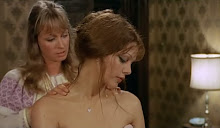
Emily Mortimer


Happy 41st birthday to Emily Mortimer - who I would describe as a classic English rose, except the archetypal English rose isn't supposed to be so damn smouldering hot. Look out for the lady herself in a Winter of Discontent offering next week.

Thursday, July 28, 2011

Cars 2


When ‘Cars’ opened in 2006, the critics were lukewarm. The main bone of contention seemed to be that it wasn’t as good as ‘The Incredibles’. Which it wasn’t. That said, I preferred it to ‘A Bug’s Life’ and ‘Finding Nemo’, the brilliance of which is punctured, in scene after scene, by the irritant that is Dory (the second most annoying character in the Pixar canon; we’ll come to the first in a minute).

‘Cars’, ultimately, is a decent film with a terrific ending. Aesthetically, its anthropomorphism of human traits, personalities and nationalities into automobiles throws up illogicalities left, right and centre – as Bryce muses in his excellent review on Things That Don’t Suck, “I wouldn’t be the first to wonder if there are not piles of human corpses just offscreen” – but once one rationalizes this in the context of John Lasseter’s love of ’50s Americana, a time as much defined by the fins, gleaming chrome and whitewall tyres of its cars as by its music or its fashions, then one can settle back and enjoy a homely tale of a race car who learns to slow down. ‘Cars’ has plenty to offer: incredibly beautiful visuals, some great supporting characters (the banter between Sarge, a 1940s US Army jeep, and Fillmore, a hippie VW Microbus, is priceless), a finale that tells the kids that, actually, winning isn’t all that important, and an end-credits sequence that transposes the film’s anthropomorphism to Pixar’s previous outings in a montage that’s arguably wittier and more inventive than anything else in ‘Cars’.

I can understand the hesitation to embrace ‘Cars’ as wholly as the ‘Toy Story’ trilogy, ‘The Incredibles’ or ‘Ratatouille’ – but it’s still a film I have a lot of time for.

When ‘Cars 2’ opened last month, it was to the absolute all-time worst reviews in Pixar’s history. Which is kind of understandable given that a whole lot of folks were ambivalent about the first one. The question of why Lasseter was so committed to the project when, say, ‘The Incredibles 2’ or even ‘Ratatouille Part Deux: The Masterchef Years’ would have been a far safer option.

But commit to it Lasseter did and, for all that I enjoyed the manic energy of the film’s last half hour, it was in many ways a bad decision. Don’t get me wrong: I wish I could thumb my nose at the naysayers and declare ‘Cars 2’ a jewel in Pixar’s crown; I wish that all the things I enjoyed about it (Pixar just keep raising the bar visually; there are some inspired in-jokes; it’s a U-rated film that has a “your mother” moment) outweighed the faults. Hell, I’d consider it acceptable if the fun and flaws simply balanced each other out on the scales of critical analysis.

Unfortunately, there are two things about ‘Cars 2’ – and they are inextricably interlinked – that present an almost insurmountable problem:

1. Fucking Mater.

2. It’s a Bond movie. With talking cars.

Or, tying those to together in one unholy bundle the way the script does: it’s a Bond movie with talking cars in which Mater gets his secret agent funk on.

I could end this review right here and I think we’d all be au fait as to what’s wrong with this movie.


For the defence, the fact that it’s a Bond movie doesn’t bother me all that much. Bond movies lend themselves well to satire, particularly the Roger Moore entries which about one micrometer from being cartoons anyway. The mild controversy about the amount of shoot-outs doesn’t bother me either: there were men with guns providing a threat to the protagonists of ‘The Incredibles’ and nobody whinged about that. It does bother me that ‘The Incredibles’ has already ticked the Pixar-spoofs-Bond box and that the material mined by ‘Cars 2’ would have worked a lot better as an ‘Incredibles’ sequel. (Seriously, Mr Lasseter: ‘Incredibles 2’, any time you’re ready. I really want to know what the deal is with the Underminer.)

It also bothers me that the set-pieces ram home the illogicalities of the anthropomorphism more gratingly than anything in the original. Talking cars in a roadside diner I can just about get my head round. Talking cars getting fitted with new tyres by another talking car assisted by a talking forklift truck that uses its blades to operate air-tools …. okayyyyyy. Talking fucking cars on a fucking oil rig being spied on by another talking car which is balanced on a fucking tightrope - that’s pushing it!

The overall aesthetic of ’50s small town America was the key to the first film. It’s what allows everything else to cohere. ‘Cars’ only functions as movie because of Radiator Springs. Location defines many films; with ‘Cars’, it permits the film. ‘Cars 2’ removes the action from Radiator Springs, and in doing so replaces the peaceable and harmonious values of its predecessor with raucous, over the top action. Yes, it’s called ‘Cars 2’; yes, it features Lightning McQueen and Tow Mater and Sarge and Fillmore and the rest of the gang (except for Paul Newman’s Hornet Hudson, whose absence is, credit where due, sensitively acknowledged in an early scene); yes, they’re all demonstrably the same characters. But ‘Cars 2’ exists in an entirely different fictive universe to ‘Cars’ and it’s this as much as anything that makes it such an awkward, unsatisfying viewing experience.

The second problem, as mentioned several hundred words ago, is Mater.

I will not speak of Mater.

I will give the nod to the entertaining and likeable new characters – the suave Finn McMissile (voiced by Michael Caine) and the elegant, albeit inelegantly named Holly Shiftwell (Emily Mortimer). I will mention the nifty portrayal of the villains (the monocled Professor Zundapp is spot on). I will high-five anybody involved in the production for the last act piss-take of the Royal Family and the unmitigated chaos the protagonists wreak through the centre of London.

But I will not speak of Mater. I owe it to my blood pressure not to.

Thursday, May 26, 2011

Shutter Island


Ever had a movie spoiled for you? I mean the ending completely and utterly blown?

In descending order of both recency and annoyance, I present three examples:

3) Twenty years ago, my aunt was watching ‘Dances With Wolves’ when some stumbling inebriate came lurching into the cinema, a good hour and a half into the film, and stood swaying in the aisle, blinking myopically as he focussed on the screen. “Oh yeah,” he slurred, “seen this. Wolf gets shot.” And blundered back out.

2) Ten years ago, a mate of mine was driving to the cinema to see ‘The Sixth Sense’ – actually frickin’ en route – and listening to the car radio when a blabbermouth DJ gave the ending away.

1) Last year, the day before I was planning to go and see ‘Shutter Island’, I read an online review whose author didn’t have the common decency to throw up a spoiler alert. Moreover, the way this doofus painted the ending, it sounded like the kind of movie I’d feel conned by and get annoyed at. So I stayed away. There’s something downright fucking unholy about being made to feel that you need to stay away from a Martin Scorsese film.

A few weeks ago, I felt that enough time had passed and added it to my rental list. The DVD turned up over the weekend. On Monday evening, fortified by half a bottle of wine, I sat down to watch it.

Damn, I wish I’d seen it at the cinema!


Granted, ‘Shutter Island’ isn’t perfect – at nearly two and a half hours it’s overlong and its revelatory final act threatens to drown the drama in exposition – but as an exercise in one of the modern masters of mainstream cinema basically fucking with the audience, it’s as audacious as it is pulpy. Even if Scorsese hadn’t namechecked Val Lewton as an influence, there’d be no doubt that ‘Shutter Island’ is his second sortie into schlock, his biggest and boldest battering at the barricades of the B-movie since Max Cady strode tattooed and unreformed from jail in ‘Cape Fear’ and promised that “you will learn about loss”.

In ‘Shutter Island’, US Marshal Teddy Daniels (Leonardo diCaprio) learns about –

And here, ladies and gentlemen, is as good a place as any to ensure I don’t do unto others as was done unto me. In other words: SPOILER ALERT. I say again: SPOILER ALERT. And for a third time, just to make sure nobody holds anything against me: SPOILER ALERT.

In ‘Shutter Island’, US Marshal Teddy Daniels (Leonardo diCaprio) learns about himself. About his past. About why his dreams are rendered into nightmare by memories of his dead wife Dolores (Michelle Williams). He learns why he doesn’t really know anything about his new partner Chuck Aule (Mark Ruffalo) prior to their assignation to track down an escaped mental patient on the Alcatraz-like clinical facility of the title. He learns why his painful memories of the liberation of Auschwitz and inextricably bound up with the present, why he is so fixated on the whereabouts of deranged arsonist Andrew Laeddis (Elias Koteas), and what the cryptic note left by the enigmatic Rachel Solando (played in two incarnations by Emily Mortimer and Patricia Clarkson) truly means.


The dual casting of Mortimer and Clarkson is genius. Both have a fragile beauty, a visceral intelligence and a quixotic combination of vulnerability and steely resolve. The two Rachels, for me, are the key to the film. ‘Shutter Island’ is a study in duality. In Teddy’s mind, the facility gets mixed up with the death camps; his wife with one of the inmates; the head of security with a Nazi officer. The facility’s senior management seems to exist under a similar schism. Who is really in charge, the suave but persuasive Dr Cawley (Ben Kingsley) or the authoritarian Dr Naehring (Max von Sydow)? Teddy’s dreams – vividly depicted in some of the film’s most challenging visual tableaux – centre around fire and ash, yet his fear of water is what opens the floodgates (pardon the pun) to the narrative’s nastiest resolution.

Having seen the film only in the context of knowing its ending, I’d like to hazard a guess that like, say, Dario Argento’s ‘Deep Red’, it’s a work that becomes infinitely more rewarding – certainly a film that reveals itself as subversively multi-faceted – once you know what to look for. The opening scene, depicting Teddy and Chuck’s ferry crossing to the island, initially comes across as shoddily edited, all weird cuts, spatial dislocations and shots that clearly don’t match. In hindsight, it’s cinematic sleight of hand, a woozy syncopation that throws the viewer out of normalcy and into a state of mind.

Scorsese perpetuates the tactic right up until the final act: gothic imagery abounds, apocalyptic storms lash the island, the agonies of Mahler are seared into the soundtrack, paranoia bleeds into the fabric of the film, conspiracies ooze out of the woodwork and the stone walls, identities are incrementally challenged, reality and madness dance a dizzying pas de deux around each other, and the lunatics – in more than one chillingly effective set-piece – seem ready to take over the asylum.


In one respect, ‘Shutter Island’ is an almost-masterpiece of psychological portraiture; in another its pure shlock. The viewer willing to let go and just experience the head-fuck will find something reasonably close to the best of both worlds. For a work of such aesthetic artifice, ‘Shutter Island’ is pure cinema. It embodies a dichotomy and damn near resolves it.

To the doofus whose review I mentioned earlier, thank you for giving me the tools by which to fully appreciate ‘Shutter Island’ on first viewing. And screw you that I didn’t go see it on the big screen.