Saturday, May 21, 2011

Buddy, can you spare an extended line of credit?

A difference of opinion took place between myself and my internet service provider earlier today.

It went like this:

THEM: You owe us two months.

ME: I don't have any money right now. I'll get paid again on Wednesday.

THEM: You'll have to make a grace payment at the very least today, otherwise your account will be frozen and services suspended.

ME: I don't have any money right now. I'll get paid again on Wednesday.

THEM: We have frozen your account and services are suspended.

ME: You big meanies.

(Okay, it was more like "well to hell with you then, knobhead".)

In short, I'm posting this over at my mate Viv's and I'll be offlined till mid-next week. Feel free to write your own Giallo Sunday review: 'Seven Blood-Red Bludgeonings to the Head of a Telecommunications Operative'.

See you next Wednesday!

Friday, May 20, 2011

Ooooh, don't mention the war!

What do the following have in common?

Clue: they’re not intended to be taken seriously.

Wednesday, May 18, 2011

Taken


Who are your favourite big screen tough guys? Bogart? Cagney? Eastwood? Maybe the muscle men action hero types: Stallone, Schwarzenegger, van Damme? The martial arts brigade, perhaps: Lee, Li, Chan? How about heroic bloodshed poster boy Chow Yuen Fat? Takeshi Kitano?

No doubt all of them would stake their claim to the title. So let’s leave them queuing up outside the Movie Tough Guy Club while Liam Neeson strolls right in with a VIP pass, a fucking big gun, a thousand-yard stare and a palpable disinclination to put up with anybody’s shit.

On the basis of ‘Taken’ alone – although there are plentiful indicators in his back catalogue, from ‘Darkman’ to ‘Batman Begins’ – Liam Neeson is the big screen tough guy I’d want in my corner if the chips were down and the bullets were flying.


‘Taken’ – directed by Pierre Morel from a script by co-written by Gaellic genre factory Luc Besson – gives us Neeson as Bryan Mills, a former secret service operative estranged from his high-maintenance wife Lenore (Famke Janssen) and doing his best to be there for his seventeen year-old daughter Kim (Maggie Grace) and resenting the pull on her affections exerted by millionaire step-father Stuart (Xander Berkeley).

When Kim decides she wants to travel to Paris with her school friend Amanda (Katie Cassidy) – a trip devoid of adult supervision – Stuart and Lenore blithely okay it. Mills, however, is dubious. Lenore and Kim pressure him and reluctantly he consents to the trip. His worst fears are confirmed during Kim’s first night on French soil when she and Amanda are abducted by Albanian gangster types who supply brothels with doped up American girls and auction off the better looking abductees to Arab sheikhs. (And, yes, the depiction of said foreign nationals is every bit as stereotyped as that last sentence implies.)

Mills is on the phone to Kim when the Albanians come calling and the connection remains unbroken long enough for him to deliver this little homily: “I don’t know who you are. I don’t know what you want. If you are looking for ransom, I can tell you I don’t have money. But what I do have are a very particular set of skills. Skills I have acquired over a very long career. Skills that make me a nightmare for people like you. If you let my daughter go now, that’ll be the end of it. I will not look for you, I will not pursue you. But if you don’t, I will look for you, I will find you, and I will kill you.”


This is the point at which Liam Neeson becomes the Angel of fuckin’ Vengenace. There’s a lot of actors who would have made a meal of that monologue; delivered it through clenched teeth. Neeson delivers it with the cool deadly formality of someone who would rip your heart out and serve it to you on a skewer rammed into your scrotum rather than look at you. Someone would won’t break a sweat at doing such a thing, nor consider it particularly excessive. Remember that line Michael Caine has in ‘Get Carter’ before he decks the fat bloke: “You’re a big man, but you’re out of shape. With me, it’s a full-time job.” Liam Neeson plays Bryan Mills as the kind of guy for whom it’s a full-time job.

‘Taken’ unfolds with all the grim determination of its protagonist. Such criticisms as can be levelled – twenty-somethings Grace and Cassidy don’t quite convince as naïve teenagers; Holly Valance is bland in a supporting role; the bad guys are one-dimensional – are hardly valid when ‘Taken’ not only achieves exactly what it sets out to do (ie. serve as a delivery system for action scenes), but does so with such honesty, immediacy and lack of pretentiousness that its plethora of chases (vehicular and pedestrian), shoot-outs and hand-to-hand smack-downs add up to a full-throttle action/revenge movie that make most examples of its ilk look tired and anaemic by comparison. ‘Taken’ is about as good as this kind of movie gets.

Sunday, May 15, 2011

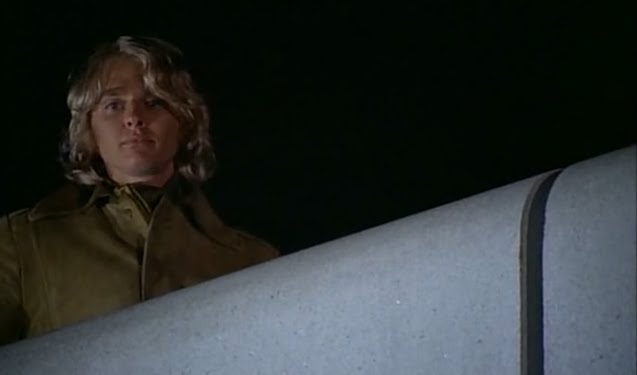
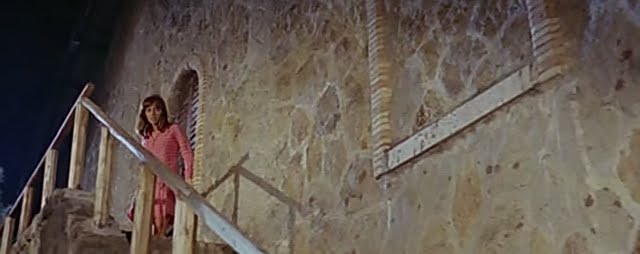
GIALLO SUNDAY: Spasmo


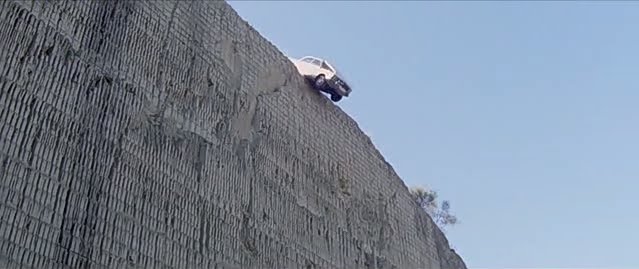
Umberto Lenzi’s psychological thriller starts with two effective rug-pulls. In the pre-credits scene, a young couple race down to the beach in the moonlight; stopping in the lee of a deserted beach house, they start making out. Lenzi’s camera frames the dangling feet of a hanged body behind them. A scream rings out as the girl turns and catches sight of it. The mood soured, they go to investigate. It’s a mannequin. An engine revs and a car roars off.

Post credits, Christian (Robert Hoffmann) and his on-off artist girlfriend Xenia (Maria Pia Conte) are walking along a beach when they spot a body lying face down. Xenia is horrified and hangs back; Christian goes to investigate. The body turns out to be very much alive; a victim of sunstroke who had momentarily passed out. She introduces herself as Barbara (Suzy Kendall) and Christian offers to fetch a flask of whisky from his car to help revive her. Barbara disappears, however, leaving behind an item by which Christian tracks her to a yacht owned by Barbara’s moneyed and much older boyfriend Alex (Mario Erpichini).

These sequences bookend two minutes of credits interspersed with rapid, disorientating cuts to a series of mannequins in macabre and sexualized tableaux. Their relevance is something that Lenzi doesn’t reveal until the very last scene; a nasty, morbid coda to an hour and a half of not-what-it-seems plotting.


Christian becomes obsessed with Barbara and poor old Xenia is unceremoniously sidelined. Gate-crashing a party at Alex’s yacht (or should that be “gangplank-crashing”?), Christian and Barbara lose no time in stealing away to a motel. Barbara insists that Christian shave off his distinctive beard before they get it on – a request that seems to have greater motive than simple comfort on Barbara’s part, particularly when Christian’s clean-shaven industrialist brother Fritz (Ivan Rassimov) comes into the picture – and while Christian is busying himself in the bathroom with scissors and electric razor, he is attacked by gun-toting thug Tatum (Adolfo Lastretti). During the struggle, the gun discharges and Christian is left with a body, his prints on the gun and Alex outside wanting Barbara back and Christian out of the picture.

Returning to the motel after a heated discussion with Barbara and Alex back at the yacht, Christian is disturbed to find the body missing. Meanwhile, more mannequins in death poses are turning up. Barbara flees Alex’s possessive influence and holes up with Christian in a holiday home she claims belongs to a friend of hers but is being occupied by the saturnine Malcolm (Guido Alberti) and his much younger consort Clorinda (Monica Monet). Christian comes to believe that he’s met Clorinda before and that she has something to do with his brother. As a plethora of unsettling events play out, Christian tries to hang on to his sanity while dealing with Alex’s benign influence and the possibility that the psychotic Tatum might not be dead after all.


‘Spasmo’ – a compellingly blunt title – plays out as utterly baffling for its first hour. Nothing quite connects; there seems to be little or no logic to narrative developments. Character dynamics are curious. Who exactly is the catalyst for the weird shit that happens: Barbara or Christian? Why does the mysterious Malcolm take such an interest? What’s the deal with Clorinda and Christian’s brother?

Things start clicking into place after an assassination attempt that plays out unexpectedly, sending Christian on a desperate chase to piece the remaining clues together. Everything is explained by the end credits, but Lenzi seems hellbent – right up to the end – to monkey with audience expectations. His determinism in this respect is entirely commendable, although it does make ‘Spasmo’ something of a hard slog in places, certainly in the middle section where the accretion of elliptical and seemingly uncontextualized incidents threaten to become infuriating.

The final third of the film more than compensates, however. The performances are uniformly good, with Kendall in particular taking a character who could have been unbearably histrionic and instead honing the characterization beyond what the often utilitarian script gives her to work with. It’s stylishly shot by Guglielmo Mancori, who makes excellent use of locations varying from swanky yachts and beach houses to abandoned quarries and industrial works. And those mannequins – carrying on a giallo tradition established by Mario Bava’s ‘Blood and Black Lace’ – bring a creepy visual element that’s all their own.

Wednesday, May 11, 2011

THE SILLITOE PROJECT: The General


Although well-received in some quarters (“Sillitoe scores a hat trick” - Punch), ‘The General’ confounded many people. Highly anticipated after the one-two of ‘Saturday Night and Sunday Morning’ and ‘The Loneliness of the Long-Distance Runner’, here was a curious fable, miles removed from the back-streets of Nottingham, its twin protagonists the titular military type and a standoffish orchestra conductor who ends up as his prisoner. A fable, moreover, that occurs in a fictitious country, during a period of time that’s deliberately out of time, and loaded with philosophically charged and decidedly non-naturalistic dialogue.

Kind of like Shane Meadows following up ‘Small Time’ and ‘TwentyFourSeven’ with ‘Ivan’s Childhood’.

With an author’s note that “East and West in this novel bear no relation to the east and west of modern times”, it’s clear from the outset that ‘The General’ is 160 pages of allegory. The country in which the story takes place is never named, the General himself remains anonymous beyond his rank, the army he commands are only ever referred to as “the Gorsheks”, and the members of orchestra who become his prisoners have names like Evart, Starnberg and Armgardson – suggesting some shared European (possibly East European) heritage, but remaining frustratingly elusive.

The story itself is pure simplicity: the General puts the orchestra into captivity after their special train finds itself behind the lines. High command order him to execute them. The General doesn’t want to, and they an extension of their lives with an impromptu concert. Yet Sillitoe never seems to milk the inherent tension, instead structuring the novel as a philosophical enquiry into various states of mind, most prominently those of the General and Evart, the conductor.

As a result, characters fling entire pages of cerebral dialogue at each other. Sillitoe’s admittedly excellent descriptive writing slows down every moment of the orchestra’s potential death sentence; in some scenes, ‘The General’ seems to be a precursor of Ian McEwan’s precise and formalist style, wherein every moment is considered intrinsically. In others, it presupposes Iain Banks’s ‘A Song of Stone’ in its quixotic and melancholy approach to its subject matter.

It’s the first of a couple of oddities in Sillitoe’s bibliography, but demonstrates that he was a writer unafraid to test himself, experiment, push back the boundaries and side-step the easy categorisation that many critics would rather he be slotted into. It would be ten years later, with ‘Travels in Nihilon’, that Sillitoe wrote a novel as boldly experiment and critically baffling as ‘The General’.

Monday, May 09, 2011

Albert Finney


Albert Finney, the man who brought the brawling and boozing Arthur Seaton definitively to life in ‘Saturday Night and Sunday Morning’ …


Albert Finney, the man who – thirty years later – was just as bad-ass, belligerent and not-to-be-fucked-with in ‘Miller’s Crossing’ …


Albert Finney, the man who turned down a CBE in 1980 and a knighthood in 2000 on the grounds that “they perpetuate snobbery” …

Albert Finney is 75 today and both cinema and stage are a hell of a lot better for the ass-kicking he gave them. The dude has talent, integrity, and a fuckload of great movies on his CV. Happy birthday, my man. There’ll be a fair few glasses raised at chez Agitation tonight.

Wo’k termorra? Bogger it!

Friday, May 06, 2011

George Clooney


Those who know me well will know that not only do I have an epic man-crush on George Clooney, but I am completely comfortable with it. Gorgeous George is 50 today, a glass of beer is being raised, and the doors to Fulwood Towers are open on the off-chance he's in the area!

Wednesday, May 04, 2011

Zebraman (guest review by Aaron)

Thanks once again to my buddy Aaron of The Death Rattle for another killer guest review.


The city of Yokohama is in the midst of its biggest crimewave in history. Could it have anything to do with the sudden emergence of aliens who crash-landed in Japan back in the '70s and have been in hibernation ever since? Yes. That being said, Yokohama needs a hero, and you can take a wild guess who that would be.


The lead character in this Takashi Miike-directed character study is a timid schoolteacher named Shinichi Ichikawa (Sho Aikawa, who also starred in Miike's GOZU - the polar opposite of this somewhat endearing tale of an everyman-turned-superhero). To escape the harsh realities of his daily life, he obsesses over the titular Zebraman - a superhero from a failed television show in the '70s which was canceled after a couple of episodes. Shinichi even dresses up in his bedroom in a homemade Zebraman outfit and fantasizes about fighting bad guys.


As far as the aforementioned "harsh realities" that he deals with: his wife cheats on him, his teen daughter dates sleazy older men, and his son is bullied in school. So, instead of confronting his problems, he hides from them while dressing up like a superhero (a superhero modeled after a Zebra no less). In my book, this makes him a coward and a shitty father, but yet we're supposed to feel sorry for this loser? Whatever.

Shinichi meets a fellow Zebraman fan in the form of a physically handicapped student who just enrolled in the school he teaches at, putting to rest any speculations of a complete lack of Zebraman fans other than himself. Together, they drop various pieces of trivia on each other, but it's mostly Shinichi being enlightened by his student, who learned all about the obscure superhero through the internet. Hoping to impress the young boy, Shinichi sneaks out of his house one night in full Zebraman get-up and dodges people on the streets out of sheer embarrassment by hiding in alleyways, hoping to ultimately make it to the boy's house where he can proudly display his neat-o costume. Things take a turn when Shinichi finds himself in a back alley confrontation with a notorious pervert who wears a ridiculous crab mask. Suddenly, without any explanation, Shinichi discovers that he's gained superhuman fighting abilities and quickly disables the pervert.


Meanwhile, a bunch of suits are monitoring alien activity as part of some secret squirrel operation. The extraterrestrial mayhem eventually spills over into Shinichi's personal life, causing him to don the costume on a regular basis and assume the role of Zebraman in attempt to act as a defender of the city, or something like that. It's later revealed that the Zebraman television show actually tied into the "real-life" alien conspiracies and attempted to expose the various government cover-ups through each episode while disguising itself as a work of fiction. But, since the show was canceled, it goes without saying that its attempt at doing so was a failure, and thus the aliens were able to exist under the radar. There's also a sub-plot involving Shinichi and the mother of the crippled boy becoming romantically involved.


If someone were to stumble upon this film for whatever reason, oblivious to who the director was, they'd probably be utterly disappointed with it, for the simple fact that it's not your typical superhero film. On the other hand, anyone who seeks this out will more than likely find that it's everything they expected. This isn't one of Miike's more well-known films, nor is it a film that comes up when cinephiles talk about their favorite unconventional superhero movies, so I'm assuming that anyone outside of Japan would have to do a little bit of digging in order to learn about it. What ZEBRAMAN partly does is satirize superheroes and comic book characters, and in that respect it's OK at best. As far as the film's flaws, aside from the mostly sluggish pacing and the lengthy running time (nearly two hours), the lead character is a hard one to care about or sympathize with; not necessarily because he's a flawed person, but mostly because he's dull and kinda pathetic. The cast shines, however, despite them not being given much to work with.

Sunday, May 01, 2011

GIALLO SUNDAY: A Quiet Place to Kill

Apologies for the minimal visual content in today’s Giallo Sunday offering; the streaming copy I watched froze just before the end credits and I’d only seen fit to take one screengrab. Nonetheless, it features a bottle of J&B, so at least there’s one giallo trope present and correct.


Umberto Lenzi’s output is prodigious and entirely genre-based: polizia, gialli, war movies, horrors. His string of gialli from the late 60s to the mid-70s are of a uniform standard – glossy, sexy, cynical – and provide something of a headache for the film historian.

For example: Lenzi’s 1969 giallo ‘Orgasmo’ (not to be confused with his later ‘Spasmo’) starring Carroll Baker as an American heiress who gets involved with a European couple only for sexual tension and murderous passions to come to the surface was retitled ‘Paranoia’ for the American market. A year and three films later (told you his output was prodigious) Lenzi made a giallo called ‘Paranoia’, which again starred Carroll Baker again as an American heiress again becoming embroiled in sexual tension and murderous passions after again getting involved with a European couple, which – to avoid (or maybe generate) confusion – was retitled ‘A Quiet Place to Kill’ for the American market. Lenzi’s next film, starring Ray Lovelock and a jailbait Ornella Muti, was called ‘An Ideal Place to Kill’, and therefore retitled for the English speaking market ‘Oasis of Fear’ a.k.a. ‘Dirty Pictures’.

For the purposes of this review, I’ll go with ‘A Quiet Place to Kill’ as a title. That or, ‘The One Where Carroll Baker Plays a Racing Driver’. Or maybe not; that makes it sound too much like an episode of ‘Friends’.

Anyway, Carroll Baker plays Helen, a racing driver who, recuperating after a crash, is invited to spend some time at the coastal villa of her ex-husband Maurice (Jean Sorel). Arriving, she discovers the invitation came from Maurice’s new wife Constanze (Anna Proclemer). Constanze has twigged to something that Helen also found out the hard way – to whit, Maurice is a good-looking, smooth-talking love rat who leeches off rich women – and is looking for a partner in crime to help her dispose of Maurice and make it look like an accident.

The film plays out against a sunny backdrop of louche, amoral privilege, where characters wander around in elegant fashions, yachting, diving, playing tennis, drinking champagne or cocktails or (hey, let’s not forget who the sponsor is!) J&B, lounging by the pool, shooting each other baleful looks, and engaging in the odd bit of hate-fucking.

So: glamorous people, glamorous locations, copious amounts of nudity and a general air of moneyed cynicism. Oh yeah, and a murder plot. Let’s not forget the murder plot. Do I need to tell you that it doesn’t entirely go to plan? Do I need to mention that a rogue element enters the proceedings – in the shape of Constanze’s headstrong teenage daughter Susan (Marina Coffa). Or that there are possible witnesses to a certain, compromised event? Or that an authority figure – in this case public prosecutor Albert Duchamps (Luis Davila) – is sniffing around, convinced that there are inconsistencies.

The second half of ‘A Quiet Place to Kill’ inhabits the kind of territory best described in Patricia Highsmith’s ‘The Talented Mr Ripley’: you know what’s happened, why it happened, who did it and how they potentially screwed up, and the tension is generated by watching them scurry around like rats trying to lie, obfuscate and side-step their way free of the consequences. Lenzi throws in a final act curveball that explodes the character dynamics and steers things in an even more reprehensibly cynical direction.

There may not be any likeable characters here, but there’s plenty to enjoy: Baker is luminously gorgeous and spends much of the film in various states of undress; Sorel plays the good-looking bastard to a tee; Guglielmo Mancori’s widescreen cinematography is eye-catching; the lounge jazz soundtrack is, as ever in this genre, hilariously inappropriate; and the twists of the last few minutes are as serpentine as the hair-pin bends one of the characters makes a tyre-squealing escape attempt along in the tense finale.

Saturday, April 30, 2011

... and it felt so good

Regular readers of these pages will know that I share a birthday with Kirsten Dunst and for the last two years, I've used this as an excuse to load the blog with eye-candy.

Time for a change this year, methinks.

I also share a birthday with R&B star Akon, whose hilarious collaboration with The Lonely Island, 'I Just Had Sex', is presented here for your viewing pleasure:


Thursday, April 28, 2011

Shane Briant resources

Wrapping up two weeks celebrating the work of Shane Briant, it’s worth mentioning his recent second career as a best-selling author. His first novel ‘The Webber Agenda’ appeared in 1994: an old-school plot-driven thriller that you imagine flowing from the pen of Alistair MacLean or Robert Ludlum. It’s fast-paced globe-trotting narrative mirrored the locations Briant was visiting for a movie he was shooting at the time!

It was followed by ‘The Chasen Catalyst’ (1995), ‘Hitkids’ (1995), ‘Bite of the Lotus’ (2001), ‘Graphic’ (2005), ‘Worst Nightmares’ (2009) and ‘The Dreamhealer’, published this year. ‘Hitkids’ could almost be a precursor of the pre-pubescent killers in ‘Kick Ass’, with the son of a mob hitman taking on his father’s mantle, while a vengeful associate tries to trap him through the internet. Hi-tech, compellingly contemporary and unflinching in its subject matter, it confirmed the promise of Briant’s first two novels and demonstrated that he’s a writer with his finger on the pulse of popular culture.

‘Worst Nightmares’ – fittingly enough for an actor inextricably associated with Hammer – is a psychological horror novel centring on a novelist who comes into possession of a diary of dreams and murders, which he initially considers a heated but compelling work of fiction. A bit of research suggests that (a) the murders mirror actual cases, and (b) the author is dead. Against his better judgement, but struggling with writer’s block, he publishes the work as his own … and quickly comes regret it. ‘The Dreamhealer’ continues the story, as Briant steers the narrative from Paris to LA.

Go here for Briant’s Fantastic Fiction page, and here for a video trailer for ‘The Dreamhealer’. Elsewhere on the net, Robcrankey’s channel provides a wealth of archive Briant material, including trailers, montages, interviews and extended footage from some of his key performances. Of particular interest are a series of short films directed by Robert Kenchington where Briant reprises his iconic roles from ‘Straight on Till Morning’, ‘Captain Kronos, Vampire Hunter’, ‘Frankenstein and the Monster from Hell’ and ‘The Picture of Dorian Gray’.

Tuesday, April 26, 2011

Shane Briant on the small screen

A great actor will excel in any medium. Shane Briant earned comparisons to John Gielgud and Michael Redgrave before he’d ever stepped in front of a movie camera. It was a natural transition from the stage to the silver screen. It was also inevitable that he’d shine on the small screen.

I’ve already written about his deliciously amoral turn in the ‘Sweeney’ episode “Chalk and Cheese”, but his work for television goes beyond that highpoint in 70s drama.

Briant followed his cinema debut in ‘Straight on Till Morning’ with an episode of the long-running ‘Armchair Theatre’ entitled “Franklin’s Farm”, notable for being directed by British TV stalwart Peter Hammond (Hammond went on to direct episodes of classic series ‘Rumpole of the Bailey’, ‘Tales of the Unexpected’, ‘Inspector Morse’ and ‘Sherlock Holmes’.

A year later, Briant gave what is arguably the definitive account of Oscar Wilde’s louche but tragic anti-hero in ‘The Picture of Dorian Gray’, directed by Glenn Jordan and also starring Nigel Davenport and Fionnula Flanagan. Niftily sidestepping the oh-so-polite costume drama elements of Albert Lewin’s lavish 1945 MGM version, and mercifully not making any of the mistakes that blight Oliver Parker’s egregious 2009 travesty, Jordan’s made-for-TV production – for all that it was a quickly made, low-budget piece – pays attention to the importance of the performance, the acid wit of Wilde’s writing and the importance of absolutely the right person in the lead role. With his debonair style, good looks and ability to conjure an ironically removed characterization, Briant was most certainly the right man for the job.

In the same year that he made his Hollywood debut alongside Paul Newman and James Mason in John Huston’s ‘The Mackintosh Man’ (a poundingly unsubtle but satisfactorily old-school adaptation of Desmond Bagley’s novel ‘The Freedom Trap’), Briant appeared in two very different but quintessentially 70s TV shows. In the ‘Crown Court’ episode “The Inner Circle”, he gave a highly memorable performance (go here and here for all the evidence, pardon the pun, you need); while in “Season for Love”, a season two episode of ‘Van der Valk’, he retains a commendable professionalism in the face of chocolate box production design and some notable scenery chewing by the show’s leading man.

1975 saw Briant appear not only in the aforementioned ‘Sweeney’ episode, but two notable TV movies: Stuart Burge’s adaptation of Joseph Conrad’s ‘Under Western Eyes’ and Jack Gold’s unforgettable Quentin Crisp biopic ‘The Naked Civil Servant’, in which Briant’s turn is every bit as memorable as John Hurt’s – and compliments don’t come much higher than that!

Shane Briant has remained active in film and television (most recently starring in the acclaimed Australian dramas ‘City Homicide’ and ‘Rogue Nation’) but it’s key to his enduring appeal that he put in such great work in the 70s – perhaps the key decade in TV drama.

Monday, April 25, 2011

THE SILLITOE PROJECT: The Loneliness of the Long-Distance Runner

Posted to commemorate the first anniversary of Alan Sillitoe’s death


Published in 1959 and one of the few Sillitoe titles (along with ‘Saturday Night and Sunday Morning’ and his last two or three books) still in print, this collection of short fiction contains nine stories: ‘The Loneliness of the Long-Distance Runner’, ‘Uncle Ernest’, ‘Mr Raynor the School-Teacher’, ‘The Fishing Boat Picture’, ‘Noah’s Ark’, ‘On Saturday Afternoon’, ‘The Match’, ‘The Disgrace of Jim Scarfedale’ and ‘The Decline and Fall of Frankie Buller’.

The title story is about a youth named Smith who is sent to Borstal after robbing a bakery. Borstals were youth prisons in the UK (named after the village near Rochester where the first one was established in 1902), which housed delinquent offenders under the age of 23. The Borstal model was abolished in 1982 when the Criminal Justice Act 1982 made provision for youth custody centres. The controversial British TV play ‘Scum’, written by Roy Minton (remade as a feature film when the original was banned), was an attack on the Borstal system.

Smith (his first name is never mentioned, rendering him effectively an Everyman given that Smith is the most common surname in the UK) demonstrates an affinity for cross-country running which, as he ruminates early in the story, is “a bit rare, having long-distance cross-country runners in Borstal, thinking that the first thing a long-distance cross-country runner would do when they set him loose at them fields and woods would be to run as far away from the place as he could get on a bellyful of Borstal slum-gullion”. Therefore, seeing an attempt to bolster his own reputation as a progressive jailer, the governor coerces Smith into competing for the Borstal Blue Ribbon Prize Cup For Long-Distance Cross-Country Running (All England), a prize that the gangly-limbed and fleet-footed Smith could win with his eyes closed. If he wanted to …

Essentially a first-person stream of consciousness, ‘The Loneliness of the Long-Distance Runner’ probes Smith’s mind as he reaches his anti-establishment decision. Whipsmart, attitudinous, cunning as a fox with criminal tendencies and blessed with, to quote William Ernest Henley, an “unconquerable soul”, Smith is perhaps Sillitoe’s greatest working class rebel. Even Arthur Seaton accepts the reality of lifetime at his capstan lathe, with booze, birds and brawling as the raison d’etre of the weekend. Smith accepts nothing, nor does he complain or seek to the shift the blame when the establishment demands recompense of him. Smith is the patron saint of everyone who has ever said “fuck you” to authority and lived it!

Most of the other stories are “slice of life” vignettes. ‘Uncle Ernest’ is about a lonely middle-aged man who befriends two prepubescent girls and starts buying them treats, seeing in them the daughters he never had. His intentions are purely good-hearted, but two bullying policemen warn him to stay away from them, their groundless assertion that “we know all about you” awakening in Ernest a guilt for something never done, never even contemplated, and yet a guilt so great that his final refuge is “through the swing doors [of] the crowded and noisy bar of a public house, his stare fixed by the beautiful heavily baited trap of beer pots that would take him into the one and only best kind of oblivion”. It’s a heartbreaking piece, more so for Sillitoe’s depiction of how the sisters, once they’ve cottoned on his generosity, start taking advantage of him.

‘Mr Raynor the School-Teacher’ starts off as a wry portrait of a man settling into the dull routine of work and the tedium of marriage, whiling away his life bullying his class into silence, the better to gaze at the buxom young woman who works at the haberdashery shop across the street. It’s only by the final paragraphs that Sillitoe plays his hand and the small collection of pieces cohere themselves into a picture of loss and helplessness.

‘The Fishing Boat Picture’ treads similar territory, chronicling the aftermath of a couple splitting up. Ostensibly, the man – Harry – seems content enough to live alone. He settles into the routine of work; reads his books; smokes his pipe. The picture of the title – the remaining item from a triptych (the other two broken during vicious arguments) – serves as an epitaph for their relationship. Then his estranged wife reappears on the scene and asks for it back. Harry relinquishes the picture philosophically enough, only to discover the next day that she’s pawned it. The story is a study in regret and ends unexpectedly.

The young lads in ‘Noah’s Ark’ are less like Ernest, Harry or Mr Raynor, and more like teeny versions of Smith in the title story. They skive off school, head to the Goose Fair (a yearly funfair that occupies a large recreational ground in Nottingham), cadge pennies for rides, pick up drop cigarettes, swear, sing rude songs and engage in the odd bit of petty theft. When their ill-gotten finances run out, they take to playing a dangerous game on the mechanical ride of the title, trying to ride for free while evading the bullish owner. Think ‘Emperor of the North’ with a little kid instead of Lee Marvin, a carnival ride instead of the train but still with Ernest Borgnine as Ernest Borgnine and you’ve pretty much got ‘Noah’s Ark’. It’s also an effective study of peer pressure and complicity, and captures that moment when a prank ceases to be a prank and becomes an altogether more serious matter.

A similarly young protagonist is the narrator of ‘On Saturday Afternoon’. Left out of a trip to the cinema, he passes the time roaming the back alleys of his hardscrabble neighbourhood. Overhearing subdued looking man accounting for the coil of rope he’s carrying with the blunt statement of purpose “It’s to ’ang missen with”, the boy follows him out of curiosity. Thus he becomes witness to (and complicit in) a suicide attempt.

I’d be tempted to call ‘On Saturday Afternoon’ the jewel in the crown after the title story, were it not for the poisoned brilliance of ‘The Match’. Storywise, there’s not much to it: Lennox attends a Saturday afternoon football match with his mate Fred, becomes increasingly morose at the poor conditions (a murky fog renders much of the game unwatchable) and outright angry at the final score, which sees Notts County lose pitifully at home (fifty-three years after Sillitoe wrote ‘The Match’, Notts County aren’t doing much better). Lennox’s belligerence is at odds with Fred’s happy-go-lucky demeanour. Fred goes home to his new bride and makes the most of the rest of his weekend. Lennox, however, goes home and deliberately picks a fight with his wife. What Sillitoe pinpoints here is the moment when somebody does something for pure spite, knowing full well what they’re doing and how destructive the outcome will be, but pathetically unable to stop themselves. It’s a horribly realistic and psychologically accurate piece of writing.

Relationships are at the centre of ‘The Disgrace of Jim Scarfedale’, Sillitoe here contrasting a volatile romantic relationship with the smothering influence of a mother unable to give up her son to the realities of growing up, life, love and the outside world. Mrs Scarfedale is a pinafore-wearing, house-proud Midlands version of Mrs Bates, constricting Jim with the taut knots of the apron-strings. Like ‘Noah’s Ark’ and ‘On Saturday Afternoon’, the story also deals with complicity.

The collection ends on an unexpectedly poignant note with ‘The Decline and Fall of Frankie Buller’ which seems, for its first few pages, to be a back-streets of Nottingham vignette that could have been an early sketch for ‘Saturday Night and Sunday Morning’, but suddenly reveals itself as a nakedly autobiographical work.

The nine stories here add up to little more than 170 pages, yet ‘The Loneliness of the Long-Distance Runner’ is a major book. Sillitoe’s ability to evoke a time and place is faultless; his dialogue has the rough-hewn poetry of real working class life. His characters rage and struggle, tearing themselves fully-formed from the page even though their creator has sketched them with deceptively few sentences. Sillitoe gets inside their heads. He understands them. He makes them all too familiar. Disturbingly familiar at times. And therein lies the genius.

Sunday, April 24, 2011

Frankenstein and the Monster from Hell


Although the Frankenstein franchise notched up almost as many entries as Hammer’s Dracula series, it never quite captured the popular consciousness the way the caped bloodsucker from Transylvania did. Maybe because Peter Cushing wasn’t as dangerously sexy as Christopher Lee. Maybe because reanimated corpses aren’t as darkly appealing as aristocratic vampires.

What the Frankenstein films can lay claim to, however, is that they didn’t suffer the drop-off in quality that beset the latter Dracula titles, particularly when Hammer took the decision to update the Count’s milieu to a horribly psychedelic version of 1970s London. Hard to imagine Baron Frankenstein swanning around Carnaby Street in a velvet smoking jacket, doing LSD and listening to the Velvet Underground.

Just as well that the studio allowed Frankenstein to go out in fine style, unrepentant in his experiments in playing God, against a particularly apposite Gothic backdrop. Sure, ‘Frankenstein and the Monster from Hell’ is saddled with a lurid title that suggests Hammer were scraping the bottom of the barrel, but it scores highly in virtually every respect.


The film starts with a grubby bodysnatcher (Patrick Troughton) only just evading the clutches of a passing constable as he makes off with an unofficially exhumed corpse. He delivers said item to the house of Dr Simon Helder (Shane Briant), who greets him with a raised eyebrow and the satirical homily, “That smell: is it you or him?” Immediately, this touch of mordant humour establishes Helder as a likeable character even if his experiments are macabre.

Inspired by the works of Frankenstein, whose publications he owns, Helder is attempting reanimation. His attempts are short-lived as the bodysnatcher is promptly arrested and sings like a caged canary. The police come calling on Helder, he’s hauled up in court and the judge – who previously sentenced Frankenstein for similar offences some years earlier – loses no time in sentencing Helder to a period of five years in an asylum for the criminally insane.

It’s at this establishment, nominally run by Adolf Klauss (John Stratton), a licentious alcoholic hiding a dark secret, that Helder meets the asylum’s doctor, Karl Victor (Peter Cushing) and realizes that Frankenstein, long believed dead, is using the anonymity of the facility to continue his experiments. Initially drawn to the older man as a mentor figure, Helder eventually comes to the reluctant conclusion that playing God has its consequences.


Although beset by a budget as small as its title is misleading, ‘Frankenstein and the Monster from Hell’ injects some new blood into the formula. Helder’s character arc – from arrogant and self-confident scientist to a man who discovers his humanity when faced with the greater and more amoral urge to scientific gain of his supposed hero – is contrasted with both that of Frankenstein, initially a benign presence who saves Helder from the heavy-handed treatment of Klauss’s goons, but whose hold over Klauss comes only at the subjugation of angelic mute Sarah (Madeline Smith). Frankenstein’s plans for Sarah in the last act cross a line Helder cannot tolerate.

Another interesting juxtaposition is that of the creature (Dave Prowse) to the two scientists. Created from the body of a thug, the hands of an artisan and the brain of a genius, the disparate elements rebel against each other, causing the creature physical, emotional and cerebral agonies. Never mind the horrible “monster from hell” part of the title, Prowse arguably conjures one of the most pitiable incarnations of Frankenstein’s monster put on screen; that he does so from behind a plastic mask that is simultaneously groteseque and almost laughable only proves how good a job he does. One of the best scenes segues from Frankenstein and Helder, sharing a drink to celebrate the creature’s resurrection, to the create itself, abandoned, alone and desperately melancholy.

In fact, the performances are uniformly good. Cushing never took the easy way out in playing Frankenstein: there was nothing self-deprecating about his performance, nary a wink to the gallery. He always played the character straight, and never more so than here. Briant’s Helder is not just a foil to Frankenstein, but the opposite side of the coin. Helder could easily become Frankenstein; inherit his mantle. The drama is in the dichotomy between Helder’s scientific curiosity and his sense of humanity.

The closing scenes toy ironically with the old concept of the lunatics running the asylum, a melee which it requires Frankenstein’s aristocratic air of authoritarianism to rectify. In consolidating Frankenstein’s status as both instigator and invigilator – as well as delivering a gut-wrenching climatic scene that says as much about the human condition as any art film – ‘Frankenstein and the Monster from Hell’ asks some probing questions about mortality, science, advanced knowledge and intellectual responsibility. If only Hammer could have rethought the title!

Saturday, April 23, 2011

Captain Kronos, Vampire Hunter


Talk about potential. ‘Captain Kronos, Vampire Hunter’ had all the elements to make it one of the Hammer’s finest horror movies, the curtain raiser to a franchise to rival the Dracula or Frankenstein franchises.

The film ticks the right boxes in its traditional period setting, its embrace (and subversion) of vampire tropes, its third act narrative development that links it to the Karnstein trilogy, its bevy of beauties (including Caroline Munro, Wanda Ventham and Susanna East) and its mysterious anti-hero, the titular Kronos, an aristocratic military type who has survived a vampire bite and dedicated himself to kicking vampire arse from one end of the British Isles to the other. He’s moody, enigmatic and handy with a sword. The ladies like him, too, hence he spends a certain amount of screen time conducting a fleeting romance with the voluptuous Carla (Munro). Pretty cool dude, right?

Unfortunately, the problems start with the casting of Horst Janson as Kronos. Although an accomplished actor in his native Germany, Janson never seemed quite at ease in English language roles; and while there’s no doubt that he has the physicality and aristocratic looks required to play Kronos, he doesn’t bring the character to life.

This, is turn, damages the relationship, central to the narrative, between Kronos and his partner Dr Marcus (John Cater). The hump-backed and sometimes self-pitying Marcus is a different beast to the usual “sidekick” stereotype: he’s there neither to provide comic relief or deliver screeds of expositional dialogue, but functions as a cerebral and rigorously determined vampire hunter in his own right. Sadly, with Janson unable to flesh Kronos out into a three-dimensional protagonist, there is no inkling of what keeps these very different men together.

Likewise, the relationship between Kronos and Carla is by-the-numbers, shoehorned in and lacking any real chemistry. A shame, since the striking and eminently likeable Munro is reduced to mere set dressing.


Fortunately, when ‘Captain Kronos, Vampire Hunter’ gets things right, it does so iconically and interestingly enough to give us hints of the film it could have been. The treatment of vampirism does things differently: attacks occur in the daylight, the cross is useless unless its wearer is devout to begin with, and the victims are drained not of blood but of their youth. Kronos’s philosophy of vampire hunting seems to be tinged with Eastern mysticism and he openly admits that “there are different ways to kill different vampires”. The black-hooded figure whose appearance presages the attacks is iconic and properly macabre. The attacks are over quickly and not eroticized in the manner of, say, the Christopher Lee Dracula films.

The film also makes an interesting juxtaposition between the transient Kronos – a man who seems to have no home, no family and only one friend (which is not to say we should in any way feel sorry for someone who gets to enjoy a dalliance with Caroline Munro) – and the Durwards, an ostensibly close-knit family but with one mother-humper of a secret in the closet.

The Durwards are held together by siblings Paul (Shane Briant) and Sara (Lois Daine). Given their closeness and Sara’s androgynous looks, you’d be forgiven for thinking that there’s a touch of the Emil/Elizabeth relationship from ‘Demons of the Mind’ percolating away in the background. But the focus seems to be more on their ailing mother Lady Durward (Ventham), still grieving the death of her husband from the plague. Paul blames surgeon Grost (John Carson) for not saving Durward’s life. Meanwhile, Grost – horrified at the recent attacks – joins forces with Kronos.


It almost goes without saying that Briant’s turn is the standout (closely followed, arguably, by Cater). He brings a similar degree of vulnerability to the role as he does as Emil, but without Emil’s capacity for sociopathic behaviour. Sadly, it’s a very limited role and the denouement sees Paul sidelined while the rest of the cast get stuck in.

Hammer dropped the ball with ‘Captain Kronos’: with Briant in the title role, Munro’s part beefed up and better execution of the swordplay (the duelling scenes are pretty bad!), it could have been a classic. Kronos himself might have taken up the mantle from Van Helsing. It’s sad to reflect that what we’re left with is, at best, a watchable intimation of what could have been.

Friday, April 22, 2011

Service announcement

Due to unexpected technical issues it being a nice day and yours truly intending to put in some serious social time at the pub, the planned review of 'Captain Kronos, Vampire Hunter' will be appearing tomorrow.

Hangover permitting.

Thursday, April 21, 2011

THE SWEENEY: Chalk and Cheese


Shane Briant’s four iconic appearances in Hammer productions are the main feature of Shane Briant week here on The Agitation of the Mind. But let’s take a mid-week break and consider his deliciously amoral turn in “Chalk and Cheese”, the first episode of series two of ‘The Sweeney’.

I’m going to throw out a statement here which might sound like fan-boy rhetoric, but I can assure you it’s not mere opinionism but a statement of fact. Ready? Here it comes: ‘The Sweeney’ was British TV’s finest hour. With Patrick McGoohan’s ‘The Prisoner’ (I spit on the remake) and ‘Inspector Morse’ coming joint second. Two of these shows starred John Thaw. Coincidence? I think not.

‘The Sweeney’ debuted in January 1975; for purposes of comparison, the cosy ‘Dixon of Dock Green’ was still on air, in its penultimate season. ‘The Sweeney’ kicked down the doors of staid and generic TV, came charging in with pistols pulled and put the finger on complacency, cliché and moral exactitude. It depicted a world in which coppers were as dirty as the blaggers and nonces they took down; where the bad guys sometimes outwitted them; where the rule book was torn up, fair play didn’t exist and violence was an occupational hazard.


‘Hill Street Blues’, ‘Miami Vice’, ‘NYPD Blue’, ‘CSI’ – fuhgeddaboudit! ‘The Sweeney’ got there first – and if anyone reading these pages remembers John Thaw solely as the opera-loving, poetry-reading, real-ale savouring Inspector Morse, then they might need a stiff drink before exposing themselves to his boozing, brawling attitudinous incarnation of the hard-as-nails Jack Regan.

It was a characteristic of the series that the opening credits juxtaposed hard-hitting imagery with a pulsating, edgy theme tune, while the closing credits were a slower, more melancholy variation on the theme, accompanied by shots of the protagonists in more contemplative mode. The creative talent behind ‘The Sweeney’ weren’t afraid to end episodes on a sour note, or leave a shard of discontent in the viewer’s mind.

In “Chalk and Cheese”, the melancholy subject is a father’s grief at a son going down the wrong path. Tommy Garrett (Paul Jones) is vaguely embarrassed by his gruff but honest father (David Lodge) and out of his depth with society girlfriend Caroline (Lesley-Anne Down). Caroline has hooked Tommy up with upper crust playboy Giles Nunn (Briant), and together they pull robberies on upper classes Giles knows socially. Tommy wants money (flash car; high maintenance girlfriend); Giles needs it (gambling debts). Tommy still has some shred of conscience that he’s plagued by. Giles, however, is louche, amoral and not above playing hide the salami with Caroline behind Tommy’s back.


With Detective Inspector Regan (Thaw) backgrounded for much of the episode, the dynamic is driven by Detective Sergeant Carter (Dennis Waterman)’s friendship with Garrett’s father – a friendship that threatens to become compromised when Carter suspects Tommy is up to no good – and by the increasingly volatile relationship between Giles and Tommy … the chalk and cheese of the title.

Briant and Jones are well matched, the latter delivering a performance so much better than his turn in ‘Demons of the Mind’, while Briant revels in Giles’s elegant villainy. “Bright boy, good looking in an androgynous sort of way,” is how one of Regan’s informers describes him. Giles is a kind of Dorian Gray but with a poor run at the tables, a line of credit that it would be ungentlemanly not to settle, and a taste for using firearms when the robberies get a bit dicey.

Lesley-Anne Down does a nice line in ice maiden as Caroline – “a snotty bit from Kensington” – while Lodge invests his role with gravitas. ‘The Sweeney’ always benefited from high calibre supporting players (Colin Welland in “Faces”, for example, or James Cosmo in “Hard Men”) and “Chalk and Cheese” is no exception.

Wednesday, April 20, 2011

Demons of the Mind


Technically Shane Briant’s first film – completed with “and introducing ~” credit – although ‘Straight on Till Morning’ ended up being released ahead of it. On the surface, ‘Demons of the Mind’ inhabits a more generically Hammer milieu: a gothic castle, a carriage and horses thundering through the woods at dusk, hidden family secrets, heaving bosoms, grisly murders, torch-bearing villagers and a mad priest.

Scratch the surface, however, and it goes into some of the darkest territory of any Hammer production. The elements enumerated above are merely trappings – the real business of Peter Sykes’s alternately dream-like and brutally cynical film is a study of the family dynamics gone sickeningly wrong. It’s a story of incest, guilt, desperation and inherited madness. With some torch-bearing villagers and a mad priest thrown in for good measure. Imagine the bastard mutant child of ‘Through A Glass Darkly’ and ‘Blood on Satan’s Claw’ that grew up reading horror comics and lusting after its sister. That’s the kind of film we’re talking about.

The setting is some unspecified part of Austria, probably during the 1800s. Nobleman Zorn (Robert Hardy) keeps his son Emil (Briant) and daughter Elizabeth (Gillian Hills) under lock and key, concerned that (a) the sociopathic tendencies he recognizes in himself are manifesting in them; and (b) they have an unhealthy sexual interest in each other.


Summoned from Vienna (where Elizabeth had earlier escaped his care), Dr Falkenberg (Patrick Magee) makes haste to Zorn’s estate to attempt to find a cure for the siblings. En route, he shares a coach with earnest young student Carl (Paul Jones) who brings up the thorny subject of Falkenberg’s recent discrediting: “Haven’t you fallen from grace?” “Fallen?” Falkenberg thunders. “Thrown! Hurled! E-jec-ted!” It’s a ripe bit of overacting from Magee and sets the tone for every scene he subsequently appears in. Worse: he seems to inspire Hardy to ever greater heights of scenery-chewing.

But I digress. Carl’s antipathy towards Falkenberg is piqued by the fact that, following Elizabeth’s brief escape from Vienna, he enjoyed a fleeting romantic interlude with her and is still a tad sore that Zorn’s thuggish footman Klaus (Kenneth J. Warren) effectively abducted her just as he was really starting to get to know her. (That’s “know” in the Biblical sense, by the way.)

Meanwhile, a crazed, mumbling priest (Michael Hordern) comes stumbling out of the woods and rallies the local villagers – whose numbers have been decimated by a series of disappearances – into fighting the evil that has blighted them. It’s no surprise that, come the full-throttle melodramatic ending, these various parties with their various agendas converge at Schloss Zorn and conflict ensues.

‘Demons of the Mind’ is a compelling and often queasy slab of Gothicism, albeit flawed. The performances by Hardy and Magee make hard work of too many scenes, and Hordern seems hell-bent on joining them, only pulling his characterization back from the brink in the climatic scenes where he leads the villagers against Zorn; in these scenes, the ham is carved away and what remains is a properly intense bit of messianic fire-and-brimstone. There is a staginess to many of the interiors, as well, and the score is about as subtle as Magee sticking his face right in the lens and ranting for extended periods.


Let us be thankful for small mercies, then. Two of them, in fact: Shane Briant and Gillian Hills. Ladies first: Hills, radiant and dreamily photogenic, invests Elizabeth with an otherworldly quality that transcends mere romantic interest or set decoration. Her ethereal calm contrasts well with Briant’s masterfully underplayed evocation of Emil’s inner turmoil. Without ever resorting to the retinue of tics and bulging eyes and chest-beating that many of Hammer’s regular players would have brought to the performance, Briant turns the disturbed and yet strangely pitiable Emil into a multi-faceted, three-dimensional character. He makes the shoddy antics of other cast members look all the worse by comparison.

Tuesday, April 19, 2011

Straight on Till Morning


Hammer = horror, right? The way Ealing = comedies, or Platinum Dunes = unnecessary remakes.

But just as Ealing also produced gritty crime movies (‘The Blue Lamp’), historical dramas (‘Scott of the Antarctic’), slices of social realism (‘It Always Rains on Sunday’), war movies (‘Went the Day Well?’) and one of the most accomplished horror portmanteau films (‘Dead of Night’) ever made, so Hammer’s output – including Bernard Mainwaring’s lost satire ‘The Public Life of Henry the Ninth’, Vernon Sewell’s moody thriller ‘The Black Widow’ and Val Guest’s classic sci-fi ‘The Quatermass Experiment’ – spans genres and iconography beyond the classic horror archetypes the studio became synonymous with.

When Peter Collinson’s ‘Straight on Till Morning’ was released in 1972, however, it was these very archetypes that defined Hammer. The Dracula franchise had reached its seventh instalment with the spectacularly lurid (and contemporarily set) ‘Dracula AD 1972’, the Frankenstein series had chalked up six titles, and the Karnstein trilogy – ‘The Vampire Lovers’, ‘Lust for a Vampire’ and ‘Twins of Evil’ – had stirred a hefty dollop of Sapphic shenanigans into the mix.

Audience expectation was always going to work against ‘Straight on Till Morning’. The opening credit sequence confounds and intrigues in equal measure. Opening on a tight shot of terrace rooftops, soot-stained chimneys and a grubby diesel loco jerking a passenger train across a railway bridge, the immediate aesthetic is that of a kitchen sink drama of the previous decade – an Alan Sillitoe or Barry Hines adaptation, maybe. This sense is reinforced, albeit briefly, by the instantly recognisable tones of Rita Tushingham (herself British cinema’s go-to actress for social realism) in voiceover.

And immediately the first of the film’s many subversions. Tushingham’s character, the cripplingly shy Brenda, is narrating a fairy story. It is quickly established that she has written this twee tale. Scenes of her scribbling away at a small table in an equally small room are jarringly intercut with a confrontation between Brenda and her mother. Brenda announces that she’s pregnant and is leaving for London where she hopes to meet “a father for my baby, someone who’ll love us both”. Her mother’s imprecations not to leave fall on deaf ears. A taxi arrives. Brenda leaves home.


In London, Brenda fetches up at a crowded labour exchange. She secures a low paying job at an oh-so-trendy emporium owned by the predatory Jimmy Lindsay (Tom Bell) and strikes up a tentative and unlikely friendship with promiscuous shop girl Caroline (Katya Wyeth) while trying to catch the eye of cynical co-worker Joey (James Bolam). Meanwhile, the impossible handsome and ethereally calm Peter Clive (Shane Briant) goes about his daily business of buying cigarettes and looking cool in his E-type Jaguar while flashing back to the woman he murdered in his flat the previous evening. All of these plot-strands, set-pieces and character introductions are effected in a dizzyingly extended sequence achieved with the kind of hyperkinetic intercutting and mind-bending visual juxtapositions that wouldn’t be out of place in a film by Nic Roeg or Alejandro Jodorowsky.

This from the guy who directed ‘The Italian Job’!

Essentially – and this is to take the film at its most basic level – ‘Straight on Till Morning’ is about the relationship between two people who live in fantasy worlds and how they drawn together by their very different attempts to function in the real world. Brenda’s fantasy world is the most obvious of the two: it is a world of fairy tales, her very own handsome prince and their baby (in case you haven’t guessed – MINOR SPOILER – Brenda’s pregnancy is a fiction), a world into which the actuality of cheap rooms, mundane jobs, social ineptitude and wrenching loneliness continually intrude.

The nature of Peter’s fantasy world is the thornier subject; a dichotomy that lends the film its power to disturb. With his Dorian Gray-ish looks (Briant was a natural to play Wilde’s ironic anti-hero in a TV production a couple of years later), his life of leisure (the source of his cash-in-hand income is never really explained) and his zen-like tendency to seem utterly removed from his surroundings, Peter never quite seems suited to the ostensibly real world of newsagents, cul-de-sacs and nocturnal walks with the dog along the South Bank (never mind that Collinson shoots the South Bank so that it looks like an alien landscape).


This, it is hinted, is the fantasy world to which he does his best to pretend he belongs. The real world – hammering away at his aloof façade and sliding knife-edges of memory into his waking consciousness – consists of the murders he has committed, an absent but devastatingly powerful mother figure, and a fairy tale of the beautiful prince driven to sociopathic hatred by his own beauty; a story Peter recounts to Brenda, in a reversal of the storyteller/fantastist role, in one of the film’s key scenes.

Collinson loads the film with symbolism: mirrors are everywhere; androgyny is rife; the surface image is challenged and fractured time and again (most notably in a scene where Brenda’s makeover renders her a grotesque and sexless caricature); and a sense of troilism permeates. Brenda initially introduces herself to Peter as “Rosalba” (the name of the princess in her fairy tales); he later renames her Wendy (the ‘Peter Pan’ analogy hardly needs belabouring).

’Straight on Till Morning’ presents a strange, disconcerting and never less than chilling fusion of genres and film-making tropes – from the warped character study of Michael Powell’s ‘Peeping Tom’ to the visual dissonance of ‘Performance’ by way of an on-location aesthetic in its production design and cinematography that recalls ‘Poor Cow’ or ‘Up the Junction’ – that coheres into a haunting and challenging piece of work, nasty but surprisingly bloodless, with the power to linger in the mind long after much gorier fare has faded. It’s one of those films that gets under the skin. You can never unsee it. And I can’t think of a better recommendation than that.

Monday, April 18, 2011

Shane Briant week on The Agitation of the Mind

Robert Kenchington, the man behind the Shane Briant Tribute Site, recently provided me with review copies of his pictorial biographies ‘Shane Briant: a Talent for Terror’ and ‘Shane Briant: the Hammer Years’. The latter gave me a yen to revisit the four (very different) films Briant made for Hammer between 1972 and 1974.

Actually, scratch “revisit”. Two nights ago I watched ‘Straight on Till Morning’ for the first time. It’s one of those films that’s been on my radar for a while but which, for reasons I can’t even fathom, I’d never got round to seeing. All I can say is I’m glad I made the effort: a disturbing and multi-faceted film, I’ll be posting a review tomorrow.

In addition to the Hammer productions, I’ll be rounding off Shane Briant week with a look at his appearance in the ‘Sweeney’ episode “Chalk and Cheese” (he’s on the subject of one of Inspector Regan’s most memorable arrests).

First up, though, Robert Kenchington’s biographical volumes. These glossy, lavishly illustrated volumes (available online here), provide an excellent introduction to Briant’s career for the newcomer as well as offering a wealth of archive material – including many stills from the actor’s own collection – sure to be of interest to the seasoned Briant fan.

It’s perhaps some marker of how critically overlooked Briant remains amongst his contemporaries (although the hero’s welcome he regularly receives at events tells a different story!) that Kenchington’s books together form the first biographical overview of his life and work.

‘A Talent for Terror’ succinctly guides the reader from Briant’s early triumphs onstage (his Hamlet was compared to Gielgud’s and Redgraves) to his iconic work at Hammer, a big-screen proving ground that gave him the springboard to appearances in big Hollywood productions. His small screen work in timeless ’tec shows ‘The Sweeney’ and ‘Van Der Valk’ is also considered.

‘The Hammer Years’ does exactly what it says on the cover and considers ‘Straight on Till Morning’, ‘Demons of the Mind’, ‘Captain Kronos, Vampire Hunter’ and ‘Frankenstein and the Monster from Hell’. As such, the stills on offer in this volume capture Briant at his most iconic (and, sometimes, demonic); better still, Kenchington’s informed analyses of the films are peppered with witty and evocative recollections from Briant himself.


Tomorrow: Briant excels in the dark fairy tale/psychological drama ‘Straight on Till Morning’

Sunday, April 17, 2011

GIALLO SUNDAY: Naked You Die


Welcome to St Hilda’s College, less a finishing school for young ladies than a school where young ladies get finished off. It’s an establishment rife with jealousy, petty rivalries and lesbian crushes … and that’s just the staff!

Behind this inimically voyeuristic setting and its magnificently lurid title (a literal translation from ‘Nude … Si Muore’), Antonio Margheriti’s pacy and entertaining giallo is a classic whodunit bracketed firmly in the Agatha Christie tradition … only with a surfeit of jailbait in the kind of short skirts that immediately identify ‘Naked You Die’ as a film made in 1968. That it was released in some territories as ‘The Miniskirt Murders’ tells you all you need to know.

Things begin with the murder of a woman who remains unidentified until the final act. She’s naked when the killer strikes (in the bath), thus justifying the title. It is, however, one of the primmest bits of exploitation you’re ever likely to see, with nary a nipple or a glimpse of the delta of Venus to be seen. (Later, when another victim buys it in a shower – also unclothed – they fall with such balletic grace as to wind an entire shower curtain around their body.) The corpse is bundled into a trunk, the trunk strapped to the roof-rack of a taxi, transported to a station, manhandled onto a train, and finally transferred to a mini-van for the last stretch of the journey to St Hilda’s. Where it – and its grisly contents – are then shunted offstage for a good hour and twenty minutes.

In the meantime, we’re introduced to some of the girls: high-spirited wannabe crime-writer Jill (Sally Smith), stuck-up Betty Ann (Caterina Trentini), sexually precocious Lucille (Eleonora Brown) and her loyal friend Denise (Patrizia Valturri). Lucille is carrying on with riding teacher Richard Barrett (Mark Damon), much to the chagrin of equestrian Betty Ann. Denise knows all about it but is sworn to secrecy. Jill, though popular, pisses off the staff right royally with her tall tales and tendency to melodrama.


And speaking of the staff, a quick round-up: there’s headmistress Miss Transfield (Vivian Stapleton), newly promoted Miss Martin (Ester Masing), recently arrived relief teacher Miss Clay (Ludmila Lvova), the aforementioned Barrett, the elderly Professor Andre (Aldo de Carellis) and groundskeeper La Floret (Luciano Pigozzi). Miss Transfield tuttingly disapproves of Barrett’s popularity with the girls, Miss Martin owes her promotion to an implied dalliance with Miss Transfield, and La Floret gets his jollies spying on the girls’ shower room.


Not the kind of place you’d want to pack your daughter off to. And even less so once the murders start and the stately Inspector Durand (Michael Rennie) and his sidekick Detective Gabon (Franco de Rosa) turn up and ploddingly start putting the pieces together as the body count increases.

Between Fausto Zuccoli’s opulent widescreen cinematography, Carlo Savina’s jauntily inappropriate score (the sleazy saxophone as La Floret peeps on a disrobing Lucille predates just about every 1980s soft-core/erotic thriller soundtrack ever written), and a stratospherically high eye-candy quotient – look out for the achingly gorgeous Silvia Dionisio (she of ‘Waves of Lust’ fame) in a supporting role – it’s difficult to keep your eye on the ball, never mind an eleventh hour revelation of a crucial inheritance that tips you off to the why if not the who.

As well as being thoroughly entertaining and solidly made, ‘Naked You Die’ toys with identity, perception and gender confusion in a way that lays the groundwork for, amongst others, the two great gialli of Dario Argento’s mid-period majesty: ‘Deep Red’ and ‘Tenebre’. At the other end of the spectrum, Andrea Bianchi’s unapologetically seedy ‘Strip Nude for Your Killer’ also owes it a debt of dishonor. The sacred and the profane: ‘Naked You Die’ can claim one hell of a birthright.