Monday, April 30, 2012

1000th post: 40 for 40

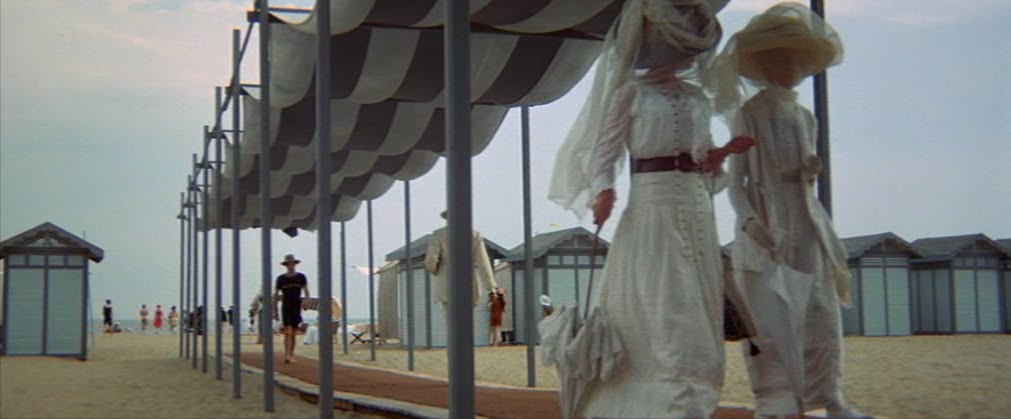
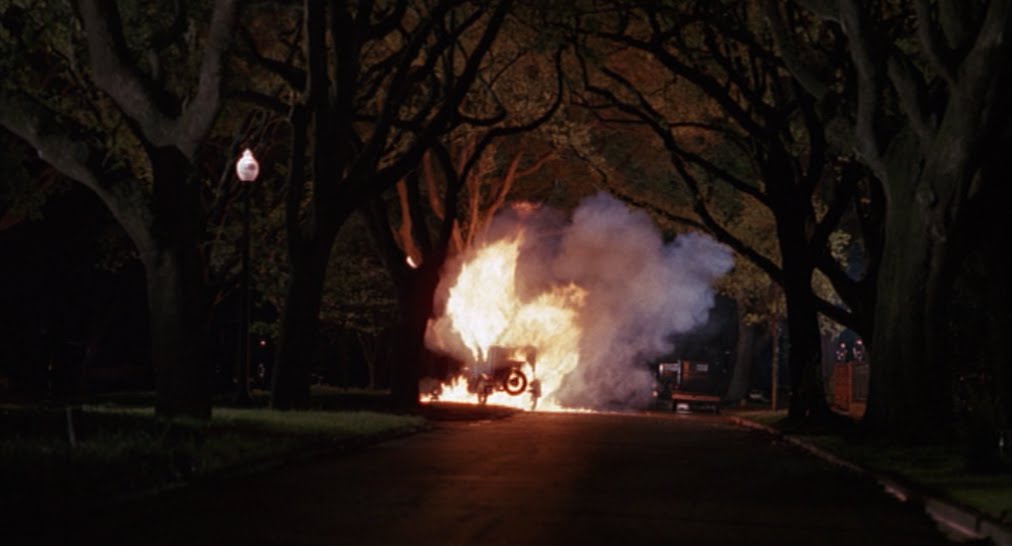
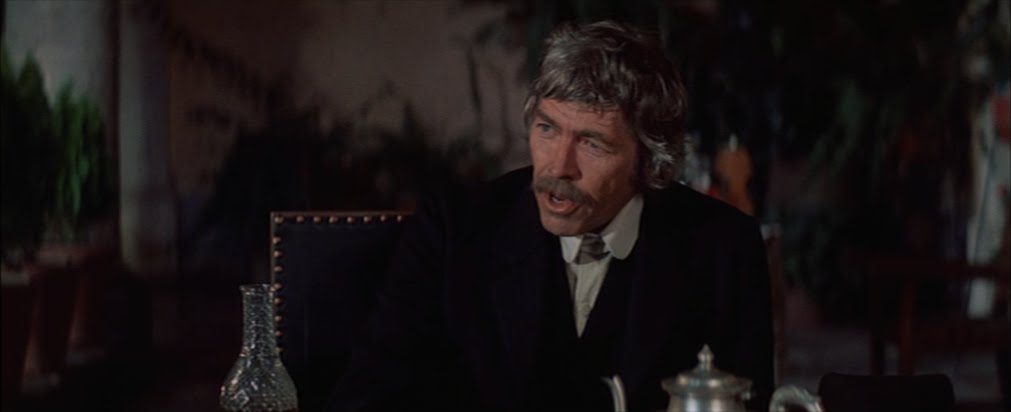
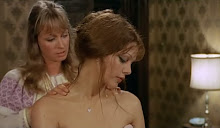
Today marks my 1000th post on The Agitation of the Mind, as well as my 40th birthday. The gimmick was too good to pass up: I took 40 DVDs, all staples of the collection, and took a screengrab at the fortieth minute. (If you’re wondering why John Carpenter’s ‘The Thing’, one of my absolute favourite films of all time, isn’t represented, it’s because there’s a fade to black at exactly forty minutes.)


Sunday, April 29, 2012

Exit Through the Gift Shop


The last art documentary I watched, Amir Bar-Lev’s ‘My Kid Could Paint That’, started out as one thing (a chronicle of the impact a four-year-old girl’s canvases had on the art world) and turned into something else (an investigation into the authenticity of her work). Ditto Banksy’s ‘Exit Through the Gift Shop’, except that instead of a precocious four-year-old we have a frankly bonkers French guy.

Before we go any further, a word about Banksy. His identity is shrouded in secrecy, mainly because the public dissemination of his work is done in such a manner as to invite calls from the Old Bill and appearances before the beak. The phrase “art terrorist” is perhaps overused, with anyone whose aesthetic is informed by anti-authoritarianism laying claim to the epithet, but Banksy is the real deal. An art terrorist – in a good way.

At the basest level, the guy’s a graffiti artist. But with style. Irreverent, subversive, often darkly comical, his work is iconic in the proper sense of the word. And you have to give kudos to a man who tagged the West Bank with images of children borne by balloons floating over the wall or the wall itself shattered to reveal idyllic vistas. Oh, and his picture of the two gay cops … still makes me snigger every time I see a policeman stomping around like he’s some authentic James Ellroy badass.

So. Banksy: artist, activist, provocateur, enigma. And – this is my impression, at least – a world-class piss-taker. Again, in a good way. So I’m inclined to view ‘Exit Through the Gift Shop’ as an elaborate, deadpan, beautifully constructed hoax, the work of a dementedly inspired parodist with a spray-can in one hand and a megaphone in the other, a pseudonymous harlequin in a hoodie gleefully using the tools of one art form to expose the hypocrisies of another.

If, however, the story depicted in the documentary is accurate, then the truth really is stranger than fiction. In a nutshell, ‘Exit Through the Gift Shop’ tells the story of Thierry Guetta, a US-based Frenchman with a successful boutique and an obsession with filming everything. He films his family, his staff, his customers, random people on the street, and even celebrities. Then he discovers that his cousin is the street artist Invader and follows him as he displays his work publically on the side of buildings and without necessarily getting permission from the owners of the buildings in question. Buildings like, y’know, the Eiffel Tower. 

Through Invader, Guetta meets Shepard Fairey – whose “Obey” series is a brilliant exercise in repetition and whose Obama “hope” poster is a cringe-making throwback to Soviet-era propaganda – and becomes his documentarist-cum-assistant. This is Guetta’s ticket into the street art underworld and he starts having big dreams of creating the definitive documentary on the movement. Due to the transient nature of much of their work (i.e. the predisposition of building owners and local councils to hose off or paint over them), many street artists were happy to have Guetta capture their creations.

Guetta still needed one almost mythic figure to complete his magnum opus: Banksy. Through a series of coincidences that even Dickens might have rejected as contrived, Guetta ends up acting as Banksy’s gopher during an LA visit, and later follows him back to the UK. His presence causes dissensions in the Banksy camp for obvious reasons: being an identity-free enigma and being filmed 24/7 aren’t exactly conducive concepts. Eventually, though, Banksy puts him on the spot and Guetta knuckles down to editing thousands of hours of footage into a 90 minute film called ‘Life Remote Control’. It sucks. Banksy encourages Guetta, who by now has started producing his own street art under the name Mr Brainwash, to go back to the States and put together his own exhibition, leaving Banksy to trawl through the tapes and try his hand and assembling them into something coherent.

This is where things get very bizarre. Guetta throws himself into producing his own show – at a cost of selling his business, remortgaging his house and putting his and his family’s livelihood on the line. The man turns into a reality-challenged egomaniac. He talks Fairey and Banksy into championing his show, an extravaganza entitled ‘Life is Beautiful’. Against all odds, and without doing much in the way of creating art himself (he simply hires people to realise his ideas), Guetta – oh, sorry, Mr Brainwash – becomes the toast of the arty-farty art world and sells about a million dollars’ worth of product.

Now, much of the film’s content is verifiable, from Guetta’s US citizenship to the fact that, helpfully, the ‘Life is Beautiful’ exhibition (stuffed, as it was, full of work that simply borrowed concepts from everyone from Warhol through to Banksy) actually happened. Additionally, Mr Brainwash has his own website, and trailers for ‘Life Remote Control’ were posted on YouTube as far back as 2006, four years before ‘Exit Through the Gift Shop’ premiered. Incredibly elaborate if the film is a hoax. But not improbable.

You see, ‘Exit Through the Gift Shop’ is about the ephemerality of modern art, the artist as a construct, and the eternal lure – even for practitioners of street art – of snobbery, sales and celebrity. Fairey sold out with his Obama poster. Banksy’s work sells for ridiculous figures while the compilation of photographs of his street (i.e. free) art into a coffee table book with a £20 price tag seems at odds with the mindset behind the work. Guetta, either as willing accomplice or pitiful dupe, is too perfect a foil, too effective a metaphor for the pretentiousness of the art world. I can only take ‘Exit Through the Gift Shop’ as a j’ (self) accuse.

Saturday, April 28, 2012

Avengers Assemble


‘Iron Man’ started it all, coming out of nowhere with the unlikeliest choice for director, and – whaddaya know? – it was pretty damned good. ‘The Incredible Hulk’ delivered a strong first half before degenerating into silliness and tedium with an arse-numblingly interminable denouement which basically featured two screensavers repeatedly twatting each other. ‘Iron Man 2’ wasn’t all it could have been, but featured a couple of stand-out set-pieces and a rollicking performance from Mickey Rourke. ‘Thor’ was hit-and-miss and proved (if ‘Frankenstein’ hadn’t already tipped us off) that Kenneth Branagh is best restricted to quirky low-budget character-driven movies and not mainstream blockbusters.

Then came ‘Captain America’ and – whaddaya know part two? – it was clear that Marvel Studios had got their game on again.

Now we have ‘Avengers Assemble’ (a last-minute retitling lest anyone confuse it with Jeremiah Chechik’s 1998 über-flop) and I took my seat with some trepidation. I had two big worries: there would be too many protagonists for whom screen-time would have to be found; and they’d have to face a threat so overwhelming that things could easily get OTT. And, to a greater or lesser degree, both those concerns remain inherent in the final product. But, with so much expectation – and so much riding on it in terms of future franchise instalments – I have to give writer/director Joss Whedon credit for just going for it with such balls-to-the-wall bravado. The man could easily have found himself in possession of a poisoned chalice. As it is, he serves up a generous measure of something that, even if it isn’t the finest or headiest wine, certainly goes down nicely while you’re partaking of it and never mind that it’s a tad forgettable afterwards.

So what’s it all about? Remember Thor (Chris Hemsworth)’s treacherous half-brother Loki (Tom Hiddlestone) in ‘Thor’? Remember the Tesseract, that blue glowing thing that looks like the bastard offspring of a drunken fumble between a Rubik’s cube and a lava lamp, from ‘Thor’ and ‘Captain America’? Well, Loki steals it from SHIELD – royally pissing off head honcho Nick Fury (Samuel L Jackson, finally getting to have some fun with the character after all those cameos) – with the intention of using it to open a portal so that his new best buds, an alien race who want to destroy earth for pretty much the same reason that some people climb Everest (because it’s there), can bring a fuckton of high tech weaponry to the party and start some shit.

The Tesseract theft makes for a scene-setting pre-credits sequence, after which Whedon gets straight down to business which a “rounding up the team” sequence. Here, his opening shot is the best with Natasha Romanoff, a.k.a. the Black Widow (Scarlett Johansson, looking hot and kicking ass with the best of ’em), in a perilous situation which she effortlessly turns to her advantage. In short order, we’re then re-introduced to Bruce Banner (Mark Ruffalo, taking over from Edward Norton and doing a sterling job – he really communicates a sense of Banner’s battered but still noble humanity), Tony Stark (Robert Downey Jnr, on cruise control for most of the movie) and Steve Rogers, a.k.a. Captain America (Chris Evans, recapturing the pitch-perfect tone of his erstwhile performance). Mismatched and conflicting in terms of their characters, they go after Loki. Then Thor – who has unfinished Loki-based business of his own – comes crashing into the plot and things go haywire.

Whedon has huge fun throwing his antagonistic protagonists together and turning up the heat under the slanging matches and in-fighting. Loki, a grinning nemesis given to Bond villain style speechifying and grotesque flights of egomania, plays them like a piano concerto, even when ostensibly in captivity. Entering its middle act, the film flags a little with the tit-for-tat my-super-power’s-better-than-your-super-power bickering becoming laboured and repetitive. Then Loki’s cohorts bring the fight directly to Fury’s command centre, while his alien backers get tired of waiting and the invasion of earth grows immient. At this point, Whedon changes horses in mid-stream and the in-jokey, fan-boy-friendly storyline segues into a symphony of destruction akin to Roland Emmerich and Michael Bay having a “who can blow up more buildings, trash more cars and conjure more orgasmic explosions” contest in the streets of Manhattan.

It’s not the only stylistic gear-shift Whedon effects. Inspired bits of comedic nonsense (how Loki is finally overpowered is so unapologetically juvenile that it had that audience I saw the film with in hysterics) awkwardly rub shoulders with po-faced serious moments that don’t really have any business in this kind of movie, while Whedon goes for one tub-thumping bit of patriotism too much, particularly in a montage towards the end which evokes (and cheapens) memories of 9/11.

As I said earlier, it’s enjoyable but forgettable. An hour and a half after I got home from the cinema, and I’m struggling to recall certain details. I’m screwed if I can remember what the alien race was called. It sounded like the Chihuahuas. And while we’re on the subject, the scenes on the alien planet are just plain dreadful.

So: better than ‘Iron Man 2’ and ‘Thor’ on points, not as good as the first half of ‘The Incredible Hulk’ but much better than its second half, straggling behind the original ‘Iron Man’ and nowhere near as good as ‘Captain America’. Not an unmitigated disaster, and perhaps as good as it was ever going to be, but with ‘Iron Man 3’ and ‘Captain America 2’ slated for next year and the year after, I’d say the Marvel franchise is a safer bet as individual projects rather than ensemble movies.

Tuesday, April 24, 2012

BOND-A-THON: Thunderball

The story behind ‘Thunderball’ is arguably more eventful than either the resulting novel or film, so let’s spend a few hundred words on it.

Four years before Saltzman and Broccoli kicked off the movie franchise with ‘Dr No’, Ian Fleming was already looking towards a big-screen incarnation of his protagonist. It was 1958 and Fleming’s friend Ivar Bryce put him in touch with Kevin McClory, a writer/director on the verge of making his debut with a film called ‘The Boy and the Bridge’. Another mutual friend of Fleming’s and Bryce’s – Ernest Cuneo (to whom the novel ‘Thunderball’ is dedicated) – joined the party and the foursome formed a production company, Xanadu Productions.

Taking Xanadu – pace Samuel Taylor Coleridge and the name of Charles Kane’s palatial bolthole in Orson Welles’s ‘Citizen Kane’ – as an elaborate folly, the name couldn’t have been better chosen.

Between the formation of Xanadu Productions and McClory’s ‘The Boy and the Bridge’ opening to public disinterest and meagre box office takings (at which point Fleming’s interest in making a film nosedived), the four men collaborated, to various degrees, on a basic idea involving a stolen plane and underwater action sequences which mutated through about ten different treatments and/or screenplay drafts. In late 1959, with Fleming about to depart on a round-the-world tour for a travelogue commissioned by The Sunday Times, McClory engaged the services of Jack Whittingham, who had two decades’ experience writing for film. With Whittingham on board, a full treatment was completed, followed quickly by a script. Whittingham and McClory’s title was ‘Longitude 78 West’. Fleming approved, albeit with the suggestion that it be retitled ‘Thunderball’.

The script never made it into production. Fleming, who customarily spent two months at his Jamaican house, Goldeneye, where he bashed out that year’s Bond novel working on a 2,000 words per day discipline interrupted only by snorkelling and Martinis, sat down at his typewriter in January 1960 and basically wrote a novelization. When, in 1961, McClory got hold of an advance copy of ‘Thunderball’, to say he was a tad miffed would be putting it mildly. He and Whittingham sued Fleming, initially petitioning to prevent publication. The High Court allowed ‘Thunderball’ to be published, but sanctioned any future action against Fleming by McClory and Whittingham.

Fast forward to 1963, Bond has gone big-screen in a big way, and McClory is suing Fleming for plagiarism. Unwell (the author had only nine months left to live), Fleming acceded to Bryce’s suggestion that he settle out of court. The deal: Fleming retained rights to the novel, subsequent editions to carry the acknowledgement “based on a screen treatment by Kevin McClory, Jack Whittingham and the Author” (my 2008 centenary edition has this in very small letters); McClory gained the literary and film rights for the screenplay.

This put producers Saltzman and Broccoli in the compromised position of having to bring McClory on board as producer for the film version. The deal they cut him allowed for remake rights, but not until ten years after the release of ‘Thunderball’. In the event, McClory waited almost twenty, producing ‘Never Say Never Again’ (featuring Connery in his unofficial return to the role) in 1983. The script was reworked by Lorenzo Semple Jnr with uncredited additions, on Connery’s insistence, from Dick Clement and Ian la Frenais (the background to ‘Never Say Never Again’ demands its own article); Irvin Kershner directed. ‘The Boy and the Bridge’ would remain McClory’s only directorial outing. McClory spent much of his career trying to kick-start his own rival Bond franchise and in the 90s unsuccessfully pitched a re-remake of ‘Thunderball’, under the frankly rubbish title ‘Warhead 2000’, starring Liam Neeson. It didn’t happen.

The Fleming-McClory/‘Thunderball’-‘Never Say Never Again’-‘Warhead 2000’ saga – spanning one novel, two films, and four decades – yielded enough material for a book of its own, Robert Sellers’s ‘The Battle for Bond’. Almost inevitably, this publication created its own flurry of controversy. The Ian Fleming Will Trust, apparently unhappy at the unapproved use of quotes from Fleming’s private papers, took action against the publisher, resulting in a hastily issued second edition, shorn of the contentious passages and unsubtly marketed as “the book they tried to ban”.

All of which brings us, 700 words into this review, to the film itself. ‘Goldfinger’ had made Bond an icon; ‘Thunderball’ rode its popularity to box office glory. Adjusting its box office take for inflation, ‘Thunderball’ is arguably the most successful entry in the franchise. Marking Terence Young’s return to the director’s chair (albeit for the last time on a 007 production), it establishes a few “firsts” in the oeuvre: the first Bond film to clock in at over two hours, and the first to be shot in Scope (only ‘Live and Let Die’ and ‘The Man with the Golden Gun’ would revert to 1:85 ratio).

It’s also – at least in my opinion – the first Bond film to feel just a little bit perfunctory. The pre-credits sequence, while reintroducing some of the “modifications” on the Aston Martin DB5 from ‘Goldfinger’ (and seemingly forgetting that it got written off in that film), throws in a jet-pack for good measure, promising all kinds of high-flying fun and games. Yet its mini-story, involving a fake funeral and Bond (Connery)’s revenge on the assassin of his colleagues, plays out in muted colours, without any of the style or urgency of the explosive opening to ‘Goldfinger’, and features a bit of hand-to-hand that’s pretty shoddily staged and edited. This done, it’s on to the plot proper as Bond, convalescing at a health farm, becomes suspicious of a fellow guest. He’s right to be: conspiracy is afoot, and SPECTRE are behind it all. But before Bond can get a handle on things, a meticulously detailed plan is put into operation, an RAF bomber is hijacked, two atomic devices disappear and our old buddy Ernst Stavo Blofield (again unseen, again played by Anthony Dawson) is holding the world to ransom for … one hundred million pounds. (Yeah, take that, Dr Evil!)

The only lead is a French NATO pilot who was onboard the bomber; his sister, Domino (Claudine Auger), is holidaying in Nassau, so Bond convinces M (Bernard Lee) that it’s worth, ahem, checking her out, so it’s off to the Bahamas for a little sun, sea, sand and sex (oh, and a bit of spying, not that you’d notice) while the shadow of atomic destruction hangs over the free world. Unusually for a Bond movie, however, 007 doesn’t get his briefing from M till 45 minutes into the film. Terence Young spends a quite a bit of time setting out his stall, observing the intricacies of the SPECTRE plan – overseen by the suitably villainous Emilio Largo (Aldofo Celi) – with an attention to detail which brings to mind that of, say, John Frankenheimer charting the movements of Von Waldheim and LaBiche’s respective locomotives as if they were pieces on a chessboard in ‘The Train’. It’s easily my favourite part of the film.

When Bond gets to Nassau, commences his dalliance with Domino, starts staking out Largo’s operation and does his best to avoid death at the hands of SPECTRE hitwoman Fiona Volpe (Luciana Paluzzi), the film settles into a steady plod. It’s never boring, and there are a few scenes which turn the heat up a bit – Bond’s encounter with Largo’s pet sharks; Fiona and her henchmen stalking Bond through a carnival – but there’s no major set-piece, nothing really iconic goes on and everyone just seems to be marking time ready for the big finale: an underwater battle followed by some derring-do on Largo’s hydrofoil yacht. But before we don the snorkel and oxygen tank, let’s cast an eye over the Bond girls.

In the novel, Domino is Italian; the film makes her French in line with Auger’s nationality (she was Miss France 1958, sexism fans). Likewise, Richard Maibaum and John Hopkins’s original draft of the script had Fiona as a flame-haired Irish femme fatale, Fiona Kelly. With Paluzzi delivering the goods in the redhead stakes but not the Gaelic ones, the character’s name was changed to Fiona Volpe, Fiona being – y’know – a traditional Italian girl’s name. In all fairness, though, Paluzzi is pretty awesome and certainly captures the imagination in a way Auger doesn’t.

Adolfo Celi makes for a pretty intimidating villain; he’s ostensibly sophisticated in the way of most Bond nemeses, but Celi’s brooding physicality leaves you in no doubt that, under the surface, Largo is a thug – and a brutally efficient one at that. Speaking of “under the surface”, let’s effect an inelegant segue into the final section of this review (and with another 700 words on the clock since I last hit the word count button, it’s probably high time I started wrapping it up): the sub-aquatic stuff.

Fleming was a big scuba-diving fan and several of his novels feature highly descriptive passages of marine life. ‘Thunderball’ contains a remarkable sequence, sadly not replicated in the film, where Bond swims through the fuselage of a submerged aircraft to find it alive with octopi – “a red-eyed catacomb”. It’s surreal, creepy, and one of the very few moments in the Bond bibliography where the usually unflappable agent seriously loses his cool.

With a budget of $9million – a huge increase compared to the incremental pattern of ‘Dr No’ ($1million), ‘From Russia with Love’ ($2million) and ‘Goldfinger’ ($3million) – the filmmakers invested a hell of a lot in the underwater sequences. Some $90,000 was invested in diving equipment alone, while Largo’s yacht set the production back a cool half million. You know that old saw about how it’s all up there on screen? That’s certainly true of ‘Thunderball’ … perhaps to its detriment. There are five major bits of sub-aquatic shenanigans: the scuppering of the hijacked bomber and its camouflage on the sea bed; Bond’s nocturnal assessment of the yacht; Bond’s escape from Largo’s shark pool; Largo’s transfer of the atomic devices to the yacht; and the harpoons ‘n’ scuba gear free-for-all which occupies most of the last quarter of an hour and seems like a hell of a lot longer. These scenes grow increasingly interminable, as if, having spent so much on them, Young and the producers were damned if they weren’t going edit every goddamn bit of undersea footage into the final cut.

In the climatic battle, Bond and CIA contact Felix Leiter (Rik Van Nutter)’s American reserves wear red wetsuits; Largo’s bunch of all-purpose bad guys – appropriately enough – wear black. So when you get a shot like this one (he’s a good guy) …

… or this one (he isn’t) …

… things are fine. But there are way too many shots like this one …

… where the screen is full of indistinguishable figures framed in meaningless tableaux. After three or four minutes, it was a case of full fathom five my capacity to give a shit lies. And the appalling speeded-up footage which constitutes Bond’s mano-a-mano smackdown with Largo … let us not speak of it. In fact, let us speak of just two more things:

Early release prints promised that James Bond would return in ‘On Her Majesty’s Secret Service’, but production difficulties resulted in ‘You Only Live Twice’ being selected as the next instalment and the credit was dropped.

The theme song is by Tom Jones. Johnny Cash actually submitted a song. Johnny Cash. Someone laid it over the opening credits and posted it on YouTube. Here’s the link. If 2,000 words on what isn’t even in my top five favourite Bond movies isn’t enough to make you question your sanity, this just might.

Sunday, April 22, 2012

Amber Heard


Happy 26th birthday to the very cool, and quite definitely photogenic, Amber Heard.

Thursday, April 19, 2012

Corpse Bride

The obvious approach to take in reviewing ‘Corpse Bride’ – and it’s so obvious there probably ought to be a law against it – is to observe that Tim Burton depicts the world of the living as grey and inert, and the world of the dead as colourful and lively, therefore yada yada yada blah blah blah upload student paper to blindingly_obvious_critiques@agitation.net.

This is what ‘Corpse Bride is really about:

Class.

The basic set-up (established in a musical number that comes across like Gilbert & Sullivan after a few G&Ts too many) has upper crust but penniless couple Finis and Maudeline Everglot (voiced by Albert Finney and Joanna Lumley) scheming to marry their winsome daughter Victoria (Emily Watson) off to Victor (Johnny Depp), the hapless son of nouveau riche parvenus William and Nell Van Dort (Paul Whitehouse and Tracey Ullman).

The names are just too priceless: Finis (as in “the end”) and Maudeline (maudlin) are the stuffed shirt aristocratic types drifting stoically towards their own personal financial Gotterdammerung, their stately home crumbling around them. Their nemeses/saviours are William (you can imagine he’s “Bill”, an archetypal working class diminutive, to his mates) and Nell (a name inevitably evocative of a nobleman’s consort). The romantic couple in waiting are called Victor and Victoria. The obvious filmic homage notwithstanding, both are reticent, gauche, clumsy and socially inept: there’s nothing victorious about either.

Victor, reeling under Pastor Galswells (Christopher Lee)’s admonition at being unable to memorize his wedding vows, takes a sheepish walk into the dark forest just on the outskirts of town and practices the lines and the giving of the ring. In the kind of innocent misunderstanding that could easily befall any young man, he finds himself betrothed to the titular Corpse Bride (Helena Bonham Carter).

[Parenthetically, the following exchange, which took place at chez Agitation while watching the DVD last night, might be worth recording:

ME: Okay, so she’s dead, crawling with maggots and has a detachable arm, but the lass has a decent figure.

PAULA: Hmmm, I don’t know. Could do with some meat on her bones.

ME: High five.]

Hooked up with Deadgirl Corpse Bride, Victor finds himself in a bustling, variegated underworld where money and social standing don’t mean squat, where a Napoleonic general and a Rhett Butler-type suth’un gennulman hang out in the same bar with a group of pool-playing skeletons and an equally fleshless jazz band. Death the great leveler, indeed.

‘Corpse Bride’ – released the same year as Burton’s overblown remake of ‘Charlie and the Chocolate Factory’ – is a curious film. Clocking in at just an hour and a quarter, its slender plot nonetheless feels dragged out in places. There are only two real set-pieces: Victor’s half-delirious half-terrified waltz through the underworld (incorporating the marvelous title song in swing band style), and the wedding finale at which arch-villain Barkis Bittern (Richard E Grant) threatens the celebrations of both the living and the dead. (We were talking about character names earlier. Barkis Bittern. Geddit? Geddit?) It packs in a vocal cast of staggering quality – in addition to the above named, Michael Gough, Jane Horrocks and Enn Reitel lend their dulcet tones – some of whom only get a line or two. The songs probably account for over a third of the screen time. Visually, it’s kind of like the characters who didn’t make the cut for ‘Nightmare Before Christmas’ decided to put on their own show and to hell with it.

It looks like it’s set in a woodcut illustration from a book of German fairy tales, yet comes on as a black valentine to Englishness. It puts up an English rose against a pretty freakin’ hot (and decidedly non-living) goth chick. (And you can’t get much more goth than actually being six feet under.) It doesn’t just laugh at the Reaper, but chortles along with him. It’s glib and sardonic and takes its leave of you with a scene that’s authentically and throat-tighteningly beautiful. Well played, Mr Burton, well played.

Monday, April 16, 2012

BOND-A-THON: Goldfinger


Between them, ‘Dr No’ and ‘From Russia with Love’ set out the various elements of the formula: in the former, a megalomaniacal villain with an outrageous plan for world domination, exotic locations and beautiful women; in the latter, a tantalising pre-credits sequence, a big ballad theme song, the post-credits promise that Bond would return, and … er … more beautiful women.

‘Goldfinger’ put all of these elements together, went to town on the gadgets, and turned the whole thing up to eleven.

‘Goldfinger’ is either the quintessential Bond movie in terms of what a contemporary audience understands by (and expects of) a Bond movie, or it’s the point at which the rot set in. As cynical as I tend to be, I can’t quite bring myself to dislike ‘Goldfinger’ for setting the franchise on course for its mid-period formulaic turgidity. I ought to. And likewise, I ought to take it to task for sanding some of the rough edges off Bond, chamfering the character into a smooth adventurer rather a governmental blunt instrument. But, damn, it’s just too entertaining a movie for me to be mad at it for any real length of time. And, damn, if Shirley Bassey’s powerhouse theme song isn’t the definitive 007 chart-topper. And, double damn, if the Aston Martin DB5 (with or without modifications) isn’t the sexiest car ever made.


Moreover, none of the elements which so quickly became formulaic are particularly intrusive here; in fact, with only a couple of minor reservations, the film as a whole is as sleek and iconic as you could want a mainstream event movie to be. Director Guy Hamilton – helming his first Bond movie; he’d return, with variable degrees of success, for ‘Diamonds Are Forever’, ‘Live and Let Die’ and ‘The Man with the Golden Gun’ – eschews the shadowy espionage of Terence Young’s previous outing, sets out his stall with a bang (Bond blowing a drug plant sky-high in the pre-credits scene, before electrocuting an assassin and tossing out a one-liner: “Shocking, positively shocking”), then opens the film proper in sunny Miami Beach as Bond interrupts nemesis-in-waiting Auric Goldfinger (Gert Frobe)’s card-cheating system and dallies with his escort Jill Masterson (Shirley Eaton).

Goldfinger is on M (Bernard Lee)’s radar as a potential gold smuggler. Bond crosses him in Miami, then crosses him again at an English club during a round of golf characterised by rampant cheating by both players. Goldfinger proves himself a bad loser, and when the portly megalomaniac gets pissed off his monosyllabic Korean manservant Oddjob (Harold Sakata) tends to do something about it. (Come to think of it, ‘Goldfinger’ adds another staple to the formula: troublesome sidekick whose social deficiencies emphasize the über-villain’s ostensible sophistication.)

From Miami Beach to England to Switzerland (globe-trotting: another franchise check-box) as Bond tracks Goldfinger to his European metallurgical headquarters, discovers how the smuggling works (pretty ingenious, actually) and realizes that Goldfinger is mixed up in more than just a bit of import-export without making the relevant customs declarations. What he is mixed up in involves Chinese nuclear physics experts, US underworld bosses and an all-girl flying circus led by the unsubtly-named Pussy Galore (Honor Blackman).


Which brings us to a suitable place to consider those aforementioned reservations. ‘Goldfinger’ is the Ian Fleming novel I have the most trouble with. Not for the writing (it has the same Janet-and-John linguistic simplicity and narrative thrust of all the other Bonds) but because of the homophobia. Fleming settles on Pussy Galore as a lesbian for, seemingly, no other reason than to engage in a bit of gay-bashing, concluding with that teeth-grindingly reprehensible ideology – depressingly prevalent at the time Fleming was writing – that all a gay person needs to, ahem, straighten them out is a bit of vigorous straight sex from the right person.

Mercifully, the film – series regular Richard Maibaum co-scripted, this time with Paul Dehn (who went on to adapt John le Carre’s ‘The Spy Who Came in from the Cold’, about as un-Bond-like a project as possible) – leaves Pussy’s preferences merely hinted at, while the inevitable Bond/Pussy clinch is as perfunctory as any of Bond’s conquests in the later movies. What Maibaum, Dehn and Hamilton replaced the homophobia with, however, was a trace element of misogyny that would burgeon as the series developed. Fiona Pitt-Kethley’s poem ‘Bond Girl’ expresses what I’m getting at:

The girls were something else. All that they earned
for being perfect examples of their kind –
Black, Asian, White – blonde, redhead or brunette,
groomed, beauty-parlourised, pleasing in bed,
mixing Martinis that were shaken not stirred,
using pearl varnish on their nails not red –
was death. A night (or 2) with 007,
then they were gilded till they could not breathe,
chucked to the sharks, shot, tortured, carried off
or found, floating face downward in a pool.


Honey Ryder in ‘Dr No’ was in the wrong place at the wrong time; Tatiana in ‘From Russia with Love’ was duped just as unsparingly as Bond; both were characters as opposed to mere trinkets. If ‘Goldfinger’ pulled together the franchise’s defining qualities in terms of guns, gadgets and globe-trotting, then it also defined the Bond girl: glamorous, willing and expendable. For all that Honor Blackman got third billing as Pussy Galore, it was Shirley Eaton who gave the film its most iconic image – a woman: naked, gilded, dead.

Sunday, April 15, 2012

Alice Braga


Happy 29th birthday to Alice Braga, probably still best known for her turn opposite Will Smith in 'I Am Legend', but sultry and unforgettable in 'Lower City'.

Friday, April 13, 2012

America Unchained


The impetus for ‘America Unchained’ came when English comedian Dave Gorman toured the United States with a one-man show. Fascinated in his youth with the concept of the free-wheeling, transient lifestyle which for him was emblematic of American culture, he was disconcerted to find himself in drinking at the same airport coffee franchises, staying in the same homogenous hotels and barely being able to differentiate between one city and another despite travelling hundreds of miles between them.

Gorman decided he’d had enough of corporate America; enough of chain motels, chain eateries, chain gas stations. He decided to cross America, coast to coast, without giving any money to The Man. To cross America and only give his custom to Mom ‘n’ Pop outlets. To discover, essentially, the real America.

‘America Unchained’ is the story of how he almost didn’t achieve it.

Landing in the States with his director-cum-camera-operator Steph Wagstaffe, Gorman immediately hares off the planned route in order to find a suitable car for the journey. He picks up a second hand Ford Torino station wagon. That’s second hand as in 1974 model, by the way. It has “666” as part of its license plate. Many people would have backed away from it; Gorman practically falls in love with it. The Torino proves itself a poisoned chalice on four wheels (“Ford,” a mechanic remarks airily later in the documentary after it’s broken down for the umpteenth time: “Fix Or Repair Daily.”)

With a muffler begging replacement before the road trip’s underway, Gorman accentuates the positive and gives his business to an independent garage. Then he discovers that there’s a town called Independence and makes another deviation from the planned route in order to pay a visit. It’s a disappointment. Combing the map, he locates a bunch other towns called Independence dotted all over the USA. The coast-to-coast in a more or less straight line idea goes quite spectacularly tits up at this point.

It’s fair to say that Gorman’s haphazard and whimsical approach to the project tempts fate. Fate turns out to be a real bastard and it’s a Wagstaffe who bears the brunt. Suffering with back pains severe enough to leave her unable to operate the camera (Gorman assumes DoP duties for a while; let’s be charitable and just say that it’s not really his forte), she eventually has to depart the project and fly back to England. Marooned in Moab, Utah for a week while producer Andy Devonshire tries to pressgang someone – anyone – into replacing Wagstaffe, Gorman undergoes a small personal meltdown.

Actually, no. Gorman full-on fucking wigs out a la Captain Willard in the opening scenes of ‘Apocalypse Now’. We’re talking personal heart of darkness territory, only with a Utah hotel room instead of one in Saigon.

How bad does it get? You’ll have to watch ‘America Unchained’ to find out.

Evidently unable to find anyone else, Devonshire flies out to America to help Gorman finish the documentary. He’s wanting to get home before Christmas to spend the festive period with his baby daughter and puts the kibosh on Gorman’s excessive peregrinations straightaway. Which is all well and good, but Devonshire doesn’t have any influence over the vagaries of the Torino.

‘America Unchained’ is an entertaining 75-minute film which, approached as a stand-alone work, pretty much ticks the required boxes. I purposefully left a couple of years between reading the accompanying book and watching the DVD. And yet I still can’t quite reconcile the substantial 378-page paperback, with its wealth of observation, detail and often screamingly funny set-pieces, with its wistful and slightly flimsy celluloid counterpart. Still, the film never outstays its welcome and Gorman makes for a genial guide along the highways and byways of America, full of self-deprecating humour and “everyman” likeability. He certainly comes across as a nicer guy than I’d have proved in the circumstances. Me, I’d have shot that fucking car after the first fifty miles.

Friday, April 06, 2012

BOND-A-THON: From Russia With Love

During the latter stages of ‘From Russia With Love’, James Bond (Sean Connery) and defecting Russian cipher clerk Tatiana Romanova (Daniela Bianchi) are biding their time on a trans-European express train with a stolen decoding machine, waiting to disembark at the crucial moment to effect a strictly passport-free border crossing. Agents of SPECTRE, who have been using both of them as pawns in a meticulously constructed piece of espionage, attempt to prevent their escape and retrieve the machine.

A pick-up truck, parked across the tracks as if broken down, its bonnet propped open, stops the express. Bond anticipates the trickery. Dropping noiselessly off the train, he sneaks up on the SPECTRE agent on his blindside and slams the bonnet down on the guy’s hands before cold-cocking him with the butt of his Beretta. It’s all done with a ruthless efficiency. Earlier on, Bond slaps a distraught Tatiana – hard, really snapping her head back – to get information. Earlier still, he assists his opposite number in Istanbul in an unsanctioned revenge killing and tosses out a glib one-liner as the two of them stroll off.

For me, Connery in ‘From Russia With Love’ defines Bond. He’s basically a cold, ruthless bastard who employs a mixture of low cunning and unflinching brutality to achieve his ends. But it’s not for this reason that ‘From Russia With Love’ is my favourite Bond movie (yup, this retrospective is peaking two films in; thanks for joining me, folks, it’s been emotional). The film wins out for me because it’s what most of the Bond movies aren’t: a proper, straight-up, according-to-Hoyle espionage thriller.

That might not sound like I’m making much of a claim, but consider the basic Bond template: M calls 007 into his (or her, when we come to the Dame Judy Dench incarnation) office and lays down a few minutes of exposition: something naughty’s happening and the main suspect is a multi-billionaire industrialist/scientist/metallurgist/newspaper baron [delete as applicable]. Bond goes waltzing into the middle of said megalomaniac’s operation, announces himself as “Bond, James Bond” (whoops, there goes the cover), a bit of cat and mouse ensues, Bond gets laid, Bond gets captured, Bond frees himself, the bad guy’s secret base gets blown to shit.

Except for the getting laid bit …

… none of this malarkey happens in ‘From Russia With Love’. Which makes it the most un-Bond of the Bonds. And decidedly better for it. (Although in other respects, it establishes the pre-credits sequence, dancing girls in silhouette during the credits, a celebrity theme song – take a bow, Matt Monro – and Q department goodies as franchise tropes.)

What happens instead is that SPECTRE head honcho Ernst Stavro Bolfeld (Anthony Dawson – his face unseen and billed as “?” in the credits, presumably to detract from the fact he’d already appeared, and been dispatched, in the first Bond movie as Professor Dent) approves a plan by chess champion and all-round devious swine Kronsteen (Vladek Sheybal) to exploit Cold War tension between Britain and Russia, get their mitts on the much sought-after Lektor decoding machine, disgrace Bond and thereby enjoy a little payback for Dr No’s demise.

And what bait do you dangle in front of Britain’s top secret agent? That’ll be a pretty girl, then. Former Russian operations head Rosa Klebb (Lotte Lenya) – now working for SPECTRE – recruits Tatiana to seduce Bond. She also recruits Aryan psychopath Grant (Robert Shaw) to ensure Bond, Tatiana and the gadgetry don’t make it back to Britain.

Sent to Istanbul, when Tatiana is working at the Russian embassy, Bond makes contact with Turkish spymaster Kerim Bey (Pedro Armendariz, having a whale of a time playing as big a ladies’ man as 007). En route to the acquisition of the Lektor (was Thomas Harris a fan of the movie, I wonder?) – which, incidentally, is a Macguffin worthy of Hitchcock – there’s all manner of red-herrings, with everyone in Istanbul seemingly spying on everyone else, and a subplot regarding rivalry between gypsy tribes, incorporating a narratively redundant but leeringly lingered-upon bitch fight between two gypsy girls.

‘From Russia With Love’ was Ian Fleming’s fifth novel. While its predecessors had sold decently in the UK, he’d failed to crack the American market and, as he wrote to Raymond Chandler, he worried that he was running out of ideas. The book has a more experimental structure than the others, its first third dealing entirely with the plot against 007 and Bond himself not showing up for a good 100 pages. The last chapter intimates that Fleming was ready to call time. The final line is “Bond pivoted slowly on his heel and crashed headlong to the wine-red floor”.

All things considered, it’s an odd choice for a second instalment in what producers Saltzman and Broccoli were unambiguously developing into a franchise. (The closing credits teaser “The End … but not quite the end … James Bond will return in the next Ian Fleming thriller ‘Goldfinger’” is more than just a statement of intent; it’s an exercise in branding that your average Madison Avenue ad man would have been proud of.) They made damn sure, though, that the last scene of the film was nowhere near as dark as the novel’s.

As with ‘Dr No’, Richard Maibaum and Johanna Harwood collaborated on the adaptation, with Terence Young calling the shots. Series regulars Bernard Lee and Lois Maxwell return as M and Miss Moneypenny, while Desmond Llewellyn puts in his first appearance as Q. Eunice Gayson carries over her role as Sylvia Trench from ‘Dr No’, in the only intimation the franchise offers of a relationship outlasting the heat-of-the-moment frisson of Bond’s mission du jour.

Connery’s much more at home with the character this time around, and there’s none of the padding (excepting the gypsy girl smackdown) that punctuates ‘Dr No’. World domination silliness is given short shift. Genuinely suspenseful set pieces – Bond and Grant’s vicious hand-to-hand in a cramped train compartment; Bond’s duel with a helicopter; a speedboat chase – deliver more excitement than multiple explosions. Gadgets are minimal and used contextually instead of as the hi-tech deus ex machinas of the later films. In Bianchi’s Tatiana (albeit a dubbed and slightly stilted performance), we have a Bond girl who’s integral to the plot rather than just buxom set-dressing.

Best of all, though, the Bond of the novels gets the fullest filmic outing he’d have until Daniel Craig and Martin Campbell took the series back to its roots with ‘Casino Royale’. The polarity between character and actor that informed ‘Dr No’ seems harsher in ‘From Russia With Love’. Connery’s panther-like muscularity is more evident; his working-class tough-guy aura is never far away; and the suave, socially adroit façade of James Bond is never in more danger of being punctured than in his exchange with Grant after the latter (temporarily at least) has out-manoeuvred him.

“Red wine with fish,” Bond muses, remembering Grant’s restaurant car faux pas; “well, that should have told me something.” Voice as steely as his eyes, Grant contemptuously replies, “You may know the right wines, but you’re the one on your knees.”

As the youth of today would no doubt put it: PWNed, Mr Bond.


I originally reviewed ‘From Russia With Love’ in July 2008 as part of my Personal Faves project. Here’s the link. I’ve deliberately not referred to it in writing this article.

Sunday, April 01, 2012

The Kid with a Bike: a Belgian film in French with English subtitles

Thanks to my good friend Viv Apple for this review

‘The Kid with a Bike’ is the story of Cyril, an 11 year old boy with two things on his mind: his bicycle, and his dad. Both are missing as the film opens, and he is passionate about both of them. The bike is found by Samantha (Cécile de France), a hairdresser who understands what Cyril is going through and takes him under her wing. But his father is a far more intractable problem, and one which underlies every dramatic incident in the film.

We know this from the first scene where Cyril (beautifully but unsentimentally played by Thomas Doret) is desperately trying to phone ‘Papa’ from the children’s home where he now lives; a scene which could have been gut-wrenchingly overdone but which instead is all the more moving because of its understatement. Directed by the Dardenne brothers, this approach is sustained throughout the film, despite some dramatic and even violent scenes. Samantha allows Cyril to stay with her at weekends, and manages to arrange a meeting between him and his father which is fraught with difficulty - after which the boy comes to realise that his dad will no longer look after him.

The film conveys, without spelling it out, that what happens next is due to the sense of hurt and abandonment Cyril feels. He still loves his father – who is portrayed as sad rather than bad – and in trying to kick against this betrayal he becomes involved with a local drug dealer. The film has several long, unbroken takes during which we can almost see into Cyril’s mind, and after one traumatic incident we follow him in close-up as he his rides his bike, painfully coming to terms with the fact that the dealer is not the substitute father figure he longs for.

How and why Samantha copes so tirelessly with Cyril’s difficult behaviour is not explained, but perhaps it does not need to be. The film has a ‘double twist’ ending, the first part of which is as heart-stopping as being in a plane about to crash; the second part is the safe landing which Samantha was there to ensure all along. But this is no Hollywood style happy ending. True to itself, the film’s final scene is extraordinary in its ordinariness, hinting at the redemption that very nearly didn’t happen, and leaving us to imagine the rest of the story.

by Viv Apple