Friday, August 27, 2010

Funny Games

Posted as part of Operation 101010
Category: Eurovisions (Austria) / In category: 5 of 10 / Overall: 62 of 100


I’ve always been mildly suspicious of Michael Haneke. It’s that veneer of cerebral, slightly aloof arthouse filmmaking – cinematography that communicates a cold, clinical approach; arbitrary shots lingered on long enough to provoke inertia (but not long enough that they become hypnotically mesmeric as in, say, the work of Andrei Tarkovsky or Bela Tarr); the soundtrack dotted with the more austere choices from the Schubert lieder – juxtaposed with content that is often exploitative. There’s something about Isabelle Huppert sniffing a semen-encrusted tissue in a porn booth in ‘The Piano Teacher’ or the non-naturalistic reverse deus ex machina at the end of ‘Funny Games’ that makes me think of Haneke not as an auteur or a provocateur but as a seven-year-old saying “fuck” in a school playground because it’s guaranteed to shock the grown-ups. An intelligent seven-year-old, granted, and from a good family; a seven-year-old who can recite a Shakespearean sonnet from memory and is doing well with his piano lessons. But nonetheless a seven-year-old who’s just gleefully said “fuck” because he knows it’ll get a reaction.

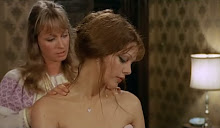
‘Funny Games’ is patterned after that grimmest of sub-genres, the home invasion movie. An upper-middle class family head for their summer house for a weekend of yachting and doing whatever else that people with that kind of money get up to, only for their sojourn to be interrupted by two well-spoken and ineffably polite young men, both dressed in tennis whites, who take them hostage in their own home and subject them to a series of increasingly unpleasant humiliations. The husband’s leg is broken with one of his own golf clubs. The family dog is offed. The son’s life is threatened, a bag over his head. The wife is forced to disrobe.

All of which is pretty standard ‘House on the Edge of the Park’/‘Last House on the Left’ fare. Except whereas those films – and a goodly number of other 70s and 80s low-budget, “video nasty” stylee productions would follow up this last with a protracted rape scene, then document the turning of the tables by the victims against their aggressors, Haneke takes a different route. For starters, he gives the youths no motive: they take none of the family’s material possessions, no ransom is demanded, they seem to bear no grudge, there’s no sexual violence and, given that they seem as well-spoken and well-bred as their victims, there isn’t even a class divide to account for their antagonism. Nor do they seem to take any pleasure in what they do. Nor does the onscreen action (such as there is: much of the film is dialogue) deliver sex, violence, blood or gore. The worst moments – including two of the deaths – occur offscreen.

In essence Haneke takes the template of a grubby and nasty little home invasion movie, strips it of all the guilty pleasures fans of that subgenre would expect and throws it back at the audience’s face to ask its own question: why are you watching this?

Which is fair enough. Only Haneke makes two aesthetic decisions – one (and it happens on several occasions) is to break the fourth wall; the other constitutes a major spoiler but you’ll know it when you see it and, if your reaction is the same as mine, you’ll want to kick the TV out the window – that I find unfathomable. They puncture the claustrophobia of the film; they leech it of tension; they allow the audience to shrug and say “yeah, whatever”, to sidestep the thorny questions of audience complicity and let themselves off the hook. The poster for ‘Last House on the Left’ famously read “to avoid fainting, keeping repeating it’s only a movie”. Haneke never lets us forget that it’s only a movie; and try as I might to rationalise the mindset behind this, I can’t see it as anything other than an artistic own goal.

Appleseed Ex Machina

Posted as part of Operation 101010
Category: anime / In category: 5 of 10 / Overall: 61 of 100


Produced by John Woo (which accounts for a wonderful in-joke where a fluttering dove is shot down and revealed to be a cyborg) and with costumes designed by Miuccia Prada (yeah, let’s see your next animation outfitted by Gianni Versace, Dreamworks!), Shinji Aramaki’s ‘Appleseed Ex Machina’ is an iconic and visually astounding anime whose slightly derivative plot (bits of Isaac Asimov, Philip K. Dick, ‘The Matrix’ and ‘Aliens’ are all in evidence) functions as an excuse for Aramaki and his collaborators to worldbuild in gorgeous and jaw-dropping detail.

A sequel (though it works very effectively as a stand-alone film) to ‘Appleseed’, both features developed from a bestselling manga series, the concept had already been explored in an animated TV series. This was defined by a steampunk aesthetic, while the films depict a more ordered and antiseptic vision of the future – a utopia, albeit one that is heavily policed and where dystopian feeling is just beneath the surface.

The plot concerns an ESWAT team (Extra Special Weaponry And Tactics) who are tasked with investigating a series of terrorist incidents. Impulsive operative Deunan Knute, partnered with the biroid (a former human re-engineered genetically so as not to feel emotion or make impaired judgements) Briareos, are concerned that the perpetrators seem to be cyborgs. Suspicion falls on arms manufacturer Poseiden, but a wider political context overshadows the investigation as Athena, the prime minister of Olympus (the most developed principality in a world still rebuilding after a destructive and debilitating war), involves Poseidon in a move towards implementing an Orwellian policy, ostensibly for the good of mankind, that would essentially make Olympus (or rather its ruling council) all-powerful.

‘Appleseed Ex Machina’ is as heavy on dialogue and exposition as it is on pumped-up action sequences, and for that reason viewing in a subtitled print (if you can get hold of one) is recommended. The English dub suffers from some poor vocal work (in particular the actresses voicing Athena and Poseidon’s CEO Yoshino mumble their way through the dialogue, which is fucking annoying as the political games between these two characters inform some of the film’s key scenes).

Crucially, though, the whole thing looks amazing. Mixing traditional cell animation and CGI, the effect is as close to 3D as you’re ever likely to come in a 2D production, and the visual imagination on display can’t be faulted. If there is a problem, it’s in the film’s po-faced seriousness and the paucity of emotional investment in the characters … although my better half informs me that the first film delves into Deunan’s past and her relationship with Briareus prior to him becoming a biroid; with this foreknowledge, there are a number of small moments in ‘Appleseed Ex Machina’ that hold a lot more meaning; without it, you could easily overlook them.

A minor quibble, though. You could watch this one with the sound muted and completely detach yourself from the narrative and let 105 minutes of pure cinematic eye-candy wash over you. “You’re going to have trouble picking screengrabs for this one,” Mrs Agitation warned me as we watched it. “No, I’m not,” I replied; “you could pause this film at random and have a perfect shot.” She grinned: “Exactly.” She was right.


Thursday, August 26, 2010

South Park: Bigger, Longer and Uncut

Posted as part of Operation 101010
Category: comedies / In category: 6 of 10 / Overall: 60 of 100


Dating its first incarnation back to ‘The Tracey Ullman Show’ in 1987, it took ‘The Simpsons’ twenty years to make the transition from TV to the big screen, and then with variable results: ‘The Simpsons Movie’ is entertaining, but doesn’t quite achieve the inspired brilliance of the series at its formidable best.

‘South Park’, on the other hand, debuted in 1997 with the feature-length spin-off ‘South Park: Bigger, Longer and Uncut’ effing and blinding its way into cinemas just two years later. It’s sharp, cohesive and exploits the possibilities of its extended running time in a way ‘The Simpsons Movie’ failed to, building on everything that was so scabrously entertaining about its small screen self and taking it just that bit further. It’s also got some kick-ass songs.

Oh yeah, ‘South Park: Bigger, Longer and Uncut’ is a musical. But not like any other animated musical you’ve ever seen. From the affable cynicism of ‘Quiet Little Mountain Town’ (“see our breath hanging in the air / see homeless people but we just don’t care”) to the gently improving sentiment of ‘M’kay’ (“you don’t have to end up addicted to smack / homeless on the street giving hand-jobs for crack”) to the parade of profanity in ‘Uncle Fucker’ (“shut your fucking face, uncle fucker / you’re a bona fide bastard, uncle fucker”) by way of the call to arms ‘Blame Canada’ (“we must blame them and cause a fuss / before someone thinks of blaming us”) and the defining anthem that is ‘Kyle’s Mom’s a Bitch’ (“well, Kyle’s mom’s a bitch, she’s a great big bitch / she’s the biggest bitch in the whole wide world / she’s a stupid bitch if there ever was a bitch / she’s a bitch to all the boys and girls”), every number emerges as the kind of triumphantly potty-mouthed sing-a-long that would have Walt Disney spinning in his grave.

The plot is bonkers: Kyle’s mom starts a groundswell of moral outrage after she catches her son repeating filth heard a Canadian-produced movie which develops into all out war with Canada; meanwhile Kenny gets killed (natch!) and ends up in hell where Satan is awaiting his chance to rule earth while his lover Saddam Hussein keeps the Prince of Darkness firmly under his thumb. Saddam murmuring to Satan, “You like that don’t you, bitch?” after they get under the sheets and turn the lights out is just one of many moments in the film’s 78-minutes that could be deified and installed in the Temple of Wrong.

Ultimately, though, that’s what the movie’s about. It’s what the show has always been about. ‘South Park’ is an abattoir for sacred cows. Are you female? You’ll be offended (Mr Garrison on menstruation: “I wouldn’t trust anything that bleeds for five days and doesn’t die.”) Gay? You’ll be offended (Big Gay Al belting out a camp show tune full of stereotypical tropes while his pianist hammers away on an instrument made by, ahem, Felcher & Sons.) A member of the armed forces? You’ll be offended (Mr Garrison again: “This uniform makes me feel so manly. I can’t wait to go into town and get me some fucking poontang.”) Black? You’ll be offended (Operation Human Shield – ouch!) Religious? You’ll be offended (pre-pubescent resistance fighter The Mole: “God is a bitch.”) A member of the Baldwin acting dynasty? You’ll be calling a lawyer. Canadian? Brother, you’ll be declaring war right back!

Eight Legged Freaks

Posted as part of Operation 101010
Category: films with numbers in the title / In category: 5 of 10 / Overall: 59 of 100


Ellory Elkayem’s 15-minute short film ‘Larger Than Life’, made in 1997, is a knowing and good-natured homage to the “creature features” of the 1950s. He followed it up with ‘They Nest’, a TV movie about a coastal community besieged by killer bugs. You could say a pattern was emerging, and with the backing of ‘Independence Day’ heavy-hitters Dean Devlin and Roland Emmerich, Elkayem’s love of all things creepy and crawly found its fullest expression in ‘Eight Legged Freaks’.

The script, by Elkayem and Jesse Alexander (who went on to be a regular contributor to ‘Heroes’), is a gem of economical exposition and multiplicity of characters. The setting is the economically depressed town of Prosperity – a place as ironically named as Perfection in ‘Tremors’ – whose denizens include foxy-as-fuck sheriff Samantha Parker (Kari Wuhrer), her equally eye-candylicious teenage daughter Ashley (Scarlett Johansson), returning prodigal son Chris McCormick (David Arquette), conspiracy theorist and pirate radio DJ Harlan Griffith (Doug E. Doug), corrupt local entrepreneur Wade (Leon Rippy), his stepson (and Ashley’s jock boyfriend) Bret (MattCzuchry) and a whole of others. Enough, in fact, to fill a mall ... which is where the townsfolk gather in for their climactic stand-off against a hoard of giant spiders, an extended set-piece that’s gloriously demented and often laugh-out-loud funny.

The mall setting deliberately evokes Romero’s ‘Dawn of the Dead’, and Elkayem uses it as a fictive and genre-heavy space stocked as heavily with in-jokes as the stores are with unsold goods. Any film that can effortlessly and within the same sequence homage ‘Friday the 13th’, ‘The Texas Chainsaw Massacre’ and – in a bizarre but inspired moment – ‘Field of Dreams’ without ever battering the audience over their heads with its own cleverness gets my vote.

It’s the aforementioned ‘Tremors’, though, that provides the essential touchstone for ‘Eight Legged Freaks’. The small town setting, the acute awareness of the tropes of ’50s B-movies (and how to integrate them into a contemporary setting), the nifty balance between gross out and funny (the fate of the deputy’s cat is a standout; likewise the disappearing ostriches), the eccentrics who populate the town, the besieged survivors gathered in one place, the hair’s-breadth escapes – ‘Eight Legged Freaks’ follows the template of ‘Tremors’ but avoids the trap of slavish imitation. It generates its own folksy charm, largely by dint of a well-chosen cast and Elkayem’s ability to seed the humour organically (many post-‘Scream’ horror comedies take the route of self-conscious irony and the humour suffers as a result).

Well-paced and attractively shot (a tip of the hat to cinematographer John S. Bartley), it’s strange that ‘Eight Legged Freaks’ didn’t set Elkayem up for bigger and better things. His next films – shot back-to-back – were the four and fifth entries in the ‘Return of the Living Dead’ franchise (subtitled ‘Necropolis’ and ‘Rave to the Grave’ respectively). These were followed last year, after a four year hiatus, by redundant sequel ‘Without a Paddle: Nature’s Calling’. Which leaves ‘Eight Legged Freaks’ as the one stand-out – a terrifically enjoyable film where everything clicks – in a filmography otherwise defined by mediocrity. What went wrong?

Ten for 101010

Several factors have combined to prod me in the direction of an undertaking that will see a glut of material appearing on Agitation over the next few days followed by a short break at the beginning of next month.

1) I’ve had some time off this week (which I’ve mostly spent watching movies and drinking beer – some would call it a wasted life, others a way of life) and there’s still the bank holiday to look forward to.

2) I’ve neglected my non-blog writing project in recent weeks and I need to make a concerted effort to re-engage with it.

3) I’ve noticed that just about every article I write for Agitation does its damnedest to head for the 1,000 word mark or even sprint past it.

4) Posting the last couple of (non-Operation 101010) articles has reminded me how beholden the blog seems to have become to that lunatic project, and how much Operation 101010 is starting to feel like a millstone around my neck, particularly since I’m only just over half way through the 100 and it’s almost the end of August.

So, starting today and blasting through until bank holiday Monday, I’ll be posting two Operation 101010 articles a day, keeping them short and sweet at around the 500 word mark. Then I’ll be taking a week off to square up to the novel again.

First review’ll be up in a few minutes after I’ve swiped a few screencaps. Heads down, see you at the end.

Vinyan


When Fabrice du Welz’s ‘Vinyan’ was released in the UK about a year ago, it was marketed as a horror movie. I read a lot of negative reviews: indifferent performances, unsympathetic characters, a meandering first hour, an abrupt lurch into brutality during the final stretches, a befuddling ending.

Except for the befuddling ending part, those exact criticisms could be applied to ‘Wolf Creek’ – and that 90% dull and 10% tense and grimly nasty little number had garnered appreciative reviews and done pretty well at the box office.

So when ‘Vinyan’ aired on Film Four a couple of nights ago, I settled down with a large glass of red and minimal expectations. Two hours later, in the early hours of the morning with Mrs Agitation soundly asleep and every tiny sound from next door or out on the street pricking the hairs on the back of my neck, I switched the bedside light off and drew the covers over me, thoroughly creeped out.


‘Vinyan’ isn’t a perfect film, and I can see why its final shot leaves many people cold, but damned if it isn’t an underdog that’s worth banging the drum for. At its best, ‘Vinyan’ achieves an atmosphere of eerie dread, a fog-like sense of something unwholesome that drifts through the very celluloid of the film. It also achieves a slow and hypnotically awful depiction of a character’s mind folding in on itself under the weight of grief.

The plot concerns aid workers Paul and Jeanne Bellmer (Rufus Sewell and Emmanuelle Beart), whose son was lost in a tsunami six months before the film opens. At a fundraiser for a project to assist a village of abandoned children in Burma, their host shows some grainy footage of the village in question and describes how the only way into the region was to pay for the services of a Triad boss, Thaksin Gao (Petch Osathanugrah), to escort him upriver. Seemingly apropos of nothing, Jeanne flips out. She becomes convinced that one of the children in the footage, out of focus and not even facing the camera, is her missing son.

During the taxi ride home, Paul is sceptical and tries to reason with her. But Jeanne’s is in the grip of a fully-formed obsession and plunges into the criminal underworld to locate Gao. Paul, reluctantly and with increasing frustration, follows. Paying Gao an absurd amount, they set out on a journey that comes across as ‘Heart of Darkness’ by way of ‘Don’t Look Now’ with an ending that Ruggero Deodato is probably still kicking himself for not coming up with.


The pivotal scene synthesizes the film’s themes of loss, grief and desperation in a moment of visual poetry and unexpected calm (much of ‘Vinyan’, particularly in dealing with Paul and Jeanne’s fractured relationship, is pitched at a borderline hysterical level): on a moonlit beach, Gao and some of his colleagues release lanterns to into the sky, offerings to those who have died badly, whose souls cannot make the transition to the next world. They are called vinyan, he tells Jeanne: tormented and angry ghosts. Gao asks her to release a lantern. She replies that she doesn’t need to: her son is not dead; she’s convinced of it. Gao shakes his head. “For me,” he says. Fragile, paper-thin lanterns, ablaze with light, fill the sky above them, reflections dotting the ink-black water as they drift ever higher.

This introduces an enigma that, for me, defines the film. Whose troubled and malicious spirit does the title refer to? Is it Paul and Jeanne’s son? Or, allowing for Gao’s intimation that one’s spirit can be vinyan whilst one is still alive – perhaps in anticipation of a bad end (or, as is evident in Jeanne’s withdrawn and unhinged behaviour, because of an agitation of the mind) – does it refer to Paul or Jeanne?

Or is the children, feral and disturbing and making the chavs in ‘Eden Lake’ look like a bunch of girl scouts, they encounter in the depths of the jungle, their faces painted and their laughter devoid of anything human?

I said there were faults with the film, and there are. The foley work is ludicrously overdone, car engines, rainfall, footsteps and noises of the jungle overwhelming the soundtrack in scene after scene so that entire screeds of dialogue are rendered difficult to hear or, in some instances, completely incomprehensible. This especially doesn’t help when Beart’s accent is so heavy that some of her line-readings are murky (she seemed to demonstrate a better facility in English language dialogue in, of all things, ‘Mission: Impossible’). The film’s first third in particular functions at the histrionic level mentioned earlier, although this does contrast well with Jeanne’s withdrawal into the crumbling façade of her own mind in the latter scenes.

On the plus side, Benoit Debie’s cinematography is excellent, capturing a sense of alien-ness in the river and the landscape that’s almost Herzogian. The performances are good (Sewell, so often cast as a villain, proves that he can essay an everyman role very effectively) and in Osathanugrah’s case excellent – as the curiously sanguine gang boss, he steals every scene he’s in. Du Welz paces the film well, the feverish grip of Jeanne’s obsessive communicated with slam-bang intensity, dream sequences and hallucinations intermingling with the actuality of the Bellmers’ quest, a stomach-churning sense of something darkly inevitable waiting for them, and a jarring transition into grand guignol territory at the very end providing a not-entirely-unpredictable but still uncomfortable conclusion.

And then there’s that final shot.

‘Vinyan’ is a very good film that only just falls short of greatness. There seem to be a lot of people out there who didn’t like it. But maybe that provides the measure of the film: it gets under the skin, lodges itself in the back of the mind and leaves a nasty little imprint on the memory.

Wednesday, August 25, 2010

The Man Who Would Be King

Posted to coincide with Sir Sean Connery’s 80th birthday.

Yes, makin’ mock o’ uniforms that guard you while you sleep
Is cheaper than them uniforms, an’ they're starvation cheap;
An’ hustlin’ drunken soldiers when they’re goin’ large a bit
Is five times better business than paradin’ in full kit.
Then it’s Tommy this, an' Tommy that, an’ “Tommy, ’ow’s yer soul?”
But it’s “Thin red line of ’eroes” when the drums begin to roll,
The drums begin to roll, my boys, the drums begin to roll,
O it’s “Thin red line of ’eroes” when the drums begin to roll.

These lines from Rudyard Kipling’s bitterly expressive poem ‘Tommy’ are something you can easily imagine Peachy Carnehan (Michael Caine) or Daniel Dravot (Sean Connery) muttering vehemently to themselves, ex-serviceman with a grudge against the Forces and a healthy disrespect for the politicians they feel have let them down; men, it has to be said, who were just as petulant when they were in uniform, the majority of their time spent up on a charge or doing jankers.

No wonder, then, that Carnehan is introduced to us picking someone’s pocket in the crowds at Marwar Station, or that Dravot makes his first appearance dozing in a railway carriage and lambasting the individual who disturbs him with a message from his old mucker Peachey. The victim of Carnehan’s wandering fingers and the receipt in Dravot’s tongue-lashing is one and the same person: journalist and aspiring writer Rudyard Kipling (Christopher Plummer). His interaction with our (anti) heroes provides the framing device for John Huston’s enjoyably cynical epic.

Carnehan returns Kipling’s stolen pocket-watch when he recognizes the symbol on the watch-chain as Masonic; passing himself off as a Mason, he inveigles Kipling into passing a message to Dravot. Tipped off by Dravot as to a blackmail scheme he and Carnehan are planning, Kipling reluctantly passes the information along to the British consul. In the first of many uproarious scenes where Connery and Caine play off each other like a music hall double-act, they troop into the consul’s office, cock a snook at authority, and troop right out again.

They next cross paths with Kipling when they gain access to the newspaper offices he works at to consult maps and documents in the planning of their latest head-in-the-clouds scheme: travel to the far country of Kafiristan (the last white man to successfully mount an incursion: Alexander the Great), back some local tribal leader, defeat his enemies, install him as monarch, overthrow the poor bugger and reign as kings.

The extended mid-section of ‘The Man Who Would Be King’ details their arduous journey and the means by which they set about conquering Kafiristan. It’s a shaggy dog story of the highest order, riddled with coincidences, twists of fate, broad (and borderline xenophobic) humour, sweepingly epic set-pieces and two rip-roaring lead performances. The final stretch of the film, when the deus ex machina of Kipling’s watch-chain (presented to Dravot as a gift at the commencement of their lunatic odyssey) compounds a misapprehension by the locals that sees Dravot hailed as a god – any implausibilities are easily excused by the fact that he’s played by Sean freakin’ Connery! – takes things into darker territory.

The friendship between Dravot and Carnehan – the characters’ jocular, bantering relationship and the actors’ palpable chemisty is the backbone without which the film would be little more than some pretty cinematography and a few impressive crowd scenes – is compromised by Dravot’s burgeoning egomania, his to-the-manner-born assimilation of absolute power culminating in his suggestion that Carnehan demonstrate subservience in order to continue the façade. Then Dravot takes a fancy to a local woman, Roxanne (Shakira Caine), whom he believes the reincarnation of the bride his spiritual predecessor, Alexander the Great, took when he ruled Kafiristan two and half thousand years before.

This righteously pisses off the country’s holy men and the scene is set for the film’s justly famous denouement.

‘The Man Who Would Be King’ is bustling, colourful and ultimately poignant. It begins as a Flashman-like romp, occupies buddy-movie territory for most of its running time, delivers a couple of sweeping battle scenes reminiscent of Caine’s earlier turn in ‘Zulu’, and finally becomes a cautionary tale of the wages of greed and the price of hubris capped off with an almost affirmative moment of reconciliation. It’s a high point in the careers of both Connery and Caine, as well as nestling in the top tier of Huston’s filmography. It’s the kind of Sunday afternoon movie that reminds you – with a glint in its eye, a swagger in its step and a dash of ballsy attitude beneath its seemingly breezy exterior – that Sunday afternoon movies can actually be good.

Monday, August 23, 2010

The Wild Blue Yonder

Posted as part of Operation 101010
Category: Werner Herzog / In category: 4 of 10 / Overall: 58 of 100


There’s a scene in Tim Burton’s ‘Ed Wood’ where the eponymous wannabe director is looking through some reels of stock footage with a cutting room buddy. He speculates that you could make an entire movie using them.

This, apart from a few original scenes which feature Brad Dourif basically ranting to camera, is pretty much what Herzog has done with ‘The Wild Blue Yonder’. Except where Ed Wood’s footage is strictly B-movie B-roll, Herzog got his from NASA.


At its most effective, ‘The Wild Blue Yonder’ juxtaposes scenes of the earth seen from space, scenes of astronauts floating gracefully in zero gravity and scenes of divers exploring far beneath the Antarctic ocean. The depths of space and the depths of the sea cohere aesthetically in a tone poem of wondrous images given added meaning and poignance by Ernst Reijeseger’s strange, haunting and beautifully otherworldly score.


And if that had been the entirety of Herzog’s approach – a wordless poem of visual imagery and music – ‘The Wild Blue Yonder’ might have emerged as one of the oddest and greatest works by a man who has produced more odd and great cinema (the oddness and the greatness often inextricably intermeshed) than most. It could have been considered the concluding part of a loosely connected trilogy following ‘Fata Morgana’ and ‘Lessons of Darkness’.

Like ‘Fata Morgana’, it is an exploration into the uniqueness of the image. Like ‘Lessons of Darkness’, it postulates itself as a science fiction fable documenting the alien qualities of planet Earth as if through the perspective of a visitor from another world.

Only here, Herzog makes this aspect literal. He gives us a wild-looking Brad Dourif as the alien, raging at the folly of mankind. He recounts a story about Roswell, alien spores, a mission to the outer fringes of the galaxy and the discovery and planned colonisation of the Dourif alien’s home planet (the “wild blue yonder” of the title). Which all sounds very ‘X Files’/Arthur C. Clarke/Peter F. Hamilton, except that Herzog clearly doesn’t give a flying fuck about traditional (or even recognisable) sci-fi tropes. The Dourif scenes are so completely random and out of character with the deep space/deep sea footage that it’s tempting to wonder if Herzog had basically sold whomever stumped the budget on the sci-fi angle and then decided, with po-faced solemnity, to completely and utterly take the piss.

It’s a curious film, ‘The Wild Blue Yonder’. It’s quite definitely a Herzog film. Minor Herzog, but still intriguing. Get through the Dourif scenes (he has one or two moments that are moderately entertaining, but his verbiage becomes white noise after a while) and you’ll be rewarded with visuals and music that are genuinely haunting.


The Region 2 DVD I watched features a half-hour documentary, ‘A Requiem in Space’, about Reijeseger’s vision of the music, his collaborative approach with Herzog and the musicians he engaged, which is pretty much worth the rental price on its own. It clarifies some of the ideas behind the film and provides a fuller appreciation for Reijeseger’s ethereal score.

Sunday, August 22, 2010

A Hole in My Heart

Posted as part of Operation 101010
Category: impulse buys / In category: 10 of 10 / Overall: 57 of 100


Why buy?

Part of the Lukas Moodysson box set.

The expectation

An endurance course of a movie.

The actuality

I’ve not seen it, but between ‘Lilja 4-Ever’ and ‘A Hole in My Heart’, Lukas Moodysson co-directed the documentary ‘Terrorists: The Kids They Sentenced’, about police brutality, judicial example-making and the media furore surrounding anti-globalisation protests in Gothenburg in 2001. I’m going to make a point of tracking this film down, because I’m coming to believe – perhaps more so than the work of any other filmmaker I can think of – that Moodysson’s filmography has to be approached sequentially.

‘Fucking Åmål’ dealt with potentially downbeat subject matter (sexual uncertainties, social ostracism, self-harming) but delivered an affirmative ending. ‘Together’ trawled the lives of a collection of misfits and found an essential humanity. The experience of making ‘Lilja 4-Ever’ and ‘Terrorists’, though, seems to have changed the direction of Moodysson’s aesthetic.

‘Lilja 4-Ever’ is dedicated, in its end credits, to all the children of the world exploited by the sex trade. This is an important starting point in any review of ‘A Hole in My Heart’. It is also important, going into the film, to remember that Moodysson has always demonstrated a feminist sensibility: allowing for Elisabeth as main character by proxy from the ensemble cast in ‘Together’, a defining characteristic of Moodysson’s filmography thus far is the female protagonist.

‘A Hole in My Heart’ challenges from the off by having no clearly defined central character, while its redacted cast (it’s essentially a four-hander) doesn’t allow it the status of an ensemble piece. Still, viewed chronologically in Moodysson’s filmography, Tess (Sanna Bråding) is identifiable as the focal point for audience involvement. Tess, to put it bluntly, acts in pornographic movies and it’s for this purpose that she arrives at the pustulantly grubby flat shared by middle-aged wannabe smut director Rikard (Thorsten Flinck) and his permanently depressed goth son Erik (Björn Almroth). Also on the invite list is Rikard’s stud muffin best mate Geko (Goran Marjanovic), Tess’s co-star in said filmic endeavour.

What follows is a 93-minute visual and aural assault on the viewer. The imagery is often extreme. An early scene has Tess describe a surgical procedure for vaginal reconstruction; Moodysson inserts footage of the actual procedure (in queasy, glistening close-up) at several points during the course of the film. Repulsed yet? Stick around (but keep the sick bags handy) because we haven’t got to the vomiting, urination, cockroaches, earthworms, smeared food and sex toys yet.

If anyone’s still with me, (a) thank you for your commitment to this blog; and (b) I will completely understand if you tune out now when I say that ‘A Hole in My Heart’ is an artistically valid film that I would cautiously – very, very cautiously – recommend. But only, as I said earlier, when viewed in its proper place in Moodysson’s body of work.

The last time I took a shot at defining art on this blog (in the context, if I remember correctly, of the Powell & Pressburger film ‘A Matter of Life and Death’) I said something like “art is when a work functions equally on an intellectual, emotional and aesthetic level”. If nothing else, this kind of platitude should serve as a warning that anyone who attempts to define art is on a hiding to nowhere.

Art ennobles. Art celebrates. But art can also howl in despair. Art is a label we can put on some of the most beautiful things ever created. But art can also be the blood and the guts and the gore and the filth. Art also serves to provoke, to challenge, to discomfort, to upset, to cause controversy, to force debate as to its own definition, its own validity and its own purpose. Because if art does not do these things, then it will only ever mirror the positive aspects of humanity and therefore be a lie.

Art can encompass works that are anti-art. Art can aspire to an anti-aesthetic. Consider minimalist and atonal music – the opposite end of the spectrum from, say, a Beethoven symphony or a Wagner opera. But still as important. Or the stripped-down credo of the Dogme 95 filmmakers – a world apart from the big-screen excesses of David Lean. But still important.

Another thing needs to be factored into any discussion of art (and this is why I can’t emphasize enough the importance of approaching ‘A Hole in My Heart’ having watched Moodysson’s preceding films in order): so much depends on context. I know that sounds like a lot of wishy-washy, liberal, Guardian-reading crap, but context is what separates the degradation the characters suffer in, say, Ruggero Deodato’s ‘House on the Edge of the Park’ from the degradation the characters suffer in Pier Paolo Pasolini’s ‘Salo, or the 120 Days of Sodom’ and renders one of them an (albeit exceptionally well-made) exploitation movie and the other an important work of film art. Deodato delivers violence and sexual violence and does so for its own sake, as well as for the sake of generating ticket sales. Pasolini delivers violence and sexual violence (as well as scenes of abject humiliation and caprophilia) – and believe me, I approached ‘Salo’ a few years ago and ended up watching it in 15 minute segments over a week; that was the only way I could get through it without being physically sick or lapsing into profound depression; the imagery of ‘Salo’ is much much worse than anything on the DPP’s video nasties list – but does so to deliver a hammerblow against fascism, the marriage of de Sade’s original text with the WWII setting of Pasolini’s film providing a bitterly ironic commentary on the political climate of Italy at the time Pasolini made the film. All of which is a roundabout way of saying that both films are hard to watch, both rub the audience’s face in it and both challenge the propriety of what a “responsible” filmmaker should or shouldn’t depict, yet one is art because of its context and the other isn’t.

I’m 1,000 words into this piece and I’m in great danger of writing myself into a corner. Either that or deviating so far from the business at hand – a write-up of ‘A Hole in My Heart’ – that the point will irretrievably be lost.

I feel I should talk about such mainstays of the conventional film review as acting, direction, cinematography, narrative, characterisation and mise-en-scene. But ‘A Hole in My Heart’ raises a huge and dirty middle finger to such concerns – and does so for a reason. ‘A Hole in My Heart’ (the title itself should tip you off that you’re not supposed to like it) is an anti-film. Its subject is the lowest exposition of filmmaking as an artform: the porno. (And yet, perversely, the porno is perhaps the most honest and unpretentious example of the medium: it doesn’t pretend to be anything other than a litany of sexual activity filmed, edited and distributed for the sole purpose of aiding masturbation.) It is filmed using the kind of basic equipment, shoddy location, bad lighting and limited technique that characterizes your average skin flick. Its characters are the kind of people you would imagine being involved in such an undertaking: Tess, the exploited commodity, convincing herself that Rikard will recommend her to a producer in the mainstream film industry; Rikard, the misogynist whose issues with his dead wife and inability to communicate with or provide direction for his son are the root cause of a project undertaken as both a petty power trip and an exegesis of his self-loathing; and Geko, the narcissist whose muscular physicality belies the fact that he’s terminally ill.

‘Lilja 4-Ever’ was Moodysson’s scream of protest against a system of underworld activity that targets vulnerable children and viciously exploits them (his script was based on an actual case). ‘A Hole in My Heart’ is his scream of protest against a society that lets this happen – that lets any and all bad things happen – because it’s too busy burying its nose in shallow concerns, wanking off over porn, fixating on ‘Big Brother’, stuffing itself with food, numbing itself with alcohol, alienating its children, shitting in its own backyard, making a puke-ridden and piss-stained embarrassment of itself. Moodysson’s film is a slap in the face, a knee to the groin. If it makes you feel soiled and disgusted and angry, that’s because it’s meant to. If it comes off as challenging and difficult and unpleasant, that’s because Moodysson made a conscious aesthetic decision to that effect.

You are not supposed to like this film.

In this respect, it succeeds too well. With an IMDb rating of 4.5 and a backlash of critical disapproval that was already frenzied before the film had even been premiered, ‘A Hole in My Heart’ did no favours for Moodysson’s reputation. And I must admit, in all honesty, had I chosen it as my inaugural Moodysson film from the box set – had I not formed an understanding of his artistic trajectory over four feature films – I would be writing a very different review right now. A hostile and vehement one.

Good buy/bad buy?

The box set as a whole: thunderingly good buy. ‘Fucking Åmål’ and ‘Together’ are films I can see myself returning to again and again until they become old friends. ‘Lilja 4-Ever’ I will return to only very occasionally and my heart will break for Lilja each time. Right now I can’t honestly say that I’m in any hurry for a second viewing of ‘A Hole in My Heart’. Maybe once in more, in four or five years’ time, and then only for the luminescent Sanna Bråding’s provision of the vaguest semblance of humanity the film has to offer.

BUT. I spent a tenner (about $15.50) on a four film box set that introduced me to a director I knew nothing of a few weeks ago and whom I now regard as one of the most important European talents currently at work. I will definitely be tracking down ‘Terrorists’ as well as his most recent films ‘Container’ and ‘Mammoth’.

Friday, August 20, 2010

Service annoucement

Due to an internet connection that's been dicking me around for the last hour, due to a very sketchy article that I'm not entirely happy with (I think I need the film to rattle around my subconcious for a bit longer before I can fully assess my feelings on it), and because of an early start tomorrow for a weekend away (wedding anniversary), this evening's intended review of 'A Hole in My Heart' will be appearing sometime on Monday.

Thursday, August 19, 2010

Lilja 4-Ever

Posted as part of Operation 101010
Category: impulse buys / In category: 9 of 10 / Overall: 56 of 100


Why buy?

Part of the Lukas Moodysson box set.

The expectation

A downbeat, emotionally draining drama.

The actuality

Did I say “downbeat”? In the first half hour or so of ‘Lilja 4-Ever’, the eponymous 16 year old heroine (Oksana Akinshina) has her hopes of a new life in America dashed when her mother accompanies her new suitor abroad, leaving Lilja behind in Russia with the vague promise of joining them later. Lilja’s bad-tempered Aunt Anna (Liliya Shinkaryova) cons her out of her mother’s apartment, coercing her into a move to a dingy towerblock flat with peeling wallpaper, threadbare carpets and defective plumbing. It’s enough to make your average Ken Loach film look like a feelgood rom-com. And things only get worse for our girl.

Did I say “emotionally draining”? Lilja is left without money, the electricity cut off, and summoned before social services who are in receipt of a letter from her mother renouncing her care of Lilja and turning her over to the state. Determining to become self-sufficient, Lilja reluctantly lets her so-called best friend Natasha (Elina Benenson) persuade her into turning tricks for older men they meet at a nightclub. When Natasha’s parents find her stash of earnings from these liaisons, she claims the money is Lilja’s, denounces her as a slut and gives her a reputation in the neighbourhood which culminates in a gang rape at the hands of a gang of local youths.

Depressed yet? Hang onto your Prozac, because we’re less than an hour in and the worst is still to come.

BUT. Whereas a Ken Loach or a Lars von Trier would have gone all out with the miserablism and human suffering, Moodysson never loses sight of Lilja’s effervescence, her sparky and rebellious attitude, never mind the travails she goes through. He charts her friendship with fellow outcast Volodya (Artyom Bogucharsky), a young boy whose father is a truculent bully, sensitively but enthusiastically. The few moments of lightheartedness they share together are joyous and touching. Oksana Akinshina delivers an utterly open, heart-on-her-sleeve performance as Lilja.

So far, Lilja’s mother, aunt and best friend have formed the triumvirate responsible for Lilja’s woes. Compared to Andrei (Pavel Ponomaryov), who wanders onto the scene about half way through the film, they’re her fucking benefactors.

Andrei is the too-good-to-be-true boyfriend: good job in Sweden, own flat, flowery promises of a better future. Volodya sees through him immediately. His concerns fall on deaf ears. Lilja sees in Andrei a way out. A new start. Andrei acquires a passport for her in a false name. At the last minute, driving her to the airport, he manufactures a story that he’s been detained and he’ll follow her later (an ironic reversal of her mother’s lie earlier). When her flight lands, she finds herself not in the promised land but the clutches of ill-tempered pimp Witek (Tomasz Neuman). He imprisons her in a dingy flat in a towerblock in a shabby and graffiti-ridden district, all of which are virtually indistinguishable from her home in Russia.

And thus Moodysson wrenches the audience through the last half hour – 30 minutes of cinema as despairing, emotionally devastating and unflinchingly directed as, say, the final stretches of ‘Requiem for a Dream’.

BUT. Even the bleakest moments – a montage of men who use and abuse Lilja (variously: old, ugly, seedy, perverted, misogynistic); a failed escape attempt that results in a beating; Lilja running helplessly and without through the anonymous streets of a foreign and unfriendly city while Rammstein’s bludgeoningly unsubtle ‘Mein Herz Brendt’ (“my heart burns”) roars abrasively on the soundtrack – are offset by a remarkable, and hitherto unheralded in Moodysson’s filmography, leap into the metaphysical.

I’ve littered this review with minor to moderate spoilers already, so I’m saying nothing more about this element of ‘Lilja 4-Ever’. I’ll just post this still …

… and note that the bird is a metaphor and leave it there.

‘Lilja 4-Ever’ is a hard film to watch. In a cinematic climate where audience desensitivity is arguably at its height thanks to half a decade of torture porn, ‘Lilja 4-Ever’ proves that the art form still has the power to disturb, to upset, to provoke. Not that it achieves this by hammering the audience with extreme imagery or testing their limits the way anything from ‘Hostel’ (at the mainstream end) to, say, ‘A Serbian Film’ (at the extreme end), but by engaging the audience with the life, the hopes and the occasional joys of a flawed but extremely human protagonist and then giving the audience nowhere to hide, no narrative or aesthetic comfort zone, when said protagonist, through no fault of her own, is forced into a life that no-one should have to endure.

‘Lilja 4-Ever’, in its own gut-wrenching way, is an incredibly passionate film. Oksana Akinshina is an incredibly fearless actress. Lukas Moodysson proves himself, three films in a row, as one hell of a director.

Wednesday, August 18, 2010